




At the Technology and Maintenance Council's 50th anniversary meeting last month in Tampa, one of the most interesting technical programs was a preview of what we'll be seeing on '07 truck diesel engines. All truck manufacturers will be upgrading their exhaust systems to meet the next generation of EPA's emissions regulations. There's only room in this column to scratch the surface, but we'll have plenty more in the months ahead.
A Look At 2007 Diesel Emissions
Here's a preview of exhaust hardware you'll be seeing on '07 diesel engines.
by Jim Winsor, Executive Editor
March 1, 20063 min to read
The most notable changes will be the addition of exhaust particulate filters to trap unburned hydrocarbons (commonly called soot). Doing this means substantial changes, including engine electronics. And it's all pretty pricey.
Engines will have added cooled EGR with an increased percentage of exhaust gases being recirculated. This will increase the loads on cooling systems. And it will take even more sophisticated electronic controls to manage the emissions systems.
The typical muffler as we know it today will be replaced with a combination oxidation catalyst and particulate matter filter. We'll call it a diesel particulate filter (DPF). The oxy catalyst reduces much of the exhaust particulates and the DPF traps what's left.
Over time, the DPF will load up with soot, which must be disposed of. When "loaded," it will automatically "regenerate," meaning burn off what's been trapped. If the engine is working under a fairly heavy load and putting out hot exhaust, this heat will be sufficient to cause regeneration. However, if the engine is under light load, or idling, the trap will need additional heat and this will come from igniting sprayed-in diesel fuel – sort of like an enclosed blow torch.
EPA says this exhaust after treatment must work without maintenance or replacement for three years or 150,000 miles. As presently envisioned by several manufacturers, the DPF can be cleaned using a sophisticated machine that vehicle or engine dealers will buy. Or, the DPF can be removed and replaced with a clean one.
Visually, the DPF will look like a pregnant muffler – larger in diameter than current mufflers. It'll be handling a lot higher temps, for instance 1,100-1,300 degrees F. versus today's typical 800-900 degrees F. These higher temperatures will require the use of more expensive stainless steel.
On straight trucks and many tractors, the DPF/muffler combo will be mounted horizontally inside a frame rail and fairly close behind the engine so as not to lose exhaust heat. This location is important. Body installers and PTO-driven accessories can't be relocated, I'm told, which may affect some fleet specs and/or special options. Vertical exhaust pipes can still be used but the DPF/muffler must remain horizontal.
Sulfur can quickly foul DPF's. Diesel fuel – even today's low-sulfur diesel – will make them ineffective. This is why the entire on-highway industry will be changing over to the new ultra-low-sulfur diesel (ULSD) as '06 progresses.
Fleets that are taking part in engine manufacturers' field test programs are be provided with this 15 ppm (parts per million) ultra-low-sulfur diesel when it's not readily available.
The on-highway petroleum industry will undergo a massive changeover during the second half of '06 in preparation for the new engines. I'm told only two fuel tank loads of the wrong fuel will ruin a DPF and require its replacement. And this won't come under "warranty."
Engine lube oils will be changing, too, because of the sulfur issue. We'll see new families of low-ash lubricants. What little bit of engine oil gets past the rings and burned in the engine might be enough to increase the load on the DPF, so the oil companies are reformulating, using non-sulfur chemical additives. Oil drain interval recommendations are likely to be unchanged.
Overall, the engine manufacturers are much better prepared than they were in '02 when the emissions rush was on and it was all new technology.
Nonetheless, all truck users will be on a new learning curve starting with new ULSD fuel, as well as new engine oils and the new exhaust filters (DPF's) that must be kept operational, maintained and ultimately cleaned or replaced.
Subscribe to Our Newsletter
More Fleet Management

ACT: Trucking Volumes Rise, Capacity Tightens as Fuel Prices Cloud Outlook
ACT Research data shows volumes hitting a four-year high and supply-demand balance strengthening, but higher oil prices are undercutting tariff relief and tempering optimism.
Read More →
Wabash Teams Physical Security With Digital Tech For Better Cargo Visibility
The patent-pending cargo solution integrates a digitally connected cargo door and an intelligent locking system with the TrailerHawk.AI technology platform.
Read More →
From Diesel Prices to Cyberattacks: How the Iran War Is Affecting Trucking
The impact of the Iran conflict extends beyond fuel costs, bringing more fraud and cybersecurity risks to the trucking industry.
Read More →
ATA’s Spear Warns Fuel Prices, Trade Policy, and Global Conflict Could Stall Trucking Recovery
Speaking at the TMC Annual Meeting in Nashville, ATA President Chris Spear said trucking faces mounting pressure from rising fuel prices, geopolitical instability, and uncertainty around trade policy.
Read More →
New Entrants, Chameleon Carriers, and Safety: Is It Too Easy to Start a Trucking Company?
More than 100,000 new trucking companies enter the industry each year, but regulators manage to audit only a fraction of them. That churn creates opportunities for inexperienced startups — and for “chameleon carriers” that shut down after safety violations and reappear under new identities. Read more from Deborah Lockridge in this commentary.
Read More →
Fleet Managers Invited to Apply for Exclusive HDT Exchange Event
HDTX is an intimate event that connects heavy-duty trucking fleet managers with industry suppliers through small-group discussions, educational sessions, and structured one-on-one meetings.
Read More →
DAT Launches iPhone Widget to Help Owner-Operators Find Loads Faster
New DAT One feature shows top-paying loads directly on an iPhone’s home screen, helping carriers react faster to spot-market opportunities.
Read More →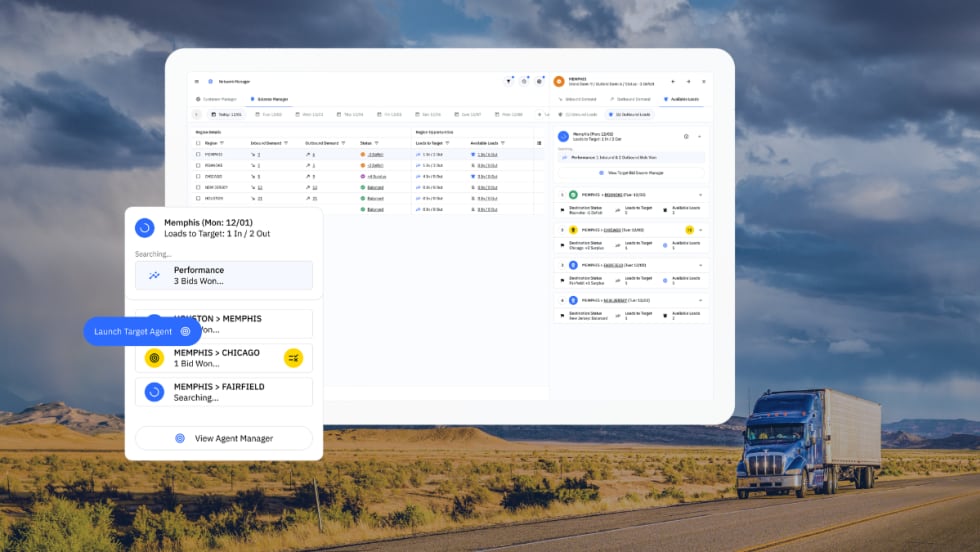
Optimal Dynamics Launches AI System to Help Carriers Choose Better Freight
Optimal Dynamics says its new Scale platform uses AI agents and optimization to help carriers find and secure freight that improves network balance and profitability.
Read More →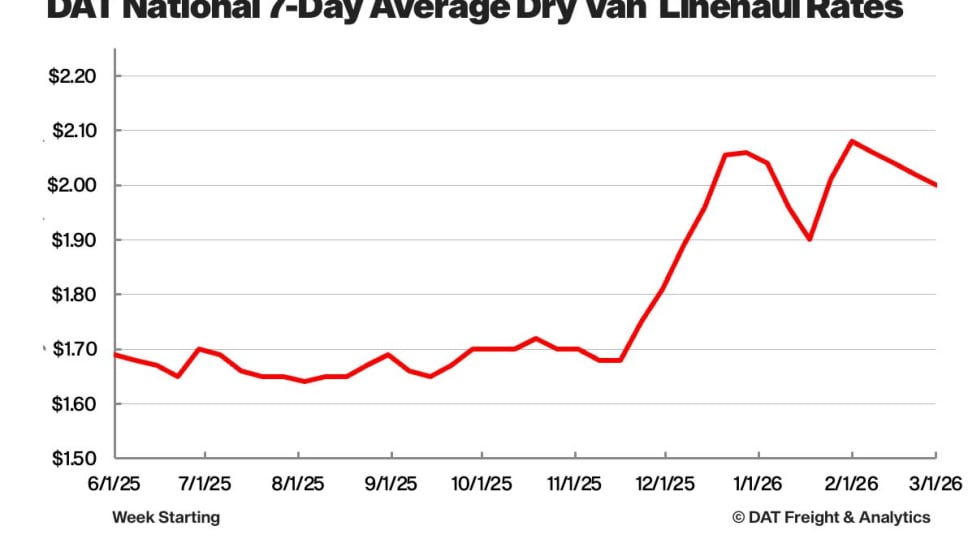
DAT: Flatbed Demand Climbs as Van and Reefer Rates Soften
DAT Freight & Analytics data shows tightening flatbed capacity, easing produce markets, and softening van and reefer rates.
Read More →
Run on Less “Messy Middle” Data Shows Multiple Paths Forward for Truck Powertrains [Watch]
NACFE's Run on Less - Messy Middle project demonstrates the power of data in helping to guide the future of alternative fuels and powertrains for heavy-duty trucks.
Read More →