





You’d have to admit that truck OEMs are generally doing a much better job today at keeping their cabs from literally rotting away. Coating and pre-paint treatments are much better than they were 20 or 30 years ago. But the industry is seeing a new type of invasive corrosion, brought into cabs on drivers’ boots and even in the air.
Prevent Truck Cab Corrosion: Keep De-Icing Compounds at Bay
Truck cab corrosion of the penetrating kind is almost a thing of the past, but de-icing chemicals can lodge in obscure places and cause structural damage year-round.
November 22, 2021
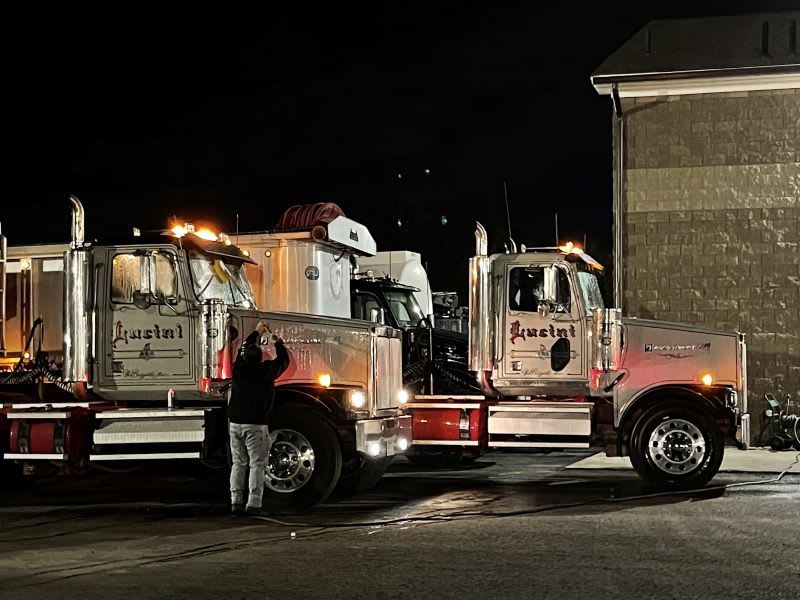
Regular washes help keep these decade-old cabs in nearly show-room shape. Don’t give those corrosive de-icing chemicals time to take hold on metal surfaces.
Photo: Darry Stuart
4 min to read
The highly corrosive road de-icing compounds find their way into places we can’t reach and inexorably begin eating away at our expensive trucks. Evidence of corrosion has been found in tractor and trailer braking systems and even in the deeper recesses of HVAC systems. It’s thought that corrosion is the result of airborne magnesium- and calcium-chloride dust that is inhaled into the various systems and then comes to rest there.
“That stuff is drawn into the air circulating fan, circulated through the HVAC system, and pushed back out into the cab interior,” says Tim May, regional sales manager at Minimizer and chair of the S.17 Cab and Controls Corrosion Control task force at the ATA’s Technology & Maintenance Council.
“We’re starting to see it even in seatbelt retractor mechanisms and in the door jambs that house some darned expensive sensors.”
How De-Icing Compounds Corrode Truck Cabs from the Inside Out
Minimizer’s May suggests there are many ways chloride-laden moisture can enter the cab, including on the soles of drivers’ boots and shoes and even along CB antenna wires that are passed through door jambs.
“When the antenna wire is routed through the door opening, it prevents the rubber seals from seating properly,” he says.
“Water flows along the outside of the wire, enters the cab and drips down to the floor, where it flows to the lowest point and collects. There, it begins eating away at whatever it lands on.”
It can access the cab interior from the other direction as well, wicking up through the floor from the underside of the cab on bolts such as seat mounts. Left unchecked, this could result in weakened seat mounts and corroded floor panels, especially on older trucks.
Dried-out windshield sealing rubbers can also serve as ingress points for moisture. The rubber contracts and becomes less pliable with age and exposure to the sun’s UV rays. Water can seep in this way, and like the antenna wire, it can create a pathway for moisture to leak into the cab and down into areas that are seldom seen or inspected.
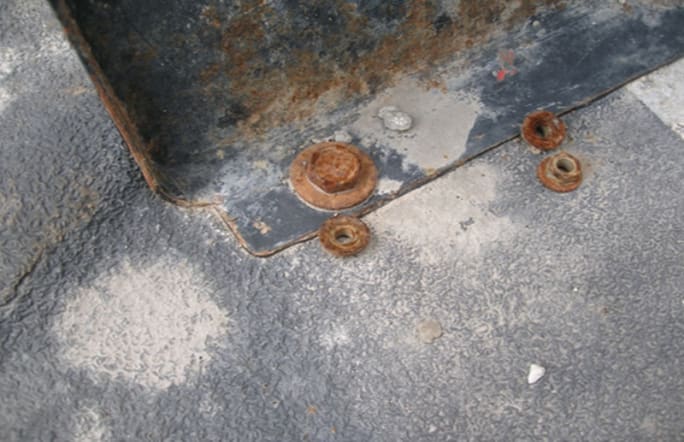
Corroded seat mounting bolts have been found on older trucks. Left unchecked, this could result in weakened seat mounts and corroded floor panels.
Photo: Tim May
Corrosion of Aftermarket Accessories on Trucks
When cabs are built, they are acid washed before painting to achieve as moisture-free surface as possible, and they are coated several times for good coverage and a thicker coating. Today’s coating processes will last a good long time — or until someone breaks the surface of the paint by drilling through the cab wall to attach some post-assembly component such as a light bar or a grab-handle. Once the paint is broken, rust is inevitable.
Often, items bolted to the cab are of dissimilar metals, aluminum on steel, for example. When dissimilar metals come into contact with electrolytes such as condensation, rainwater, or other sources such as oil, dirt and airborne particles, it can produce an electrochemical reaction that destroys metal and reduces its strength and thickness.
While it’s never a good idea to drill through a painted surface and join together two dissimilar metals, measures can be taken to reduce the effect of this galvanic corrosion. Insulate the two metals electrically with a non-conductive material such as a rubber grommet or a polyester/plastic film tape such as Mylar.
“Fleets are notorious for not using a 3-cent rubber gasket or a grommet when hanging stuff like muffler mounts and lights,” says limited-time fleet maintenance executive Darry Stuart, who is also an active member of TMC. “On trailers, we use Mylar tape, but after a while, that gets eaten away too.”
Corrosion's Role in Post-Accident Truck Repairs
Cabs can get beaten up pretty good after a crash, and putting them back together requires a little extra care if long-term corrosion protection is a consideration. Joints and seams can be opened up during the crash can allow water inside, corroding the surfaces from the inside.
Firewalls can be potential assess points for moisture too, particularly in older trucks where gaskets and seals may have dried out. The firewall is like Swiss cheese, there are so many holes. After a crash, bends or twists in the metal surface can reduce the effectiveness of the seals around the holes.
It’s basically impossible to prevent corrosion entirely, especially today with the harsh chemicals used for road de-icing. However, technicians can be trained to spot it developing before it becomes a serious problem.
Wash trucks regularly, especially during the winter when the chemicals are used. Those chemicals linger on road surfaces, and the dust kicked up by tires, even in summer, is a threat to the metallic surfaces of the truck. Regular washes with non-corrosive wash products can help.
“There’s so much of that stuff around now, it’s like living by the seashore,” Stuart says. “There’s enough corrosive material in the air that it will corrode anything it comes into contact with, even brake valves and evaporators inside the cab.”
Subscribe to Our Newsletter
More Maintenance
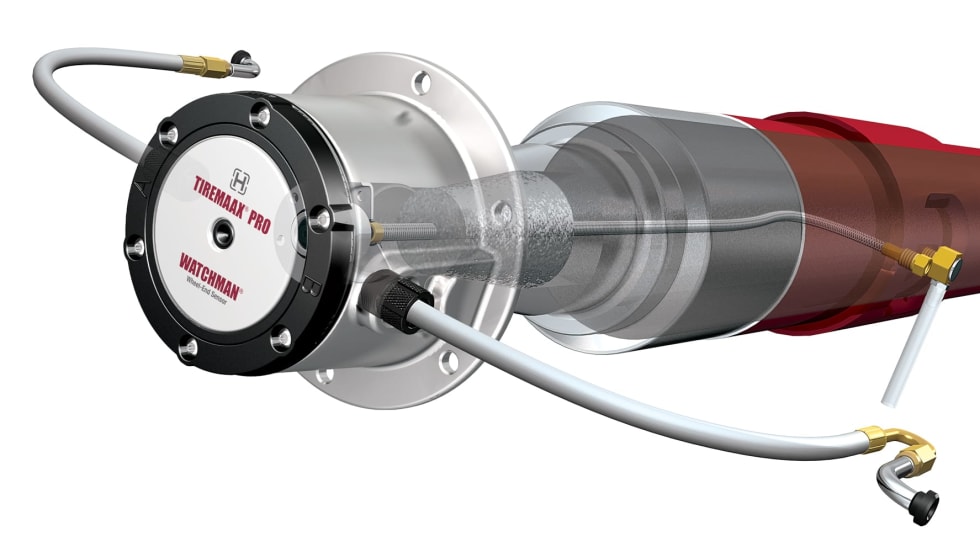
Hendrickson Unveils Watchman Smart Wheel-End System at TMC
Hendrickson’s new sensor platform integrates with its TireMaax system to deliver real-time tire and wheel-end insights, targeting uptime and cost savings.
Read More →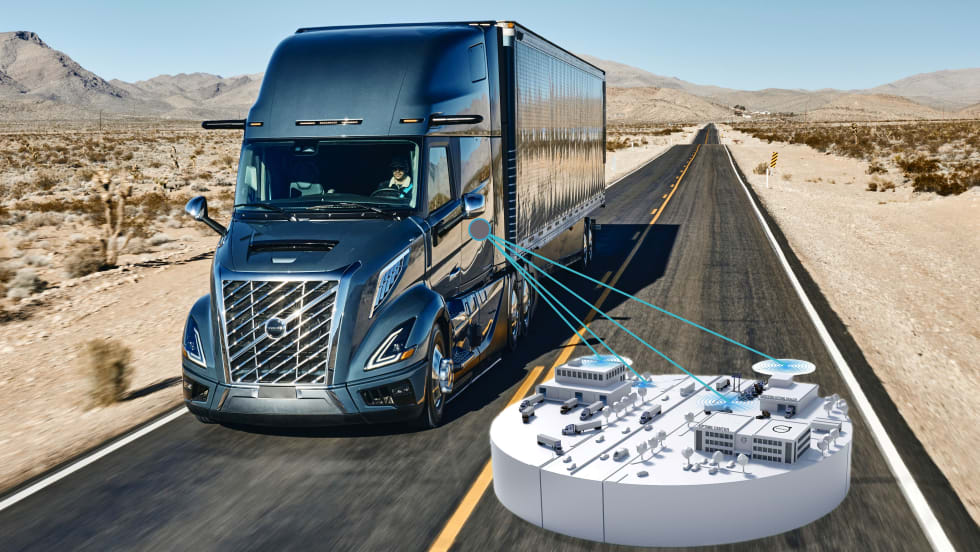
Over-the-Air Updates and the Modern Powertrain Explained
Over-the-air updates are moving beyond recalls, and expanding how fleets manage performance, compliance, and uptime.
Read More →
SKF, TMC Expand Hands-On Training to Boost Technician Skills at Annual Meeting
A new partnership between SFK and TMC brings certified, on-site instruction focused on wheel-end reliability and maintenance best practices.
Read More →
Why Higher Pay Isn’t Fixing the Heavy-Duty Technician Shortage
Hiring heavy-duty truck technicians has become a bidding war, but shops that focus on culture, training, and career paths are gaining an edge. That's the takeaway from a TMC panel discussion.
Read More →
Technology & Maintenance Council 2026 Annual Meeting [Photos]
Couldn't make it to Nashville for TMC's 2026 annual meeting? Check out these images.
Read More →
Fullbay Report: Heavy-Duty Shop Revenue Up, Rates Rising, but Shops Still Short on Techs
Strong growth across the heavy-duty repair sector is being tempered by workforce shortages and an aging technician pipeline.
Read More →
How Mack Sees the Next Era of Fleet Intelligence
Telematics has evolved from simple vehicle tracking into a connected service platform that can help fleets boost uptime, improve specifications, and move toward predictive maintenance. Mack executives say AI is now giving fleets a way to turn all that vehicle data into faster, smarter decisions.
Read More →
Clarios Expands Battery Monitoring Into Subscription Service with Battery Manager Pro
A new battery-monitoring-as-a-service program from Clarios Connected Services uses predictive analytics and automatic replacement to reduce downtime and smooth fleet maintenance costs.
Read More →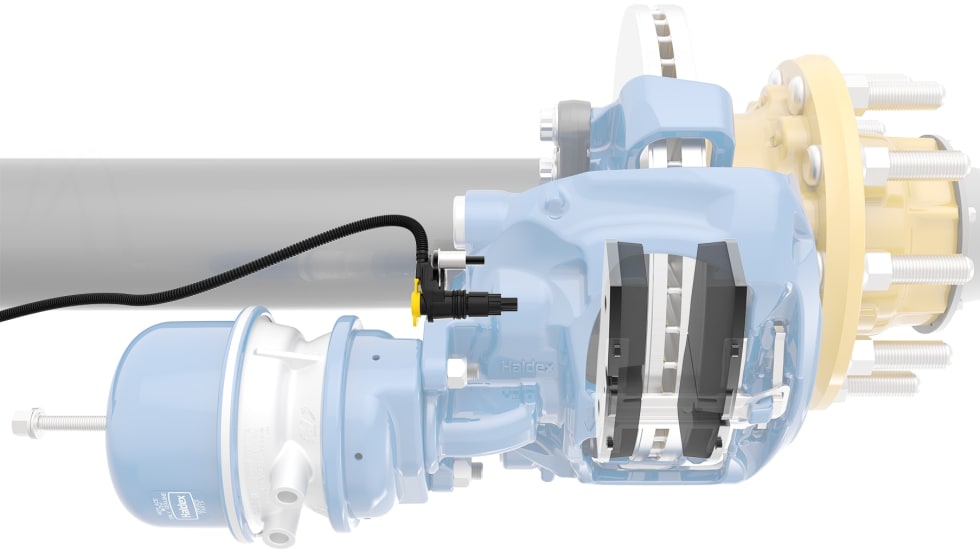
SAF-Holland’s BrakeSight Aims to Take the Guesswork Out of Air Disc Brake Maintenance
New Haldex sensor technology from SAF-Holland integrates with telematics systems to give fleets continuous insight into air disc brake condition.
Read More →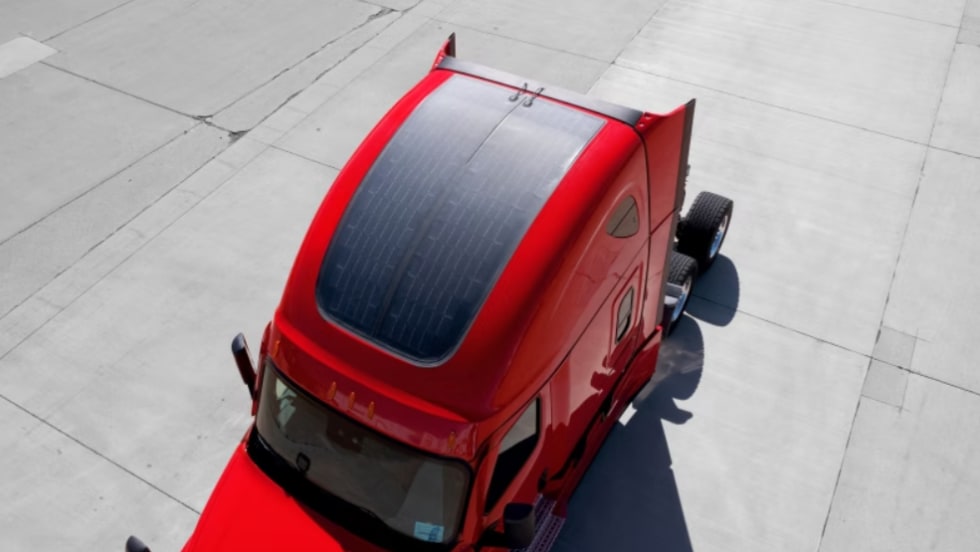
Vanair Introduces Solar, Battery Power Ecosystem for Class 8 Trucks
The company’s expanded EPEQ ecosystem includes flexible solar panels, lithium batteries, hydraulic power systems, and a portable fast charger for electric trucks.
Read More →