





If there's a problem with your truck's electrical system, simply replacing the bad batteries with fresh ones may consign those to the scrap bin, too.
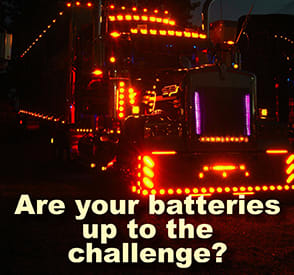
Are Your Batteries up to the Challenge?
If there's a problem with your truck's electrical system, simply replacing the bad batteries with fresh ones may consign those to the scrap bin, too
January 6, 2013
3 min to read
Most batteries don't require much in the way of maintenance anymore. Inspect the case for damage, clean the terminals and you're good to go.
But batteries do fail, and a single weak or damaged cell can take down a group of batteries. Electrical current, like water, flows to the lowest point - in this case, the cell with the lowest charge. So even with all systems shut off, current will still flow from good batteries to the bad one because the cells are connected. The first step is to identify the problem battery cell.
"You have to disconnect all the batteries in the group and test them individually," says Gale Kimbrough, engineering and technical services manager at Interstate Battery. "Today's conductivity testers can test a pack of four batteries in a group, but they may not isolate the bad one. The testers can also be influenced by corrosion on the terminal connectors causing small voltage drops."
If you can determine which battery is faulty, remove it and find out why it failed.
"Generally only one of the batteries in the pack is bad; the rest are likely discharged due to the bad battery," says Bruce Purkey of Pur key's Fleet Electric.
If no battery stands out from the rest, perhaps the problem lies elsewhere, such as in the charging system, or a short or current draw somewhere there shouldn't be. That pushes the problem somewhere upstream of the batteries, out of the sphere of battery maintenance, yet the problems are intimately related.
Discharging while idle
Parasitic loads are created by onboard electronics, such as communications and instrumentation systems.
"If the engine is inactive for a long enough time, parasitic loads will drain the battery to discharge, at which point they are unable to maintain a voltage that is high enough for proper operation of electronic equipment," says Kalyan Jana, development support manager for specialty markets at EnerSys, makers of Odyssey batteries. "The battery probably will not be able to turn the engine if it is discharged to less than 70% of the battery's capacity."
In order to prevent excessive discharge of the battery when the vehicle is inactive for an extended time, Jana recommends connecting the batteries to an appropriately rated trickle charger, or disconnecting the negative battery cable to prevent excessive discharge.
Charging is key
Proper charging is key to performance and longevity, especially with absorbed glass mat batteries, says Brad Bisaillon, strategic accounts and transportation sales manager for Trojan Battery.
"Batteries discharge during use as well as self-discharge when idle," he says. "While in storage, batteries should be charged periodically to ensure they do not remain at a low state of charge."
Bisaillon says charge time will depend on how deeply the batteries have been discharged.
"Deeply discharged batteries will take longer to charge, while those with shallower discharges will take less time," he says. Battery charging should be limited to 16 hours, and most chargers are programmed for this as a safety feature. Be sure to set the battery charger for the appropriate program for AGM batteries.
You can see that while most of today's batteries can be considered "maintenance free," that is not totally true. Maintenance and service issues may have just been shifted away from the batteries themselves, but the problems certainly haven't gone away. If you're waiting for problem-free batteries, you could be waiting a while.
Subscribe to Our Newsletter
More Fleet Management

ACT: Trucking Volumes Rise, Capacity Tightens as Fuel Prices Cloud Outlook
ACT Research data shows volumes hitting a four-year high and supply-demand balance strengthening, but higher oil prices are undercutting tariff relief and tempering optimism.
Read More →
Wabash Teams Physical Security With Digital Tech For Better Cargo Visibility
The patent-pending cargo solution integrates a digitally connected cargo door and an intelligent locking system with the TrailerHawk.AI technology platform.
Read More →
From Diesel Prices to Cyberattacks: How the Iran War Is Affecting Trucking
The impact of the Iran conflict extends beyond fuel costs, bringing more fraud and cybersecurity risks to the trucking industry.
Read More →
ATA’s Spear Warns Fuel Prices, Trade Policy, and Global Conflict Could Stall Trucking Recovery
Speaking at the TMC Annual Meeting in Nashville, ATA President Chris Spear said trucking faces mounting pressure from rising fuel prices, geopolitical instability, and uncertainty around trade policy.
Read More →
New Entrants, Chameleon Carriers, and Safety: Is It Too Easy to Start a Trucking Company?
More than 100,000 new trucking companies enter the industry each year, but regulators manage to audit only a fraction of them. That churn creates opportunities for inexperienced startups — and for “chameleon carriers” that shut down after safety violations and reappear under new identities. Read more from Deborah Lockridge in this commentary.
Read More →
Fleet Managers Invited to Apply for Exclusive HDT Exchange Event
HDTX is an intimate event that connects heavy-duty trucking fleet managers with industry suppliers through small-group discussions, educational sessions, and structured one-on-one meetings.
Read More →
DAT Launches iPhone Widget to Help Owner-Operators Find Loads Faster
New DAT One feature shows top-paying loads directly on an iPhone’s home screen, helping carriers react faster to spot-market opportunities.
Read More →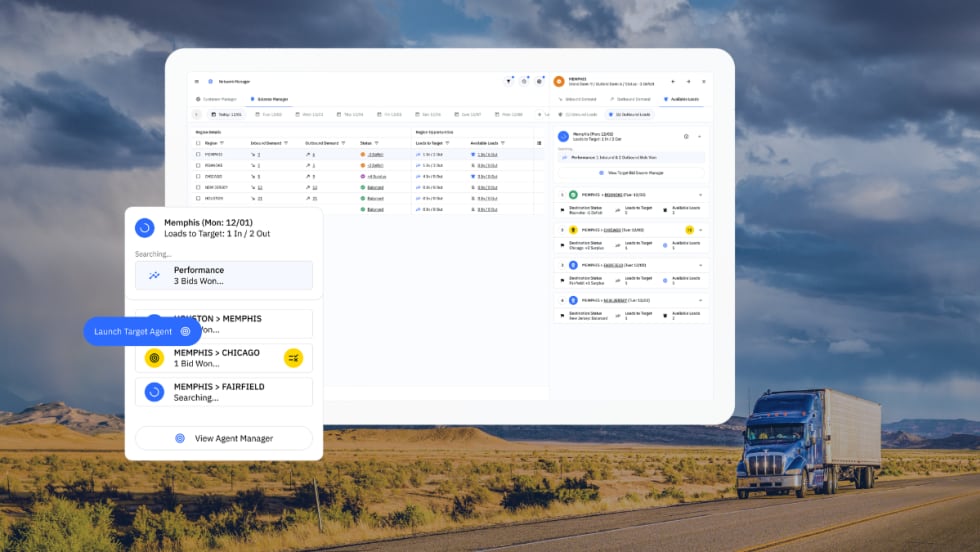
Optimal Dynamics Launches AI System to Help Carriers Choose Better Freight
Optimal Dynamics says its new Scale platform uses AI agents and optimization to help carriers find and secure freight that improves network balance and profitability.
Read More →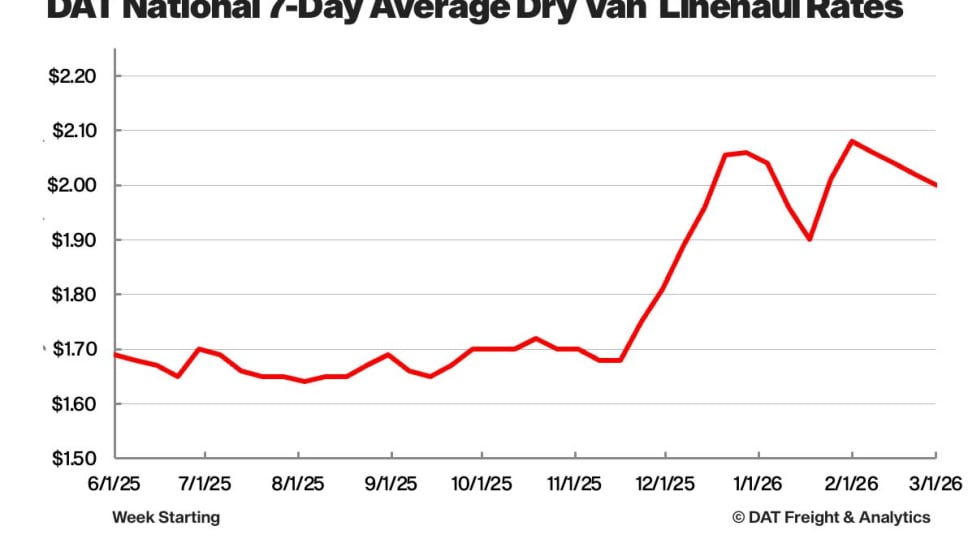
DAT: Flatbed Demand Climbs as Van and Reefer Rates Soften
DAT Freight & Analytics data shows tightening flatbed capacity, easing produce markets, and softening van and reefer rates.
Read More →
Run on Less “Messy Middle” Data Shows Multiple Paths Forward for Truck Powertrains [Watch]
NACFE's Run on Less - Messy Middle project demonstrates the power of data in helping to guide the future of alternative fuels and powertrains for heavy-duty trucks.
Read More →