For the sake of profit and loss, trucking operators have analyzed their businesses since the first load was hauled for a fee. So you might think that terms such as business intelligence, analytics and big data are new wrappers for the same concept. Not so.
Ad Loading...
When you consider the vast amount of data generated within a trucking operation, faster mobile communications networks, increased computing power and software tools for looking at the data, it becomes clear there is something different underneath those wrappers after all.
Ad Loading...
Where the data comes from
Before a fleet can analyze big data, it has to collect it. There are a number of places that generate data — the vehicles, the trucking management and maintenance systems, accounting and human resources. In fact, most areas of a business can contribute data points, and data from outside the company can also be put to use in analytics.
Data sources can be loosely categorized, according to Jim Sassen, senior manager product marketing, Omnitracs.
“There are some logical groupings,” he says, including behavioral (driver performance), vehicle-centric (various devices and sensors on the vehicle) and operational (collected within a company’s enterprise systems). Plus, fleets can make use of what he terms administrative data. “We go into their human resource systems, look at driver histories and things that are not necessarily what we would call operational data.”
Some fleets go beyond that. Tom Flies, chief operating officer, Cadec, says he has customers, especially private fleets, that “take information from their telematics, they look at warehouse information, routing information, point of sale in the stores and make sense of it” in their analytics.
Ad Loading...
Mark Botticelli, chief technology officer for PeopleNet, says data collected from a vehicle can include information from the tire pressure monitoring systems, stability/control systems, reefer monitoring, cargo status sensors and others.
“Vehicle-generated data is on the rise as more and more vehicle-centric data is generated by a growing number of sensors being added to trucks to support improved performance, safety, diagnostics and maintenance,” he says.
He also noted that more information is being generated from driver interactions, such as enhanced messaging, navigation, re-routing and other information that can be put to use in the back office to optimize routing or driver scheduling.
Bill Cooper, general manager of fleet OTR and partner channels at Wex, a fleet fuel card provider, looks at data in terms of levels. With a fuel card, for instance, the first level of information would include a line item on a statement showing how much fuel was purchased and where. Most fuel cards deliver more information. They may require things such as vehicle ID or driver number, odometer reading, purchase number plus the date, time, location and total purchase. The next level of data, what Cooper describes as the “real fun part,” captures information from handheld devices, smartphones, telematics devices and other sources.
Dan Valentine, director of marketing for Nextraq, says the company collects 13 billion data tracks a day from client vehicles, which include position, speed, time, heading, fast acceleration, over-speed, hard cornering/braking, and so on. “We take all of this data and can provide different averages or benchmarks for our customers to use.”
Ad Loading...
Dean Newell, vice president of safety for the Arkansas-based fleet Maverick Transportation, says his company is “collecting everything we’ve got. We start from the beginning — the original driver application and what information we have on drivers before they come to work for us.” Maverick uses analytical modeling as a safety and recruiting/retention tool. “Not sure how many bits of data we collect, but it’s huge.”
How the data is used
“Big data” can mean too much data if you don’t know what to do with it, says Kelly Frey, vice president of product marketing for Telogis. “You have to turn the data into suggestions and actionable data that someone can do something with. You have to interpret it so it can be used to make the right decisions.”
Telematics systems and other mobile communication devices give carriers access to data that didn’t exist in the past. Even for the data that was out there, making use of it traditionally has been hit or miss.
“Raw data has been available for some time,” says Ken Weinberg, vice president and co-founder of Carrier Logistics Inc. “But what’s happened is the technology has become available so carriers don’t need PhDs on their staff to make sense of the data.”
Ad Loading...
Omnitracs’ Sassen says “a few years ago, fleets were begging for data they wanted to get it into their internal management systems.” Now, customers aren’t asking for a ton of data, he says, “they want answers to business questions in a timely manner.”
Frey says fleet management systems typically offer three main ways to put data to use:
Alerts: Collected data is compared to preset thresholds or key performance indicators. When that threshold is exceeded, an alert is issued. All the alerts from all the trucks in a fleet can be aggregated so managers can recognize problems that might be fleet-wide.
Scorecards: The information is put into scorecards showing multiple key performance indicators to show drivers how they are doing, how divisions are doing, how regions are doing, and so on.
Benchmarking: While scorecards allow carriers to look internally, benchmarking allows fleets to look externally to see how they measure up to other similar fleets.
Ad Loading...
Braxton Vick, senior vice president of corporate planning and development at Southeastern Freight Lines, Lexington, S.C., said the fleet uses the data it collects from vehicle telematics systems and then uses its IT infrastructure to mine and analyze the data for insights on ways to improve customer service and other aspects of the operation.
In addition to location tracking, the SEFL system sends fault alerts on things such as particulate filter problems, low oil, high temperature, and other problems that could cause equipment failure or pose a safety risk.
Analyzing big data can help fleets set vehicle specs that work best for their operation. For instance, one Wex customer used analytics to find a set of vehicles that wasn’t reaching the company’s mpg standards. Once they drilled down deeper, they found that the vehicles were not spec’d for the operation area (the Rocky Mountains). They sent them back to the dealer for adjustments and ended up getting 20% better fuel mileage than before.
Beyond analytics to prognostics
What separates business intelligence from analytics is that in some ways, business intelligence looks backward, while analytics looks forward. Fleets set performance standards for drivers, divisions and other units, then measure their performance against those standards. Predictive analytics take historical data and tries to predict what will happen in the near term.
Ad Loading...
Omnitracs Analytics (formerly known as Fleet Risk Advisors) develops models that help fleets identify potential safety risks among their driver pool by finding correlations between thousands of data points and behavior.
Maverick has been using the models for five years. The fleet uses dashboards and scorecards to make sense of the data and use different models to look at percentage change from one month to the next.
“We’re trying to get predictive — who’s the most at risk for the next two weeks,” Newell says. “We don’t look at them as bad drivers, we just look at them as drivers we have to reach out to.”
Maverick also uses the models to predict which drivers are most likely to leave. For instance, they found that drivers who had been off for six days or more were more at risk of having an accident or a workers’ comp claim within the first two or three days of returning to work than the driver pool as a group. Now, they have a conversation with drivers who have been off six days or more before dispatching them on their next load.
Maverick puts as much data as they can into their models. “We give it everything we’ve got.” He doesn’t think it’s too much data. On the other hand, for companies just beginning to work with predictive analytics, he advises that they “bite off what you can chew and not try to eat the whole elephant at once.”
Ad Loading...
First Advantage, which offers employment screening and background services, recently announced a product called FleetIQ that analyzes data obtained from telematics devices and other sources. It uses this data to give fleet managers detailed information on fuel economy, driver performance and other metrics. The company published a white paper in October 2014 that noted that some fleets use more than 3,000 data points on each driver in their predictive modeling. The paper also pointed out how government transportation officials use big data to manage congestion, target enforcement activities and prioritize capital investments.
Fleets can also put their big data to use in determining which vehicles or components will need service based on performance metrics rather than a static schedule.
Does size matter?
Analyzing big data is not just something for large fleets. Smaller fleets can gain benefits as well.
“One of the good things that happened in the last five years is that leading providers have developed a cloud platform that allows them to provide all the tools that are necessary — routing, navigation, tracking, and all of the data — via the cloud,” says Telogis’ Frey. More successful fleets, he says, aren’t necessary larger, but they ask better questions of the data.
Ad Loading...
“I think you can almost make an argument that smaller fleets get a better impact,” Sassen says. “That’s the nice thing about our software as a service offering.” When small fleet managers say they don’t have time to go through a bunch of data, “they picture a data dump into a spreadsheet,” he says. But because most providers today deliver the data in a scorecard or a dashboard, “that’s the eye-opener to small fleets. That’s the promise of analytics and SaaS.
Valentine adds that large fleets may be able to get more out of their data simply because smaller fleets won’t have as many data points. “But all fleets can benefit from telematics and data. It’s important for them to be able to pinpoint what’s going wrong and where it’s going wrong.” Plus, this information is easier to act on in a small company.
In the end, using big data comes down to establishing benchmarks, monitoring performance and seeing where you are and identifying the things that need to be changed.
The American Transportation Research Institute will examine driver coaching, regulatory impacts — including the "Beyond Compliance" concept —and weather disruptions that shape trucking operations.
Fleet Advantage's Brian Antonellis says it's time for fleets to get back to the fundamentals of good maintenance practices. And that includes replacing older, inefficient equipment.
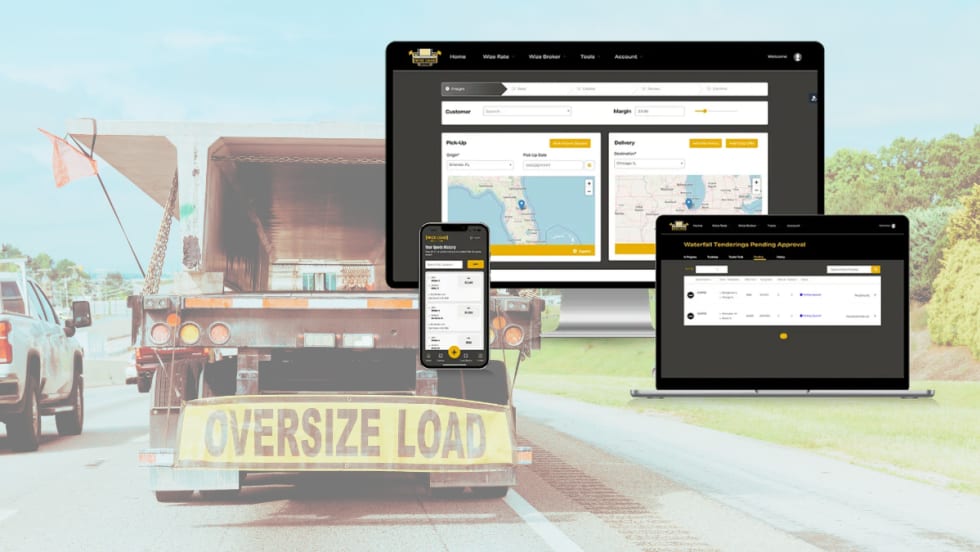
Load matching for flatbed, lowbed, oversize and overweight loads can't be automated like basic van freight, but Truckstop.com is adding more high-tech tools to help.
An expanded Trucker Path and Truckstop.com integration brings more freight opportunities into the TruckLoads app while emphasizing security and network quality.
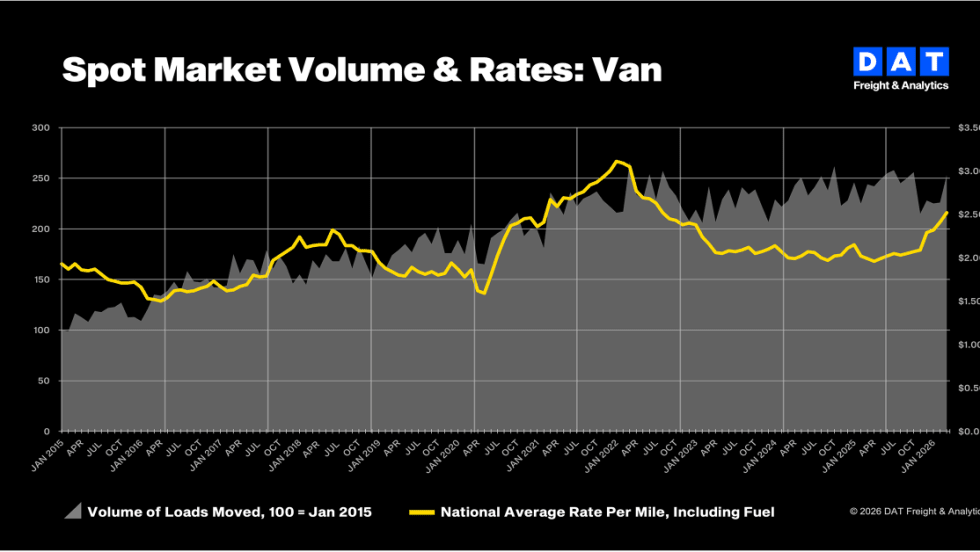
Strong March freight demand combined with a spike in fuel costs pushed both spot and contract truckload rates to their highest levels in more than two years.
C.H. Robinson is waiving fees on fuel cards and cash advances for April and May, aiming to help carriers offset rising diesel costs tied to geopolitical instability.