




The group of trucking companies that is pushing legislation to mandate electronic onboard recorders plans to spend the rest of the year gathering allies and building support for passage of the bill next year.
Carrier Alliance Pushing for Congress to Pass EOBR Mandate Next Year
The group of trucking companies that is pushing legislation to mandate electronic onboard recorders plans to spend the rest of the year gathering allies and building support for passage of the bill next year

Oliver Patton・Former Washington Editor

A group of carriers is pushing to make electronic logs mandatory. (Photo courtesy PeopleNet)
5 min to read
The bill, which would require recorders for all interstate carriers subject to the hours of service rules, was introduced yesterday by Sens. Mark Pryor, D-Ark., and Lamar Alexander, R-Tenn.
"Time is of the essence," said Steve Williams, chairman and CEO of Maverick USA, one of the five founding companies of the Alliance for Driver Safety & Security that is pushing the bill. "As an individual carrier I can't sit around and wait for an opportune time better than now to advance this legislative solution."
The other carriers in the Alliance are Knight Transportation, J.B. Hunt Transport Services, Schneider National and U.S. Xpress Enterprises. Craig Harper, COO of J.B. Hunt, said yesterday that he is hearing interest from other fleets and expects the number to grow.
The Alliance is moving now in hopes of building momentum for passage of the bill as a stand-alone measure next year, said spokesman Bill Vickery.
Williams made it clear that the Alliance would prefer that legislative route, rather than seeing the measure attached to the massive bill reauthorizing the federal highway program, which is now a year overdue with no action in sight.
The ATA Question
A key question is if the Alliance will be able to win the support of the American Trucking Associations, which as a matter of policy supports a voluntary approach to recorders for the industry at large, with mandated recorders for habitual hours of service offenders as required in the Federal Motor Carrier Safety Administration's new rule, which was made final in April.
Williams said the Alliance plans to take the question to the ATA Executive Committee at the association's annual meeting in Phoenix Oct. 17-19.
"I'm optimistic ... now that we have a bill with some specificity, that we'll have the opportunity for ATA to back Sen. Pryor's and Sen. Alexander's proposed legislation," he said. "We're fully aware that ATA's policy position would not allow support right now, but I am optimistic that that will be the case in October."
The outcome of that meeting is anyone's guess at this point.
ATA views recorders as a passive technology that has proven to be a good compliance tool, said Dave Osiecki, senior vice president for policy and regulatory Affairs. "We support their use for that reason."
Osiecki could not say how the Alliance's initiative will be received in Phoenix but took the opportunity to reiterate ATA's support for incentives for active safety technologies such as stability control and lane departure warning.
"They have a measurable safety benefit," he said. "Our preference would be for Congress to focus on safety technologies that would prevent crashes."
The Details
The bill, called the "Commercial Driver Compliance Improvement Act," would give the Department of Transportation 18 months to come up with a final rule and three years for it to take effect.
This rule would set performance standards that have become familiar to the industry through the FMCSA proceedings that led to the current rule.
Recorders would have to be linked to the truck's electronic control module, for example. They would have to identify the driver, record driving time, provide the real-time location of the truck, give enforcement personnel access to the information and be tamper-resistant.
In addition, the rule would have to define a standard user interface, set up a secure process for driver identification and data transfer - and set up a process for approving eligible systems.
Of critical importance to the industry, the bill sets forth limitations on how the data in the recorders could be used.
The data would not be admissible in any civil, criminal or administrative proceeding for any purpose other than establishing compliance or non-compliance with the hours of service rule, unless the owner of the truck consents, the bill says.
Greer Woodruff, vice president of Ssfety for J.B. Hunt Transport Services, said the bill is written broadly enough to give FMCSA the latitude it needs to draft appropriate specifications.
"It will be up to them to determine if they should follow (the specifications) in the current rule," he said.
Woodruff also said that the Alliance's move has no connection to the rewrite of the hours of service rule that is now in the clearance process at the White House Office of Management and Budget.
"What we would like to accomplish is to give greater confidence to the American public that our drivers are complying with hours of service rules, regardless of what they are," he said.
"Whether we like the rules that come out, or don't like them, we still think we have an obligation as an industry to comply with them."
Woodruff also cited the FMCSA's new safety enforcement regime, CSA 2010, as a reason for mandatory recorders.
"There has been a clear connection through CSA 2010, looking at the fatigue-related (category), that carriers that have higher levels of non-compliance with hours of service have elevated crash risks, and those carriers that have greater compliance with hours of service have lower than average crash risk," he said.
"It's time now for our industry to embrace (this) type of technology and move forward."
Carriers and owner-operators who have objected to earlier proposals for mandatory recorders often have cited the cost of the devices as a reason for their opposition. On that point, Williams of Maverick said there are products available that are affordable, ranging upward from $300 to $400 per unit.
"If that is too much of a hurdle then that person quite frankly probably doesn't need to be operating a piece of commercial equipment on our nation's highways," he said.
Enforcement Likes It
The safety enforcement community applauded the bill.
"This bill gets us closer to where we ought to be," said Steve Keppler, executive director of the Commercial Vehicle Safety Alliance, which has long endorsed the idea of a universal recorder mandate.
In particular, Keppler likes details in the bill such as requirements for a standardized interface for law enforcement and drivers, tamper resistance, an approval process for recorders, standard and secure driver identification and standard security requirements.
He said he does not know if CVSA will join the alliance. "That remains to be seen," he said. "From our perspective, whether we are in the Alliance or not, the main thing is that are working together toward common goal."
Subscribe to Our Newsletter
More Safety & Compliance

'Beyond Compliance,' Regulations, Driver Coaching on ATRI’s 2026 Research List
The American Transportation Research Institute will examine driver coaching, regulatory impacts — including the "Beyond Compliance" concept —and weather disruptions that shape trucking operations.
Read More →
FMCSA Revamps DataQs to Improve Fairness, Speed of Reviews
New requirements add firm deadlines and independent review steps, addressing long-standing complaints about inconsistent rulings and slow response times.
Read More →
FMCSA Extends Paper Medical Card Exemption … Again
Five states still aren't ready to accept commercial driver medical exam information directly from the medical examiner's registry.
Read More →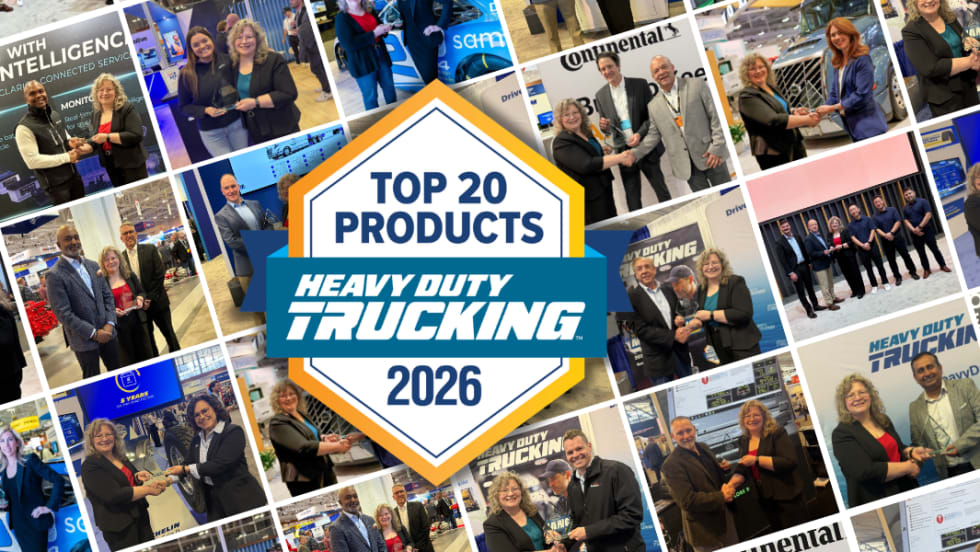
HDT Honors the Best New Products of 2025 at TMC [Photos]
Heavy Duty Trucking's Top 20 Products awards recognize the best new products and technologies. Check out the award presentations at the 2026 Technology & Maintenance Council annual meeting.
Read More →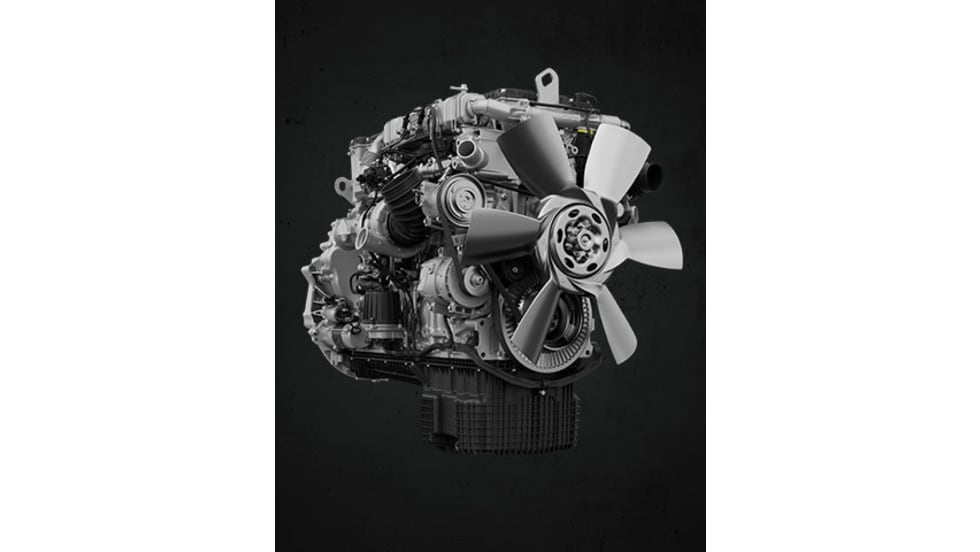
Sponsored•March 31, 2026
Detroit Engines: Trusted Performance, Built for What's Next
The Detroit® Gen 6 engine platform proves that real progress doesn’t require a complete redesign. Built on 20 years of trusted technology, these engines are designed for efficiency, stronger performance, and greater reliability than before. And they do it all while complying with 2027 EPA standards on every mile.
Read More →
Aperia Expands Halo Platform with Steer-Tire Inflation System, Fifth-Wheel Integration
Aperia Technologies introduced a new automatic tire inflation system for steer axles and a partnership with Fontaine Fifth Wheel to integrate coupling status into its Halo Connect platform.
Read More →
Fleetworthy and HAAS Alert Expand Partnership Stopped Truck Protection Alerts
Fleetworthy and HAAS Alert expanded their partnership to deliver real-time digital alerts that warn motorists when commercial trucks are stopped roadside and notify truck drivers when approaching emergency responders.
Read More →
New Entrants, Chameleon Carriers, and Safety: Is It Too Easy to Start a Trucking Company?
More than 100,000 new trucking companies enter the industry each year, but regulators manage to audit only a fraction of them. That churn creates opportunities for inexperienced startups — and for “chameleon carriers” that shut down after safety violations and reappear under new identities. Read more from Deborah Lockridge in this commentary.
Read More →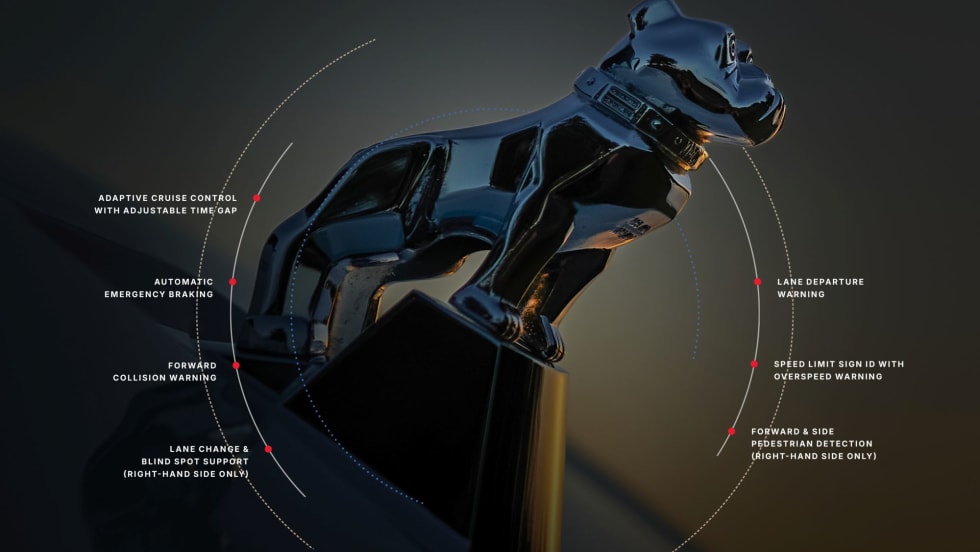
Mack Introduces Mack Protect Collision Mitigation System for MD Series
Mack Trucks has expanded its proprietary Mack Protect collision mitigation platform to the Mack MD Series, bringing heavy-duty safety technology to medium-duty trucks operating in urban and regional environments.
Read More →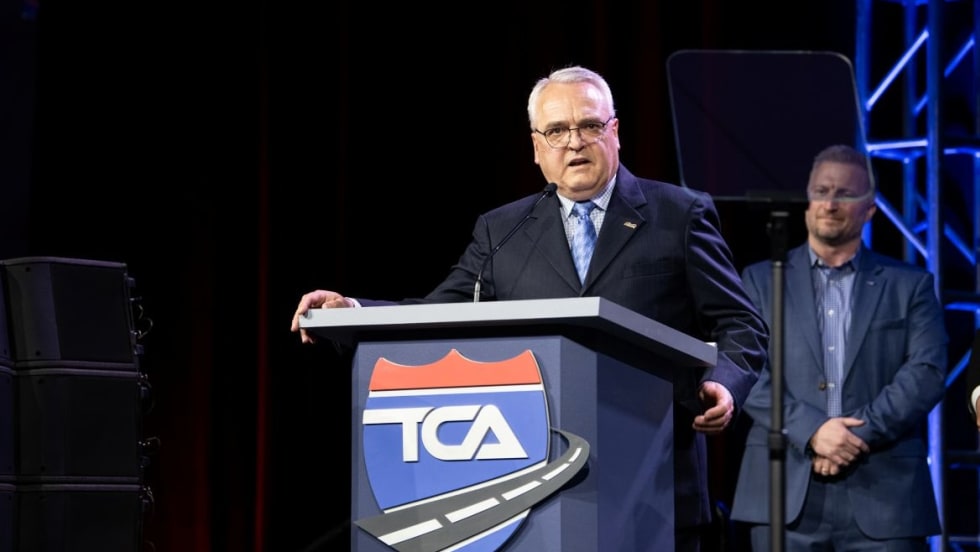
Bison Transport, Mill Creek Motor Freight Win TCA Fleet Safety Awards Grand Prize
Two Canadian fleets earned the Grand Prize in the Truckload Carriers Association’s 2025 Fleet Safety Awards, recognizing the industry’s top safety performance based on accident frequency and safety programs.
Read More →