



Holy moly, it’s already 2016 as you read this. Seems like yesterday I was scrambling to explain my forgetfulness on Valentine’s Day.
 MENU
MENU SEARCH
The year went quickly, but that’s because so much happened — largely good in our trucking sphere. You don’t need me to review things, but a couple of developments late in 2015 leave me very hopeful about what lies ahead.

Rolf Lockwood, Executive Contributing Editor
Holy moly, it’s already 2016 as you read this. Seems like yesterday I was scrambling to explain my forgetfulness on Valentine’s Day.
OK, so the year went quickly, but that’s because so much happened — largely good in our trucking sphere and utterly horrific in the larger world. You don’t need me to review things, but a couple of developments late in 2015 leave me very hopeful about what lies ahead.
First, as I sit writing this in early December, Congress approved by a wide bipartisan margin the Fixing America’s Surface Transportation (FAST) Act.
Aside from actually having the first long-term highway bill in ages, the best thing is that it allows us to fix one of the worst examples of safety legislation ever devised, the Federal Motor Carrier Safety Administration’s Compliance Safety and Accountability (CSA) program. The FAST Act requires FMCSA to rework its mighty flawed reporting regime.
It’s a good start, and with any luck we’ll soon see common sense and fairness injected into CSA. Yeah, well, ‘soon’ may stretch things a little.
Just a week earlier there was a different sort of good news emanating from Washington, and it’s very encouraging because it will support the research and development of alternative fuels and advanced vehicle technologies.
The Vehicle Innovation Act (VIA) was introduced in the House of Representatives, aiming to earmark funds for R&D while also creating truck-specific programs within the Department of Energy.
The legislation was first introduced in the Senate earlier last year, with both Democratic and Republican co-sponsors, remarkably enough. It passed the Senate’s Energy and Natural Resources Committee as part of a larger package of energy legislation.
It calls for DOE’s Vehicle Technologies Office to partner with light-duty automobile, medium- and heavy-duty commercial truck engineers, manufacturers, and suppliers to conduct research that will help advance the future of fuel-efficient cars and trucks. VIA is technology-neutral.
The bill would require DOE “to conduct a program of basic and applied research, development, engineering, demonstration, and commercial application activities on materials, technologies, and processes with the potential to substantially reduce or eliminate petroleum use and emissions of both cars and commercial vehicles.”
“To the maximum extent practicable,” all this would be carried out in partnership or collaboration with truck, engine, and component makers as well as every other conceivable stakeholder from electric utilities to universities.
It’s foreseen that DOE would also work in partnership with relevant R&D programs in other federal agencies. But it’s not at all clear how any of this activity would mesh with the massive effort now underway to meet the Phase 2 greenhouse gas and fuel economy targets being finalized by the Environmental Protection Agency and the National Highway Traffic Safety Administration.
Will we have too many horses trying to pull the same cart? Can there actually be too many?
There’s support for this proposed legislation right across the board, from the United Auto Workers to the Sierra Club, and of course the various manufacturers with horses in the field.
This funding idea is encouraging in and of itself, but it’s also evidence of foresight at a time when fuel is cheap. I’d been despairing that the rise of the natural gas option and the fall in oil prices would conspire to limit interest in looking beyond the present. I think that did indeed happen, but this legislation gives me hope.

ACT Research data shows volumes hitting a four-year high and supply-demand balance strengthening, but higher oil prices are undercutting tariff relief and tempering optimism.
Read More →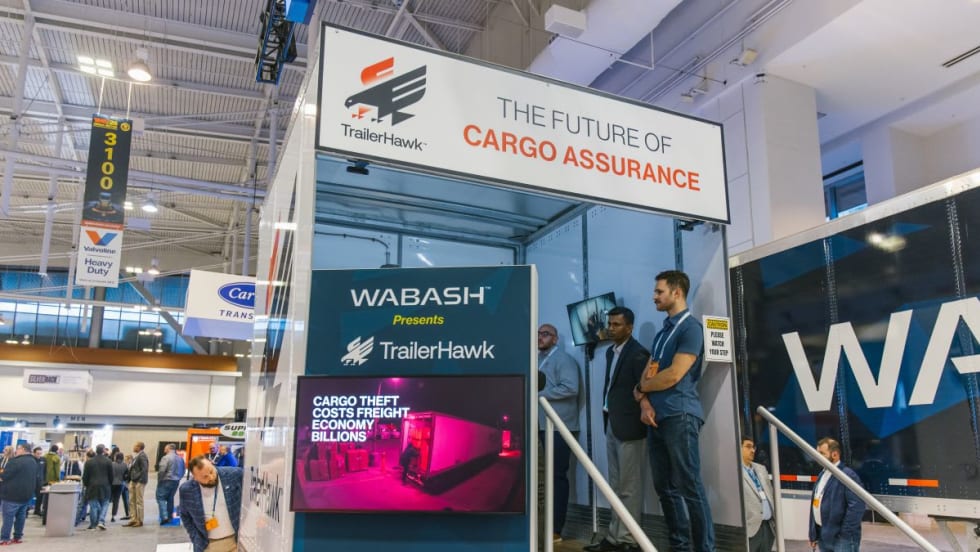
The patent-pending cargo solution integrates a digitally connected cargo door and an intelligent locking system with the TrailerHawk.AI technology platform.
Read More →
The impact of the Iran conflict extends beyond fuel costs, bringing more fraud and cybersecurity risks to the trucking industry.
Read More →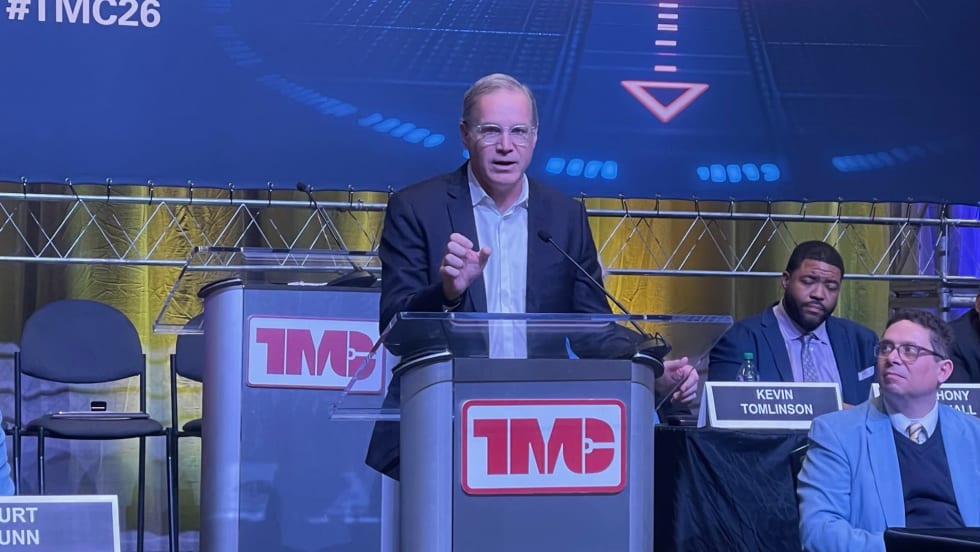
Speaking at the TMC Annual Meeting in Nashville, ATA President Chris Spear said trucking faces mounting pressure from rising fuel prices, geopolitical instability, and uncertainty around trade policy.
Read More →
More than 100,000 new trucking companies enter the industry each year, but regulators manage to audit only a fraction of them. That churn creates opportunities for inexperienced startups — and for “chameleon carriers” that shut down after safety violations and reappear under new identities. Read more from Deborah Lockridge in this commentary.
Read More →
HDTX is an intimate event that connects heavy-duty trucking fleet managers with industry suppliers through small-group discussions, educational sessions, and structured one-on-one meetings.
Read More →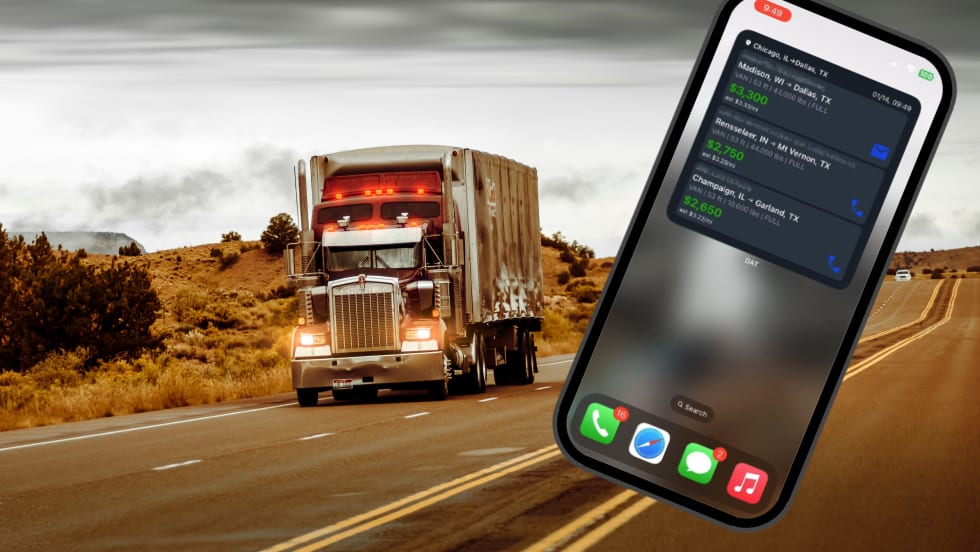
New DAT One feature shows top-paying loads directly on an iPhone’s home screen, helping carriers react faster to spot-market opportunities.
Read More →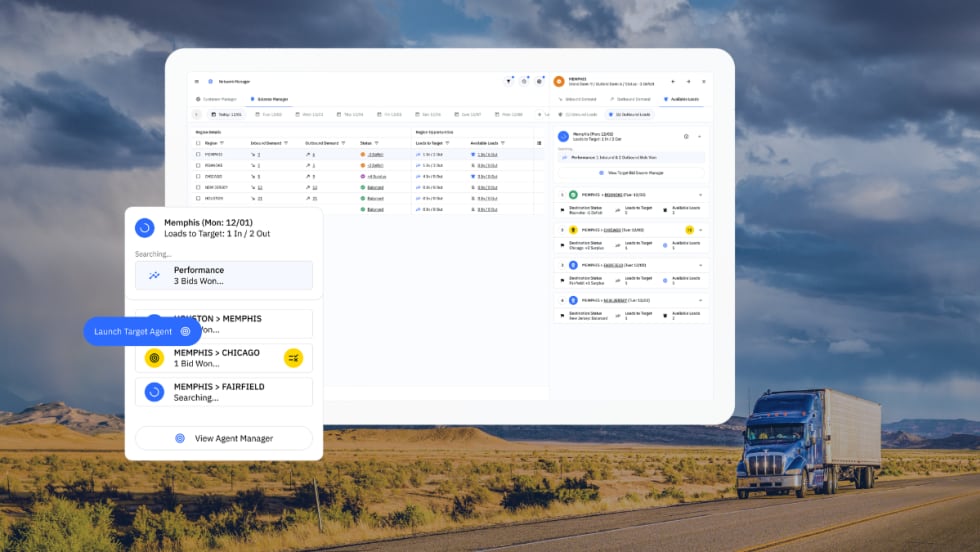
Optimal Dynamics says its new Scale platform uses AI agents and optimization to help carriers find and secure freight that improves network balance and profitability.
Read More →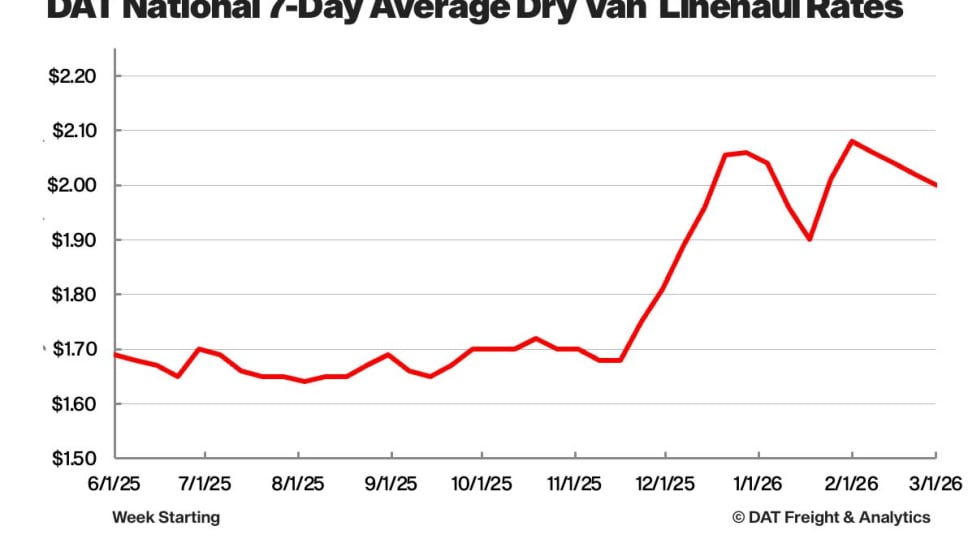
DAT Freight & Analytics data shows tightening flatbed capacity, easing produce markets, and softening van and reefer rates.
Read More →
NACFE's Run on Less - Messy Middle project demonstrates the power of data in helping to guide the future of alternative fuels and powertrains for heavy-duty trucks.
Read More →