




Arguments are heating up between Lightsquared, a 4G LTE wireless company, and the GPS industry and user community.
Could a New Internet Network Trash Your GPS?
Arguments are heating up between Lightsquared, a 4G LTE wireless company, and the GPS industry and user community.
by Tom Nunlist, Associate Editor
August 1, 2011
5 min to read
Lightsquared wants to build around 40,000 terrestrial communication towers capable of delivering high-speed data and Internet wirelessly. But according to The Coalition to Save Our GPS (set up specifically to combat Lightsquared), the Department of Defense, the Department of Transportation and independent telecomm R&D outfits, Lightsquared will severely impair virtually every GPS unit currently in use.
Groups opposed to the plan are upset with the Federal Communications Commission, which granted Lightsquared permission in 2004 to use a portion of a the "L band" radio frequency spectrum to transmit signals. The frequency band abuts the GPS band and causes signal interference. The technical issues are explained more below.
So far, the FCC has heeded concerns over interference, and Lightsquared has moved its location on the L band further away from the GPS band. However, opponents say the solution isn't workable, and last April, the FCC said Lightsquared cannot begin offering commercial service until the problems have been resolved.
However, name-calling abounds. GPS supporters say the Lightsquared plan is unworkable and dangerous. Lightsquared says GPS is at fault for the interference issues and unwilling to change. It continues to push ahead with its plans to build the nation's newest network.
What about the trucking industry?
Since GPS became fully operational in the mid-1990s, it has steadily made its way into dozens of aspects of life and commerce, from finding the way home with your TomTom to planting crops to dropping bombs. The trucking industry has embraced GPS technology to increase operational efficiency, and even protect against property theft.
"GPS is effectively a national utility," said Rex Granum, spokesperson for Coalition to Save Our GPS. "There are some estimates that there are as many as half a billion GPS units out there in one form or another."
To get technical in brief: Most GPS, like the one in your smartphone and your fleet, is low-precision, meaning it can detect your location within a few meters or so. It does this by picking up very weak signals from satellites and calculating its location. The reason Lightsquared is such a threat is that, while not directly in the same signal band, its transmitters are terrestrial towers, which produce signals many magnitudes stronger than the ones coming from distant satellites. The GPS signals get drowned out like a whisper at an AC/DC concert.
This interference can mean one of two things: Your device goes out of service, which is bad. Or your device miscalculates your location, which is worse.
"GPS nowadays is being repurposed not just to track the truck and trailer, but to help the driver do duty status and delivery updates," said Ron Konezny, CEO of PeopleNet, which is a member of the Coalition to Save Our GPS.
If, he said, the office thinks you're in Atlanta, when you are really in Alabama, you have a headache. A Lightsquared tower could potentially cause this sort of interference 10 or more miles away.
But this is small potatoes. A much more important issue is how the interference would affect things like airplane navigation, military communication or any other mission-critical application. Even though Lightsquared has agreed to move its frequency band to help avoid this issue, applications using high-precision GPS may be hopelessly crippled. These devices augment their data with other signals to generate more precise locations, and those signals reach directly into Lightsquared's territory. For very sensitive operations such as agriculture and construction, where even millimeters count, this could be a disaster, say Lightsquared's opponents.
What's next?
With all the potential safety, security and commercial problems GPS interference would create, it's easy to see why opponents are numerous and vocal. It's a big deal, but should you lose sleep over it?
"To be honest, I think at this point the government is functioning properly," said Konezny, citing the FCC's requirement of further network testing, and the fact that the military plays a huge role maintaining GPS. "It would be a massive failure of government if [Lightsquared was allowed to produce interference]."
With all the things going on right now, he said, this one is pretty low on the priority list.
Trashing a system that's become vital to national defense and commerce certainly does seem like no-go, and there a lot of very powerful organizations are working to make sure that won't happen.
On the wireless atmosphere
Given the massive implications of a GPS meltdown, some find it a bit odd the issue has even made it this far. Why would the FCC grant spectrum use to such a hugely flawed plan?
One reason might be the very real threat of a wireless oligopoly.
If AT&T is allowed to purchase T-Mobile, the nation will be down to just three major wireless communications carriers: AT&T, Verizon and Sprint. After a few bad deals, Sprint isn't doing as well as the its two larger competitors.
There's a possibility that the wireless market could have just two providers - a prospect that makes the FCC (and this writer) nervous.
"The FCC is really trying to encourage competition, especially if AT&T buys T-Mobile," said Konezny. "They are desperate to have these alternatives." So desperate, in fact, that the FCC agreed to let Lightsquared use the L band for free.
None of the signal controversy means that Lightsquared is going away. While a solution hasn't been worked out, that doesn't mean it won't be. And despite the would-be carrier's troubles, companies are still signing on with Lightsquared. Just last week, Sprint inked a 15-year agreement with the company, which gives Lightsquared a jump on building the network and Sprint the power to buy around half of its future capacity.
That means if all the kinks are worked out, Lightsquared could avoid GPS calamity and return balance to the wireless force.
Subscribe to Our Newsletter
More Fleet Management

'Beyond Compliance,' Regulations, Driver Coaching on ATRI’s 2026 Research List
The American Transportation Research Institute will examine driver coaching, regulatory impacts — including the "Beyond Compliance" concept —and weather disruptions that shape trucking operations.
Read More →
Fleet Advantage's Brian Antonellis on the Growing Need to Replace Old Trucks
Fleet Advantage's Brian Antonellis says it's time for fleets to get back to the fundamentals of good maintenance practices. And that includes replacing older, inefficient equipment.
Read More →
Truckstop.com Adding to Open Deck, Heavy Haul Offerings
Load matching for flatbed, lowbed, oversize and overweight loads can't be automated like basic van freight, but Truckstop.com is adding more high-tech tools to help.
Read More →
Trucker Path, Truckstop.com Expand Load Access Partnership
An expanded Trucker Path and Truckstop.com integration brings more freight opportunities into the TruckLoads app while emphasizing security and network quality.
Read More →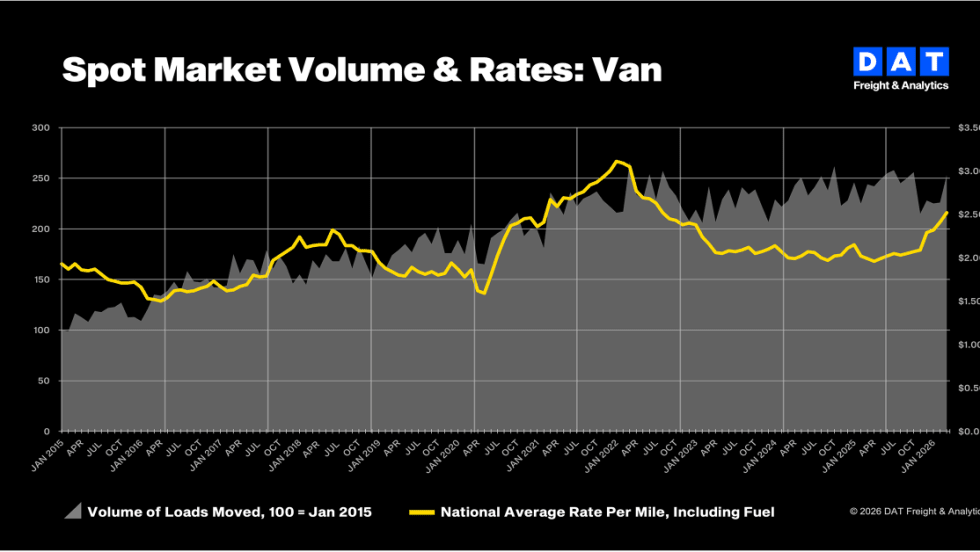
Truckload Rates Hit Two-Year Highs as Diesel Costs Surge, DAT Says
Strong March freight demand combined with a spike in fuel costs pushed both spot and contract truckload rates to their highest levels in more than two years.
Read More →
The AI Conversation You Need to Have with Your TMS Provider
Everyone’s talking about AI — but is your transportation management system actually built for it?
Read More →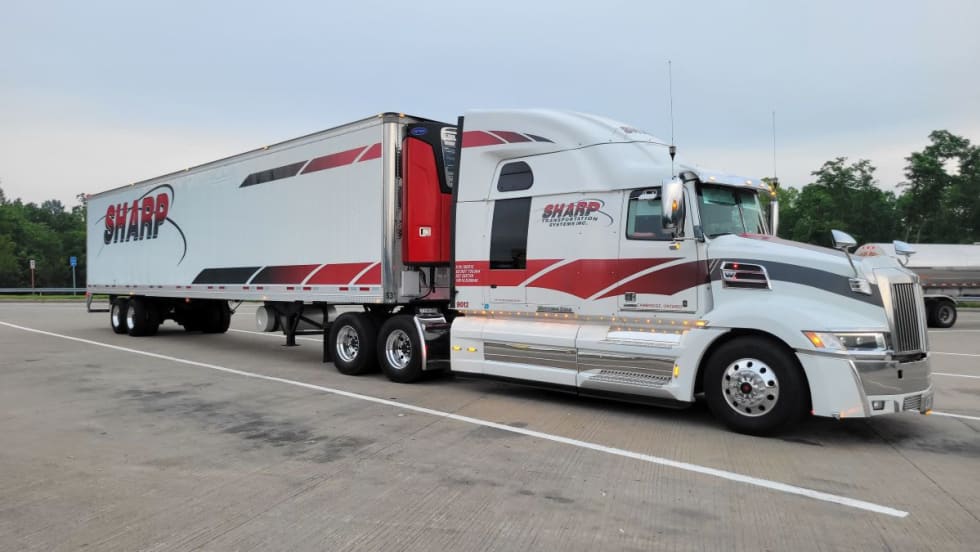
Kriska Buys Fellow Canadian Carrier Sharp Transportation Systems
Being part of KTG will allow Sharp to expand and improve its services.
Read More →
Bill in House Would Raise Minimum Insurance for Motor Carriers to $5 Million
The Fair Compensation for Truck Crash Victims Act would increase insurance requirements for interstate motor carriers by nearly seven times.
Read More →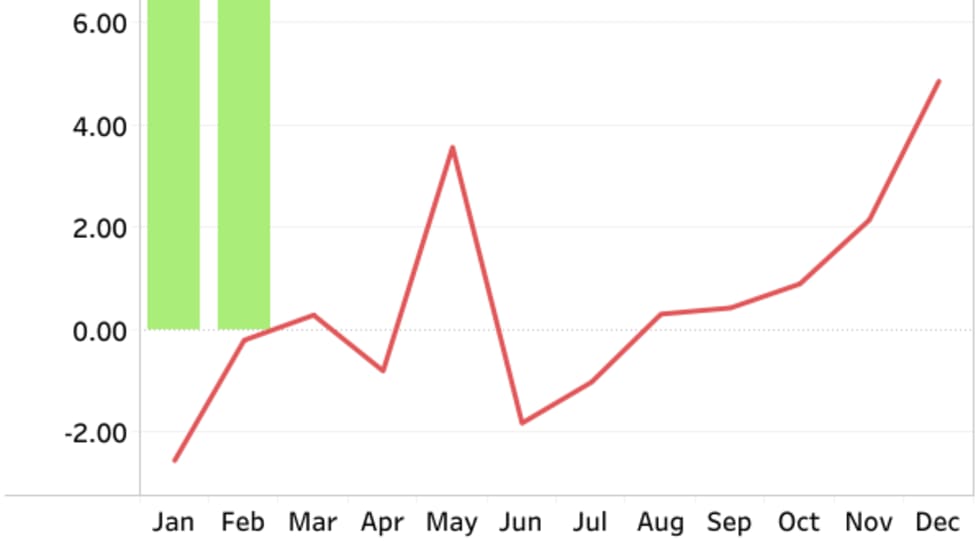
FTR Trucking Conditions Index Hits Four-Year High in February
Strong freight rates push TCI to 10.2, but FTR expects fuel-price volatility to skew March results.
Read More →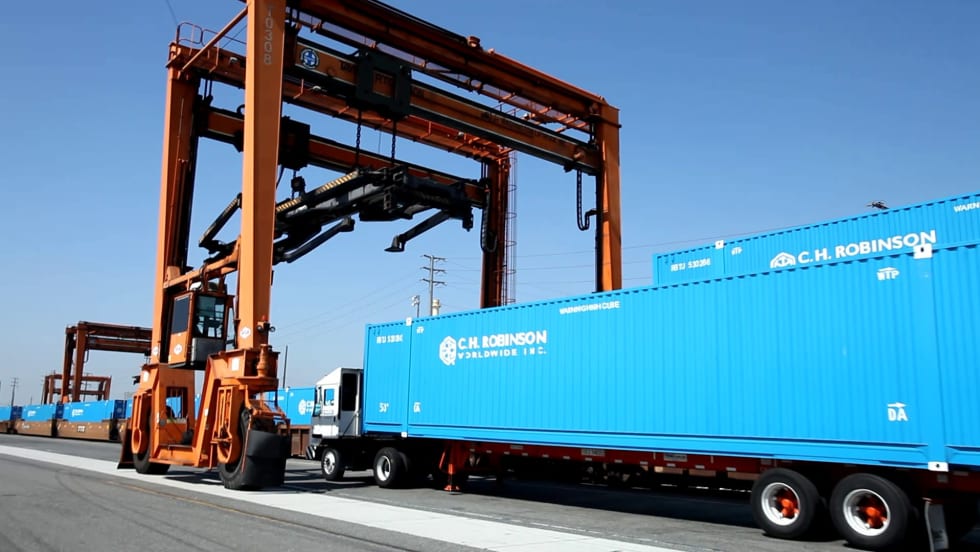
C.H. Robinson Offers Carriers Relief as Diesel Prices Surge
C.H. Robinson is waiving fees on fuel cards and cash advances for April and May, aiming to help carriers offset rising diesel costs tied to geopolitical instability.
Read More →