




Since April 2008, wholesale distributor J.T. Davenport & Sons has cut its idle time from 20-30 percent to 3 percent.
The fleet's speeding rate has gone from 18-20 percent down to 0.2 percent, and the company has saved more than 30,000 gallons of fuel in one year, all through the use of Xata Corp.'s software.
Concord, N.C.-based Cardinal Logistics was able to eliminate cell phone usage by its drivers. That's because OTS, which provides tax technologies and tax solutions for the trucking industry, teamed up with Sprint to get access to Cardinal's drivers' phone records and audit those time-stamped records against their driver logs.
Meanwhile, truckload carrier Central Refrigerated Service realized a 15 percent drop in deadhead mileage on average per month, using TMW Systems' optimization solutions.
What do these fleets have in common? They've all used data to improve their operations and be more profitable.
Trucking companies are capturing and collecting all sorts of data from a variety of sources, from the engine control module and tracking/communica- tions system to fuel purchases and driver logs.
But what's important is what you do with that data, says Barry Craven, J.T. Davenport's transportation manager. If you're just sitting on data, it just takes up room on your hard drive, Craven says.
"If you don't use it, don't collect it," he says. "If the company invests money in technology for the transportation department, it is my job to make sure I get an ROI on that investment."
The playbook
J.T. Davenport uses Xata's software to measure key performance indicators, or KPIs, which are quantifiable measurements that drive fleet - and corporate - performance. "Typically tied to an organization's goals, KPIs provide everyone in the organization a clear picture of what success looks like," says Christian Schenk, vice president of marketing at Xata. "KPIs also clearly state what's going to be measured and how."
Xata's system offered J.T. Davenport the ability to run hundreds of reports, but Craven gets the ones he wants, based on what the company wants to accomplish. J.T. Davenport chose to look at idle time, speeding and mpg.
The company set goals, or targets, for how much they wanted these KPIs to improve. The Xata system then started tracking these, and the company awarded drivers and teams of drivers for meeting these goals.
McLeod Software's Randy Seals, customer advocate, says KPIs give fleets an actual playbook. KPIs allow fleet management to set up goals and see how their efforts are contributing to those goals. He compares it to the scoreboards at a baseball game: The players can look up at the scoreboard and see how they're doing and what they need to do to meet their goals.
"Trucking, for a long time, didn't have that," he says.
McLeod has a powerful suite of reporting capabilities within its LoadMaster software, which allows a fleet manager to observe, react and manipulate the success of his business in real time. It will help a fleet not only survive, but also monitor, execute and adjust their business plan by seeing what the key indicators are, Seals says.
For example, by viewing customer volumes by month, the system can predict what will happen for the rest of the year. That way, fleets can adjust the playbook to maximize their effort, Seals says. The system allows you to refine your dispatch and operations, identify weaknesses and correct those.
Analyzing key performance indicators specific to an operation can help a trucking company be competitive in real time, Seals says. The key is acting on the data. "Pondering long sometimes is pondering wrong."
Costing and profitability
Fleets can also crunch the numbers to perform activity-based cost analysis and profitability forecasting. These types of tools help fleets analyze their freight mix to determine what lanes and customers maximize their profitability.
Ashland City, Tenn.-based R.E. West Inc. implemented Transportation Costing Group's ProfitVision solution, which provides an itemized view of what it costs to run its business. An understanding of costs and profitability was needed to quantify successful freight and freight lanes and to fix those areas of the business that were underperforming.
R.E. West improved its bottom line by 10 percent in 18 months.
"These profits are the result of pricing potential lanes more efficiently by looking at accurate, historical cost data to make better informed decisions about lanes, loads and customers, and to communicate more effectively about costs and profitability," explains Jenny West, chief financial officer of R.E. West. "The TCG software ties to our general ledger so every dollar spent correlates to a dollar spent in the real world. TCG has helped us quantify costs and identify areas of success and where we can make improvements. It helps everyone here make more informed decisions that are backed up by hard numbers."
TCG President Ken Manning says the company can drill down into a fleet's data by anything that's in the freight or dispatch record. They analyze data such as freight bills, tolls, fuel records, general ledger, operating statistics, payroll, driver settlements, payments to interline carriers and dispatch data.
Once they've got the data, TCG sits down with the carrier and constructs a model of their operation over a certain time period, assigning a cost to every shipment or load in that period, Manning says.
But TCG doesn't just look at a load in isolation; it analyzes cost on a roundtrip basis, then isolates the loads. TCG's system also accounts for everything that happens to the load, from liftgate delivery and refrigerated moves to stop-offs. That way, the costing is very accurate, Manning says.
TMW Systems also has a suite of software products aimed at optimization and maximizing profitability. These software tools allow carriers to better understand their business and see efficiencies and inefficiencies in greater detail.
One of these offerings, IDSC MatchAdvice, works in real time to give planners and dispatchers suggested load and power matchups that are calculated to generate the highest profits and improve asset placement throughout the carrier's freight network.
Evans Equipment of Butler, Ind., uses TMW's IDSC ExpertFuel, which automatically generates an optimal travel route and a specific plan for fueling along the way. The fuel purchasing plan includes the location and amount of fuel to purchase at each stop to reduce the fleet's fuel spending.
Using the ExpertFuel tool, Evans Equipment is saving $50,000 to $70,000 a year. The tool uses the carrier's data to map out the most cost-effective fuel stops.
These tools are designed to help fleets take inefficiencies out and put efficiencies back into their operations, says Mike August, vice president and general manager of TMW's optimization group.
Custom reporting
Some technology providers work with fleets to customize the type of reporting and data capabilities that fit the fleet's specific needs.
Among them is Operating Tax Systems in Ohio. Al Uritis, CEO and founder of OTS, says the company takes a consultative approach to crunching data, and it's not limited to tax information.
OTS takes data from GPS, paper trip records, dispatch, the ECM, or anything that has an electronic thumbprint. The company then sits down with the fleet, slices, dices and massages that data to see how the information can be used to add value in other areas, outside of fuel taxes and driver logs. "How can we create and add value in other areas?" Uritis asks.
This type of customizable reporting is exactly what the company did for Cardinal Logistics. Cardinal's drivers were banned from using cell phones while driving, but the company needed a way to enforce that.
By taking drivers' cell phone records from Sprint and auditing them against driver l
Crunching the Numbers: What Do You Do With All That Data?
Since April 2008, wholesale distributor J.T. Davenport & Sons has cut its idle time from 20-30 percent to 3 percent.
More Fleet Management

'Beyond Compliance,' Regulations, Driver Coaching on ATRI’s 2026 Research List
The American Transportation Research Institute will examine driver coaching, regulatory impacts — including the "Beyond Compliance" concept —and weather disruptions that shape trucking operations.
Read More →
Fleet Advantage's Brian Antonellis on the Growing Need to Replace Old Trucks
Fleet Advantage's Brian Antonellis says it's time for fleets to get back to the fundamentals of good maintenance practices. And that includes replacing older, inefficient equipment.
Read More →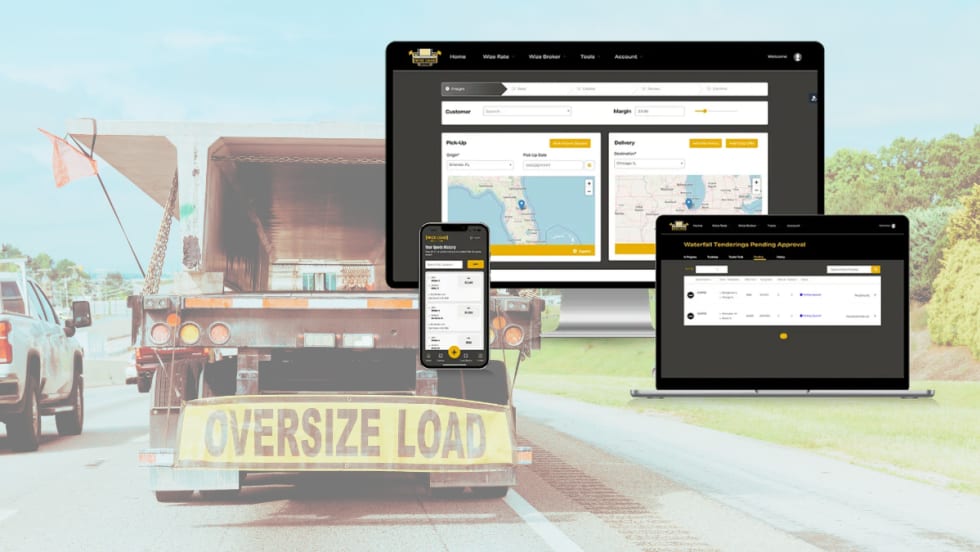
Truckstop.com Adding to Open Deck, Heavy Haul Offerings
Load matching for flatbed, lowbed, oversize and overweight loads can't be automated like basic van freight, but Truckstop.com is adding more high-tech tools to help.
Read More →
Trucker Path, Truckstop.com Expand Load Access Partnership
An expanded Trucker Path and Truckstop.com integration brings more freight opportunities into the TruckLoads app while emphasizing security and network quality.
Read More →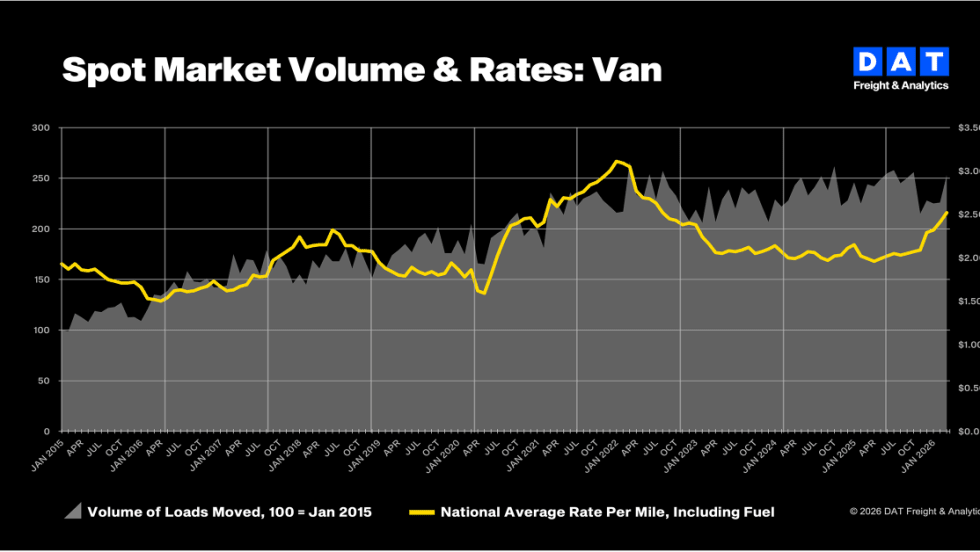
Truckload Rates Hit Two-Year Highs as Diesel Costs Surge, DAT Says
Strong March freight demand combined with a spike in fuel costs pushed both spot and contract truckload rates to their highest levels in more than two years.
Read More →
The AI Conversation You Need to Have with Your TMS Provider
Everyone’s talking about AI — but is your transportation management system actually built for it?
Read More →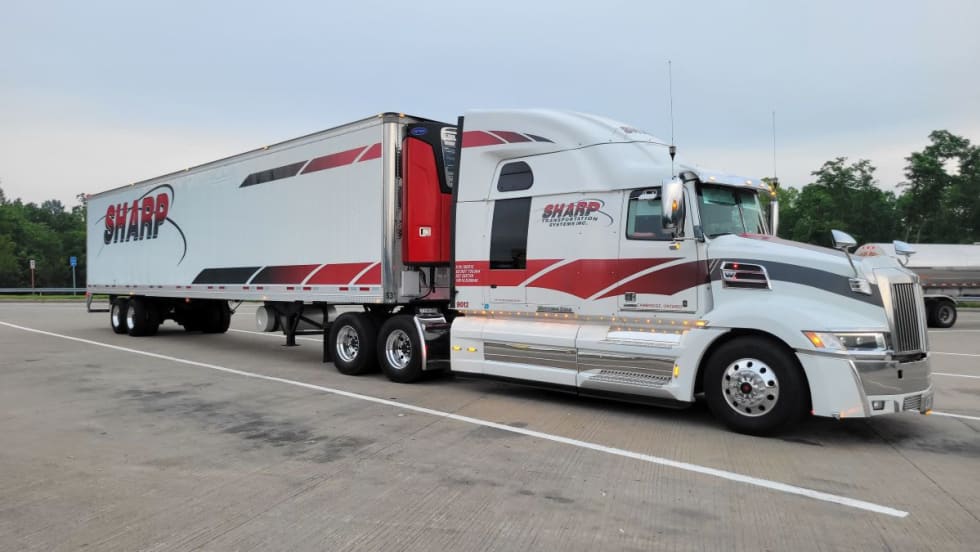
Kriska Buys Fellow Canadian Carrier Sharp Transportation Systems
Being part of KTG will allow Sharp to expand and improve its services.
Read More →
Bill in House Would Raise Minimum Insurance for Motor Carriers to $5 Million
The Fair Compensation for Truck Crash Victims Act would increase insurance requirements for interstate motor carriers by nearly seven times.
Read More →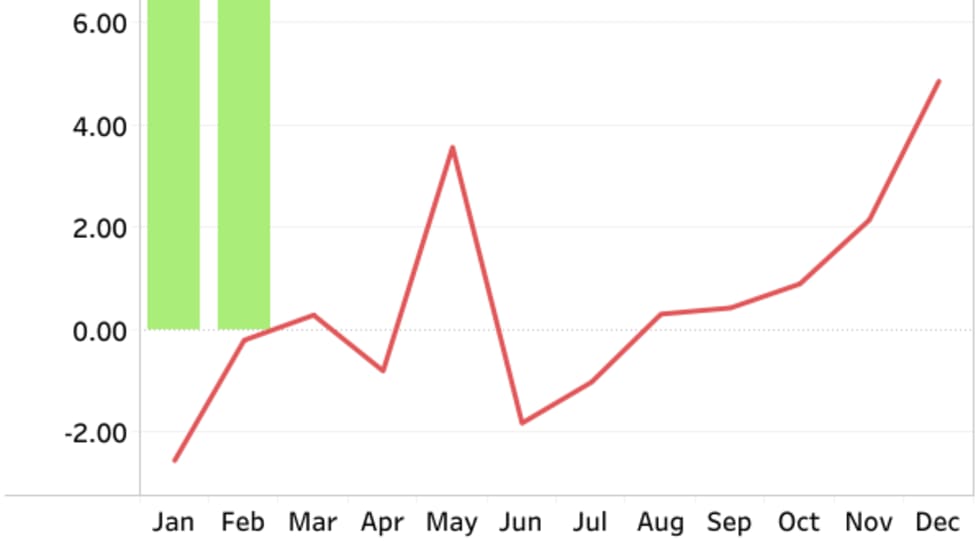
FTR Trucking Conditions Index Hits Four-Year High in February
Strong freight rates push TCI to 10.2, but FTR expects fuel-price volatility to skew March results.
Read More →
C.H. Robinson Offers Carriers Relief as Diesel Prices Surge
C.H. Robinson is waiving fees on fuel cards and cash advances for April and May, aiming to help carriers offset rising diesel costs tied to geopolitical instability.
Read More →