




A term has been buzzing around industry meetings recently: disruption. This generally refers to technologies that “disrupt” the way business is done.
 MENU
MENU SEARCH
The key disrupter in recent years has been the Internet, which has changed the way a number of industries operate. In trucking, e-commerce has profoundly affected trucking operations, especially those that serve retailers.
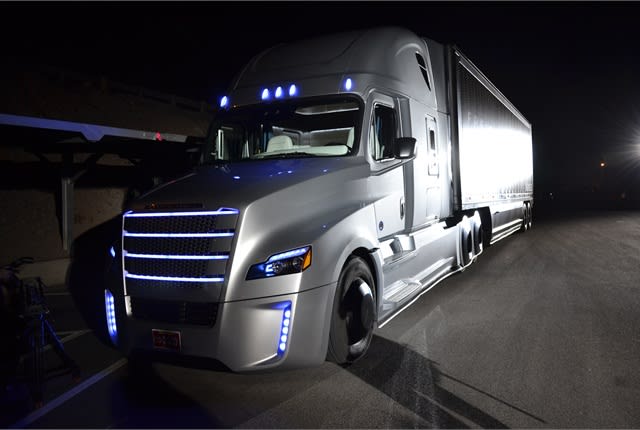
The Freightliner Inspiration Truck at it's Hoover Dam introduction. Photo: Stephane Babcock
A term has been buzzing around industry meetings recently: disruption. This generally refers to technologies that “disrupt” the way business is done.
The key disrupter in recent years has been the Internet, which has changed the way a number of industries operate. In trucking, e-commerce has profoundly affected trucking operations, especially those that serve retailers. Fewer goods are moving from distribution/warehouse centers to retail stores, with more moving from the warehouses directly to the end consumer. The emergence of e-commerce giants such as Amazon and next-day or same-day delivery promises create an entirely new set of delivery and routing problems. (Not to mention Amazon’s interest in delivery drones.)
The recent unveiling of Freightliner’s “Inspiration Truck” autonomous vehicle was also described as a disruptive technology that holds promise for entirely new business models in freight movement.
The phrase was also used by a Daimler Trucks North America executive during the ALK Transportation Technology Summit in Princeton, N.J., in May. Matthew Pfaffenbach, director of telematics, said OEM powertrain integration would “positively disrupt the telematics industry.” Currently, most vehicles are equipped with third-party telematics hardware after customers have taken delivery. Fleets contract with a telematics service provider to gather, transmit, store and analyze vehicle and other data while the trucks are on the road.
But just as OEMs are increasingly providing vertically integrated powertrains, Pfaffenbach made the case for them to integrate telematics capabilities, as well.
Pfaffenbach said telematics service providers have long-established, integrated products that OEMs do not need to replicate. But OEMs can bring more to the telematics table. For example, the partnership between Daimler and Zonar to provide a remote diagnostic system using Zonar’s connectivity coupled with diagnostic data and fault codes generated by the vehicle’s powertrain.
“A lot of information that could be very useable comes from the powertrain,” he said.
The OEM focus should be on information truck customers can’t get anywhere else, and OEMs should develop connectivity solutions that complement those from telematics service providers.
ACT Research data shows volumes hitting a four-year high and supply-demand balance strengthening, but higher oil prices are undercutting tariff relief and tempering optimism.
Read More →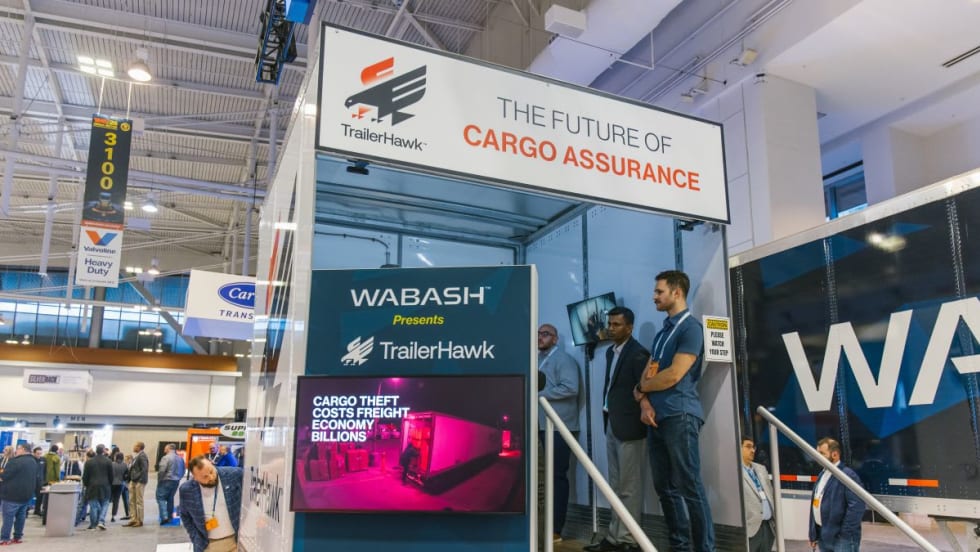
The patent-pending cargo solution integrates a digitally connected cargo door and an intelligent locking system with the TrailerHawk.AI technology platform.
Read More →
The impact of the Iran conflict extends beyond fuel costs, bringing more fraud and cybersecurity risks to the trucking industry.
Read More →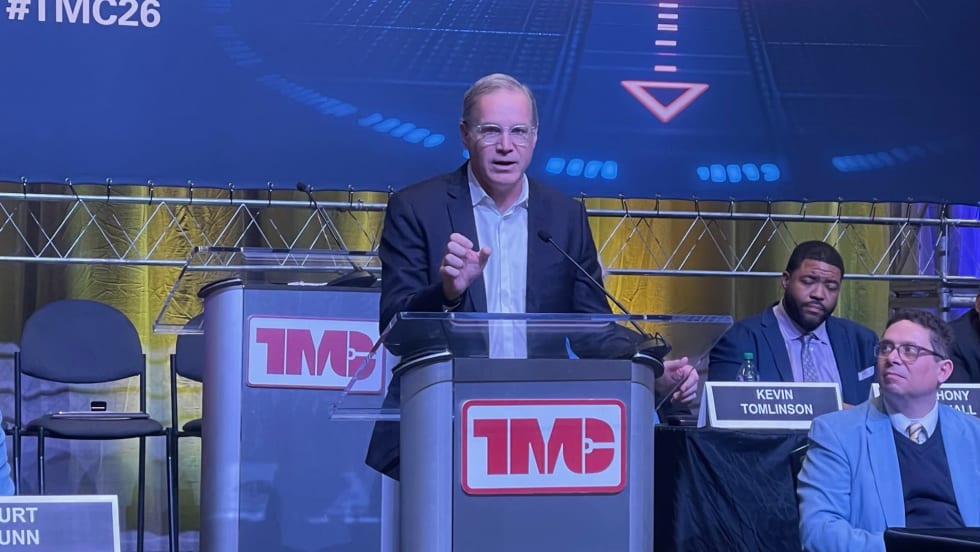
Speaking at the TMC Annual Meeting in Nashville, ATA President Chris Spear said trucking faces mounting pressure from rising fuel prices, geopolitical instability, and uncertainty around trade policy.
Read More →
More than 100,000 new trucking companies enter the industry each year, but regulators manage to audit only a fraction of them. That churn creates opportunities for inexperienced startups — and for “chameleon carriers” that shut down after safety violations and reappear under new identities. Read more from Deborah Lockridge in this commentary.
Read More →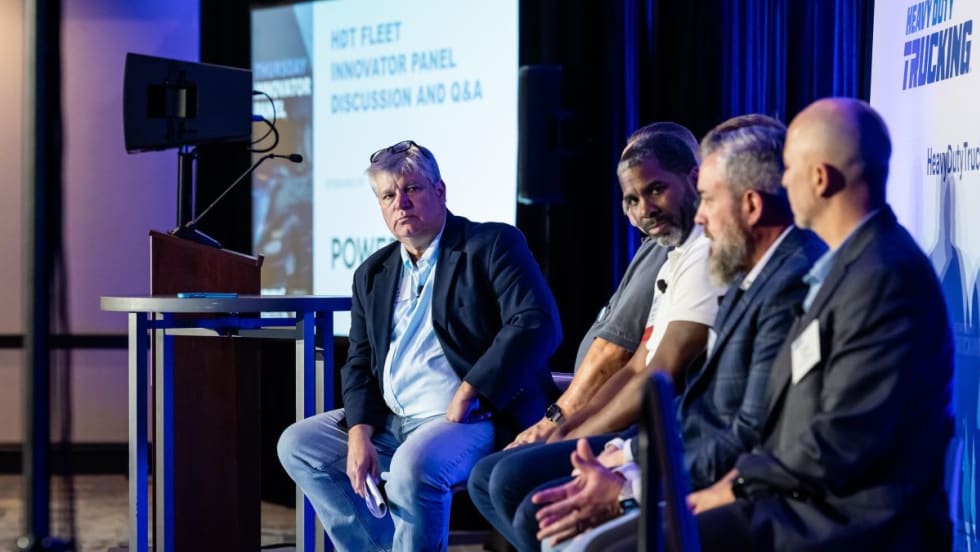
HDTX is an intimate event that connects heavy-duty trucking fleet managers with industry suppliers through small-group discussions, educational sessions, and structured one-on-one meetings.
Read More →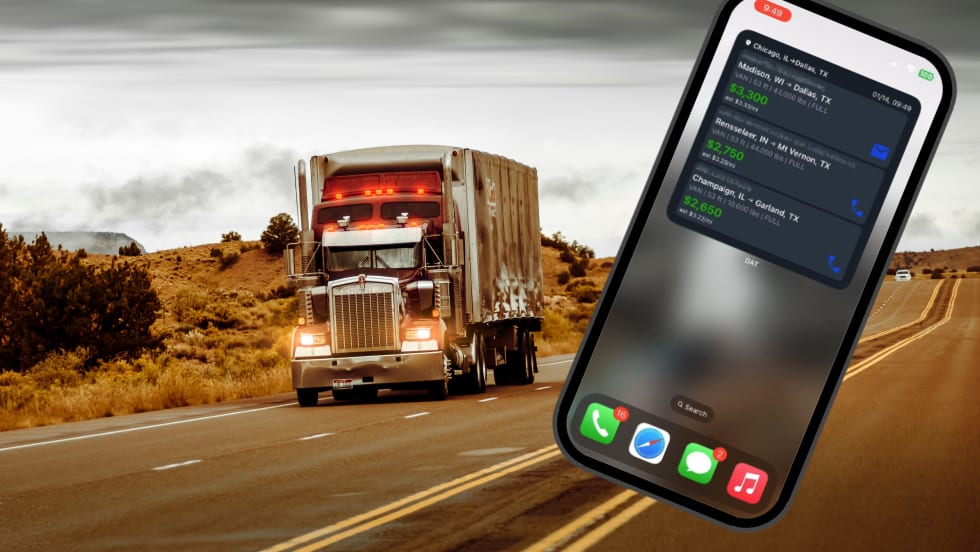
New DAT One feature shows top-paying loads directly on an iPhone’s home screen, helping carriers react faster to spot-market opportunities.
Read More →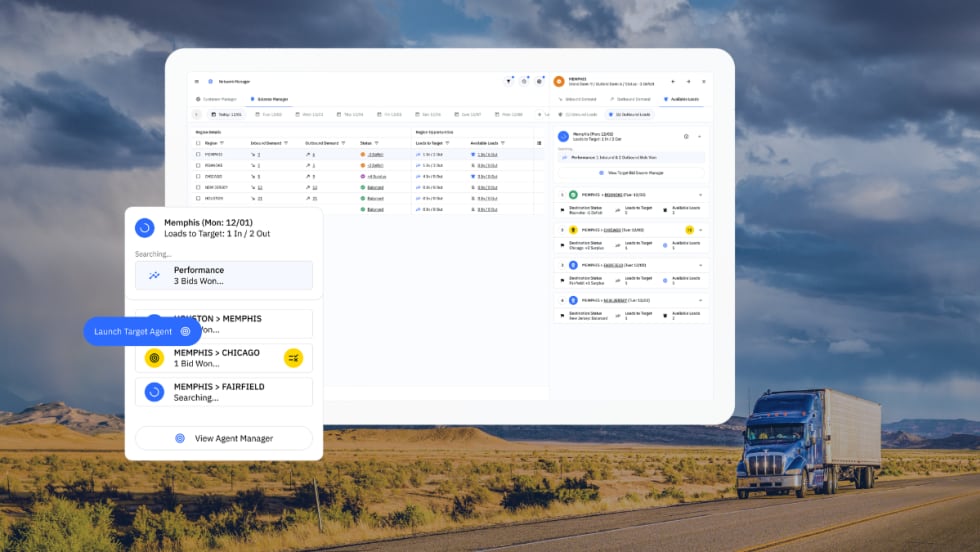
Optimal Dynamics says its new Scale platform uses AI agents and optimization to help carriers find and secure freight that improves network balance and profitability.
Read More →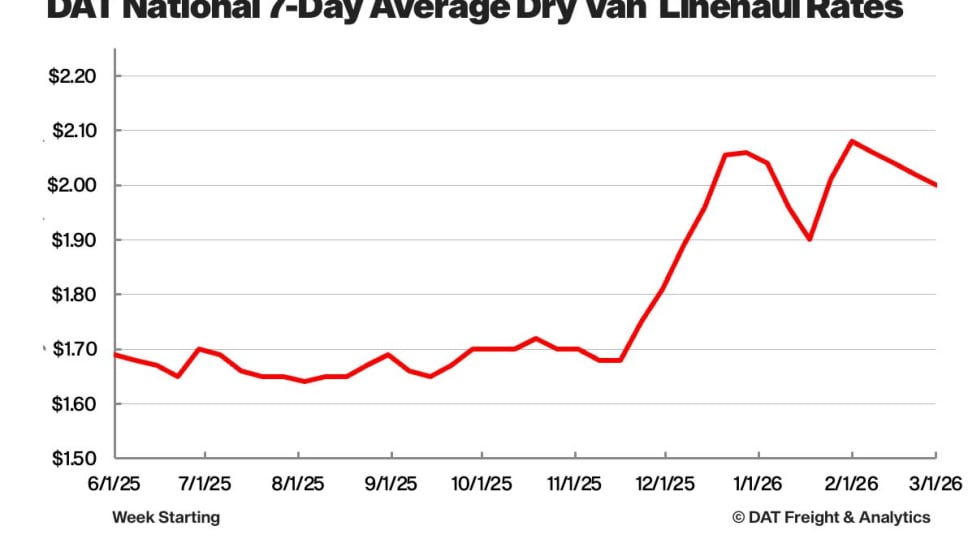
DAT Freight & Analytics data shows tightening flatbed capacity, easing produce markets, and softening van and reefer rates.
Read More →
NACFE's Run on Less - Messy Middle project demonstrates the power of data in helping to guide the future of alternative fuels and powertrains for heavy-duty trucks.
Read More →