




High on the list of carrier concerns about electronic onboard recorders is how to guard the data these devices collect. The information can work both ways: It can protect a carrier, but it also can be used as weapon
by lawyers looking to collect damages for their clients.
"Lawyers who sue carriers know what to ask for," warned Joseph Pappalardo, an attorney with the Cleveland firm Gallagher Sharp, in a recent web-based discussion on the issue. "They are becoming more savvy. They will try to use what you retain against you. Frankly, the trucking industry is a major target."
Pappalardo, in a presentation sponsored by the Truckload Carriers Association on not letting technology hurt you in court, described a legal climate in which carriers need to be well informed about their risks and have company procedures in place to prepare for suits.
"Assume that anything you have in files, electronic or paper, will someday show up in a courtroom in front of a jury in a catastrophic truck accident," he warned. "Whatever form it's in, that is how it will show up in front of a jury."
When It's A Good Thing
Of course, that might not be a bad thing. Cargo Transporters, a fleet that recently adopted recorders, has found that the accuracy of electronic logs can be useful in defending against attacks by plaintiff attorneys, said Safety Director Jerry Waddell.
The susceptibility of paper logs to manipulation gives plaintiff attorneys an advantage that they don't get from electronic logs, Waddell said.
"I will speak up any day for (electronic) log programs, because it's minute for minute (that) tells you exactly where the truck is, when, and its speed," he said in the webinar. "It's made me sleep a lot better at night."
Carriers must make their own decisions about any productivity benefits of recorders, but with respect to managing risk Waddell has become a big fan. "If you monitor it, it puts the burden right back on the driver (to obey the hours of service rules)," he said.
"We've invested in everything we can invest in to give our drivers every tool they could possibly use," he said. "If they fail to use it, that's a driver decision. There's a distinct difference now between what the company stands for and what our intentions are, in relation to what the driver actually did nor did not do. We gave him the tools and he just has to use them."
Info Access
However the data is used, though, carriers need to be able to put their hands on it quickly. "Trust me when I tell you that plaintiffs' lawyers will want all of it and they know how to ask for it," said Pappalardo. "It's a judge-by-judge decision as to whether it's too burdensome to produce it."
One of the side risks is being accused of spoliation - destruction or alteration of evidence. That, Pappalardo said, can lead to a separate claim.
His recommendation: Preserve all records as required by the Federal Motor Carrier Safety Administration and until after expiration of statutes of limitations. Also document your record retention practices, as well as any losses of documents due to fire, flood or the like. Strict compliance with the FMCSA rules is a good argument that the carrier is acting in good faith, Pappalardo said.
The rules require retention of records pertaining to drug and alcohol testing, driver training, financial responsibility, accidents, driver and medical qualifications, hours of service, inspection and maintenance, and hazardous materials. An explanation of FMCSA record requirements is available on the agency website at www.fmcsa.dot.gov. Click on "How to Comply" under Rules and Regulations.
Smart Procedures
Each company should have someone who is in charge of records retention, Pappalardo said. "Start with the legal department, outside counsel or the risk manager - someone who knows the company backwards and forwards, knows where all the documents are kept, knows the document retention rules and has the capacity to contact all departments and make sure that documents are being held."
For electronic data, Pappalardo suggested downloading electronic control modules immediately, should downloading be necessary. "If it's a reportable accident or a potential bodily injury accident, we have the ECM downloaded through a third party," said Rose Kastrup, Director of Risk Management and Safety for O&S Trucking.
Pappalardo said it is wise to preserve in-cab email communications as well as cell phone records. To that point, he added that the safest thing is to assume everything said via email is public, and that drivers should be aware of this. Also, he said, carriers should obtain and hold tracking data from GPS devices to confirm driver logs.
Waddell counseled quick action. "To be quite practical, I'd rather have the information first," he said. "I want to know what's going on, see the facts as early as possible. The first 48 hours after an accident will make you or break you. That data is important. Get all you can as fast as you can."
Pappalardo also suggested that companies have a qualified forensic crash scene investigator on retainer, to record the scene of a crash, preserve evidence and, if necessary, be prepared to clarify or correct the police reconstruction report.
"This is one of the few areas of the law where the defendant has the advantage in terms of getting to the information before anyone else does," he said. "Not to manipulate but to get the lay of the land. It comes with the responsibility to preserve."
In sum, said Pappalardo, a company needs to have a record retention policy and stick to it. "The law is reasonable - you don't have to have everything, you just have to act reasonably."
A company should be able to document the investments it has made in information technology, and explain why it has one kind of technology rather than another, which means knowing the standard of care across the industry. "You must be able to credibly say that this is a reasonable way of conducting business in this industry."
Don't Let Technology Hurt You in Court
High on the list of carrier concerns about electronic onboard recorders is how to guard the data these devices collect. The information can work both ways: It can protect a carrier, but it also can be used as weapo

More Fleet Management

'Beyond Compliance,' Regulations, Driver Coaching on ATRI’s 2026 Research List
The American Transportation Research Institute will examine driver coaching, regulatory impacts — including the "Beyond Compliance" concept —and weather disruptions that shape trucking operations.
Read More →
Fleet Advantage's Brian Antonellis on the Growing Need to Replace Old Trucks
Fleet Advantage's Brian Antonellis says it's time for fleets to get back to the fundamentals of good maintenance practices. And that includes replacing older, inefficient equipment.
Read More →
Truckstop.com Adding to Open Deck, Heavy Haul Offerings
Load matching for flatbed, lowbed, oversize and overweight loads can't be automated like basic van freight, but Truckstop.com is adding more high-tech tools to help.
Read More →
Trucker Path, Truckstop.com Expand Load Access Partnership
An expanded Trucker Path and Truckstop.com integration brings more freight opportunities into the TruckLoads app while emphasizing security and network quality.
Read More →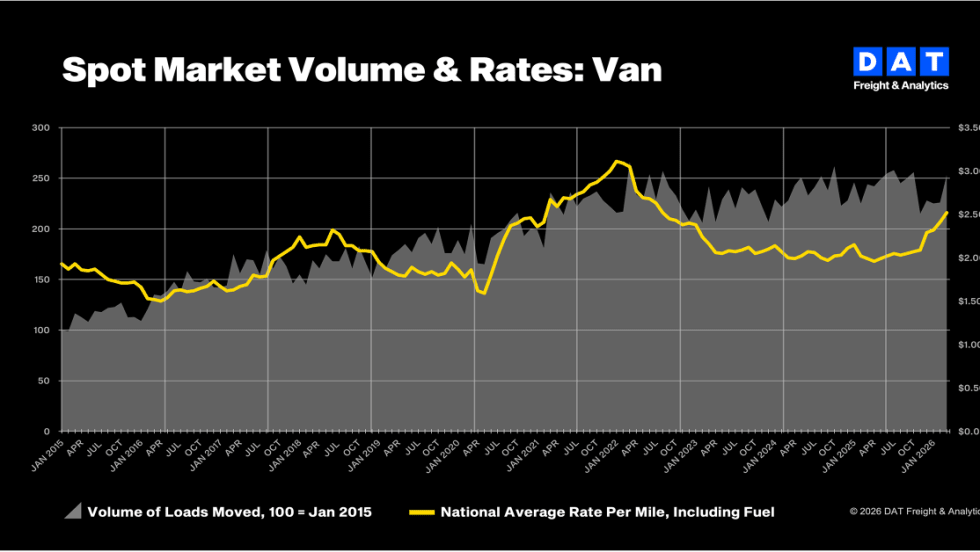
Truckload Rates Hit Two-Year Highs as Diesel Costs Surge, DAT Says
Strong March freight demand combined with a spike in fuel costs pushed both spot and contract truckload rates to their highest levels in more than two years.
Read More →
The AI Conversation You Need to Have with Your TMS Provider
Everyone’s talking about AI — but is your transportation management system actually built for it?
Read More →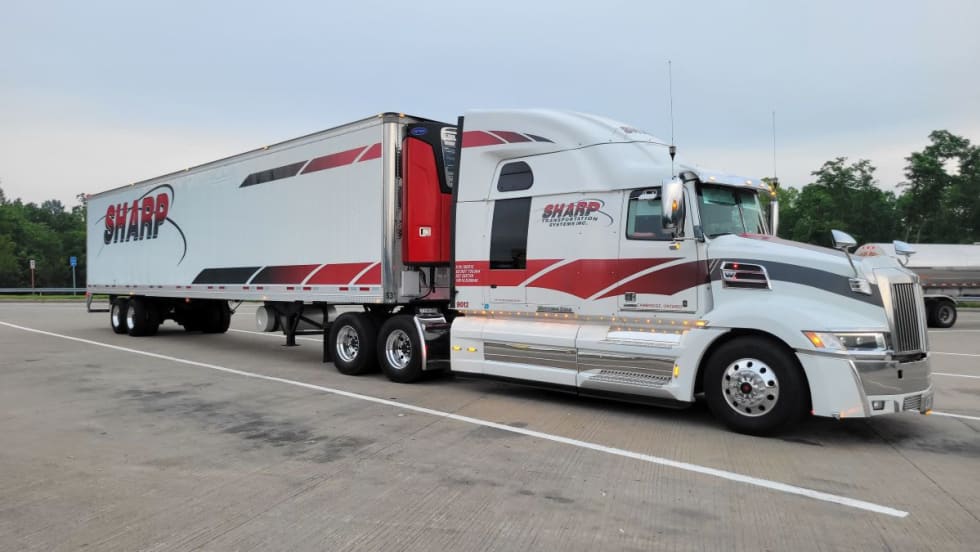
Kriska Buys Fellow Canadian Carrier Sharp Transportation Systems
Being part of KTG will allow Sharp to expand and improve its services.
Read More →
Bill in House Would Raise Minimum Insurance for Motor Carriers to $5 Million
The Fair Compensation for Truck Crash Victims Act would increase insurance requirements for interstate motor carriers by nearly seven times.
Read More →
FTR Trucking Conditions Index Hits Four-Year High in February
Strong freight rates push TCI to 10.2, but FTR expects fuel-price volatility to skew March results.
Read More →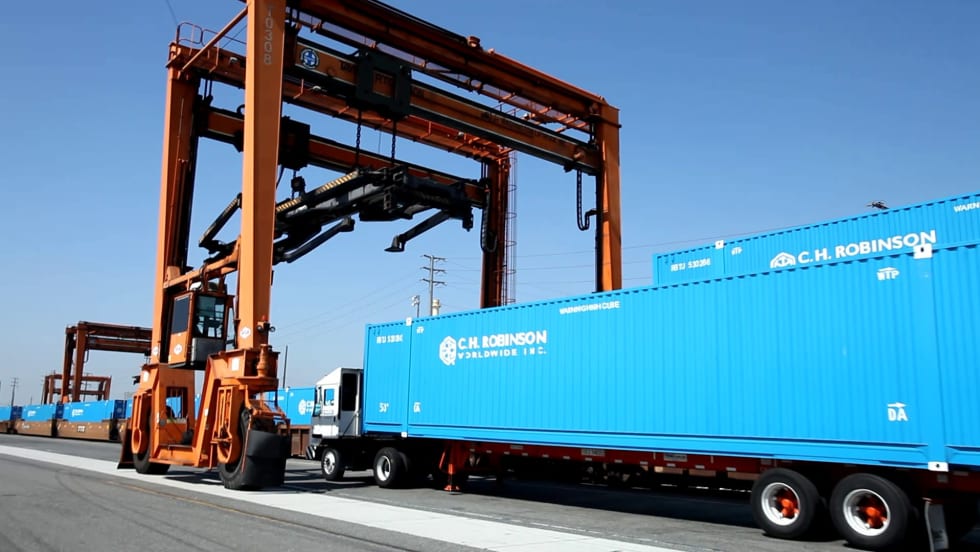
C.H. Robinson Offers Carriers Relief as Diesel Prices Surge
C.H. Robinson is waiving fees on fuel cards and cash advances for April and May, aiming to help carriers offset rising diesel costs tied to geopolitical instability.
Read More →