




It's going to take many years to rebuild the economy from the Great Recession, but there are positive signs for the near term, and the outlook is good for trucking over the next couple of years, says economist Noel Perry, senior consultant for FTR Associates.
Perry, speaking last week in a webinar hosted by FTR, said that housing, employment and debt are going to be causing friction in the economy for a while yet to come.
"The housing market will remain a drag on the economy for at least five years," Perry said. The excess housing inventory ran in the neighborhood of 2 million between 2001 and 2005, and then shot up to more than 4.5 million in 2008. It has since improved to around 3.5 million, but there's a long way to go before that inventory gets back to normal.
Unemployment in this recession is much worse than in past downturns, and it is recovering more slowly as well. And although the personal savings rate is now the highest it has been in a decade - 5 percent of disposable personal income - it still is well below what it has been in the past.
On the other hand, manufacturing has been growing as have retail sales - grounds for optimism in the near term, Perry said.
Manufacturing has been growing more rapidly than services over the past two years, although services are growing as well. "Manufacturing is leading the upturn, which means that freight is leading the upturn," he said.
Part of his optimism for the next couple of years is based on retail sales growing more strongly than they did in the comeback from the last recession. Also, exports are growing more rapidly than imports, which helps both the GDP and trucking, he said.
Economists are forecasting GPD growth to get above 3 percent this year, but Perry thinks that's a little conservative because it does not include the positives of retail sales and exports. He expects to see more volatility from quarter to quarter than forecasters are expecting - a condition that will contribute to capacity challenges for trucking.
His analysis includes a prediction of the impact of new and pending federal regulations on trucking productivity.
Regulatory Drag
Perry measures regulatory drag in terms of the additional drivers or tractors that will be required as a consequence of the rules. Starting this year, he sees the drag rising quickly to more than 250,000 drivers or tractors by the third period of 2012.
This increase will be driven principally by the effect of the proposed changes in the hours of service rules, which Perry sees costing the industry 5 percent in productivity.
Another rule in his analysis is the driver identification requirement that goes into effect this year - drivers have to present proof of citizenship when they apply for a commercial license. Perry figures that since around 5 percent of the population are illegal aliens, the same percentage will show up among truck drivers.
He also factored in the pending requirement for near-universal use of electronic onboard recorders, and the new CSA safety enforcement system being installed by the Federal Motor Carrier Safety Administration.
Other factors in the analysis are what he calls "hiring drag" - a slowdown in hiring attributable to the difficulty of finding people, and the effect of the need to train people in the new systems.
Perry expects that the market will adapt to this phenomenon by getting more productive - shippers will reduce waiting times, and carriers will move faster and improve their management of capacity.
The safety regulations do have benefits, but they don't necessarily show up in productivity measurements, Perry said. They are more likely to show up in the overall efficiency of the supply chain. "The net effect to the system is almost certainly positive," he said.
Capacity Questions
The industry has been able to keep up with rising demand over the past couple of years by using its excess capacity, as measured by miles per tractor, he said.
Coming out of the bottom of the downturn, fleets handled a lot more freight with the same resources. They had to pay more for miles and fuel, but they don't have to hire new drivers or buy any new equipment.
That is changing, though.
"Now we have taken out most of that excess capacity, so if a carrier wants to handle more freight - and we're talking about a 5 percent increase this year - he's going to have to hire more drivers and buy new equipment. And we're starting to see that."
The next question is rates. Fleets have been able to get more productive and make money without raising rates dramatically, but as freight begins to increase and regulatory drag kicks in, that will change.
"We might not get peak shortages (in capacity) like last time, but it's likely that shortages will last a lot longer. Prices will catch up to capacity."
Forecast: A Long Climb Out of Recession but a Busy Couple of Years for Trucking
It's going to take many years to rebuild the economy from the Great Recession, but there are positive signs for the near term, and the outlook is good for trucking over the next couple of years, says economist Noel Perry, senior consultant for FTR Associates

More Fleet Management

ACT: Trucking Volumes Rise, Capacity Tightens as Fuel Prices Cloud Outlook
ACT Research data shows volumes hitting a four-year high and supply-demand balance strengthening, but higher oil prices are undercutting tariff relief and tempering optimism.
Read More →
Wabash Teams Physical Security With Digital Tech For Better Cargo Visibility
The patent-pending cargo solution integrates a digitally connected cargo door and an intelligent locking system with the TrailerHawk.AI technology platform.
Read More →
From Diesel Prices to Cyberattacks: How the Iran War Is Affecting Trucking
The impact of the Iran conflict extends beyond fuel costs, bringing more fraud and cybersecurity risks to the trucking industry.
Read More →
ATA’s Spear Warns Fuel Prices, Trade Policy, and Global Conflict Could Stall Trucking Recovery
Speaking at the TMC Annual Meeting in Nashville, ATA President Chris Spear said trucking faces mounting pressure from rising fuel prices, geopolitical instability, and uncertainty around trade policy.
Read More →
New Entrants, Chameleon Carriers, and Safety: Is It Too Easy to Start a Trucking Company?
More than 100,000 new trucking companies enter the industry each year, but regulators manage to audit only a fraction of them. That churn creates opportunities for inexperienced startups — and for “chameleon carriers” that shut down after safety violations and reappear under new identities. Read more from Deborah Lockridge in this commentary.
Read More →
Fleet Managers Invited to Apply for Exclusive HDT Exchange Event
HDTX is an intimate event that connects heavy-duty trucking fleet managers with industry suppliers through small-group discussions, educational sessions, and structured one-on-one meetings.
Read More →
DAT Launches iPhone Widget to Help Owner-Operators Find Loads Faster
New DAT One feature shows top-paying loads directly on an iPhone’s home screen, helping carriers react faster to spot-market opportunities.
Read More →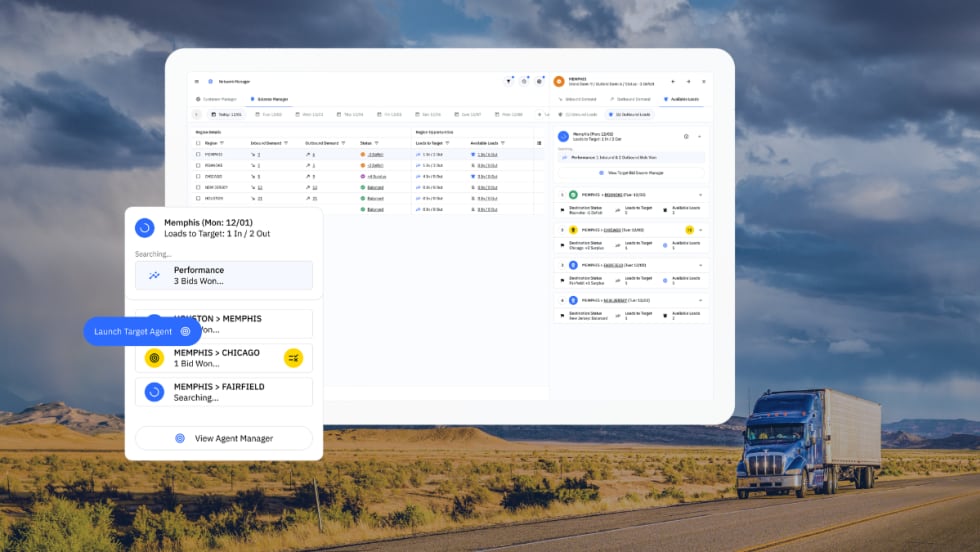
Optimal Dynamics Launches AI System to Help Carriers Choose Better Freight
Optimal Dynamics says its new Scale platform uses AI agents and optimization to help carriers find and secure freight that improves network balance and profitability.
Read More →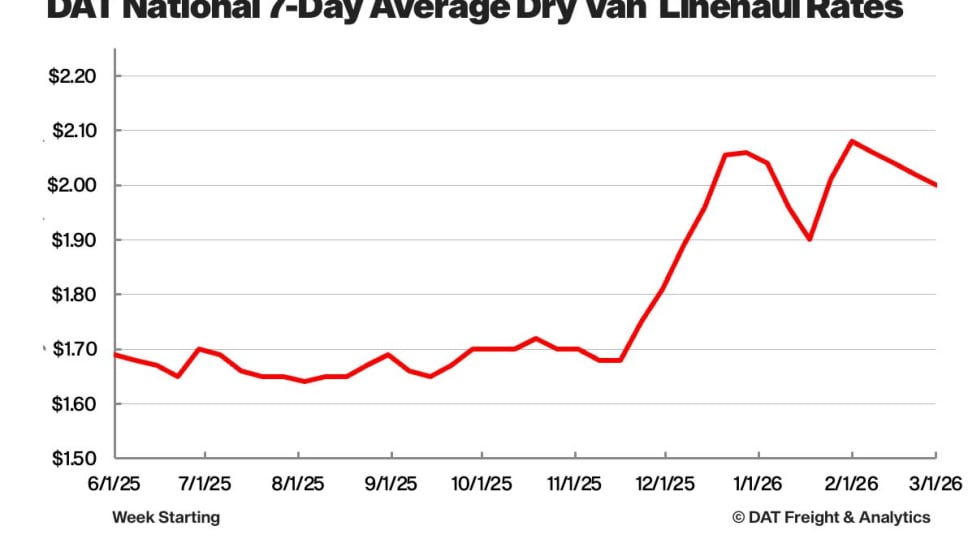
DAT: Flatbed Demand Climbs as Van and Reefer Rates Soften
DAT Freight & Analytics data shows tightening flatbed capacity, easing produce markets, and softening van and reefer rates.
Read More →
Run on Less “Messy Middle” Data Shows Multiple Paths Forward for Truck Powertrains [Watch]
NACFE's Run on Less - Messy Middle project demonstrates the power of data in helping to guide the future of alternative fuels and powertrains for heavy-duty trucks.
Read More →