




Geofencing is a critical component of a mobile communications system, with the power to optimize back-office and driver efficiency, customer service, asset protection and safety.
When integrated with dispatch, routing and other back-office applications, geofencing eliminates paper handling, reduces communications costs, and propels workflow processes to run at top speed. In addition, when it is used with an in-cab scanning service, geofencing further reduces costs, speeds up cash flow and enhances the bottom line.
Back-office efficiency saves time, reduces costs
In an integrated environment, geofencing transforms paper-based operations into an automated workplace that saves time and eliminates human error. These are immense benefits that impact back-office efficiency, which in turn reduces costs, improves driver efficiency, optimizes load scheduling and boosts customer service.
Exception notifications driven by geofencing keep communication costs down by communicating only when exception events occur, such as an overdue delivery, excessive detention time, etc. Otherwise, geofencing can be configured to store and send data only when needed for customer service and load management.
Geofencing integrated with dispatch and routing software automates workflow, eliminating countless hours of manual labor and potential human error. The data it sends enables the routing software to automatically determine whether all remaining stops on a route can be completed on-time on a given day, and readjusts routes and re-assigns stops when necessary. The dispatch software notifies customers of the new schedule and ETAs.
Geofencing combined with in-cab scanning also makes the accounting side of the business more efficient by eliminating the handling of piles of paper. Imagine how much faster billing and payroll tasks can be completed when geofencing closes out orders and pre-indexed images are received upon load completion. Stop information attached to the scanned images prior to back-office receipt expedites invoicing, speeds up the accounting cycle and improves cash flow.
Advanced customer service wins and retains business
Customer satisfaction is a top priority for retaining business. It's important to note that geofencing with exception notification gives for-hire fleets a strong, cost-effective competitive advantage over traditional, manual dispatch operations. A fully automated system enables them to be more responsive by communicating changes in delivery times ahead of ETA. Taking it a step further, for-hire fleets that provide customers visibility into their loads through online access wield an even stronger competitive advantage.
Driver efficiency, satisfaction, safety soar
Driver performance and satisfaction go hand in hand. The highest performing drivers understand the positive relationship between technology and their wallets and appreciate how it minimizes paper-handling time, so they can drive and earn more.
Geofencing in an integrated environment:
* Minimizes driver detention by pre-announcing arrival in enough time for a customer to prepare for delivery and stocking, and allows fleets to capture additional revenues for unavoidable detention.
* Eliminates manual delivery confirmation by providing pre-populated electronic forms.
* Drives costs and liability exposure down when used with in-cab scanning by avoiding costly out-of-route miles and potential accidents when stopping to scan or mail paper documents.
Safety and concern for drivers also go hand in hand. Geofencing with exception notification alerts dispatch to potential safety issues. When a driver with a 99 percent on-time record is detained for more than 30 minutes, the system notifies dispatch. Dispatch proactively contacts the driver for a safety check and contacts local law enforcement or 911 to patrol the customer stop when the driver doesn't answer. Dispatchers and appropriate personnel can be notified by email as exceptions occur.
Geofencing data integrated into a reporting system also alerts for-hire fleet managers that a stop may be out of compliance with delivery protocols, and may therefore incur additional charges for detention time exceeding contractual provisions. A comparison of actual to planned service-time for each driver, historical route data, and comparative load/driver data may reveal glitches that need driver input. If a planned two-day route requires two and a half days and four out of seven stops indicate delays, a manager would want to find out from the driver what caused those delays. Have customers' receiving hours changed? Were there route detours? Are there any situations that may be putting the driver at risk?
These answers may provide an opportunity for trucking firms to provide additional customer service. A stop that is not complying with delivery protocols indicates a compromise of company standards. This directly reflects on the location's manager and can affect operational efficiency.
Cash flow improves, accounting costs drop
With an in-cab scanner connected to a smart device in the cab, geofencing streamlines accounting processes that improve cash flow. The driver scans in the signed delivery receipt, and the driver is prompted to identify which stop the document is associated with. The in-cab scanning software aligns information associated with that stop (customer number, location and order or bill of lading, and other load information), immediately indexes it into the workflow, and provides confirmation that indexing was accomplished at a specific time and place.
Geofencing essentially saves a step in the accounting process that relieves the driver and payroll and billing clerks of handling paper and associating specific orders with documents that are received days and weeks after load completion. As a result, this automated process generates invoices faster, speeds up payment and improves cash flow. In addition to reducing soft costs, automated indexing reduces the hard cost of traditional truck stop scanning and outsourced indexing by approximately 25 percent.
Summary and conclusion
Trucking firms that integrate geofencing with mobile communications, dispatch, routing and other back-office systems, and in-cab scanning are armed with a full complement of resources for optimizing operational and driver efficiency. From planning and monitoring the driver's day and communicating with drivers and customers throughout execution, geofencing is the power source for efficiency and savings. As the preeminent driver of a paperless environment that speeds up workflow; geofencing improves cash flow and further reduces costs.
Geofencing Breaks Through Efficiency Barriers
Geofencing is a critical component of a mobile communications system, with the power to optimize back-office and driver efficiency, customer service, asset protection and safety
More Fleet Management

'Beyond Compliance,' Regulations, Driver Coaching on ATRI’s 2026 Research List
The American Transportation Research Institute will examine driver coaching, regulatory impacts — including the "Beyond Compliance" concept —and weather disruptions that shape trucking operations.
Read More →
Fleet Advantage's Brian Antonellis on the Growing Need to Replace Old Trucks
Fleet Advantage's Brian Antonellis says it's time for fleets to get back to the fundamentals of good maintenance practices. And that includes replacing older, inefficient equipment.
Read More →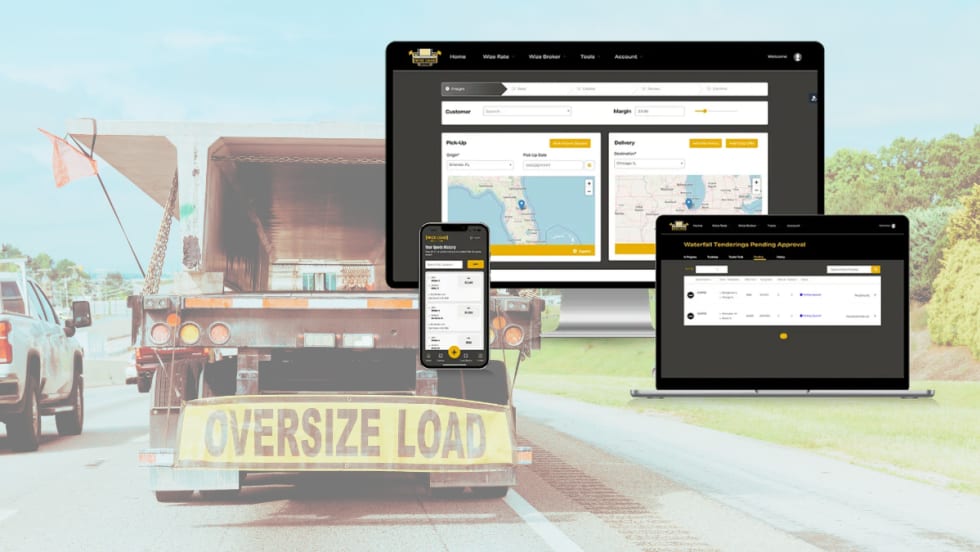
Truckstop.com Adding to Open Deck, Heavy Haul Offerings
Load matching for flatbed, lowbed, oversize and overweight loads can't be automated like basic van freight, but Truckstop.com is adding more high-tech tools to help.
Read More →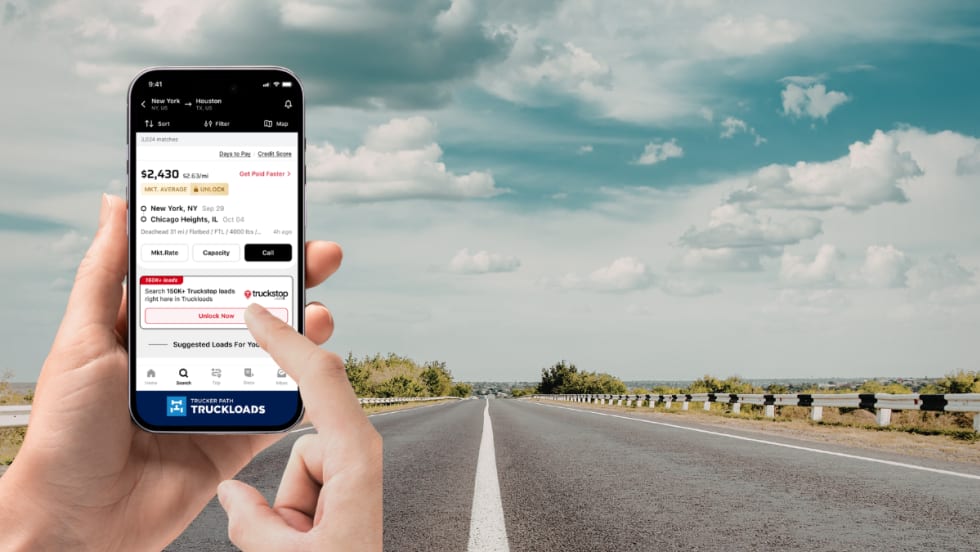
Trucker Path, Truckstop.com Expand Load Access Partnership
An expanded Trucker Path and Truckstop.com integration brings more freight opportunities into the TruckLoads app while emphasizing security and network quality.
Read More →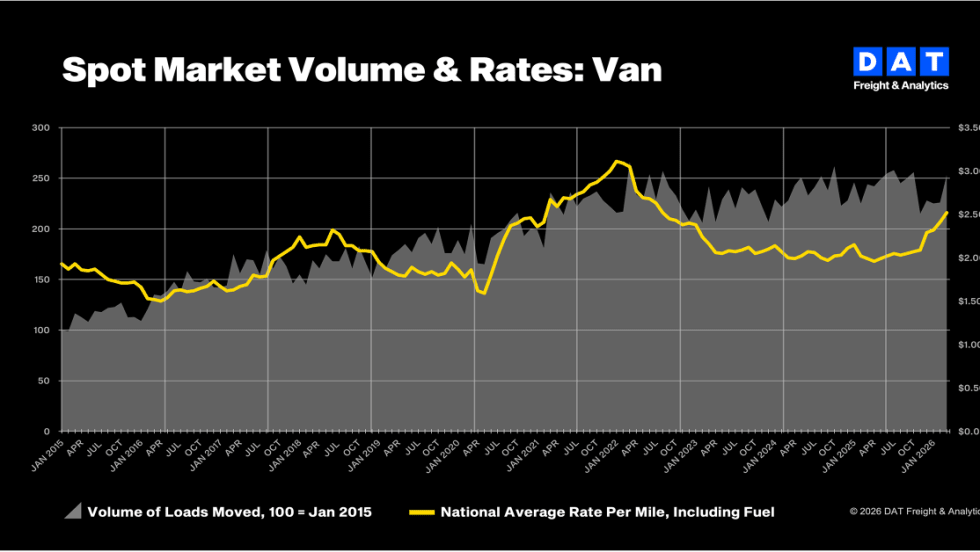
Truckload Rates Hit Two-Year Highs as Diesel Costs Surge, DAT Says
Strong March freight demand combined with a spike in fuel costs pushed both spot and contract truckload rates to their highest levels in more than two years.
Read More →
The AI Conversation You Need to Have with Your TMS Provider
Everyone’s talking about AI — but is your transportation management system actually built for it?
Read More →
Kriska Buys Fellow Canadian Carrier Sharp Transportation Systems
Being part of KTG will allow Sharp to expand and improve its services.
Read More →
Bill in House Would Raise Minimum Insurance for Motor Carriers to $5 Million
The Fair Compensation for Truck Crash Victims Act would increase insurance requirements for interstate motor carriers by nearly seven times.
Read More →
FTR Trucking Conditions Index Hits Four-Year High in February
Strong freight rates push TCI to 10.2, but FTR expects fuel-price volatility to skew March results.
Read More →
C.H. Robinson Offers Carriers Relief as Diesel Prices Surge
C.H. Robinson is waiving fees on fuel cards and cash advances for April and May, aiming to help carriers offset rising diesel costs tied to geopolitical instability.
Read More →