This week, the Internal Revenue Service issued final regulations under the Employer Shared Responsibility (aka “employer mandate”) provisions of the Affordable Care Act.
by Barb Rand, Compliance Advisor, HNI
February 12, 2014
2 min to read
This week, the Internal Revenue Service issued final regulations under the Employer Shared Responsibility (aka “employer mandate”) provisions of the Affordable Care Act. The employer mandate calls for employers to offer health insurance to employees or pay penalties. The news this week pushes back the employer mandate deadline for not-so-large employers and eases health insurance coverage rules for large employers.
Ad Loading...
The official regulations and their preamble are quite lengthy (227 pages). However, the Treasury Department also posted a concise summary of the regulations in a three-page “Fact Sheet.”
Ad Loading...
The final regulations contain some additional transitional relief:
As we already know, the employer mandate applies to “applicable large employers” (those with 50 or more full-time employees or a combination of full time and part time that equals 50) starting in 2015. The final regulations contain a transitional relief period for the not-so-large employers (those with 50 to 99 full time employees) until 2016. Note, however, to qualify for this transitional relief, a not-so-large employer must meet four criteria:
1) The employer employs, on average, fewer than 100 full-time employees on business days in 2014.
2) From February 9, 2014, through December 31, 2014, the employer does not reduce the size of its workforce, or the overall hours of service of its employees, to meet the less than 100 count.
3) Through the end plan year that commences in 2015, the employer does not eliminate or materially reduce coverage that is offered as of February 9, 2014. The regulations provide guidance as to what would be considered a material reduction.
Ad Loading...
4) The employer certifies that it meets the above conditions in a form to be released later.
The final regulations provide additional transitional relief for all large employers (including those with 100 or more full-time employers). To avoid a "Part A" penalty, applicable large employers must offer coverage to at least 95 percent of their full-time employees. The final regulations provide that, until 2016, the 95 percent threshold is reduced to 70 percent. Note: A "Part B" penalty may still apply with respect to employees who receive a premium tax credit on the exchange.
Check back to the Steal These Ideas blog for additional information about the final regulations.
DISCLAIMER: We hope this blog post gave you an "Aha!" moment, but please don't hold it as legal or tax advice. This information is general in nature, and your specific situation deserves attention from a dedicated legal or tax advisor.
This article originally appeared on the HNI blog. Used with permission. HNI is a non-traditional insurance and business advisory firm.
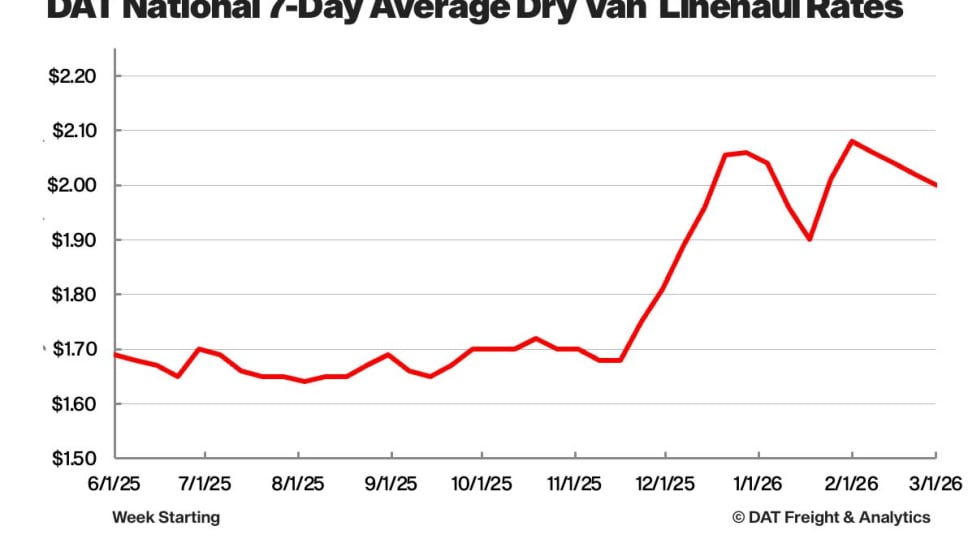
ACT Research data shows volumes hitting a four-year high and supply-demand balance strengthening, but higher oil prices are undercutting tariff relief and tempering optimism.
The patent-pending cargo solution integrates a digitally connected cargo door and an intelligent locking system with the TrailerHawk.AI technology platform.
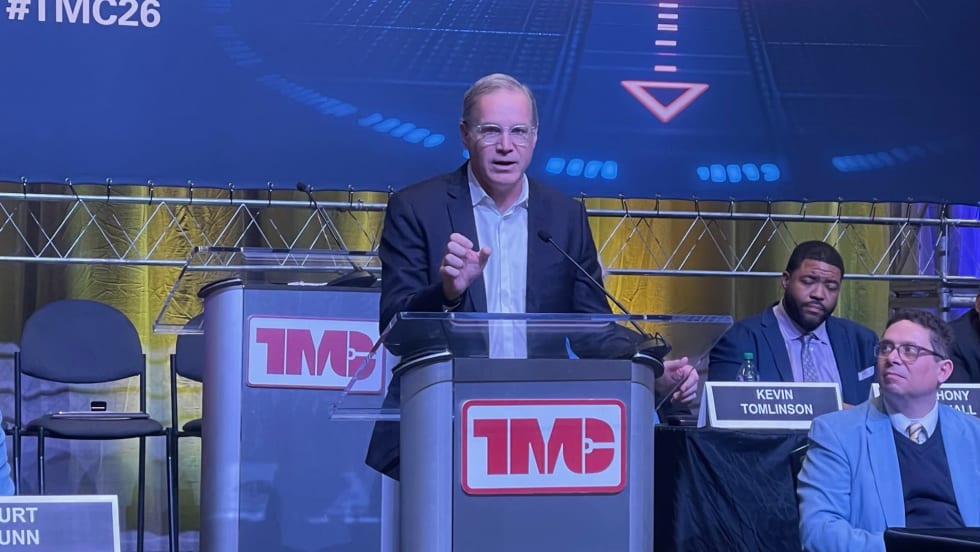
Speaking at the TMC Annual Meeting in Nashville, ATA President Chris Spear said trucking faces mounting pressure from rising fuel prices, geopolitical instability, and uncertainty around trade policy.
More than 100,000 new trucking companies enter the industry each year, but regulators manage to audit only a fraction of them. That churn creates opportunities for inexperienced startups — and for “chameleon carriers” that shut down after safety violations and reappear under new identities. Read more from Deborah Lockridge in this commentary.
HDTX is an intimate event that connects heavy-duty trucking fleet managers with industry suppliers through small-group discussions, educational sessions, and structured one-on-one meetings.
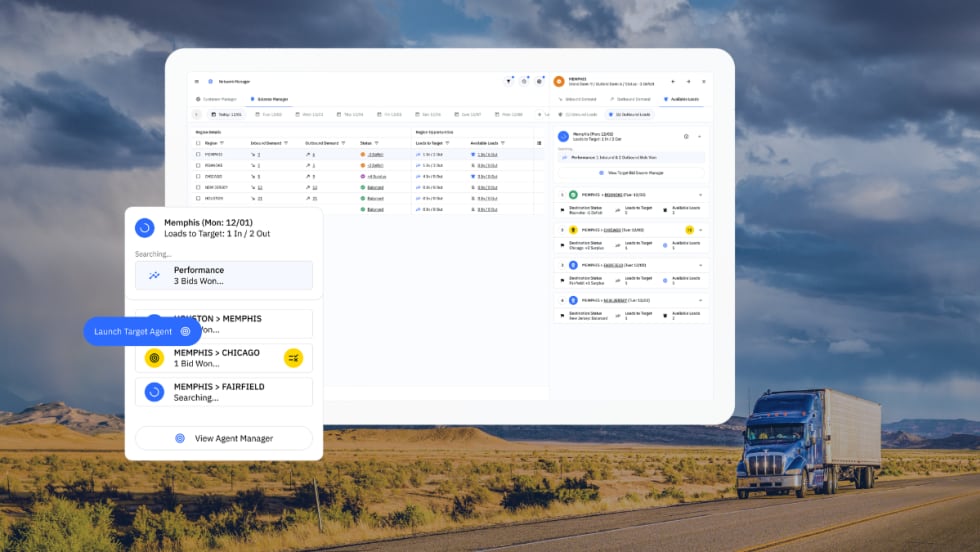
Optimal Dynamics says its new Scale platform uses AI agents and optimization to help carriers find and secure freight that improves network balance and profitability.
NACFE's Run on Less - Messy Middle project demonstrates the power of data in helping to guide the future of alternative fuels and powertrains for heavy-duty trucks.