




It's no secret that air brakes commonly go out of adjustment, even though the mandating of automatic slack adjusters 12 years ago was supposed to solve the problem. While "autoslacks" do a better job of keeping S-cam air brakes within legal operating range than manual adjusters, poorly adjusted brakes are still the main equipment reason authorities place rigs out of service, say inspectors in the United States and Canada.
Hitting The Brakes
'Autoslacks' were supposed to solve adjustment problems, but ignorance of how to maintain them – and the brakes themselves – get in the way.
by Tom Berg, Senior Equipment Editor
September 1, 20064 min to read
Brake problems in general account for 55 percent of out of service declarations, according to the Commercial Vehicle Safety Alliance, the Washington, D.C.-based organization that has 70 member agencies with about 12,000 certified inspection officers in North America.
While most accidents are caused by human error rather than equipment shortcomings, a four-year federal study ending in 2003 found that brake problems were cited as an "associated factor" in 29.4 percent of wrecks involving heavy trucks.
In those cases, people at the wheel – usually motorists, but sometimes truck drivers – did something to initiate the accidents, which were then made worse by badly adjusted brakes or one or more brakes on the large trucks that otherwise weren't working properly. Only 5 percent of non-commercial vehicle were found to have brake problems, according to the study done by the Federal Motor Carrier Safety Administration.
Occasionally bad brakes cause trucks to go out of control on downgrades, with tragic results. The National Transportation Safety Board, whose investigators are sometimes called in after deadly crashes, looked at one that occurred in Pennsylvania in 2003. They found the driver improperly pumped the brakes while descending the grade, depleting the air supply. But two of the dump truck's four brakes were out of adjustment because quick-connect clevises and clevis pins were worn, preventing the autoslacks from adjusting those brakes, so the truck didn't have the power to stop. The company's mechanics didn't know how to keep the brakes in proper repair, which led to the wreck, the NTSB's report says. As a result, the NTSB recommended that mechanics not try to adjust autoslacks.
Autoslacks are supposed to regularly advance the stroke of pushrods to compensate for wear of brake linings. But roadside inspections continually find autoslacks not operating because they have been damaged internally or are no longer in a physical position to work. Ignorance among drivers and mechanics is to blame, says Steve Keppler, CVSA's director of policy and programs.
"They try to adjust the slack adjusters, and they shouldn't," he says. The devices do have some room for adjustment, but overadjusting damages the ratcheting mechanisms and renders them useless. And autoslacks that seem to have quit working are usually not the problem. It's something in the brakes themselves that's malfunctioning. Mechanics, especially, should know enough to look at brake parts, but too few do. Suppliers who make autoslacks have long preached that they need regular maintenance, including checking of mounts and lubrication. Mechanisms that have dried out or have loaded up with dirt and other contaminants can't work, either.
Brake Sentry, a maker of pushrod-stroke indicators, says among items that can wear or break within an air brake system are linings and shoes, cams, bushings, return springs, drums, linkage between autoslacks and brakes, and worn return springs within chambers. If a new chamber is installed, the autoslack must be properly indexed to its setting angle with the chamber in order for them to work properly together.
A survey CVSA did in 2003 found "a huge lack of knowledge, not just among drivers but among maintenance people, too," Keppler says. So it expanded its Operation Air Brake, begun in 1998 as an annual enforcement exercise, to focus on education. The organization's Brake Safety Week is now held toward the end of August, with the most recent one held Aug. 27 to Sept. 2. Information on proper brake and autoslack maintenance is distributed to drivers and mechanics.
Drivers are supposed to inspect brakes for proper adjustment as part of their pre-trip inspections, and one study indicated that proper pre-trip checks could eliminate 60 percent of out-of-service citations, Keppler says. But many drivers don't know enough about braking systems to determine whether they're adjusted or otherwise working properly, and it's difficult for one person to do. And some companies don't want their drivers to to do anything with their brakes, preferring they report any apparent problems.
Stroke indicators on pushrods would make drivers' jobs easier because they could see at a glance if the pushrods are moving the correct distance, Keppler says. Mechanical and electronic stroke indicators are available from a number of suppliers, and the simple mechanical devices are cheap and quick to install. CVSA itself sells a device on its web site (www.CVSA.org) called Spot Check that was designed by an associate member, a trucking company. They cost as little as $5 for a set of 10, enough for one five-axle tractor-trailer.
Subscribe to Our Newsletter
More Fleet Management

ACT: Trucking Volumes Rise, Capacity Tightens as Fuel Prices Cloud Outlook
ACT Research data shows volumes hitting a four-year high and supply-demand balance strengthening, but higher oil prices are undercutting tariff relief and tempering optimism.
Read More →
Wabash Teams Physical Security With Digital Tech For Better Cargo Visibility
The patent-pending cargo solution integrates a digitally connected cargo door and an intelligent locking system with the TrailerHawk.AI technology platform.
Read More →
From Diesel Prices to Cyberattacks: How the Iran War Is Affecting Trucking
The impact of the Iran conflict extends beyond fuel costs, bringing more fraud and cybersecurity risks to the trucking industry.
Read More →
ATA’s Spear Warns Fuel Prices, Trade Policy, and Global Conflict Could Stall Trucking Recovery
Speaking at the TMC Annual Meeting in Nashville, ATA President Chris Spear said trucking faces mounting pressure from rising fuel prices, geopolitical instability, and uncertainty around trade policy.
Read More →
New Entrants, Chameleon Carriers, and Safety: Is It Too Easy to Start a Trucking Company?
More than 100,000 new trucking companies enter the industry each year, but regulators manage to audit only a fraction of them. That churn creates opportunities for inexperienced startups — and for “chameleon carriers” that shut down after safety violations and reappear under new identities. Read more from Deborah Lockridge in this commentary.
Read More →
Fleet Managers Invited to Apply for Exclusive HDT Exchange Event
HDTX is an intimate event that connects heavy-duty trucking fleet managers with industry suppliers through small-group discussions, educational sessions, and structured one-on-one meetings.
Read More →
DAT Launches iPhone Widget to Help Owner-Operators Find Loads Faster
New DAT One feature shows top-paying loads directly on an iPhone’s home screen, helping carriers react faster to spot-market opportunities.
Read More →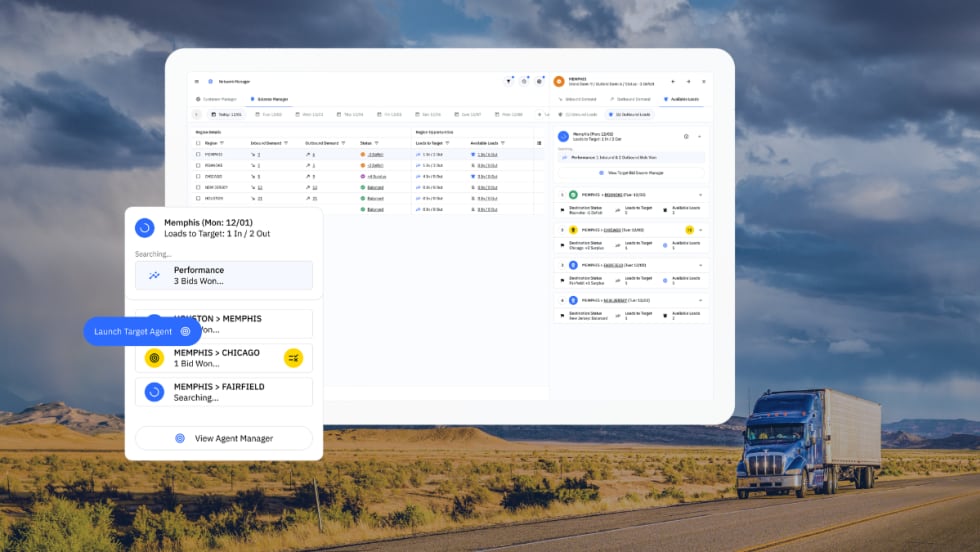
Optimal Dynamics Launches AI System to Help Carriers Choose Better Freight
Optimal Dynamics says its new Scale platform uses AI agents and optimization to help carriers find and secure freight that improves network balance and profitability.
Read More →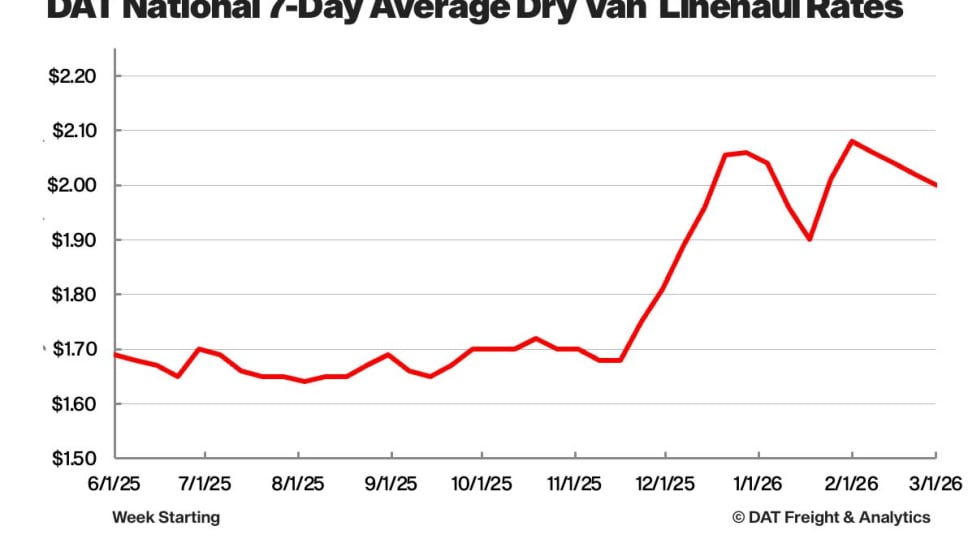
DAT: Flatbed Demand Climbs as Van and Reefer Rates Soften
DAT Freight & Analytics data shows tightening flatbed capacity, easing produce markets, and softening van and reefer rates.
Read More →
Run on Less “Messy Middle” Data Shows Multiple Paths Forward for Truck Powertrains [Watch]
NACFE's Run on Less - Messy Middle project demonstrates the power of data in helping to guide the future of alternative fuels and powertrains for heavy-duty trucks.
Read More →