





A key strategy that has emerged for fleets to help improve their scores under FMCSA's new Compliance, Safety, Accountability enforcement regime - more commonly known as CSA - is a proper pre-trip inspection.
How Do You Know Your Drivers Are Doing Proper Inspections?
A key strategy that has emerged for fleets to help improve their scores under FMCSA's new Compliance, Safety, Accountability enforcement regime - more commonly known as CSA - is a proper pre-trip inspection
March 14, 2012
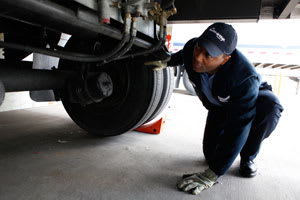
A strong safety culture, driver training and accountability all help make sure pre-trip inspections are done properly. (Photo courtesy of Con-Way)
4 min to read
If a driver catches small problems before he hits the road and gets them addressed, that's something that won't get caught in a roadside inspection and result in points against a company's CSA score.
This was an active discussion on this topic recently on the LinkedIn Transportation Professionals group. Here are some of the suggestions:
Train every driver on how you want the pre-/post-trip inspection to be conducted. Consider having a DOT officer come in and do an inspection for the drivers to see.
William Branter, a Motor Carrier Specialist at California Highway Patrol Motor Carrier Safety Unit in the San Francisco area, says his unit offers the industry free training at the fleet's location. "When a carrier is inspected for compliance, a very high emphasis is on driver daily vehicle inspection reports, and the timely turnaround from defect notification to repair/correction," he notes.
Don't take things for granted. "A company I worked for had smaller delivery vehicles, but we had them do a pre-post trip inspection, and one driver didn't know how to check his tire pressure," recalls Kaelynne Aldrich, an experienced safety instructor in the Dallas/Ft. Worth area. "I told him with a tire gauge like he did on his car. This person had never owned a car and took a bus to work. I am guessing his manager just assumed he knew how to check the oil, etc."
"I think that maybe many drivers have at one time been trained, however, no one checked to see if they really absorbed the training through a practical evaluation," says Mike Kroetsch, owner of Transportation Safety & Compliance Solutions in Kitchener, Ontario, Canada.
"It does not hurt to do ongoing training as well. Repetition is one proven way to learn. At each safety talk, touch on the vehicle inspection. Direct the talk to what you are having problems with. That can come from your roadside inspection reports, driver inspection reports or from
your shop."
Hold them accountable, but also reward them for a job well done.
Lew Snearly, an Albany, N.Y., consultant and owner of Truck & Bus Compliance, suggests tying a red tag around a dipstick, wheel stud, or other area you require the driver to check.
"If they do not turn in the tag before they leave, then they did not check the areas that you require," Snearly says. He also suggests a few random spot checks before trucks leave the yard.
"My policy is that if you did not find something during your pre-trip, such as vehicle damage, then the driver is responsible for the damage as he/she did not write it up before leaving," Snearly says.
CMAC Transportation, a logistics and transportation company in the greater Detroit area, recently started giving monetary rewards for zero-defect DOT roadside inspections.
"Make sure they are fully trained on CSA and everything that goes with it as well; including their PSP scores," says Mike Holke, director of safety. "This really opens their eyes when they find out they are accountable for their actions."
Turn to technology. Many providers are now offering electronic inspection aids, or e-DVIRs. Qualcomm, PeopleNet and Zonar are among the providers.
Ann Marie Tamrowski, a representative for Sprint in the Buffalo/Niagara, N.Y., area, works with many partners that provide e-DVIR options that she recommends to customers. "Not only does it provide the ability to manage driver safety behavior but can also provide criteria for driver scorecards that can be used for incentive-based purposes."
For smaller fleets looking for an affordable solution, she suggests Xata Turnpike, whose RouteTracker is not only a GPS tracking and electronic logging device, but it also works with various "smart" devices that can go along on an inspection walk-around.
Make sure the shop is fixing the problems. Many a driver over the years has complained,"Why should I bother with a pre-trip when the shop's not going to fix it, anyway?" Make sure you have a system in place to get problems on pre-trips repaired (there are e-DVIRs that can help keep these from falling through the cracks) and that the system is working properly.
"The people who repair the trucks are not all on the same page when it comes to road safety," Kroetsch observes. When trucks aren't repaired speedily, he says, "It is sending the message to the drivers that safety is not a priority from the top down."
From the March 2012 issue of HDT.
Subscribe to Our Newsletter
More Fleet Management

'Beyond Compliance,' Regulations, Driver Coaching on ATRI’s 2026 Research List
The American Transportation Research Institute will examine driver coaching, regulatory impacts — including the "Beyond Compliance" concept —and weather disruptions that shape trucking operations.
Read More →
Fleet Advantage's Brian Antonellis on the Growing Need to Replace Old Trucks
Fleet Advantage's Brian Antonellis says it's time for fleets to get back to the fundamentals of good maintenance practices. And that includes replacing older, inefficient equipment.
Read More →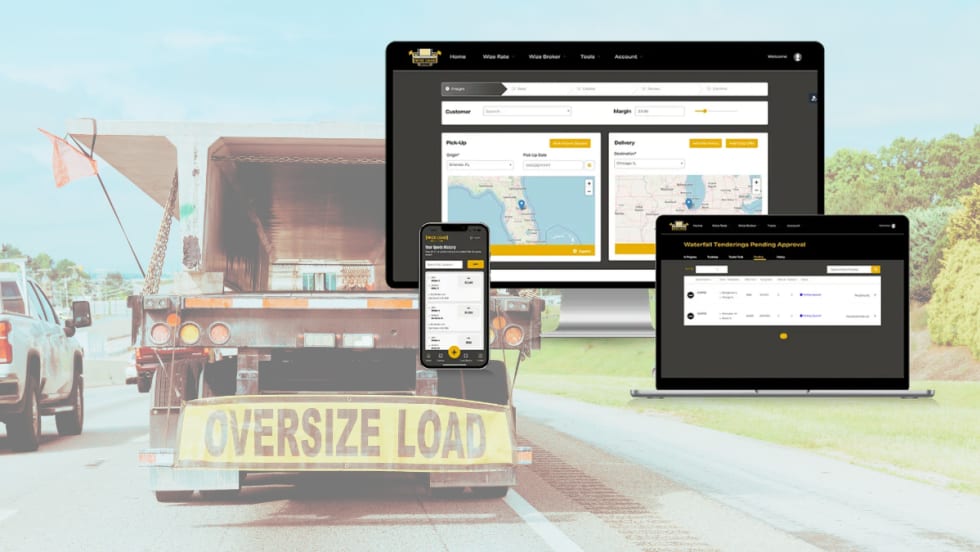
Truckstop.com Adding to Open Deck, Heavy Haul Offerings
Load matching for flatbed, lowbed, oversize and overweight loads can't be automated like basic van freight, but Truckstop.com is adding more high-tech tools to help.
Read More →
Trucker Path, Truckstop.com Expand Load Access Partnership
An expanded Trucker Path and Truckstop.com integration brings more freight opportunities into the TruckLoads app while emphasizing security and network quality.
Read More →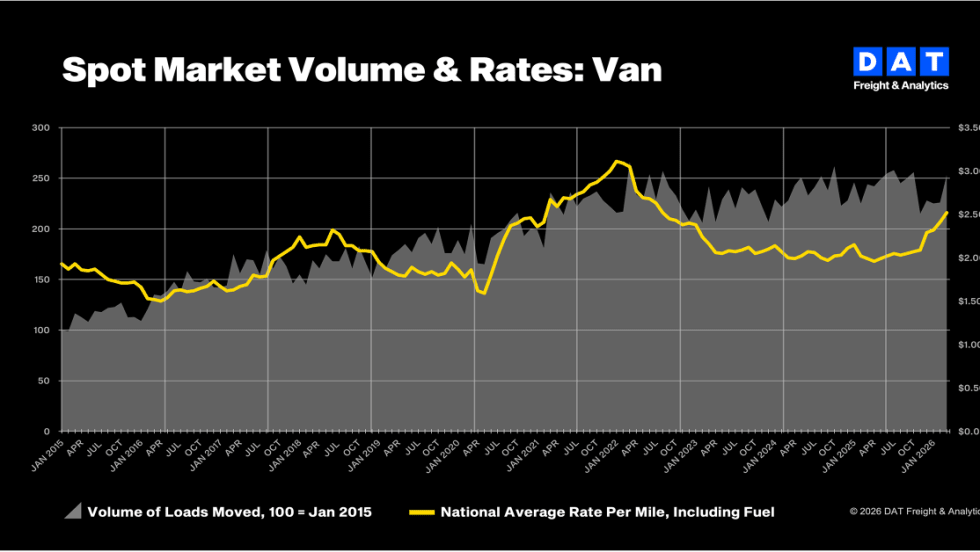
Truckload Rates Hit Two-Year Highs as Diesel Costs Surge, DAT Says
Strong March freight demand combined with a spike in fuel costs pushed both spot and contract truckload rates to their highest levels in more than two years.
Read More →
The AI Conversation You Need to Have with Your TMS Provider
Everyone’s talking about AI — but is your transportation management system actually built for it?
Read More →
Kriska Buys Fellow Canadian Carrier Sharp Transportation Systems
Being part of KTG will allow Sharp to expand and improve its services.
Read More →
Bill in House Would Raise Minimum Insurance for Motor Carriers to $5 Million
The Fair Compensation for Truck Crash Victims Act would increase insurance requirements for interstate motor carriers by nearly seven times.
Read More →
FTR Trucking Conditions Index Hits Four-Year High in February
Strong freight rates push TCI to 10.2, but FTR expects fuel-price volatility to skew March results.
Read More →
C.H. Robinson Offers Carriers Relief as Diesel Prices Surge
C.H. Robinson is waiving fees on fuel cards and cash advances for April and May, aiming to help carriers offset rising diesel costs tied to geopolitical instability.
Read More →