




The Japanese economy has remained in a state of recession for the better part of this current decade. The Japanese truck industry therefore has come to rely on export sales to not only remain stable but also to grow.
Japanese Truck Market: Takeaways for the North American Trucking Industry
The Japanese economy has remained in a state of recession for the better part of this current decade. The Japanese truck industry therefore has come to rely on export sales to not only remain stable but also to grow
by Sandeep Kar, Frost & Sullivan
December 17, 2009
3 min to read
This offers a key pointer to the North American truck industry if the economy continues to remain weak for the next several years, or even if it does not and starts to rebound. The key to attaining sustainable growth is to expand sales to encompass global markets. This will not only expand the revenue stream for North American truckmakers and suppliers, but also offer some level of insulation from the weakness in the local market.
We at Frost & Sullivan recently published a study, "Strategic Analysis of the Japanese Commercial Vehicle Industry," as part of our global commercial truck market coverage spanning North America, Europe, and key economies such as China, India and Russia. The study reports that 49 percent of all trucks sold by Japanese truckmakers in 2008 were actually sold in export markets. Another key finding was the growth of the mini-small truck segment in Japan. Japanese truckmakers, cognizant of the global trend towards polarization of truck classes, have embarked in an aggressive growth strategy that leverages light commercial vehicles such as mini-trucks and light trucks to penetrate and grow market share in emerging economies around the world. These economies show very healthy growth rates in demand for light and heavy commercial vehicles.
In 2008, 1.6 million commercial vehicles were manufactured and sold by Japanese truckmakers. The average age of trucks and buses in Japan is increasing, while the population of commercial vehicles has been shrinking steadily since 1992. This implies that the demand for new trucks will increase over the next four to five years. Frost & Sullivan forecasts that Japanese truck sales will grow at a compound annual rate of 2.1 percent over the 2008-2015 period.
Exports have helped Japanese truckmakers remain afloat. Japanese trucks have been adopted not only by consumers in developing nations, but also by consumers in North America and Europe. However, the emergence of China, India and Korea in the global commercial truck market is elevating competitive pressures on Japanese truckmakers. The price competitiveness of Chinese, Indian and Korean trucks is making it difficult for Japanese truckmakers to retain and expand market share in developing economies where the level of price sensitivity among commercial vehicle fleets is relatively higher than in developed economies.
Here in North America, there are several reasons to track the activities in the Japanese market, as it will have rippling effects in the American and Canadian markets. The fledging hybrid truck product portfolio of Japanese truckmakers and the expertise and pivotal hybrid powertrain system position of Japanese suppliers indicate that light- and medium-duty Japanese hybrid trucks will soon be introduced here. Moreover, the steady pace of urbanization and creation of networked cities in North America coupled with the rapid growth of the mini-small truck segment in Japan seems to suggest that a new category of commercial trucks may soon enter the North American market.
Sandeep Kar is a global program manager and senior industry analyst with the North American Automotive & Transportation Practice at Frost & Sullivan. He specializes in advanced automotive technologies with expertise in light vehicle and heavy truck systems and technologies, automotive infotainment systems, and vehicle networking technologies.
Subscribe to Our Newsletter
More Fleet Management

ACT: Trucking Volumes Rise, Capacity Tightens as Fuel Prices Cloud Outlook
ACT Research data shows volumes hitting a four-year high and supply-demand balance strengthening, but higher oil prices are undercutting tariff relief and tempering optimism.
Read More →
Wabash Teams Physical Security With Digital Tech For Better Cargo Visibility
The patent-pending cargo solution integrates a digitally connected cargo door and an intelligent locking system with the TrailerHawk.AI technology platform.
Read More →
From Diesel Prices to Cyberattacks: How the Iran War Is Affecting Trucking
The impact of the Iran conflict extends beyond fuel costs, bringing more fraud and cybersecurity risks to the trucking industry.
Read More →
ATA’s Spear Warns Fuel Prices, Trade Policy, and Global Conflict Could Stall Trucking Recovery
Speaking at the TMC Annual Meeting in Nashville, ATA President Chris Spear said trucking faces mounting pressure from rising fuel prices, geopolitical instability, and uncertainty around trade policy.
Read More →
New Entrants, Chameleon Carriers, and Safety: Is It Too Easy to Start a Trucking Company?
More than 100,000 new trucking companies enter the industry each year, but regulators manage to audit only a fraction of them. That churn creates opportunities for inexperienced startups — and for “chameleon carriers” that shut down after safety violations and reappear under new identities. Read more from Deborah Lockridge in this commentary.
Read More →
Fleet Managers Invited to Apply for Exclusive HDT Exchange Event
HDTX is an intimate event that connects heavy-duty trucking fleet managers with industry suppliers through small-group discussions, educational sessions, and structured one-on-one meetings.
Read More →
DAT Launches iPhone Widget to Help Owner-Operators Find Loads Faster
New DAT One feature shows top-paying loads directly on an iPhone’s home screen, helping carriers react faster to spot-market opportunities.
Read More →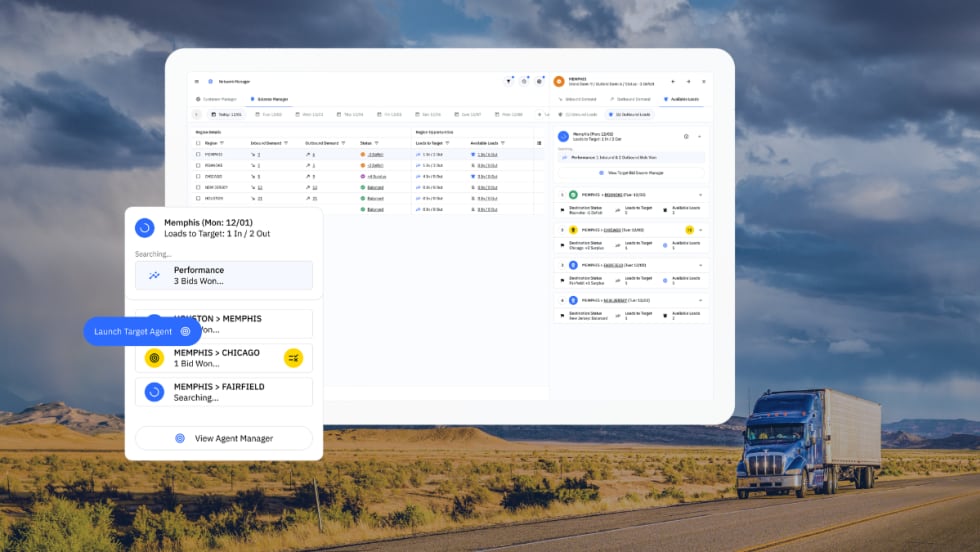
Optimal Dynamics Launches AI System to Help Carriers Choose Better Freight
Optimal Dynamics says its new Scale platform uses AI agents and optimization to help carriers find and secure freight that improves network balance and profitability.
Read More →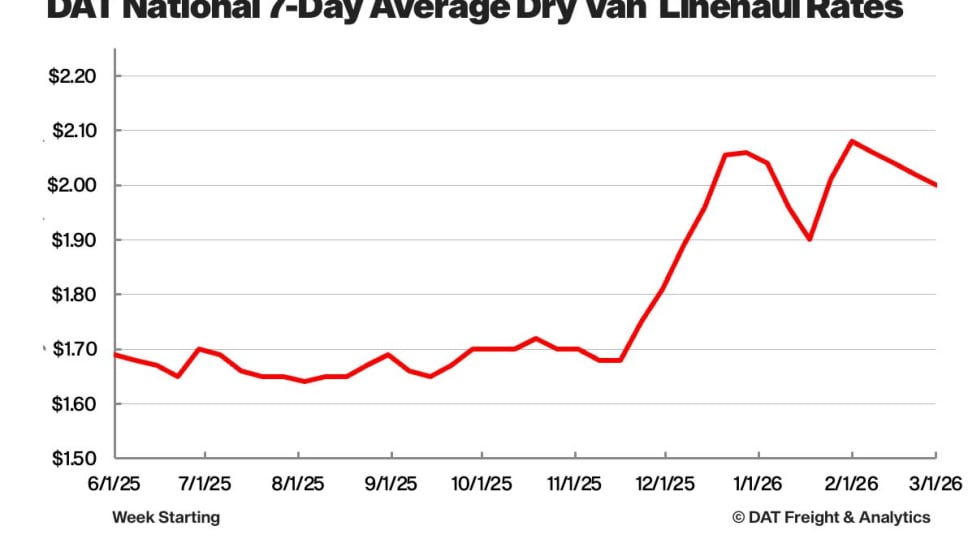
DAT: Flatbed Demand Climbs as Van and Reefer Rates Soften
DAT Freight & Analytics data shows tightening flatbed capacity, easing produce markets, and softening van and reefer rates.
Read More →
Run on Less “Messy Middle” Data Shows Multiple Paths Forward for Truck Powertrains [Watch]
NACFE's Run on Less - Messy Middle project demonstrates the power of data in helping to guide the future of alternative fuels and powertrains for heavy-duty trucks.
Read More →