





By January of 2016, you'll see a new API diesel engine oil classification, designed to help meet federal greenhouse gas/fuel economy standards. In fact, you may, for the first time, see two separate categories.
New Oil Category Will Help Meet Fuel Economy/GHG Emissions Regs
By January of 2016, you'll see a new API diesel engine oil classification, designed to help meet federal greenhouse gas/fuel economy standards. In fact, you may, for the first time, see two separate categories
October 16, 2012
5 min to read
About a year ago, the American Petroleum Institute formed a team to develop a new API oil-service category, to replace the current CJ-4. And for the first time, there will be two standards, one for new engines, the other for older engines.
The main driver behind engine makers asking for the new category is the federal government's new fuel economy regulations for commercial trucks.
"One of the ways we know we can get improved fuel economy and lower CO2 emissions is going with a lower viscosity," explained Dan Arcy, global OEM technical manager for Shell during a recent Shell Technology Forum for customers. "But the real key here is, there can be no compromise in the durability of the engine."
Arcy is heading up the committee that's developing the new oil category, currently referred to as PC-11, for proposed category 11.
In addition to the GHG/mpg drivers for the new category, there are some other reasons for a new category. Since the current one was developed and put in place in 2006, Arcy explained, there have been a lot of changes in engine hardware, including types of injection systems, increased combustion temperatures and pressures, even the metallurgy and coatings used.
Plus, parts for the engines used for some of the current industry-standard tests will no longer be available by 2016.
The new category, Arcy said, should lead to improvements in oxidation stability, shear stability, scuffing/adhesive wear, aeration and compatibility with biodiesel blends (see more below.)
"I think more significantly, the Engine Manufacturers Association recommended it be split into two subcategories - one that retains the higher viscosity grades we see now, and one of a lower viscosity, a thinner oil, to achieve that better fuel economy."
HTHS
The key to the new oil category is something calls HTHS, or high temperature/high shear viscosity - the ability of the oil to maintain its thickness under high-temperature/high-shear conditions.
Arcy explained that when we use language such as "SAE 40" or "SAE 30" to talk about the thickness, or viscosity, of the oil, that actually represents the thickness of that oil at 100 degrees C, or 212 degrees F. If the oil's thickness at that temperature falls into a certain range, it's an SAE 30; if it's in a different range, it's SAE 40. For HTHS oils, the oil viscosity is measured at 150 degrees C, or just over 300 degrees F. Under those conditions, most 15W40 oils are going to be thinner.
Right now, the CJ-4 category requires a score of at least 3.5. Shell's Rotella 15w40 is around 4.2. "We know that we get a fuel economy advantage moving down to about 3.5," Arcy explained. So for the new category, we're proposing we put the number down around 2.9 minimum HTHS, which is in the SAE 30 range. But those will probably not be backwards-compatible. Oils with a higher HTHS number will still be usable in older engines. Oils meeting lower HTHS numbers will be in the new fuel-efficient oil category.
What happens is that you can't just look to the viscosity rating, Arcy said. You could have two oils that were both SAE 10w-30, but one might be blended to meet the lower HTHS numbers and therefore offer higher fuel efficiency, while the other might be blended to work in older engines with a higher HTHS number - in other words, one is at the bottom of the HTHS viscosity number range for a 10w-30 and the other is at the top of that range.
Of course, having two different standards raises a host of other questions the committee is grappling with. For instance, do you come up with two completely different category names, like CK4 and CL4? Or do you use some sort of sub-category designation, such as CK4 and CH4-HT (for high-temp)? Look for a decision on that sometime in 2013.
"I know nobody in here wants to carry two oils," Arcy said, "but for some of the newer engines, that may be necessary."
Backwards-Compatible
The backwards-compatible-category oils may not see gains in fuel economy, but they will benefit from a host of other improvements being planned for the new category, Arcy said.
- Oxidation stability: The ability of the lubricant to resist oxidation, which is a reaction between oxygen and the lubricant that can cause acidic compounds to form in the oil. "For next-generation engines, EMA has said theirs going to be an increase in engine operating temperature up to 10 degrees," Arcy said. For every 10 degree increase in engine heat, he said, you double the rate of oxidation.
- Shear stability: Lubricant engineers use long-chain polymers in the oil to get the multi-viscosity qualities needed. Under high-stress conditions, those polymers can be broken down, or "sheared," which can lead to a drop in viscosity. "Some oils are seeing greater shear than engine makers would like," Arcy said, "shearing down to the lower end of the grade or even shearing out of grade." So the committee will look at the test used for shearing to make sure it's representative of what's going on in the field and see if any test changes are needed.
- Compatibility with biodiesel blends: The U.S. mandates that a certain amount of biodiesel needs to be used, and those standards are increasing with time. Although Arcy said he's not currently seeing much in the way of problems with lubricants and biodiesel, because the amount of biodiesel will increase in the future, it's something the committee wants to be sure of.
- Scuffing/adhesive wear: "This is kind of new," Arcy said. "This is actual metal-to-metal contact where metal surfaces could weld together then tear apart." Current standards, he said, look at abrasive wear caused by contaminants or soot in the oil. "Since we're looking at going lower in viscosity, we want to make sure engines are protected."
- Aeration: This is air that stays entrained within the lubricant - and air is not a good lubricant. The oil should get that air to the top of the oil, where it shows up as foam. You want those air bubbles to come to the top of the sump and pop instead of being in the lubricant.
Related Story:
12/20/2011 New Oil Category in the Works for Next Round of Engine Technology
Subscribe to Our Newsletter
More Maintenance
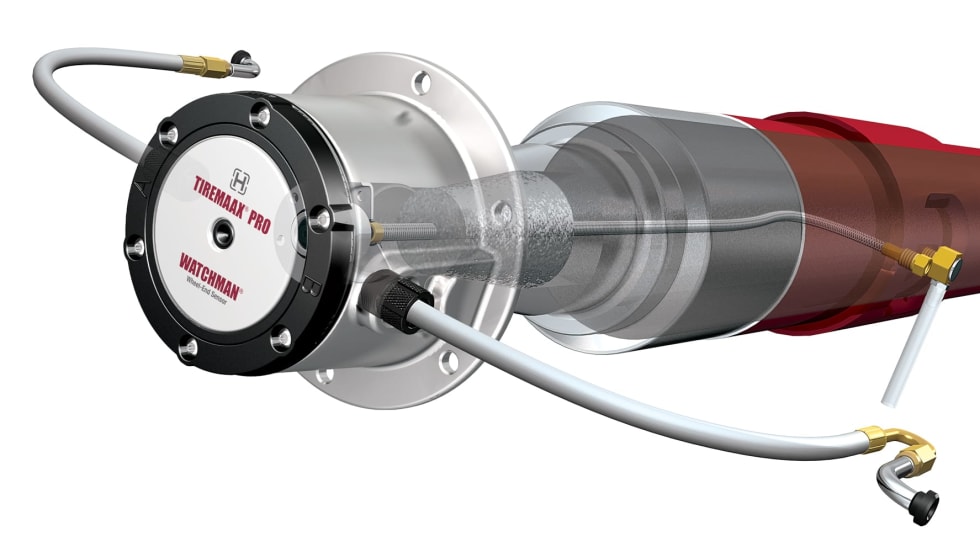
Hendrickson Unveils Watchman Smart Wheel-End System at TMC
Hendrickson’s new sensor platform integrates with its TireMaax system to deliver real-time tire and wheel-end insights, targeting uptime and cost savings.
Read More →
Over-the-Air Updates and the Modern Powertrain Explained
Over-the-air updates are moving beyond recalls, and expanding how fleets manage performance, compliance, and uptime.
Read More →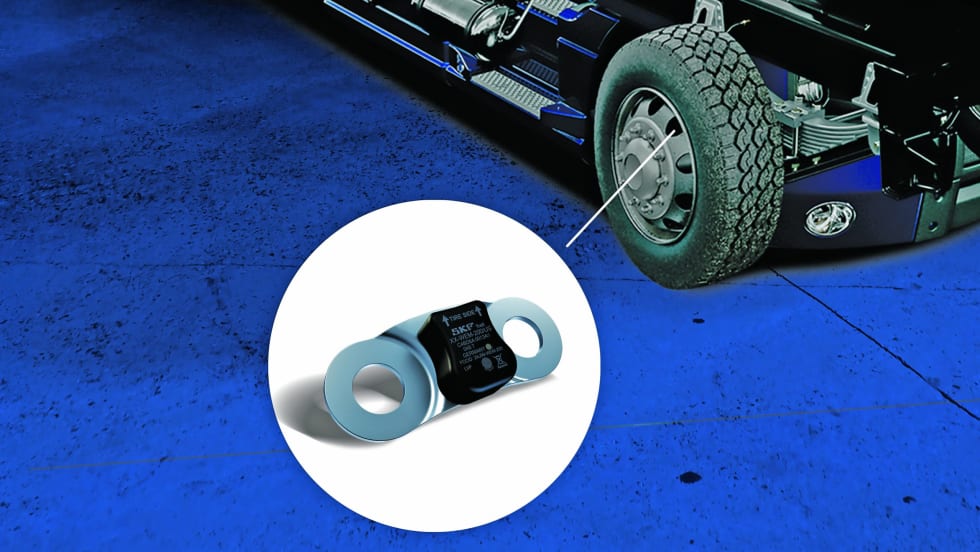
SKF, TMC Expand Hands-On Training to Boost Technician Skills at Annual Meeting
A new partnership between SFK and TMC brings certified, on-site instruction focused on wheel-end reliability and maintenance best practices.
Read More →
Why Higher Pay Isn’t Fixing the Heavy-Duty Technician Shortage
Hiring heavy-duty truck technicians has become a bidding war, but shops that focus on culture, training, and career paths are gaining an edge. That's the takeaway from a TMC panel discussion.
Read More →
Technology & Maintenance Council 2026 Annual Meeting [Photos]
Couldn't make it to Nashville for TMC's 2026 annual meeting? Check out these images.
Read More →
Fullbay Report: Heavy-Duty Shop Revenue Up, Rates Rising, but Shops Still Short on Techs
Strong growth across the heavy-duty repair sector is being tempered by workforce shortages and an aging technician pipeline.
Read More →
How Mack Sees the Next Era of Fleet Intelligence
Telematics has evolved from simple vehicle tracking into a connected service platform that can help fleets boost uptime, improve specifications, and move toward predictive maintenance. Mack executives say AI is now giving fleets a way to turn all that vehicle data into faster, smarter decisions.
Read More →
Clarios Expands Battery Monitoring Into Subscription Service with Battery Manager Pro
A new battery-monitoring-as-a-service program from Clarios Connected Services uses predictive analytics and automatic replacement to reduce downtime and smooth fleet maintenance costs.
Read More →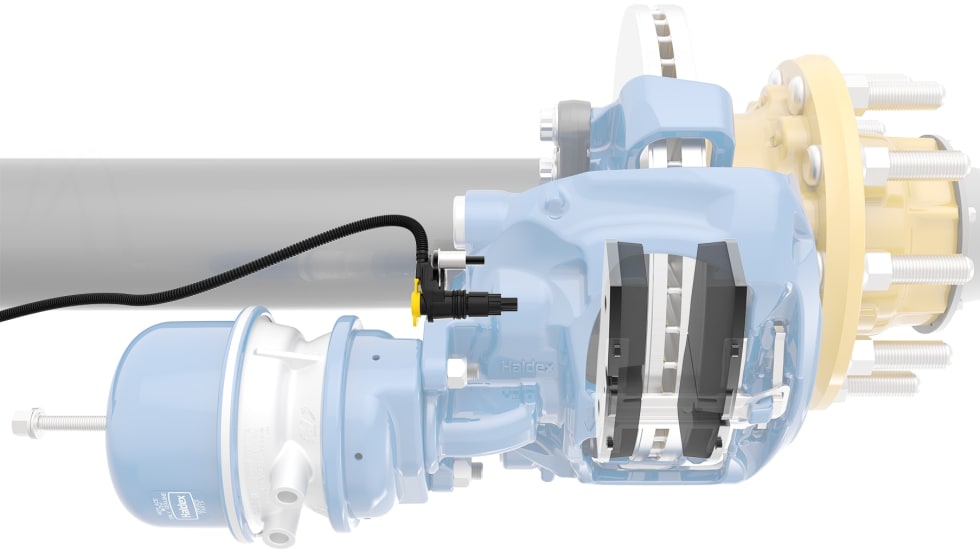
SAF-Holland’s BrakeSight Aims to Take the Guesswork Out of Air Disc Brake Maintenance
New Haldex sensor technology from SAF-Holland integrates with telematics systems to give fleets continuous insight into air disc brake condition.
Read More →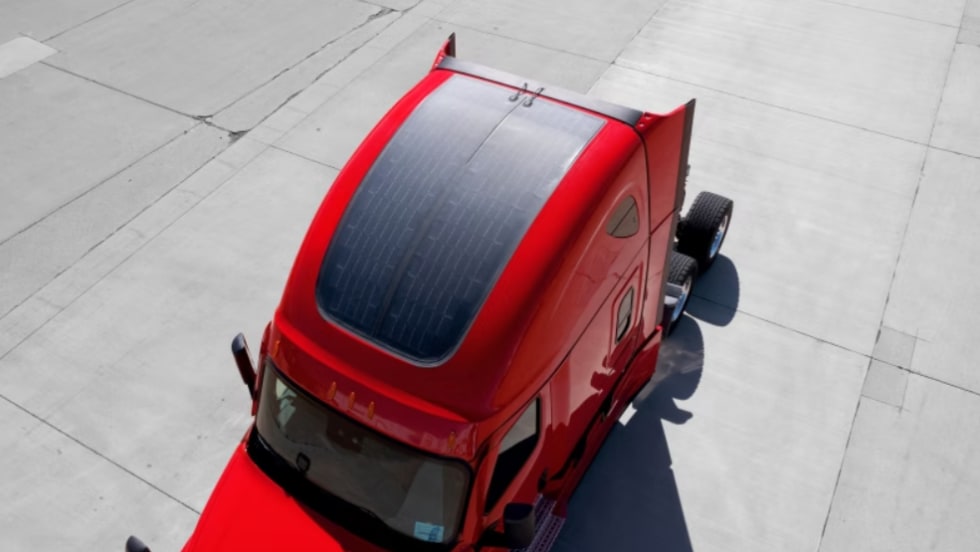
Vanair Introduces Solar, Battery Power Ecosystem for Class 8 Trucks
The company’s expanded EPEQ ecosystem includes flexible solar panels, lithium batteries, hydraulic power systems, and a portable fast charger for electric trucks.
Read More →