





Freight fraud and cargo theft often succeed for one simple reason: It’s too easy to pretend to be someone you’re not. The National Motor Freight Traffic Association is working to address that.
NMFTA Targets Freight Fraud and Telematics Supply Chain Risks
New carrier identity checks, industry resources, and telematics supply chain research aim to make freight fraud and cyber risks harder to exploit.
February 26, 2026

Freight fraud often works because it’s easy to fake legitimacy.
Credit:
HDT Graphic
4 min to read
- The NMFTA introduces new carrier identity checks to enhance security in the freight industry.
- Industry resources are being developed to provide guidance against freight fraud and cyber threats.
- Research is focusing on securing the telematics supply chain to mitigate potential risks.
*Summarized by AI
NMFTA announced several new initiatives to help:
- Increased verification for non-Class 8 carriers who register for Standard Carrier Alpha Codes (SCAC).
- A centralized source for NMFTA’s freight fraud prevention information.
- Investigating the prevalence of “white-labeling” telematics hardware.
A Stronger Identity Check for SCACs
Freight fraud often works because it’s easy to fake legitimacy. Double-brokering, carrier impersonation, and fictitious pickups all get a lot easier when onboarding decisions rely on documents or credentials that can be spoofed.
SCAC Verified is an enhanced verification process that helps confirm the applicant's identity and provides a level of certainty when dealing with SCAC-Verified carriers across the industry.
As of February 26, all SCAC registrations and renewals must go through this added verification step.
The goal is simple: Make an SCAC a stronger signal that the company behind it is who it claims to be — particularly in segments of the industry that may not have the same level of data and identifiers as larger Class 8 carriers.
The change also moves non-Class 8 SCAC issuance and renewals directly into NMFTA’s portal instead of through third-party resellers. That reduces confusion, improves record accuracy, and closes off another potential weak spot.
The takeaway? SCAC Verified isn’t a silver bullet. But it should make it harder for bad actors to impersonate legitimate carriers at scale — and it gives brokers, 3PLs, shippers, and carriers one more data point to rely on.
It won’t replace a robust verification workflow, but it should make it harder for bad actors to impersonate legitimate entities at scale.
New Source for Freight Fraud Prevention Resources
NMFTA also launched a new Freight Fraud Prevention Hub, a centralized home for its fraud and cargo crime resources, with more resources to be added in the future.
The organization is positioning the Hub as a centralized “get smart, get aligned, get practical” location backed by ongoing education.
For companies that don’t live and breathe security every day, having one place for playbooks, definitions, and best practices helps standardize how teams verify carriers and handle risk.
Real risk reduction means fewer “one-off” exceptions, fewer last-minute saves, and more consistency in the verification process across the operation.
White-Labeling Telematics Hardware
White-labeling — rebranding hardware or software built by another company — is common across industries. It isn’t automatically a problem.
The risk shows up when the supply chain becomes murky. That’s why NMFTA researchers, led by Anne Zachos, are deep into a project to determine the prevalence of white-labeling across telematics devices.
With white-labeling, fleets think that they are buying from Vendor A, but the device’s chipset, firmware, update infrastructure, and build process trace back to Vendor B — or even further down a subcontractor chain.
White-labeling can also lead to greater “concentration risk,” the risk that a vulnerability in one device actually affects multiple devices across multiple brands.
Federal guidance on ICT supply chain risk makes one point clear: Adversaries target weak links in technology supply chains, whether those were intentionally or unintentionally introduced, particularly where oversight and security controls are lacking.
Why Is This A Potential Problem for Telematics Devices?
Telematics devices are a special case because they sit at the intersection of safety, operations, and data.
Best practices for telematics security advise that the risk should be monitored and mitigated across assembly, sale, delivery, and installation. Supplier transparency and security guarantees should be viewed as the baseline, not as an option.
What does greater transparency in the supplier pipeline allow for? It means ensuring the ability to verify device lineage, who designed it, who manufactured it, and who maintains the firmware.
Greater transparency means fleets can:
- Verify device lineage.
- Confirm secure boot and signed updates.
- Review patch timelines and vulnerability disclosure processes.
- Obtain a Software Bill of Materials (SBOM) and Hardware Bill of Materials (HBOM).
Whether your focus is fraud prevention, operational security, or telematics purchasing, the underlying theme is the same: Stronger verification and clearer visibility reduce risk. NMFTA’s new tools are designed to give the industry more of both.
Learn more at www.nmfta.org.
Subscribe to Our Newsletter
More Fleet Management

ACT: Trucking Volumes Rise, Capacity Tightens as Fuel Prices Cloud Outlook
ACT Research data shows volumes hitting a four-year high and supply-demand balance strengthening, but higher oil prices are undercutting tariff relief and tempering optimism.
Read More →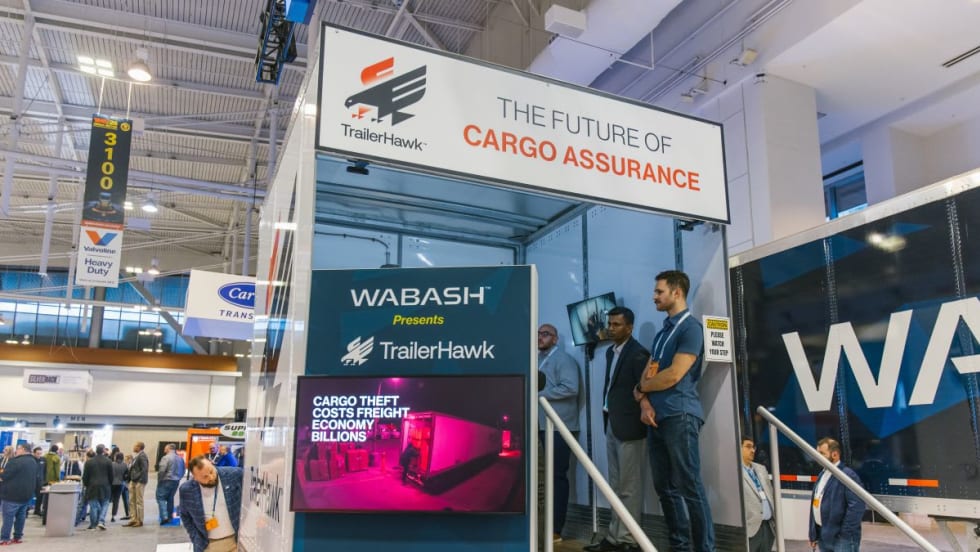
Wabash Teams Physical Security With Digital Tech For Better Cargo Visibility
The patent-pending cargo solution integrates a digitally connected cargo door and an intelligent locking system with the TrailerHawk.AI technology platform.
Read More →
From Diesel Prices to Cyberattacks: How the Iran War Is Affecting Trucking
The impact of the Iran conflict extends beyond fuel costs, bringing more fraud and cybersecurity risks to the trucking industry.
Read More →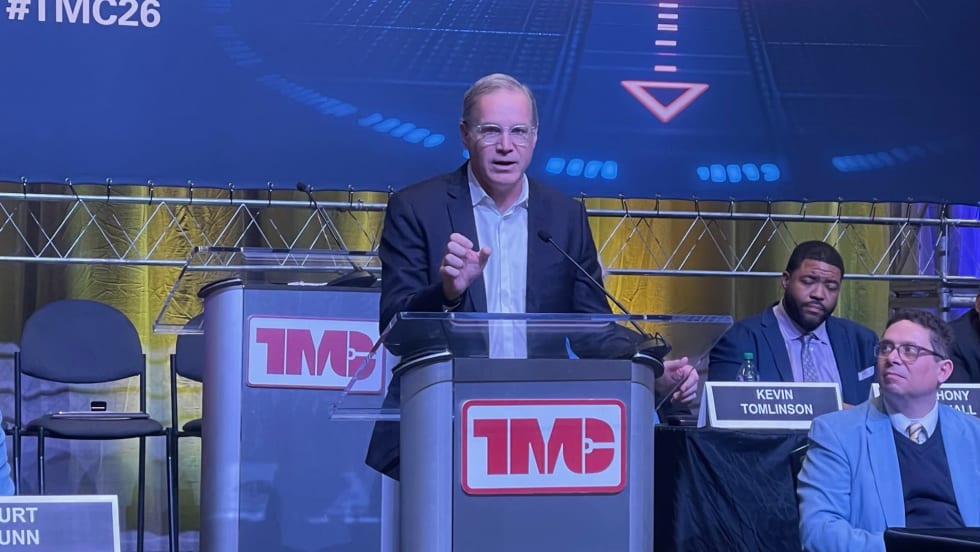
ATA’s Spear Warns Fuel Prices, Trade Policy, and Global Conflict Could Stall Trucking Recovery
Speaking at the TMC Annual Meeting in Nashville, ATA President Chris Spear said trucking faces mounting pressure from rising fuel prices, geopolitical instability, and uncertainty around trade policy.
Read More →
New Entrants, Chameleon Carriers, and Safety: Is It Too Easy to Start a Trucking Company?
More than 100,000 new trucking companies enter the industry each year, but regulators manage to audit only a fraction of them. That churn creates opportunities for inexperienced startups — and for “chameleon carriers” that shut down after safety violations and reappear under new identities. Read more from Deborah Lockridge in this commentary.
Read More →
Fleet Managers Invited to Apply for Exclusive HDT Exchange Event
HDTX is an intimate event that connects heavy-duty trucking fleet managers with industry suppliers through small-group discussions, educational sessions, and structured one-on-one meetings.
Read More →
DAT Launches iPhone Widget to Help Owner-Operators Find Loads Faster
New DAT One feature shows top-paying loads directly on an iPhone’s home screen, helping carriers react faster to spot-market opportunities.
Read More →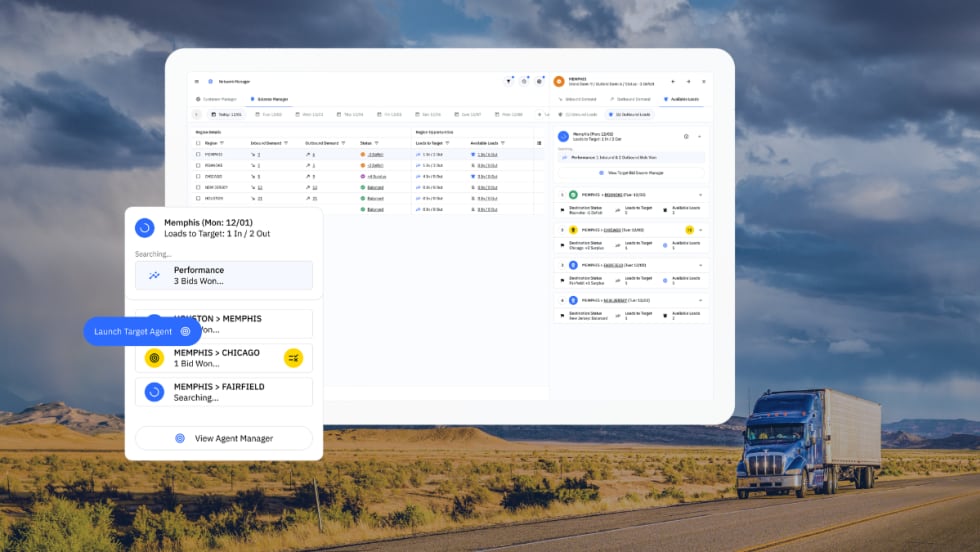
Optimal Dynamics Launches AI System to Help Carriers Choose Better Freight
Optimal Dynamics says its new Scale platform uses AI agents and optimization to help carriers find and secure freight that improves network balance and profitability.
Read More →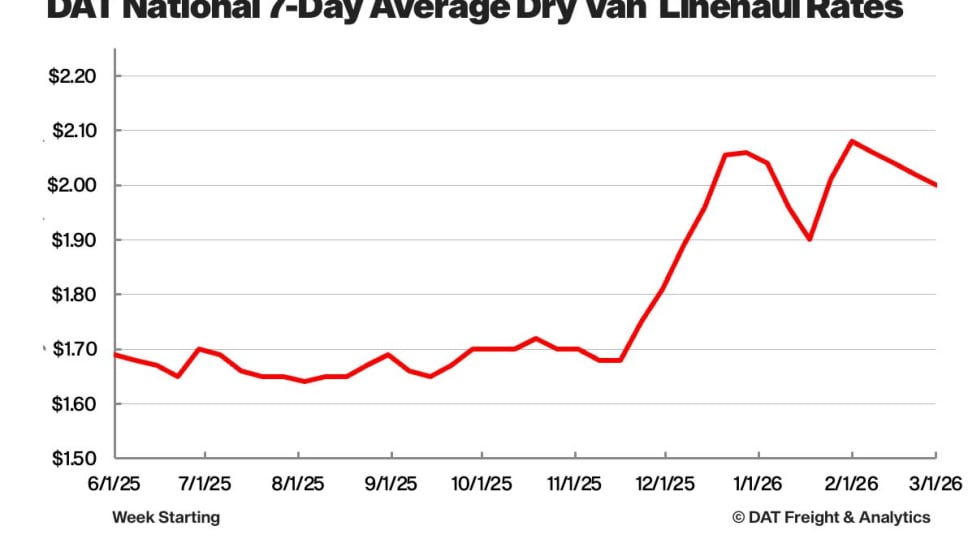
DAT: Flatbed Demand Climbs as Van and Reefer Rates Soften
DAT Freight & Analytics data shows tightening flatbed capacity, easing produce markets, and softening van and reefer rates.
Read More →
Run on Less “Messy Middle” Data Shows Multiple Paths Forward for Truck Powertrains [Watch]
NACFE's Run on Less - Messy Middle project demonstrates the power of data in helping to guide the future of alternative fuels and powertrains for heavy-duty trucks.
Read More →