The future of connected trucks lies in integration and reducing the number of entry points into a truck, according to a panel of industry experts speaking on data and “the internet of trucks” at the Canadian Fleet Maintenance Summit in Mississauga, Ontario.
by Today's Trucking
April 19, 2018
Big data, telematics, and the "internet of trucks" were discussed by a panel at the Canadian Fleet Maintenance Summit.Photo via Today's Trucking.
3 min to read
Big data, telematics, and the "internet of trucks" were discussed by a panel at the Canadian Fleet Maintenance Summit. Photo via Today's Trucking.
The future of connected trucks lies in integration and reducing the number of entry points into a truck, according to a panel of industry experts speaking on data and “the internet of trucks” at the Canadian Fleet Maintenance Summit in Mississauga, Ontario.
Ad Loading...
Ric Bedard of Cetaris, a maker of fleet maintenance and asset management software, said some of his projects involved more than 400 connection and integration points, because each technology manufacturer has its own proprietary system.
Ad Loading...
That disjointed technology leads to problems ranging from a flood of data that is almost unusable, to introducing more access points for potential cybersecurity attacks.
Filtering out the Noise
Although sensors on every part of the truck have given fleet managers the ability to have a 360-degree view, inside and out, at all times, Bedard estimated that up to 95% of that data is “noise.” Either it doesn’t provide enough information to be useful, or it takes too long to get to an end user to be valid.
And sensors can also break down. Jason Krajewski, director of truck connectivity for Daimler Trucks North America, said OEMs have to be cognizant of where they get sensors from, and the quality – there are lots of cheap sensors on the market.
Bedard said when an engine sends a fault code, if often doesn’t include information about why a part is failing, how quickly it will need to be fixed, or what will need to be done when the truck gets into a service bay. Add a problem sensor to that, and a fault code becomes just another alert. If that alert also takes 24-48 hours to get to a maintenance manager, it’s useless.
He also noted that there’s a need in the industry to develop generally acceptable categorization as to what’s urgent or not urgent.
Ad Loading...
The Right Data at the Right Time
Jaques DeLarochelliere of ISAAC Instruments, a provider of telematics technology ranging from diagnostics to electronic logs, said the key to better data is integrating systems to send the right data at the right time, and eliminating the number of connection points on a truck – eventually aiming for one sim card on a vehicle.
This also would reduce the potential for security risks.
Krajewski said everyone who connects their devices to the internet understands there is always some associated risk. But he hopes the security is improving.
“The instant you put a wireless connection point on the vehicle, you’re introducing the potential for an attack,” he said.
Protecting the Data on the Truck
With some trucks carrying eight or more connection points, all speaking to different partners, Krajewski said OEMs are starting to recognize the need to incorporate security from the ground up.
Ad Loading...
Connected trucks are now coming straight from the manufacturer with encryptions and firewalls that may help prevent someone with ill intentions from gain access to a truck. But just trusting the onboard security isn’t enough.
Fleets need to examine their back-end structures and know they’re protected on all sides, said the panel. Back office applications that pull data off the truck to analyze it can easily leave a virus behind.
Protecting systems outside the truck could mean security audits and software, but sometimes it’s a task best left to someone else. While storing all your data on the cloud may seem like a risky prospect, Krajewski said companies storing data have the latest security software and patches, and are monitoring activity 24/7 — something that most fleets might find hard to match.
“In terms of cost and scaleability you can’t beat the cloud, but then you’re transferring the onus for the security onto the cloud owners.”
ACT Research data shows volumes hitting a four-year high and supply-demand balance strengthening, but higher oil prices are undercutting tariff relief and tempering optimism.
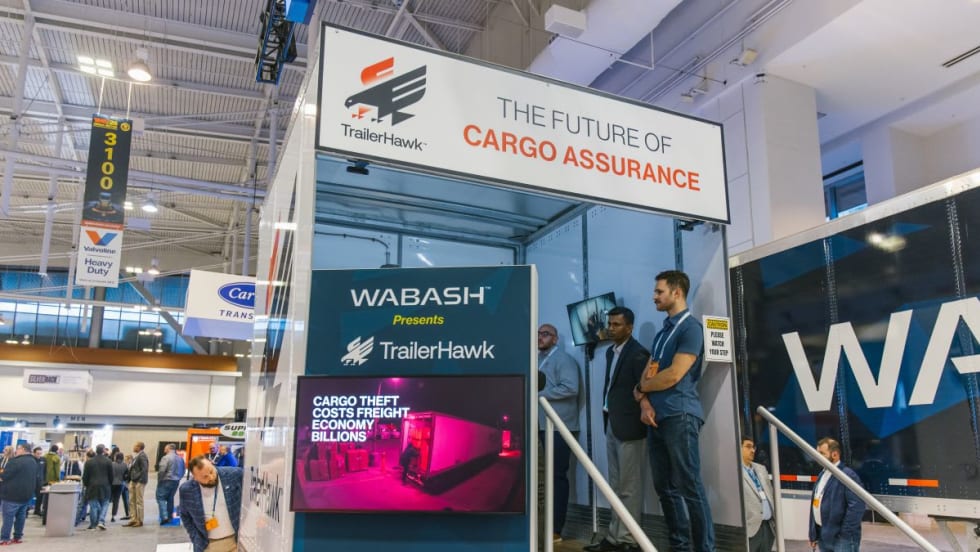
The patent-pending cargo solution integrates a digitally connected cargo door and an intelligent locking system with the TrailerHawk.AI technology platform.
Speaking at the TMC Annual Meeting in Nashville, ATA President Chris Spear said trucking faces mounting pressure from rising fuel prices, geopolitical instability, and uncertainty around trade policy.
More than 100,000 new trucking companies enter the industry each year, but regulators manage to audit only a fraction of them. That churn creates opportunities for inexperienced startups — and for “chameleon carriers” that shut down after safety violations and reappear under new identities. Read more from Deborah Lockridge in this commentary.
HDTX is an intimate event that connects heavy-duty trucking fleet managers with industry suppliers through small-group discussions, educational sessions, and structured one-on-one meetings.
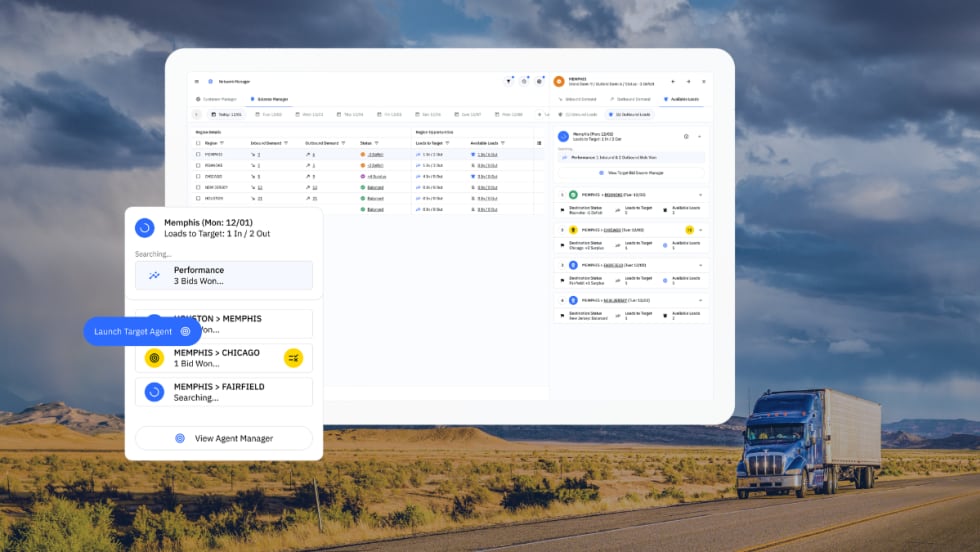
Optimal Dynamics says its new Scale platform uses AI agents and optimization to help carriers find and secure freight that improves network balance and profitability.
NACFE's Run on Less - Messy Middle project demonstrates the power of data in helping to guide the future of alternative fuels and powertrains for heavy-duty trucks.