





What if you could find out in 10 minutes or less precisely how each and every one of your tractor-trailer's brakes is working? You'd know how much force they're producing to stop the rig, individually and by axle.
You'd find if threshold air pressures - the point when linings begin contacting the drums - are correct, and if linings are dragging. You'd know the condition of all valves, sensors and wiring, and even if the anti-lock braking system is working correctly. You could quickly examine a computer-generated printout, then send a mechanic straight at any problem.
That's what performance-based brake testing can do, say its proponents, but not many people in North America are listening. PBBT, usually using a wheel dynamometer, originated more than 50 years ago. For at least 15 years it has been used extensively in Europe and elsewhere in the world. About 140,000 brake testers are being used overseas, ranging from 30 in Mongolia to 69,000 in Great Britain. In many countries, vehicle equipment inspections are required twice a year, and each one includes testing of a truck's brakes on such a machine.
In the U.S., fewer than 400 testers are in use, mostly by municipal transit-bus fleets whose vehicles are in really tough service. Other machines are in truck dealers' service departments, and a handful are used by commercial law enforcement officers in a couple of states, according to David Domine, general manager of Link-Radlinski Inc., a brake testing and certification operation at East Liberty, Ohio, that uses and sells brake dynos.
"When they hear that we don't use this technology, they're amazed," he says of his contacts in Europe. Trying to convince truck-fleet managers to use PBBT is difficult, because neither federal nor state laws or regulations require it, and a dyno costs $75,000 to $100,000. Over-the-road fleets whose brakes don't get much wear would have difficulty justifying such an expense, though Domine does have some safety statistics that argue for it. Certain severe-service trucks can benefit, but even their managers don't consider PBBT because "there is great pride among them in believing they're already doing things right" in how they maintain brakes, Domine observes.
Often they aren't.
Brake maintenance in North America is usually done by sight. Someone looks at the condition of drums, linings, slack adjusters and associated parts, and measures the length of push-rod strokes, then adjusts and repairs things as necessary. That's how it goes in most shops. Where drivers complain that brakes just aren't stopping or pull to one side, mechanics look harder for problems and do their best to correct them. If everything looks good and drivers don't complain, the brakes are deemed to be working well, and they might be. At official inspection stations, trucks are passed or put out of service based on visual examinations.
But how exactly is each brake working, and how much force is it applying? Is it doing its share of work, and if not, how much harder are other brakes working to make up for it? Performance-based brake testing shows this by quantifying it, Domine explains.
A comprehensive report generated by a performance-based brake tester shows the amount of braking force (in pounds) divided into the vehicle's gross weight. By federal regulation, the resulting number must be at least 43.3 percent, and it should be somewhat higher, Domine says. Thus the brakes on a rig grossing 78,000 pounds must be able to apply a minimum of 33,774 pounds of force. No visual inspection can determine that except by inference, but the machine can, and it pinpoints the amount of force from the brakes on each axle. That means axle-to-axle balance can be determined and corrected if necessary - the key to effective maintenance.
Further, a PBBT report determines side-to-side balance - how one brake is working with its partner at the other end of the axle. Law enforcement officers are particularly concerned with this, because a serious imbalance can lead to sideward pull and, under hard braking, can yank a truck out of its lane. But, Domine notes, side-to-side numbers on a report can seem alarming when they're not. One brake on an axle can be working 30 percent harder than its mate, but a driver won't notice it, partly because power steering compensates for it, and force being applied on other axles might balance out the errant axle. The side-to-side differential must reach 40 to 50 percent before a driver can feel it, he says.
One believer in the PBBT concept is Dennis McNichol of A.M. Keefe Transport in Broomall, Pa., which hauls building materials and other commodities. McNichol employs a Link-Radlinski dyno in his own brake maintenance program, and uses a portable version in his consulting with transit and refuse fleets. He is active in the Technology and Maintenance Council of the American Trucking Associations, and is among a group that's writing a TMC recommended practice to guide usage of brake dynos. He also sells the Link-Radlinski machines.
"You wanna save money in brakes and you own 25 or 50 trash trucks? Buy one of these machines," he says. "It's all about balance, and these help you do that." He's found that the front brakes on trash trucks are comparatively small and not set to apply hard, so linings polish the drums and become ineffective. Braking work shifts to the rear axles, which are carrying most of the load anyway. Linings on drive axles will wear out three and four times a year while there's little wear on the fronts, and managers think it's normal.
The problem is acute in transit buses, he says. Overheated rear brakes in a fleet in Miami, Fla., set two buses afire, and it took dyno testing to show managers that front brakes had to be put to work. Even after pinpointing the underlying problem, it took major attention to workmanship by mechanics to get braking systems operating correctly.
"I went to one of the major trash fleets and found the same thing - the front axle (brakes) not doing any of the work, the back axles were doing all the work," McNichol says. "If you see the performance is wrong (on the dyno), you can go back to the manufacturer and see what can be done to bring performance back to OE specs. Otherwise, replace the linings with something that's gonna do the job."
Multi-axle combinations like Michigan trains and dump trucks with several lift axles are also good candidates for performance-based brake testing, especially if they operate locally with a lot of stops and starts, Domine says. That's because the many brakes on these vehicles are difficult for a short-handed shop crew to watch and keep in adjustment, much less in proper balance. A PBBT machine can spot problems quickly and prompt quick and efficient repairs.
McNichol gives an example he's seen: "A driver writes 'bad brakes!' on an equipment report and that's all. So the mechanic takes the truck for a test drive and sees that it pulls to the right when he applies the brakes. He runs a brake test on the machine and finds one front brake that's really aggressive, so he takes off that wheel. This tractor is equipped with an automatic greasing system, and he finds that the line leading to the kingpin near that wheel is leaking grease onto the brake lining. He fixes the line, cleans up the lining and that's it. Without the machine, he'd have to make a seat-of-the-pants decision. He might take off both wheels instead of one. So the machine helps him focus the repair," and that saves time and money.
Through effective maintenance, a trash fleet of 60 trucks could save enough in brake wear to pay off a $100,000 tester in about two years, Domine figures. This is a portable, above-ground model; an in-ground version costs $75,000 to $85,000, and installation costs are minimal if it's part of the construction of a new shop or inspection building to house the machine.
Fleets not wanting to spend such money might get Dom
Performance-Based Brake Testing
What if you could find out in 10 minutes or less precisely how each and every one of your tractor-trailer's brakes is working? You'd know how much force they're producing to stop the rig, individually and by axle.
More Maintenance
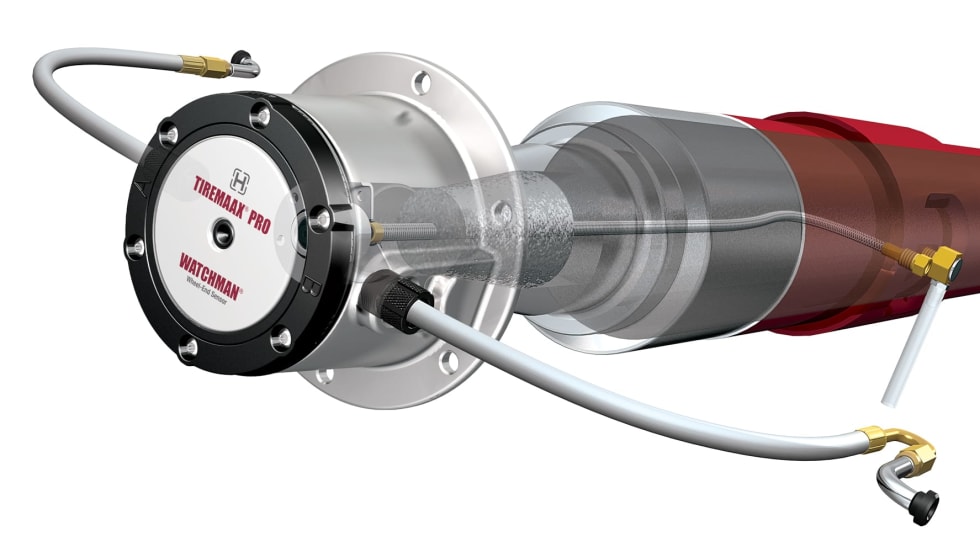
Hendrickson Unveils Watchman Smart Wheel-End System at TMC
Hendrickson’s new sensor platform integrates with its TireMaax system to deliver real-time tire and wheel-end insights, targeting uptime and cost savings.
Read More →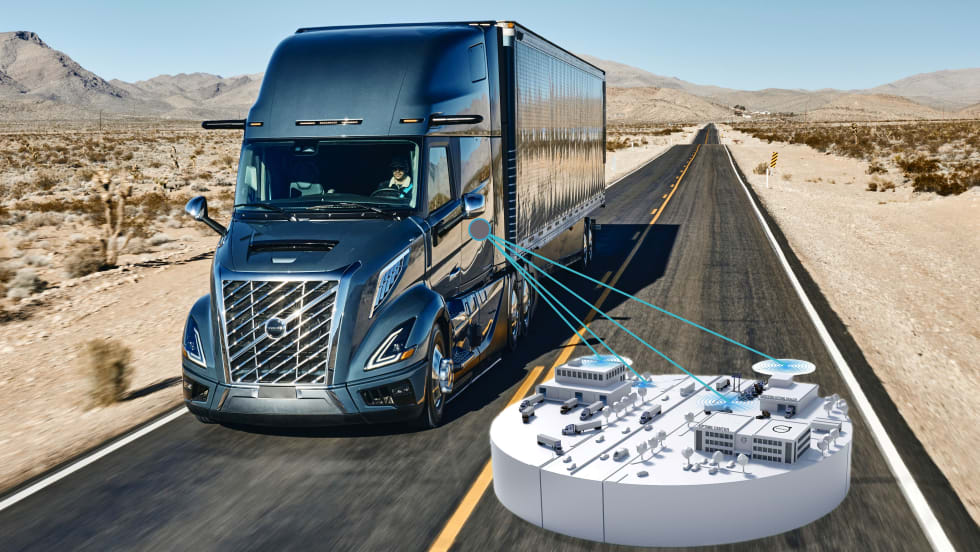
Over-the-Air Updates and the Modern Powertrain Explained
Over-the-air updates are moving beyond recalls, and expanding how fleets manage performance, compliance, and uptime.
Read More →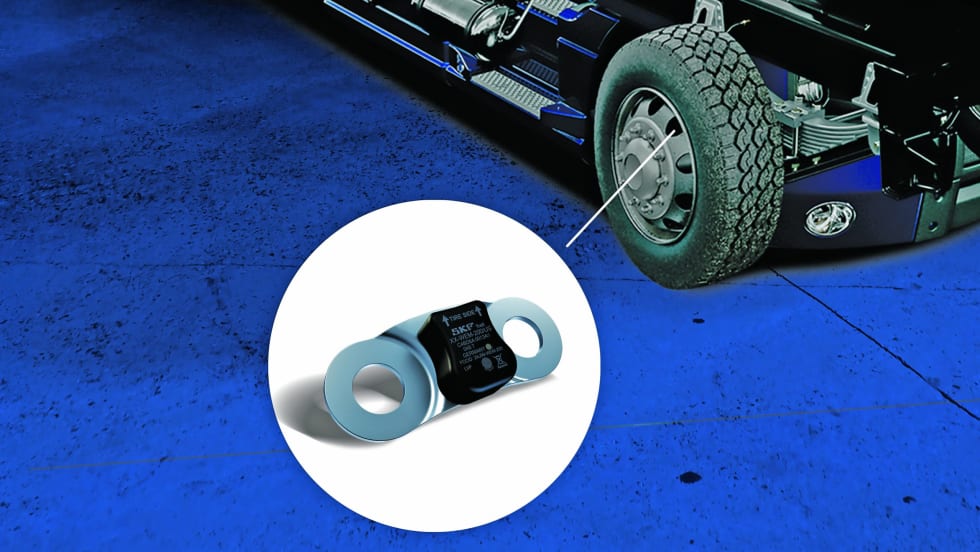
SKF, TMC Expand Hands-On Training to Boost Technician Skills at Annual Meeting
A new partnership between SFK and TMC brings certified, on-site instruction focused on wheel-end reliability and maintenance best practices.
Read More →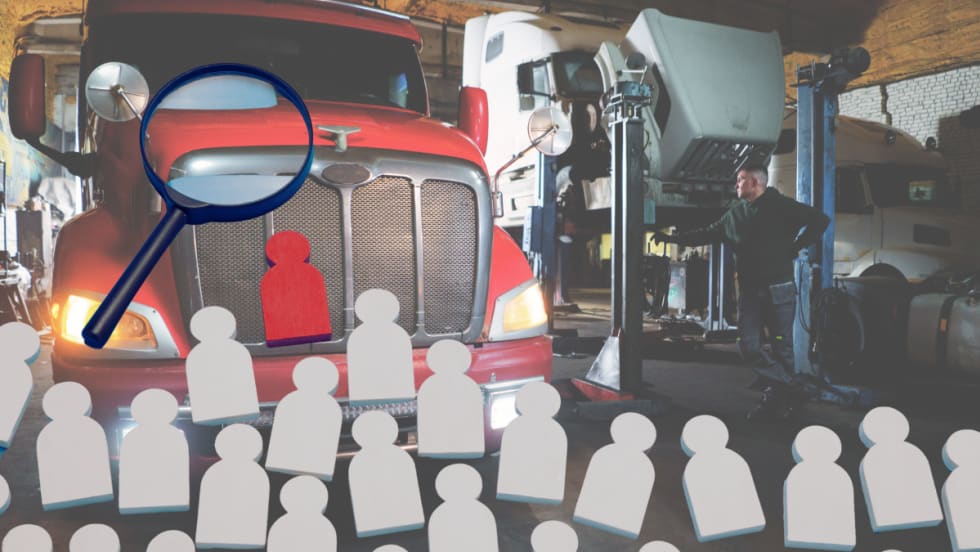
Why Higher Pay Isn’t Fixing the Heavy-Duty Technician Shortage
Hiring heavy-duty truck technicians has become a bidding war, but shops that focus on culture, training, and career paths are gaining an edge. That's the takeaway from a TMC panel discussion.
Read More →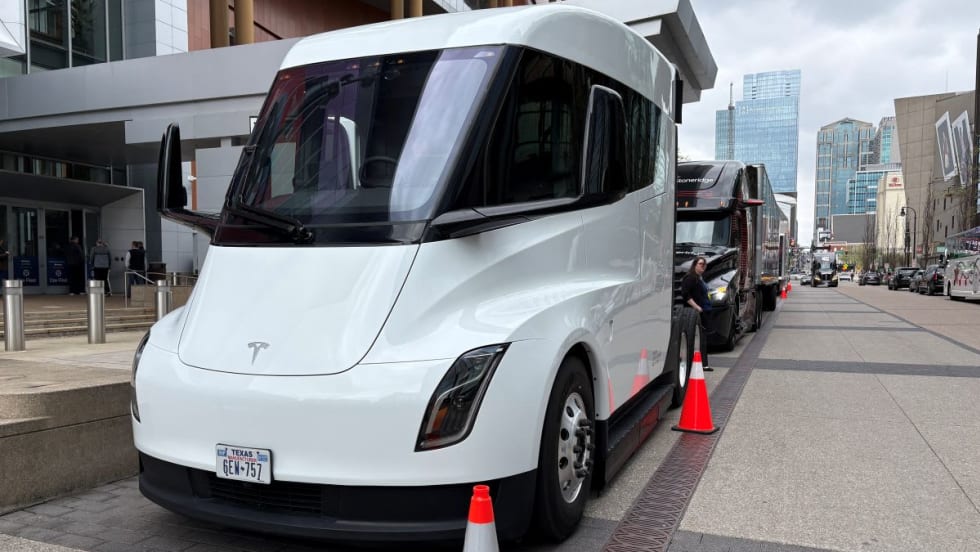
Technology & Maintenance Council 2026 Annual Meeting [Photos]
Couldn't make it to Nashville for TMC's 2026 annual meeting? Check out these images.
Read More →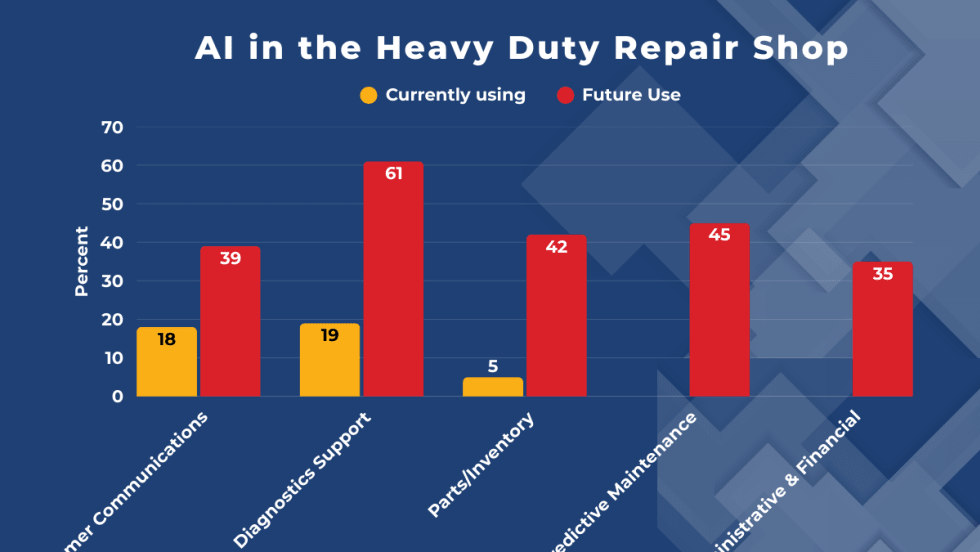
Fullbay Report: Heavy-Duty Shop Revenue Up, Rates Rising, but Shops Still Short on Techs
Strong growth across the heavy-duty repair sector is being tempered by workforce shortages and an aging technician pipeline.
Read More →
How Mack Sees the Next Era of Fleet Intelligence
Telematics has evolved from simple vehicle tracking into a connected service platform that can help fleets boost uptime, improve specifications, and move toward predictive maintenance. Mack executives say AI is now giving fleets a way to turn all that vehicle data into faster, smarter decisions.
Read More →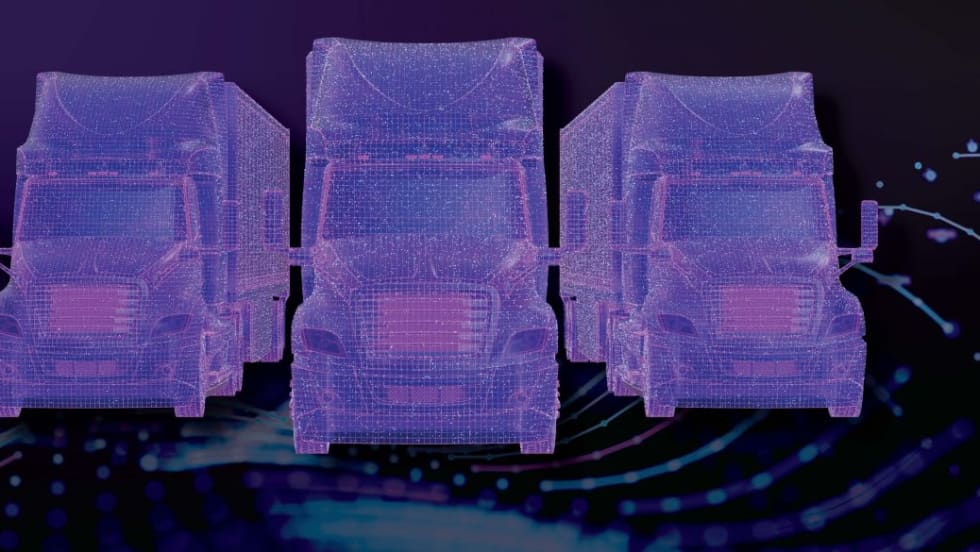
Clarios Expands Battery Monitoring Into Subscription Service with Battery Manager Pro
A new battery-monitoring-as-a-service program from Clarios Connected Services uses predictive analytics and automatic replacement to reduce downtime and smooth fleet maintenance costs.
Read More →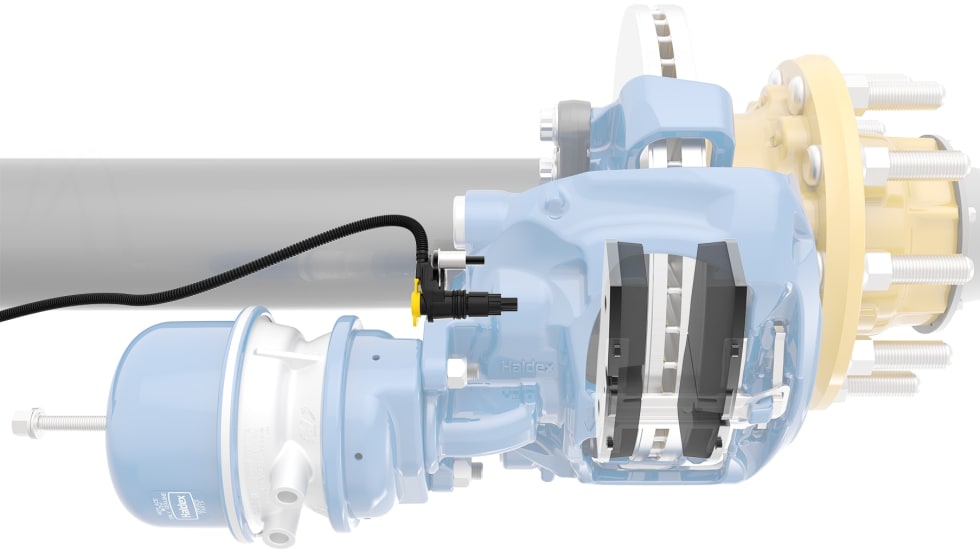
SAF-Holland’s BrakeSight Aims to Take the Guesswork Out of Air Disc Brake Maintenance
New Haldex sensor technology from SAF-Holland integrates with telematics systems to give fleets continuous insight into air disc brake condition.
Read More →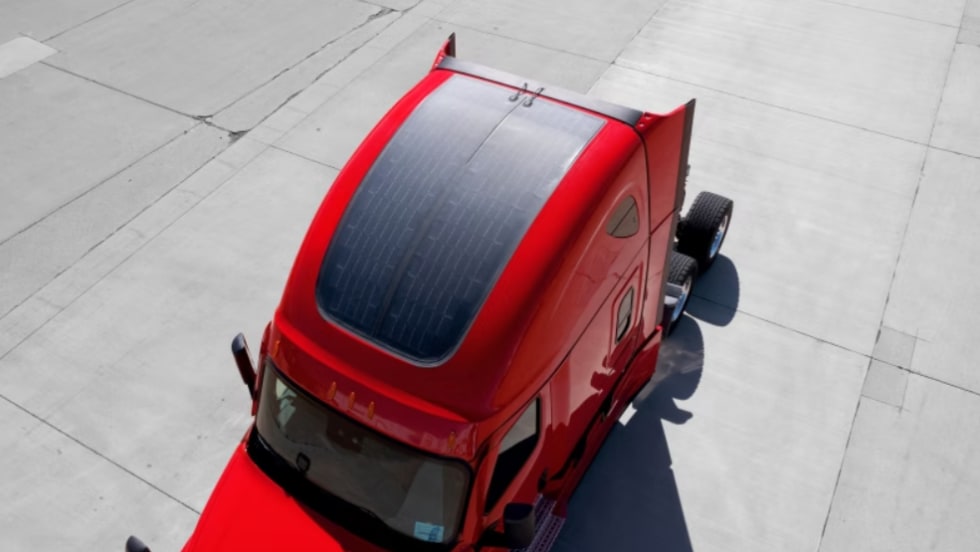
Vanair Introduces Solar, Battery Power Ecosystem for Class 8 Trucks
The company’s expanded EPEQ ecosystem includes flexible solar panels, lithium batteries, hydraulic power systems, and a portable fast charger for electric trucks.
Read More →