




While the use of stability control systems could mean the difference between a collision and the avoidance of a crash, it also could help you create safer, more conservative drivers.
Stability Control Technology Can Lead to More Conservative Drivers
While the use of stability control systems could mean the difference between a collision and the avoidance of a crash, it also could help you create safer, more conservative drivers
by Diana Britton, Managing Editor
November 24, 2009
3 min to read
Alan Korn, director of vehicle dynamics and controls at Meritor Wabco Vehicle Control Systems, says with a stability control system installed on the vehicle, a driver can recognize he's driving too aggressively, because the vehicle is slowed down when the system is activated. This, in turn, may encourage the driver to adopt a more conservative style of driving, he says.
RSC Vs. ESC
Korn says more and more fleets are adopting stability control systems, including electronic stability control (ESC) and roll stability control (RSC) systems. ESC provides full stability control, working to prevent both rollovers and loss of control incidents. RSC is built to primarily address rollovers, but not loss of control.
Using the anti-lock brake system, the technology that powers RSC uses a lateral accelerometer, a sensor that measures the lateral acceleration, the main cause of a rollover, Korn says. Valves are automatically applied to dethrottle the engine, while the drive and trailer axle brakes are also automatically engaged.
ESC has the same technology to control rollovers as RSC, but it uses two additional sensors, Korn explains. The first, a steering wheel sensor, tells the system where the driver is pointing the vehicle. The second, a gyro sensor, measures how much the vehicle is actually turning. When there's a disconnect between the two, the system automatically intervenes. The individual foundation brakes kick in as a counteractive force.
Stability Control Study
Korn says a mandate for these systems could be in the cards, especially following the results of a recent study conducted by The University of Michigan Transportation Research Institute under a cooperative agreement between the National Highway Traffic Safety Administration and Meritor Wabco Vehicle Control Systems. That study found that because ESC systems are more comprehensive, they offer more safety benefits than RSC.
With ESC installed on the vehicle, the number of annual heavy truck crashes would decrease by 4,659 crashes, preventing 126 fatalities and 5,909 injuries, according to the study. If all trucks were outfitted with ESC, it would result in savings of $1.74 billion annually because of the rollovers prevented. With RSC installed on the vehicle, there would be 3,489 less crashes, preventing 106 fatalities and 4,384 injuries. Having all trucks outfitted with RSC would save $1.46 billion annually, according to the data.
Methodology
According to Korn, the study's researchers set out to measure the effectiveness of stability control systems. Using information from several databases including the GES database, the Trucks Involved in Fatal Accidents database and the Large Truck Crash Causation Study, UMTRI determined how many of the accidents involved rollovers versus loss of control. They were categorized according to what conditions they occurred in, including type of road (curvy or straight) and condition of road (wet or dry). Using data collected from TIFA and GES on a five-year annual average, the researchers found that there were 6,874 crashes involving rollovers per year and 4,350 crashes involving loss of control.
Using a hardware-in-the-loop simulation, or HiL, the researchers put the vehicles through a computer software maneuver simulation, in order to accurately measure how the stability control system was reacting. They used HiL for the rollover incidents, and tested the systems for loss of control in the field. With these methods, they were able to put a value of effectiveness on the different stability control systems in mitigating rollovers and loss of control, according to different conditions.
In the end, they found that ESC and RSC were most effective on curvy, dry roads, with prevention rates of 75 percent and 71 percent, respectively.
Apex Logistics, which uses Meritor Wabco's Roll Stability Control system, has seen the benefits. "We averaged three rollovers a year until Jan. 1, 2005, when we started equipping our tractors with RSC," said Mike Siebert, director of maintenance. "We haven't had a rollover since."
Subscribe to Our Newsletter
More Fleet Management

'Beyond Compliance,' Regulations, Driver Coaching on ATRI’s 2026 Research List
The American Transportation Research Institute will examine driver coaching, regulatory impacts — including the "Beyond Compliance" concept —and weather disruptions that shape trucking operations.
Read More →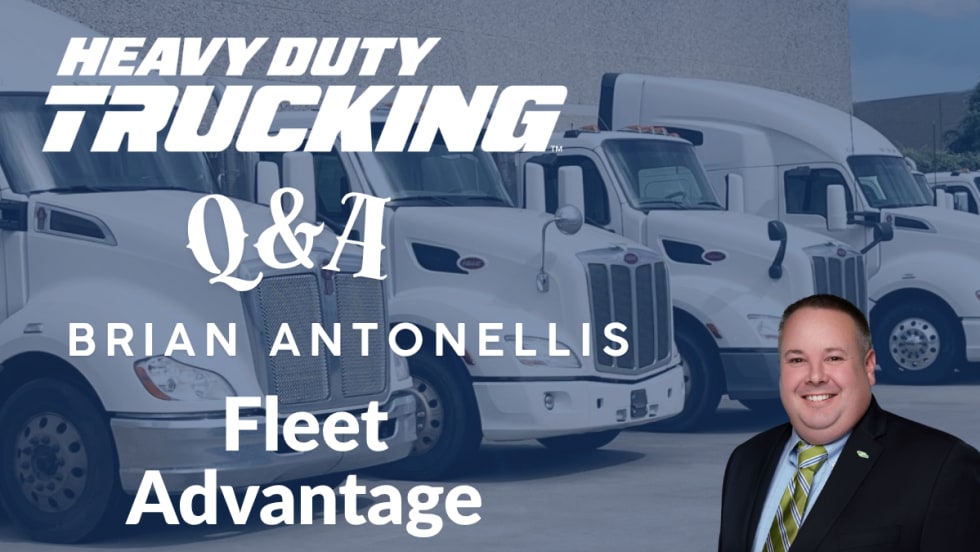
Fleet Advantage's Brian Antonellis on the Growing Need to Replace Old Trucks
Fleet Advantage's Brian Antonellis says it's time for fleets to get back to the fundamentals of good maintenance practices. And that includes replacing older, inefficient equipment.
Read More →
Truckstop.com Adding to Open Deck, Heavy Haul Offerings
Load matching for flatbed, lowbed, oversize and overweight loads can't be automated like basic van freight, but Truckstop.com is adding more high-tech tools to help.
Read More →
Trucker Path, Truckstop.com Expand Load Access Partnership
An expanded Trucker Path and Truckstop.com integration brings more freight opportunities into the TruckLoads app while emphasizing security and network quality.
Read More →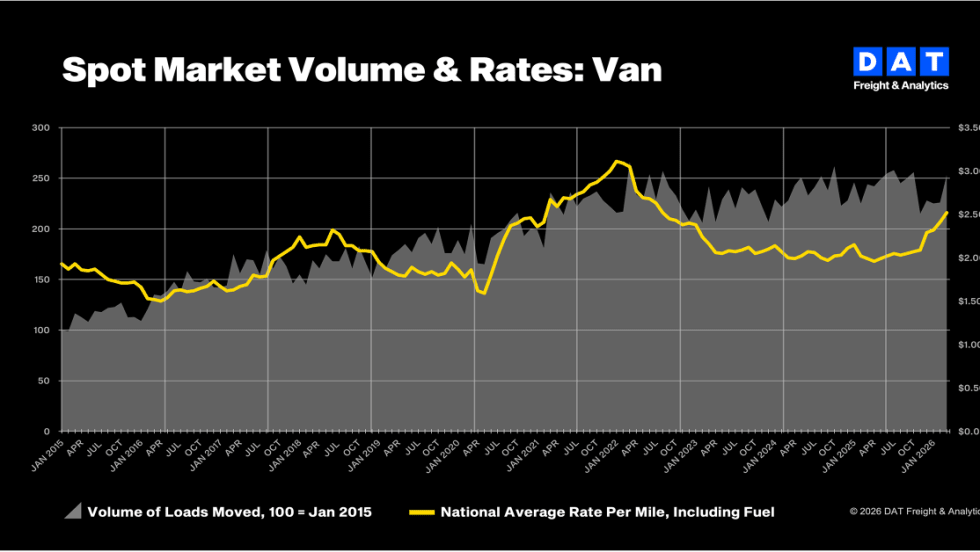
Truckload Rates Hit Two-Year Highs as Diesel Costs Surge, DAT Says
Strong March freight demand combined with a spike in fuel costs pushed both spot and contract truckload rates to their highest levels in more than two years.
Read More →
The AI Conversation You Need to Have with Your TMS Provider
Everyone’s talking about AI — but is your transportation management system actually built for it?
Read More →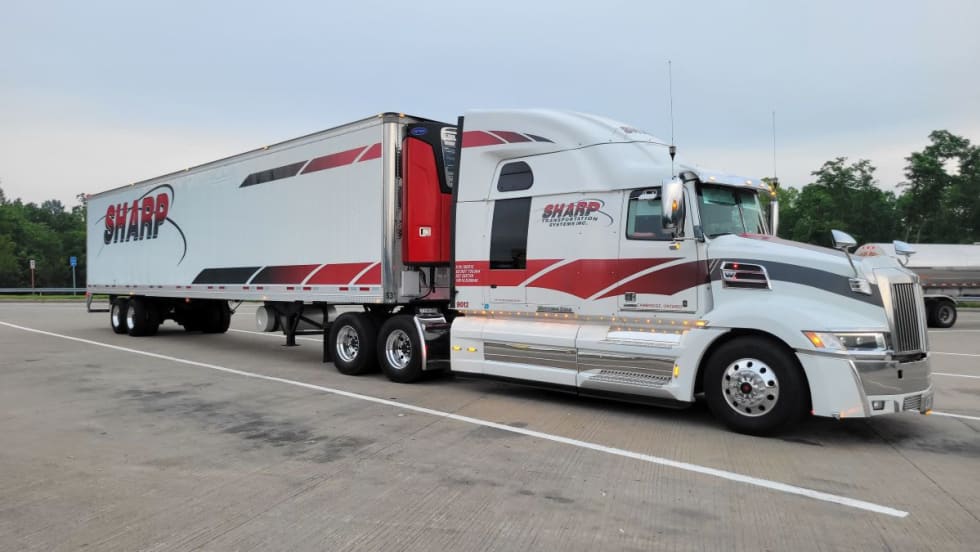
Kriska Buys Fellow Canadian Carrier Sharp Transportation Systems
Being part of KTG will allow Sharp to expand and improve its services.
Read More →
Bill in House Would Raise Minimum Insurance for Motor Carriers to $5 Million
The Fair Compensation for Truck Crash Victims Act would increase insurance requirements for interstate motor carriers by nearly seven times.
Read More →
FTR Trucking Conditions Index Hits Four-Year High in February
Strong freight rates push TCI to 10.2, but FTR expects fuel-price volatility to skew March results.
Read More →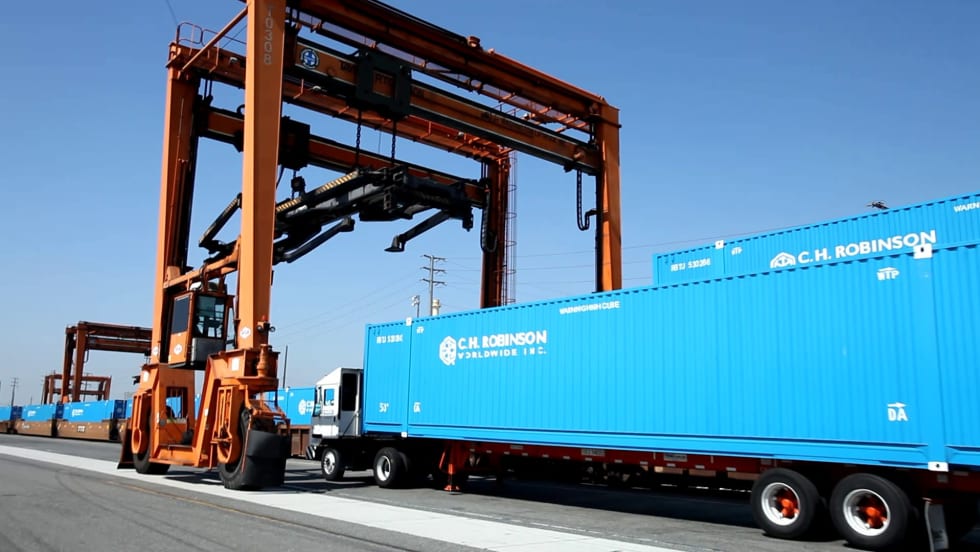
C.H. Robinson Offers Carriers Relief as Diesel Prices Surge
C.H. Robinson is waiving fees on fuel cards and cash advances for April and May, aiming to help carriers offset rising diesel costs tied to geopolitical instability.
Read More →