




There are indications that we are closer to the start of economic recovery - at least, the pace of decline is slowing - but John White, President of U.S. Xpress, is still waiting for inventory numbers to show a turnaround.
The inventory-to-sales ratio is the highest it has been since 2001, White said. In remarks at the ALK Transportation Technology Summit in late April, White said shippers are telling him that they will continue destocking their inventories, a sign that they are not seeing any increase in demand.
This number was at the core of a bleak overall assessment: gross domestic product down 2.7 percent so far this year, the worst since 1982; housing starts expected to stay low into next year; U.S. unemployment approaching 9 percent and rising.
White said he believes the trucking industry has lost about 15 percent of its total capacity. Some 45,000 trucking jobs were lost in the first quarter of this year. There were 3,065 bankruptcies last year - counting only fleets with five or more trucks - the highest in any 12-month period since 2001. The ATA For-Hire Tonnage Index fell 13.4 percent last year - "and we're not sure we've seen the bottom."
There is at least one positive, White said. Driver turnover has dropped significantly, probably because drivers who formerly jumped from one fleet to another in search of a better deal are now thinking that the grass is not necessarily greener. "That has helped us, but the reality is that it will not take much of an upturn to reignite the problem."
Fuel Prices
Fuel prices are the great unknown: "All it will take is a hurricane or some other disruption for things to get really bad," he said.
The drop in oil prices from their record high of $4.76 a gallon last July has in effect produced a $230 billion tax cut for the industry, White said. "But no one in the industry believes these prices will hold for long." He cited a forecast that shows the per-gallon price rising annually from today's $2.09 to over $4 by 2017.
"The reality is that diesel does not go as far as it did," he said - an observation that resonated with carriers who came to the ALK conference to get better at using onboard technologies to control fuel use, among other functions.
ALK offers fuel control, and other business solutions, with its CoPilot system, which integrates global positioning with routing and mapping systems and gives drivers turn-by-turn directions through an onboard computer or a cell phone.
Optimizing Routes
Other suppliers were on hand, as well. Among them was Benjamin Murphy, vice president of TMW Optimization Software, who noted that while carriers are good at designing their fuel networks based on supplier chains, locations and deals, many are not taking the next step of optimizing their routes to buy specific amounts at specific locations.
Prices can vary enormously across the country even within a network, and a decision-support system like ISDC's Expert Fuel can get a driver from one low-cost pump to the next, with room to take on more fuel, and save lots of money, Murphy said. White underscored the point with a testimonial: Expert Fuel saves U.S. Xpress millions of dollars a year, he said.
Down the Road
Looking further down the road for the next generation of fuel-saving technologies, ALK founder Alain Kornhauser talked about a data base he has that will provide a statistical forecast of how much time it will take for a truck to transit a particular stretch of road at a particular time of day on a particular day of the week.
By analyzing data collected from GPS-equipped vehicles, Kornhauser has built a map of the U.S. that can show historical speeds on given road segments. "What I want to generate out of this is two things," Kornhauser said. "One, the minimum expected travel time between any two points based on observed speed and, two, provide information as a function of day of week and time of day. I have the data to do that."
The practical outcome will be the ability for a fleet to pose a theoretical trip over specific routes at specific times and learn how much congestion it might expect, absent an abnormality such as an accident. The next step would be to layer real-time traffic information on to this historical base, for a complete congestion planning solution.
Kornhauser, a PhD who in addition to his role as ALK chairman is a professor of operations research and financial engineering at Princeton University, said he expects to begin testing the system for use with CoPilot and PC*Miler this summer.
From the June 2009 issue of Heavy Duty Trucking.
Technology for Cost Control: Report From the ALK Conference
There are indications that we are closer to the start of economic recovery - at least, the pace of decline is slowing - but John White, President of U.S. Xpress, is still waiting for inventory numbers to show a turnaround

More Fleet Management

'Beyond Compliance,' Regulations, Driver Coaching on ATRI’s 2026 Research List
The American Transportation Research Institute will examine driver coaching, regulatory impacts — including the "Beyond Compliance" concept —and weather disruptions that shape trucking operations.
Read More →
Fleet Advantage's Brian Antonellis on the Growing Need to Replace Old Trucks
Fleet Advantage's Brian Antonellis says it's time for fleets to get back to the fundamentals of good maintenance practices. And that includes replacing older, inefficient equipment.
Read More →
Truckstop.com Adding to Open Deck, Heavy Haul Offerings
Load matching for flatbed, lowbed, oversize and overweight loads can't be automated like basic van freight, but Truckstop.com is adding more high-tech tools to help.
Read More →
Trucker Path, Truckstop.com Expand Load Access Partnership
An expanded Trucker Path and Truckstop.com integration brings more freight opportunities into the TruckLoads app while emphasizing security and network quality.
Read More →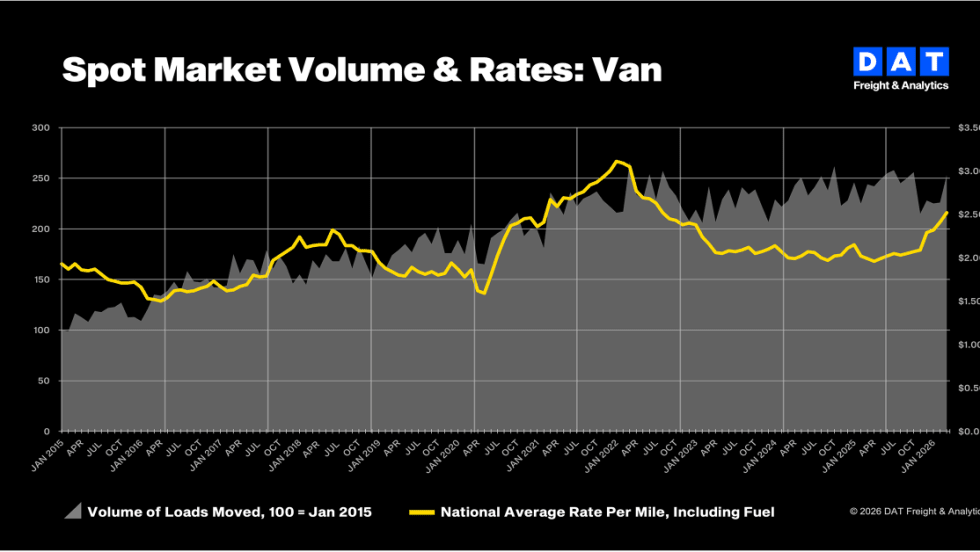
Truckload Rates Hit Two-Year Highs as Diesel Costs Surge, DAT Says
Strong March freight demand combined with a spike in fuel costs pushed both spot and contract truckload rates to their highest levels in more than two years.
Read More →
The AI Conversation You Need to Have with Your TMS Provider
Everyone’s talking about AI — but is your transportation management system actually built for it?
Read More →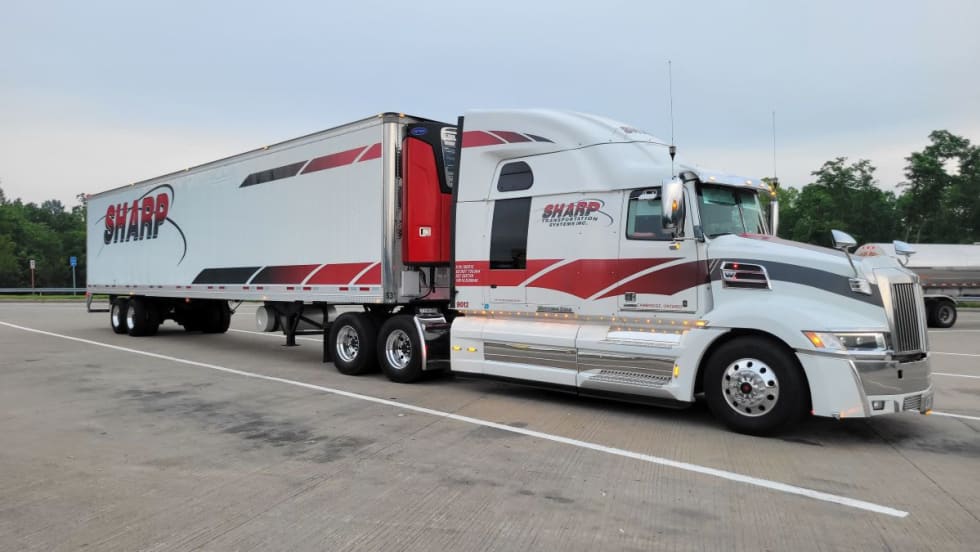
Kriska Buys Fellow Canadian Carrier Sharp Transportation Systems
Being part of KTG will allow Sharp to expand and improve its services.
Read More →
Bill in House Would Raise Minimum Insurance for Motor Carriers to $5 Million
The Fair Compensation for Truck Crash Victims Act would increase insurance requirements for interstate motor carriers by nearly seven times.
Read More →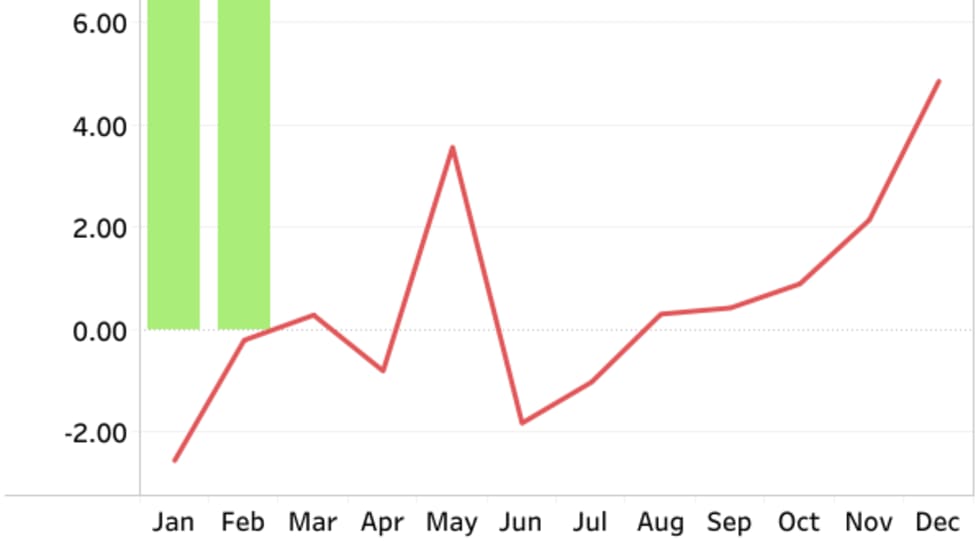
FTR Trucking Conditions Index Hits Four-Year High in February
Strong freight rates push TCI to 10.2, but FTR expects fuel-price volatility to skew March results.
Read More →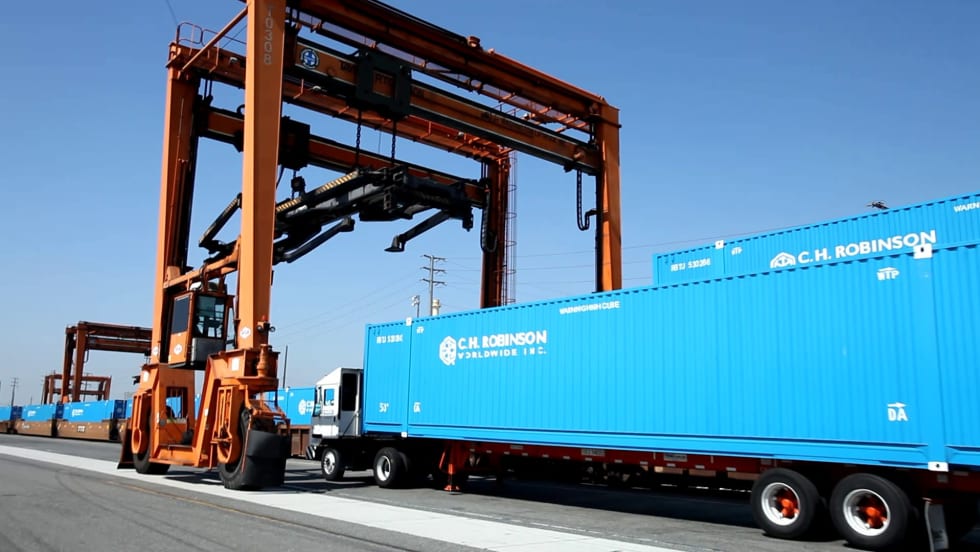
C.H. Robinson Offers Carriers Relief as Diesel Prices Surge
C.H. Robinson is waiving fees on fuel cards and cash advances for April and May, aiming to help carriers offset rising diesel costs tied to geopolitical instability.
Read More →