




Constantly climbing fuel prices have more and more fleets mulling over their operating costs. And while proper tire maintenance is one of the biggest keys to getting the best fuel economy, it will only take you so far.
Testing Tires For Economy
New TMC recommended practice offers an easier way to evaluate fuel-efficient tires.
by Evan Lockridge, Contributing Editor
June 1, 20074 min to read
Spec'ing fuel-efficient tires is another way to stretch your fuel dollar farther.
Fuel-efficient tires achieve better fuel economy mainly through lower rolling resistance. This is achieved through a combination of tire compounding, tread design and casing construction.
The upside, obviously, is improved fuel economy. The downside, unfortunately, is that tread wear life is typically lower. Lower-rolling-resistance compounds do not wear as long as regular compounds, and their lower tread depths reduce overall wear life.
The only way to know for sure whether fuel-efficient tires will save you money – and which of these tires are best for your operation – is to test them in your fleet. The question is, how do you do this?
That's where the Technology and Maintenance Council of the American Trucking Associations comes in. At this year's spring meeting, members approved a new Recommended Practice called "Guidelines for Evaluating Tire and Wheel Related Products and Systems," or RP 242.
While TMC has had a separate RP on testing tires for fuel economy for a decade – RP 230A – it can be a bit overwhelming. This new one is shorter and more straightforward, according to Guy Walenga, Bridgestone/Firestone North America director of engineering for commercial products and technologies, and chairman of the TMC task force that developed the RP.
RP 242 consists of two parts. One contains a sample product evaluation questionnaire that fleets can give to salespeople who come knocking on their door. "What fleets wanted, and what we provided, is a short standardized format that salespeople are asked to fill out," Walenga says. "Now the fleet is prepared to see the guy … to cut past the claims of the company trying to sell you something and to hone in on what is measurable and what it is going to do for you."
The second part of the RP provides "a six-step process by which product performance can be consistently measured."
Part of these guidelines, Walenga says, give fleets an idea of what kind of information they should be capturing when doing their testing and how they can easily analyze the results on their own. The goal is to have a testing and evaluation procedure that is not too intricate: "If you've got to peel a grape to find a benefit, then maybe you are wasting your time," says he.
This RP also includes steps on how to conduct your product evaluation, in many cases "comparing a new product to an old product or comparing a new product in an operation where such a product did not exist before."
For purposes of testing a tire that claims to be fuel efficient, this means putting the tires on 30 trucks in your fleet and measuring them against 30 selected others.
Even if your fleet does not have enough trucks to make up this sample size, you can still use this method. "In cases like this, you put the fleet on half of what you are testing and the other half is the control group," Walenga says. No matter the size of the fleet, you need to make sure your control and test groups are as similar to one another as possible when it comes to equipment and the type of applications and hauling, and that each group fairly represents your entire fleet.
One of the real tips to conducting a proper evaluation of any product, according to this RP, is that it "must be long enough so that the product is exposed to all or most of operational extremes – yet short enough so that the results may be used in the impending purchase decision."
For testing fuel-efficient tires where you want to get a gauge of how well they improve fuel economy, Walenga says, you can probably get good results in six months. However, if you want to look at that along with mileage and retreadability, then you may want to go longer, because you have to use more of the product to get more data.
The bottom line, Walenga says, is that evaluating tires for fuel economy is one of the easiest things for a fleet to look at. There are certainly more exacting ways to evaluate fuel-efficient tires, but they are more involved and time-consuming.
Using this RP can not only streamline this process, but it also offers a way to screen and test nearly any other product for the trucks in your fleet easily and effectively.
Subscribe to Our Newsletter
More Fleet Management

'Beyond Compliance,' Regulations, Driver Coaching on ATRI’s 2026 Research List
The American Transportation Research Institute will examine driver coaching, regulatory impacts — including the "Beyond Compliance" concept —and weather disruptions that shape trucking operations.
Read More →
Fleet Advantage's Brian Antonellis on the Growing Need to Replace Old Trucks
Fleet Advantage's Brian Antonellis says it's time for fleets to get back to the fundamentals of good maintenance practices. And that includes replacing older, inefficient equipment.
Read More →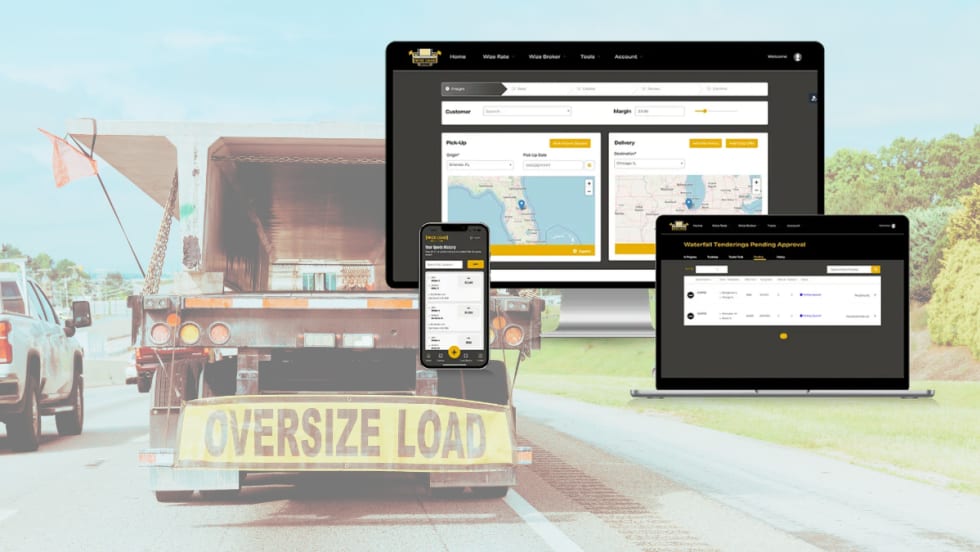
Truckstop.com Adding to Open Deck, Heavy Haul Offerings
Load matching for flatbed, lowbed, oversize and overweight loads can't be automated like basic van freight, but Truckstop.com is adding more high-tech tools to help.
Read More →
Trucker Path, Truckstop.com Expand Load Access Partnership
An expanded Trucker Path and Truckstop.com integration brings more freight opportunities into the TruckLoads app while emphasizing security and network quality.
Read More →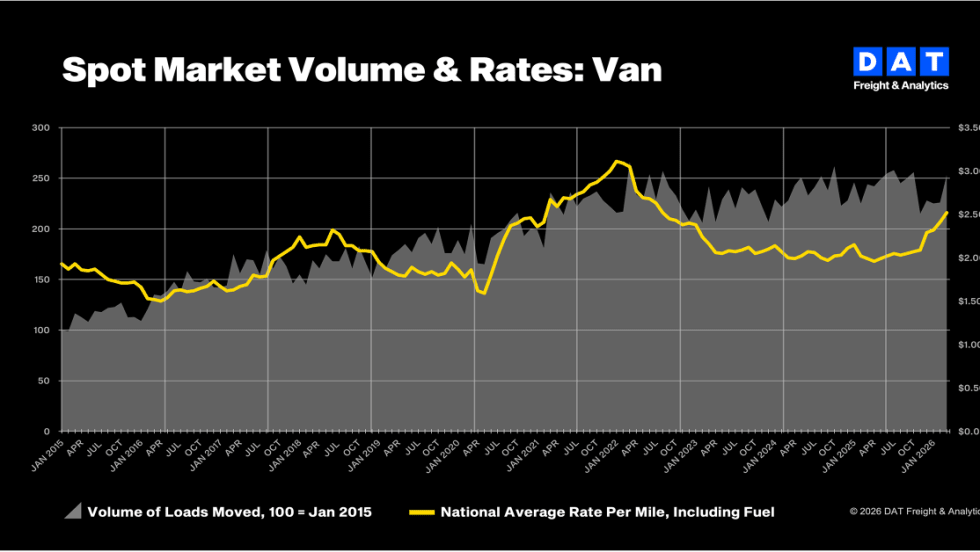
Truckload Rates Hit Two-Year Highs as Diesel Costs Surge, DAT Says
Strong March freight demand combined with a spike in fuel costs pushed both spot and contract truckload rates to their highest levels in more than two years.
Read More →
The AI Conversation You Need to Have with Your TMS Provider
Everyone’s talking about AI — but is your transportation management system actually built for it?
Read More →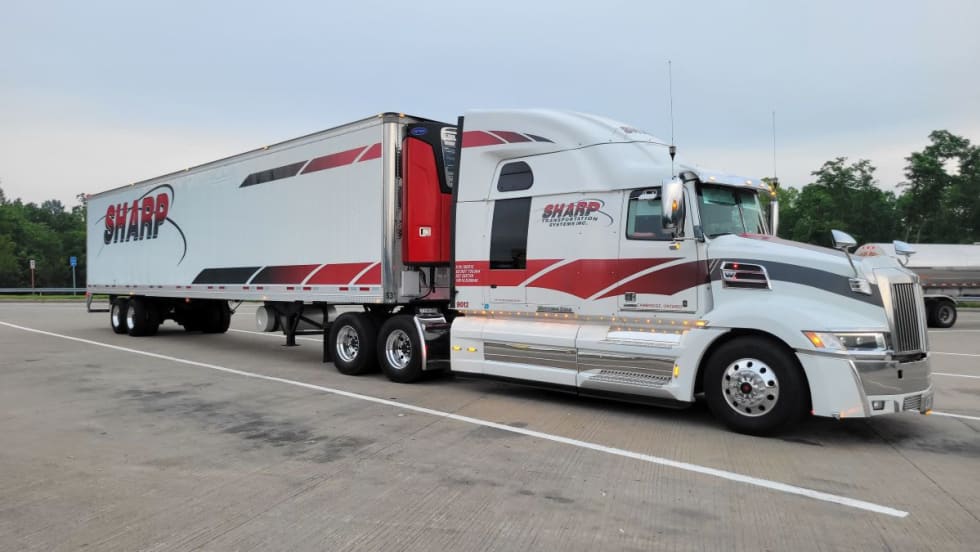
Kriska Buys Fellow Canadian Carrier Sharp Transportation Systems
Being part of KTG will allow Sharp to expand and improve its services.
Read More →
Bill in House Would Raise Minimum Insurance for Motor Carriers to $5 Million
The Fair Compensation for Truck Crash Victims Act would increase insurance requirements for interstate motor carriers by nearly seven times.
Read More →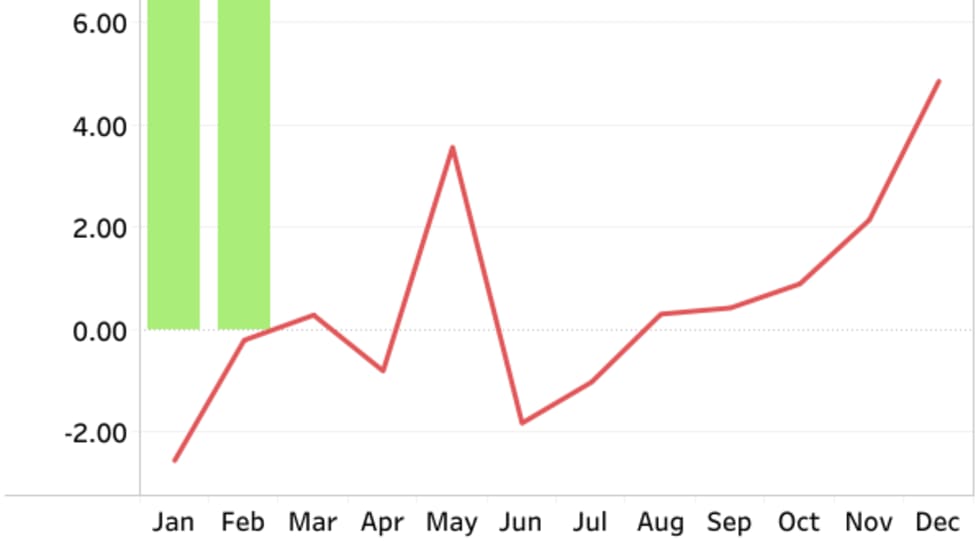
FTR Trucking Conditions Index Hits Four-Year High in February
Strong freight rates push TCI to 10.2, but FTR expects fuel-price volatility to skew March results.
Read More →
C.H. Robinson Offers Carriers Relief as Diesel Prices Surge
C.H. Robinson is waiving fees on fuel cards and cash advances for April and May, aiming to help carriers offset rising diesel costs tied to geopolitical instability.
Read More →