



Arnold Schwarzenegger is in the news again. This time the California governor has come up with a state initiative to "lower the carbon content in fuel."
 MENU
MENU SEARCH
Arnold Schwarzenegger takes on air quality. He needs more information.

Arnold Schwarzenegger is in the news again. This time the California governor has come up with a state initiative to "lower the carbon content in fuel."
The objective is to lower the carbon dioxide in California air by 25 percent by the year 2020. An admirable objective, actually, and nearly like the one that most developed nations signed in the Kyoto accord.
California is not alone in declaring a state initiative on carbon. Other states include Maine, New Hampshire - though it has never been ratified - Vermont, Connecticut, New York, New Jersey and Delaware, as well as many major U.S. cities.
But how do you reduce the carbon content of fuel? We burn hydrocarbons and they make carbon dioxide (CO2)<$> and water (H2O). That way we transform the chemical energy in the hydrocarbon molecules into heat. Heat makes engines work. The only way to reduce carbon is to increase the hydrogen, or H, content.
But most motor fuels are paraffin molecules. They are fully saturated, i.e., all the available radicals are already hydrogen. Ethane has the chemical formula C2H6. You can increase the OH radicals, as in C2H5OH, and you have ethanol. But that doesn't reduce the amount of carbon in the chemical process and the exhaust. You make more CO2 and less CO. It's chemistry, not rocket science.
The way you get there is through good engine design and the substitution of other fuels. Reducing the CO2 in motor exhaust is something the rest of the world is working hard to achieve from a technology standpoint, with or without a mandate from California. If the Governator wants to go against the feds but go along with the rest of the world, I give him high marks.
But not the media reporting him. They espouse ethanol and biofuels. Unfortunately, neither removes carbon from vehicle fuels.
LA Times reporter Marc Lifsher betrays a lack of knowledge of energy or chemistry in a story in which he makes this comment: "... high-carbon-fuel makers could meet their mandate by purchasing credits from electric utilities that supply low-carbon electrons to electric passenger vehicles."
Low-carbon electrons? What nonsense is this? Carbon has an atomic number of 12. It has 12 electrons whizzing around each atom. Never more, never less. Electrons are totally agnostic. They don't care what nucleus they surround and they certainly have no carbon in them.
What I think's going on here is a hidden agenda for more electric vehicles.
But here's the thing: Generating electricity from fossil-based (i.e., carbon) fuel in general provides far more atmospheric pollution than burning gasoline or diesel fuel in a modern internal combustion engine. None of the electric vehicle boosters ever talk about the well-to-wheel emissions of their alternatives. Electricity-generating plants burn coal (pure carbon), oil (even more carbon) and old tires (still more carbon). And they release CO, CO2, sulfuric and nitric acid and all the rest straight to the atmosphere.
And here's an aside. General Motors spent $2 billion on electric cars, culminating in a demo project of 2,000 EV-1 electric cars (and that investment doesn't include the idiotic electric recharge infrastructure you still see in public places). Let's do the math: Each one of those EV-1s that GM built cost a million bucks by the time the project was abandoned.
Compared to similarly priced Ferraris, Bentleys and Lamborghinis, those EV-1s wouldn't pull the skin off a rice pudding.
The better way to get off hydrocarbons is to get to a hydrogen-based energy economy. One day we may. But it'll take some very enlightened leadership at the federal as well as the state level to get there. Put the same effort into energy independence as America put into the '60s space program, and we could get close.
Of course, Arnold could give up driving that full-sized Hummer and maybe drive a Honda Insight instead, just to set a good example. After all, 40 percent of the CO2 emissions in the nation's most populous state come from vehicle exhausts, and 96 percent of vehicle fuel today is petroleum-based.
So, Arnold. Good start on the carbon thing. Get the facts straight, get some intelligent media to support you, and we can get behind you.
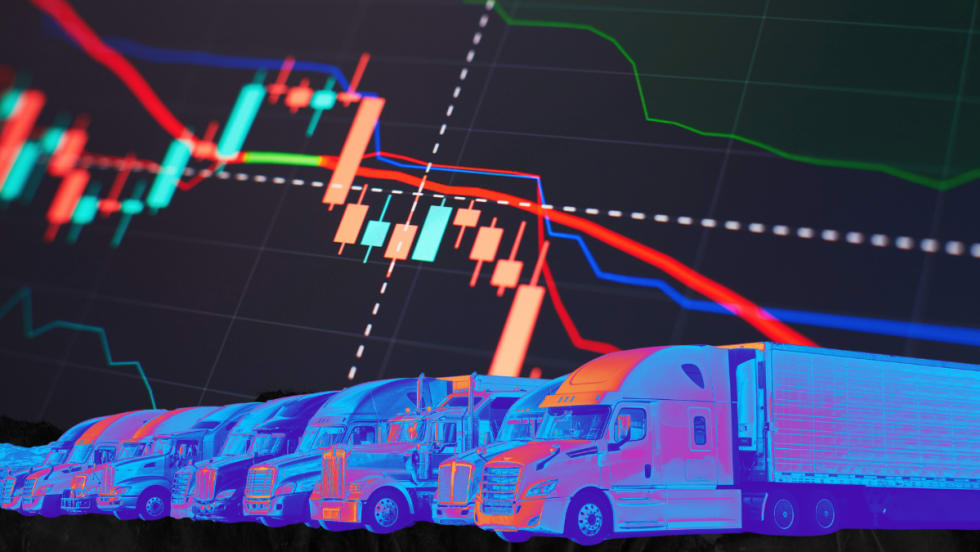
ACT Research data shows volumes hitting a four-year high and supply-demand balance strengthening, but higher oil prices are undercutting tariff relief and tempering optimism.
Read More →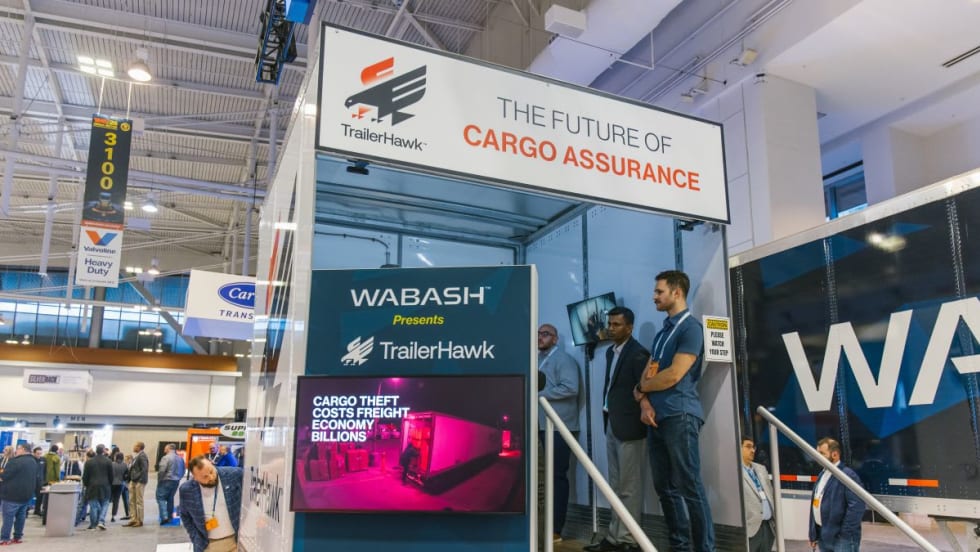
The patent-pending cargo solution integrates a digitally connected cargo door and an intelligent locking system with the TrailerHawk.AI technology platform.
Read More →
The impact of the Iran conflict extends beyond fuel costs, bringing more fraud and cybersecurity risks to the trucking industry.
Read More →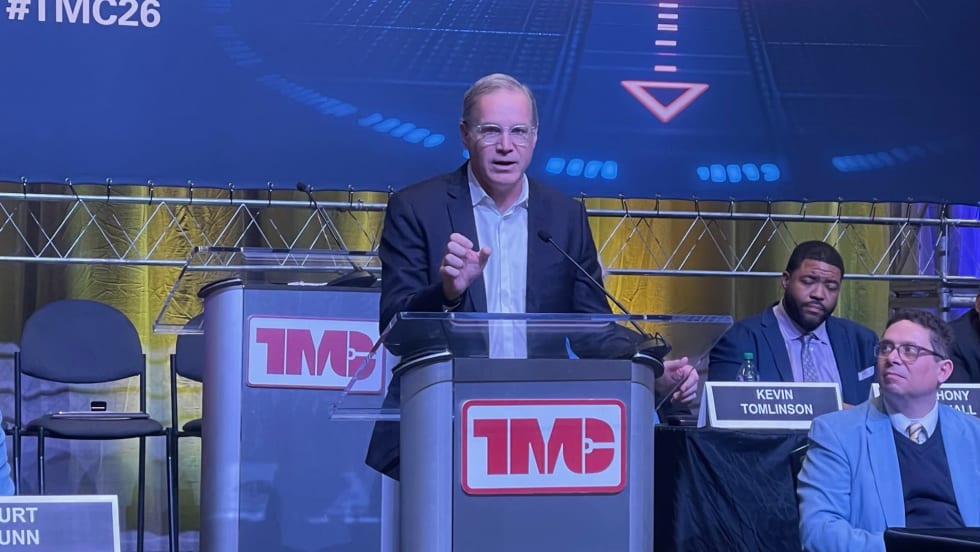
Speaking at the TMC Annual Meeting in Nashville, ATA President Chris Spear said trucking faces mounting pressure from rising fuel prices, geopolitical instability, and uncertainty around trade policy.
Read More →
More than 100,000 new trucking companies enter the industry each year, but regulators manage to audit only a fraction of them. That churn creates opportunities for inexperienced startups — and for “chameleon carriers” that shut down after safety violations and reappear under new identities. Read more from Deborah Lockridge in this commentary.
Read More →
HDTX is an intimate event that connects heavy-duty trucking fleet managers with industry suppliers through small-group discussions, educational sessions, and structured one-on-one meetings.
Read More →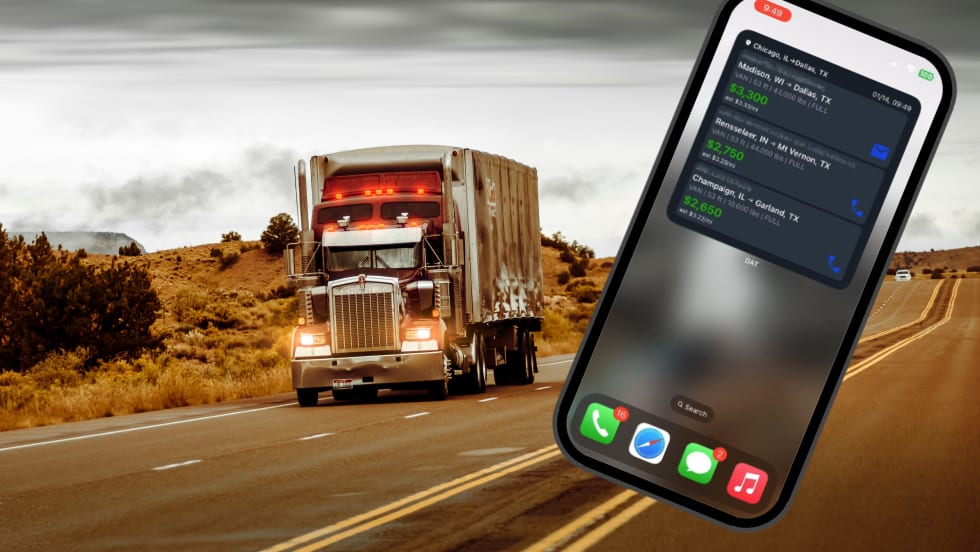
New DAT One feature shows top-paying loads directly on an iPhone’s home screen, helping carriers react faster to spot-market opportunities.
Read More →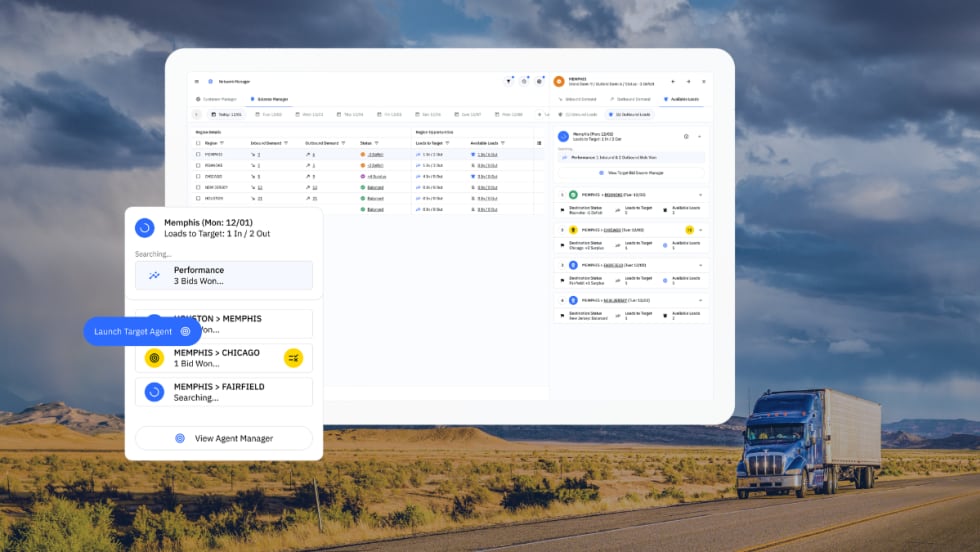
Optimal Dynamics says its new Scale platform uses AI agents and optimization to help carriers find and secure freight that improves network balance and profitability.
Read More →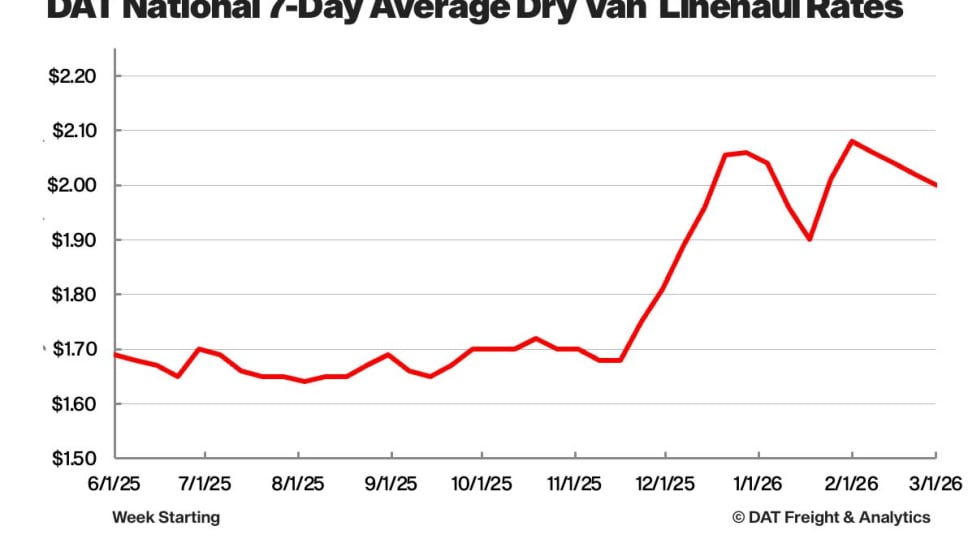
DAT Freight & Analytics data shows tightening flatbed capacity, easing produce markets, and softening van and reefer rates.
Read More →
NACFE's Run on Less - Messy Middle project demonstrates the power of data in helping to guide the future of alternative fuels and powertrains for heavy-duty trucks.
Read More →