




There has been much talk about telematics on the car side of the automotive business, with GM the highest-profile early adopter with its OnStar product. Yet trucking had the car people beat by 20 years.
The early adopters there were trucking companies Schneider National and Roberts Express among the six beta-developers of the Qualcomm OmniTracs system.
The unique antenna, the keypad and the back-office system were a huge enabler for a host of other applications, not least of which was computerized dispatch, the holy grail at Schneider in the mid-'80s.
Getting information into and off of a moving vehicle was an absolute game-changer for trucking, but it has become a commonplace thing today, with many service providers putting the communications pipeline in place through satellite, cellular communications and WiFi. The truck today in many cases is part of a wide-area network with information from the truck driving all manner of applications that streamline operations, enhance productivity and reduce costs.
Diagnostics and Prognostics
In 1998, Qualcomm added JTracs to the OmniTracs system to provide on-board vehicle diagnostics and fault monitoring. Previously it was the responsibility of the driver to report such things as an engine fault, usually during one of the check calls drivers used to have to make three or four times a day from a pay phone. This has completely changed with the wireless truck, which reports in without the driver even knowing.
Knowing a fault has been logged in a truck as it is going down the road is a huge plus for any operations manager, because from that flows a number of actions that can avoid a breakdown. The advance warning that something is wrong with the truck can allow dispatch to send out alternative power to put under the load while a crippled tractor heads for the dealer.
This takes a step up with new packages such as NormNet, to this point a military supplier looking to make inroads into commercial markets with its prognostics software.
NormNet has established itself as a prognostics application for F18 fighter engines, where the software "listens" to sensors on the jet engines for anomalies. The NormNet software has a learning capability that builds a normal profile of sensor activity. If the sensors give signals that are away from the norm - hence the name - the software can report the fact.
Where NormNet differs from JTracs is that it will track all sensors and through its learned experience can predict failure modes well before they happen - an important piece of information on a fighter jet.
NormNet has had significant success in pointing to potential failures on the Series 60 Detroit engine, which is used by the military in many fighting vehicles and could be adapted easily for over-the-road trucks. According to Nick Frankle, manager of new business for the company, NormNet can easily adapt its military product to civilian applications and is looking for development partners.
Safety Systems
The wireless truck is also a safer truck with the adoption of additional safety systems that can report on driving situations in real time. Recent innovations in this arena come from Qualcomm with its critical event reporting and from Iteris, with a new database feature added to its lane departure warning product. Iteris is very close to introducing real-time warnings over a PeopleNet wireless link that already carries critical event reporting.
Critical events can be programmed for safety action. A common critical event is hard braking applications, where speed as reported on the truck databus suddenly drops very quickly. However, safety systems such as Meritor Roll Stability Control, Meritor Wabco's OnGuard and the new Bendix Wingman report vehicle safety intervention information to the databus. This information can be signaled to a fleet's dispatch and safety management as well as stored on the vehicle for future retrieval.
It's the real-time wireless reporting that is of critical importance. Victor Malchesky, director of safety for Swift Transportation, talked about his experience in a presentation at the Qualcomm user conference in San Diego last year. He said that the technology alerted managers to unsafe driving and allowed for driver coaching instantly, averting potential accidents. In his case, he said that any critical event would immediately result in an e-mail being sent to his cell phone. The driver could be contacted via phone to see what had triggered the event and an explanation given. Once the event had been recorded, the driver was alerted via his in-cab console and he had to report in with an explanation within 24 hours. The system also captures a snapshot as well as a location for later reconstruction should it be necessary.
The Iteris system reports on out-of-lane incidences, and the fleet can set its parameters for how many instances and how frequent they are to build a threshold for critical event warnings. If a driver consistently registers out-of-lane excursions, he or she can be brought in for training. If a driver becomes erratic while driving, there can be real-time warning of a fatigue situation, putting the safety team right there in the truck with the driver.
Fuel Economy
Volvo's proprietary Volvo Link also offers reports on driver activity in its Sentry weekly reports that are transmitted from the data collected on the truck. It is also a cornerstone in the company's FuelWatch program that optimizes truck and driver for fuel savings. By generating reports on overall fuel usage as well as a driver's ability to keep the engine in its sweet spot and track the use of cruise control, the wireless reporting is a training aid that allows managers to identify top drivers and separate them from those who can benefit from fuel economy training. Sentry also tracks idle time, an easy way to improve fuel economy.
Another way to reduce fuel expenditures by linking the truck wirelessly to operations is the ability to redirect trucks to fuel stops as fuel optimizers find cheaper fuel. This can have quite a dramatic impact on not only the acquisition cost but also on driver compliance. At Central Refrigerated, Allen Lowry, director of cost analysis, showed how using Qualcomm SensorTracs reports together with a fuel management program has reduced idling almost to the target 35 percent and at the same time improved compliance with the optimizer from 20 percent to 85 percent.
Other fuel savers are minimized out-of-route miles through driver navigation aids that help the driver get straight to his destination, or through geofencing programs such as PeopleNet's Pacos product that provide alerts to show dispatch when a truck has strayed away from its designated route.
Driver Satisfaction
Navigation is a recently deployed feature that can be made available on many wireless truck platforms. Trimble, which has 20 year of experience in GPS solutions for mapping and asset management in the agricultural and construction fields, is one of the GPS pioneers and has recently targeted trucking for its mobile solutions.
In February of 2007, Trimble acquired @Road to expand this growth strategy for the trucking segment. Trimble describes its business as Mobile Resource Management, piggybacking off @Road's Web-based expertise and strong field service.
Another feature that can improve driver satisfaction is e-mail that's enabled through the wireless link. This enhances a driver's sense of connection to not just the business systems of the fleet but to friends and family as well.
Other on-board applications that can appeal to drivers include e-logbook applications that combine GPS and engine diagnostic information from the databus to simplify and automate the job of complying with hours of service.
This also has a beneficial impact on dispatch, as load planning can more accurately be linked to available driving hours.
The Wireless Truck
There has been much talk about telematics on the car side of the automotive business, with GM the highest-profile early adopter with its OnStar product. Yet trucking had the car people beat by 20 years
More Fleet Management

'Beyond Compliance,' Regulations, Driver Coaching on ATRI’s 2026 Research List
The American Transportation Research Institute will examine driver coaching, regulatory impacts — including the "Beyond Compliance" concept —and weather disruptions that shape trucking operations.
Read More →
Fleet Advantage's Brian Antonellis on the Growing Need to Replace Old Trucks
Fleet Advantage's Brian Antonellis says it's time for fleets to get back to the fundamentals of good maintenance practices. And that includes replacing older, inefficient equipment.
Read More →
Truckstop.com Adding to Open Deck, Heavy Haul Offerings
Load matching for flatbed, lowbed, oversize and overweight loads can't be automated like basic van freight, but Truckstop.com is adding more high-tech tools to help.
Read More →
Trucker Path, Truckstop.com Expand Load Access Partnership
An expanded Trucker Path and Truckstop.com integration brings more freight opportunities into the TruckLoads app while emphasizing security and network quality.
Read More →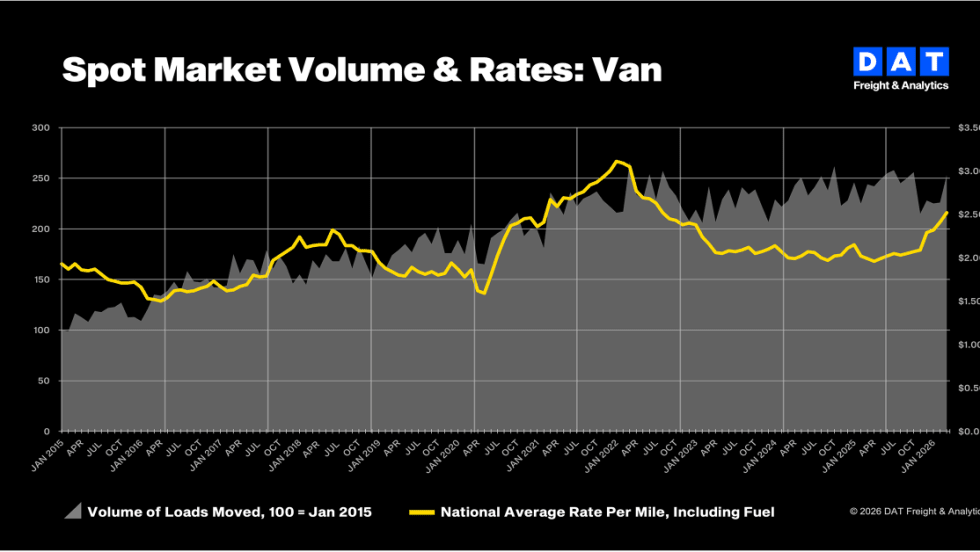
Truckload Rates Hit Two-Year Highs as Diesel Costs Surge, DAT Says
Strong March freight demand combined with a spike in fuel costs pushed both spot and contract truckload rates to their highest levels in more than two years.
Read More →
The AI Conversation You Need to Have with Your TMS Provider
Everyone’s talking about AI — but is your transportation management system actually built for it?
Read More →
Kriska Buys Fellow Canadian Carrier Sharp Transportation Systems
Being part of KTG will allow Sharp to expand and improve its services.
Read More →
Bill in House Would Raise Minimum Insurance for Motor Carriers to $5 Million
The Fair Compensation for Truck Crash Victims Act would increase insurance requirements for interstate motor carriers by nearly seven times.
Read More →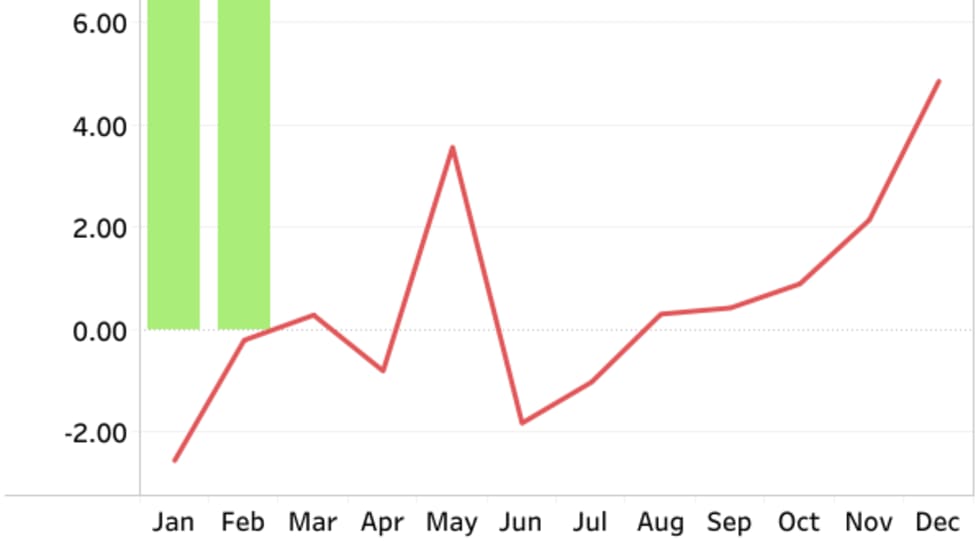
FTR Trucking Conditions Index Hits Four-Year High in February
Strong freight rates push TCI to 10.2, but FTR expects fuel-price volatility to skew March results.
Read More →
C.H. Robinson Offers Carriers Relief as Diesel Prices Surge
C.H. Robinson is waiving fees on fuel cards and cash advances for April and May, aiming to help carriers offset rising diesel costs tied to geopolitical instability.
Read More →