





Falling from a tall trailer will almost certainly result in broken bones or worse for a driver or maintenance person, and will cost thousands of dollars in medical and worker's compensation claims.
Trailer Safety: Easy On, Off and Walking for Drivers With These Products
Falling from a tall trailer will almost certainly result in broken bones or worse for a driver or maintenance person, and will cost thousands of dollars in medical and worker's compensation claims
November 7, 2009

Air cylinders raise the railing along the top of this dry-bulk tanker for safe use by a driver or worker. They drop back down when loading or maintenance is complete.
4 min to read
In fact, several studies show that slips and falls around vehicles could account for as much as 25 percent of all truck and bus driver injuries. While we don't know how many of those are from the cab vs. the trailer, it makes immense financial sense, and is only humane, to take all reasonable steps to prevent such accidents.
A couple of recent announcements are examples of options you can spec to help prevent driver injuries around trailers.
Walkways and railing
Many tankers include walkways and railing. Walkways give people sure footing as they move onto a trailer, and railing help further by providing a steady grip. But some tankers are too tall for permanent hip-height railing, because the first low-overhead obstacle would tear them off. Engineers at Mac Trailer Manufacturing in Alliance, Ohio, have devised a solution: retractable handrail.
The handrail, constructed of tubular aluminum, is operated by an air valve mounted forward of a rear fender, explains Jim Maiorana, Mac's executive vice president. The valve sends compressed air from the brake system to a pair of cylinders that take only a few seconds to raise the railing about 3 feet and lock them into position.
When the driver or worker comes back down, he again operates the valve and the rails retract into a locked position that is lower than the height of the manholes. When the rails are raised, the brakes on the trailer are locked to prevent any movement until the handrail is lowered.
Mac offers the system on its new PneuMactic dry-bulk tankers for several thousand dollars - cheap insurance considering the cost of a serious fall. The system can be fitted to existing tank trailers of various types and makes. More information is at www.mactrailer.com.
Built-in stairway
Drivers must get aboard flatbed trailers to cover and sometimes secure loads, and many of them climb up in precarious ways. Flatbeds sit comparatively low to the ground, but falling from them is almost as painful and expensive as from taller trailers.
Smarter drivers carry and use ladders of various sorts, and wiser owners equip the trailer with steps, but railing are more difficult to employ because the deck must be kept clear for loads that vary widely in size and shape.
About a decade ago, a fleet manager in Gary, Ind., showed off a built-in stairway that formed an easy and safe passage to and from a flatbed's deck. He tried to sell the idea to fellow managers and manufacturers at meetings of the the American Trucking Associations' Technology and Maintenance Council, and served on a TMC task force that looked into placement of steps and handholds in general. But the 2001 recession intervened and the man and his idea dropped out of sight.
East Manufacturing now offers the same type of arrangement in an optional "integrated stairway" built into the trailer's rear. The driver ascends from the first step that joins with the underride guard; two more are placed above that and the deck forms the fourth step up. It's likewise easy to descend, and agile guys can just walk down, thanks partly to the system's handrail. The steps themselves are made of pooch-punched aluminum for slid resistance and positive drainage, says Bill McKenzie, East's manager for platform products.
The rails are next to the steps and above the deck. The lower rail is vertical and then angles at 45 degrees to match the person's ascent. The upper rail is in the stairwell's lid, which the driver has opened before climbing; the lid locks securely in the upright position via double rods that slide into two receivers.
In its down position, the deck lid latches securely to prevent bouncing during transit. The deck lid is load-bearing, so the trailer loses no useful deck area because of the stairs.
The integrated stairway is all aluminum and little or no extra weight is added to the trailer, McKenzie says. ID lights that comply with federal DOT requirements are built into the upper step.
The integrated stairway is available on most new East flatbed models, and is also offered as a kit that can be installed on existing trailers of any make. The price is modest, East says, especially when put against the cost of a fall. And insurance companies might lower their premiums if experience shows a reduction in accidents.
Product information is at www.eastmfg.com.
From the October 2009 issue of Heavy Duty Trucking.
Subscribe to Our Newsletter
More Fleet Management

'Beyond Compliance,' Regulations, Driver Coaching on ATRI’s 2026 Research List
The American Transportation Research Institute will examine driver coaching, regulatory impacts — including the "Beyond Compliance" concept —and weather disruptions that shape trucking operations.
Read More →
Fleet Advantage's Brian Antonellis on the Growing Need to Replace Old Trucks
Fleet Advantage's Brian Antonellis says it's time for fleets to get back to the fundamentals of good maintenance practices. And that includes replacing older, inefficient equipment.
Read More →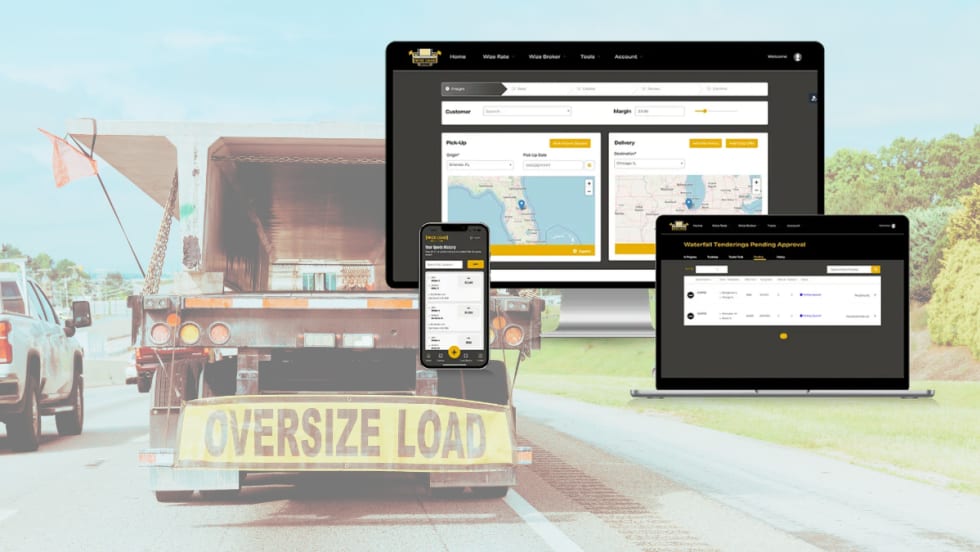
Truckstop.com Adding to Open Deck, Heavy Haul Offerings
Load matching for flatbed, lowbed, oversize and overweight loads can't be automated like basic van freight, but Truckstop.com is adding more high-tech tools to help.
Read More →
Trucker Path, Truckstop.com Expand Load Access Partnership
An expanded Trucker Path and Truckstop.com integration brings more freight opportunities into the TruckLoads app while emphasizing security and network quality.
Read More →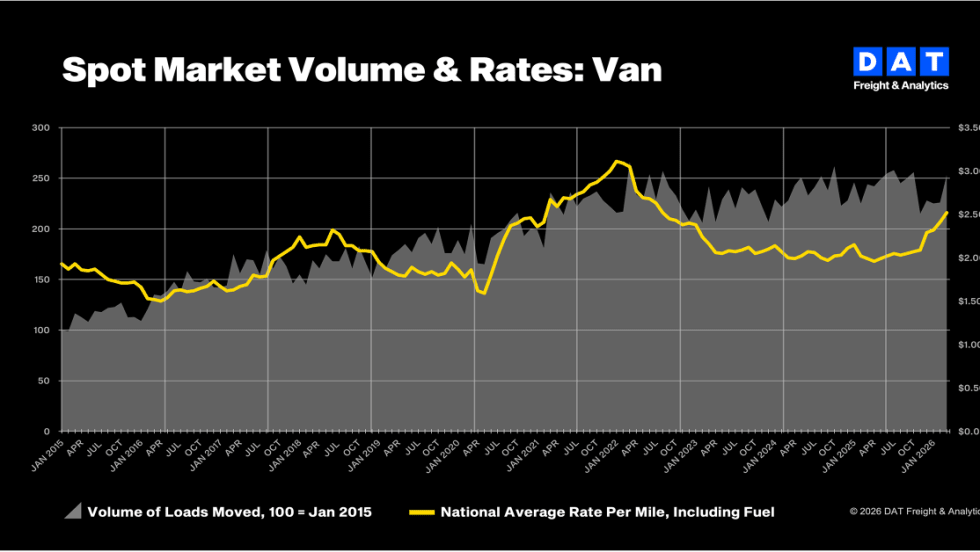
Truckload Rates Hit Two-Year Highs as Diesel Costs Surge, DAT Says
Strong March freight demand combined with a spike in fuel costs pushed both spot and contract truckload rates to their highest levels in more than two years.
Read More →
The AI Conversation You Need to Have with Your TMS Provider
Everyone’s talking about AI — but is your transportation management system actually built for it?
Read More →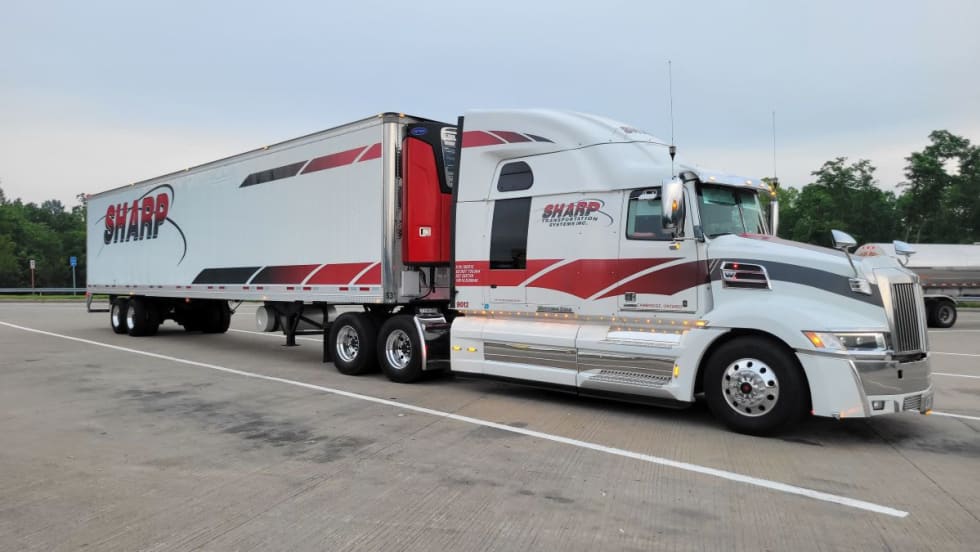
Kriska Buys Fellow Canadian Carrier Sharp Transportation Systems
Being part of KTG will allow Sharp to expand and improve its services.
Read More →
Bill in House Would Raise Minimum Insurance for Motor Carriers to $5 Million
The Fair Compensation for Truck Crash Victims Act would increase insurance requirements for interstate motor carriers by nearly seven times.
Read More →
FTR Trucking Conditions Index Hits Four-Year High in February
Strong freight rates push TCI to 10.2, but FTR expects fuel-price volatility to skew March results.
Read More →
C.H. Robinson Offers Carriers Relief as Diesel Prices Surge
C.H. Robinson is waiving fees on fuel cards and cash advances for April and May, aiming to help carriers offset rising diesel costs tied to geopolitical instability.
Read More →