





Do your suspensions keep you awake at night? Probably not. They tend to be pretty reliable and don’t require a lot of shop time. Still, problems can sneak up as the equipment ages. It might be safe to leave them more or less alone for the first few years, but you don’t want to ignore them completely.
Truck Suspension Maintenance Can Pay Off
Suspensions are not yet completely maintenance-free. Thorough inspections can keep small problems from becoming big ones.
November 15, 2018
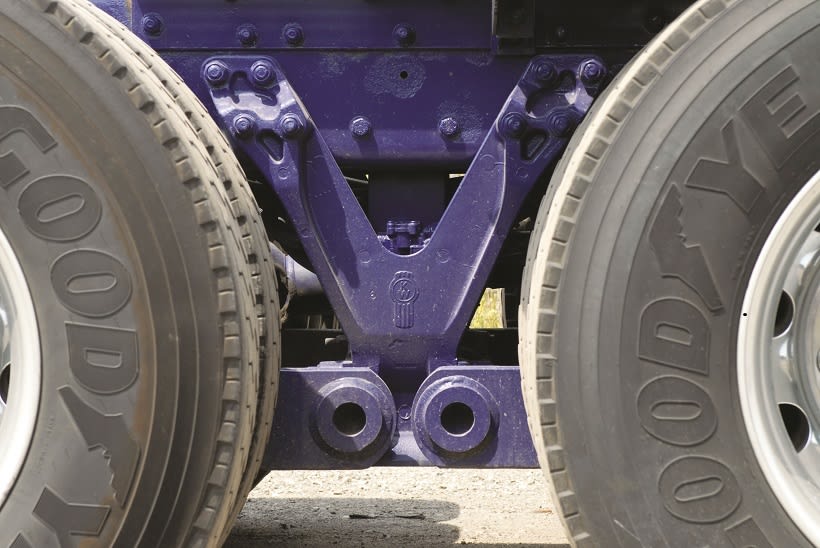
Different types of suspensions experience different types of failures. You may not notice a problem until it shows up as irregular tire wear.
Photo: Jim Park
5 min to read
We talked to a few fleets to find out what their pain points were and found surprisingly little. Jarit Cornelius, vice president of maintenance and compliance at Ethridge, Tennessee-based Sharp Transportation, says he spent just over $4,000 on suspension-related maintenance and repairs so far this year on his 140 power units.
“We have 360 trailers in the fleet and our maintenance costs year-to-date are $9,318,” he says. “Of that figure, 78% of the cost was for airbag replacements on 2003-2005 model-year trailers. I don’t even worry about that. A 15-year-old air bag owes me nothing.”
As robust as they are, things do go wrong. Cornelius likens a suspension to a diesel particulate filter. “DPFs don’t fail as a root cause – it’s usually something upstream,” he explains. “There’s usually some external factor that places undue stress on the suspension components, like not matching dual-tire diameters or running with a dry fifth-wheel top plate. They can cause uneven loading and excess torque on parts of the system, which speed up normal wear. You may not notice the problem directly on the suspension, but you’ll see increased tire wear, irregular tire wear, failed shock absorbers and the like. Those are symptoms of suspension problems that probably have another root cause.”
If you have tire wear problems on drive axles, the likely cure might be an alignment, but the alignment might reveal the real source of the problem. According to Mike Beckett of MD Alignment of Des Moines, Iowa, the average truck that visits his shop needs $1,000 worth of suspension work before he can even start doing an alignment.
Beckett says the average 3.5- to 4-year-old truck with half a million miles on it will have some undercarriage issues, such as loose U-bolts and loose wheel bearings. “You’ve got four and a half hours of labor at $90 an hour and you haven’t even replaced a part yet,” he says. “Chances are, the spring-eye bushings on the rear suspension, if you have them, are worn out too, so now we have to press bushings into all of them. You’ve now spent $1,000 and we haven’t even begun the alignment.”
Beckett says he frequently sees loose U-bolts on under-slung suspensions where the weight of the truck hangs on the U-bolt. Over time, the bolts stretch and the assembly loosens, he says.
“When you see air bags cocked in at the bottom, that usually indicates the U-bolts have stretched and the axle is moving within the assembly,” he notes. “This can be difficult to detect when looking down at the assembly. The usual signs are not obvious from that vantage point, such as rust streaks running from the bolt. Get under it and look.”
Beckett suggests torqueing the suspension U-bolts when the truck is new, again at 5,000 miles because they stretch a lot when they are new, and every 50,000 miles after that.
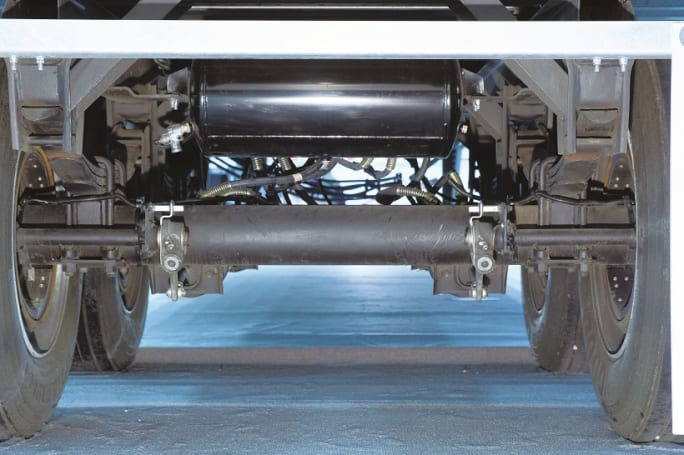
All interconnected parts respond to other components in the suspension system. A problem in one part of the suspension may indicate a failure with another part of the system.
Photos: Jim Park
Canaries in the truck bay
Kevin Tomlinson’s approach to suspension maintenance is eyes-on and hands-on. “There’s not much in terms of ongoing maintenance, but our techs are under the tractor every 15,000 miles,” says the director of maintenance at South Shore Transportation of Sandusky, Ohio. “We hardly need to grease anything anymore, but we look closely for damage and loose fasteners.”
Shock absorbers and leveling valves remain about the only moving parts in a tractor suspension, and they do need periodic inspection.
“Visually inspect them for leaking hydraulic fluid, broken end connections, worn bushings or cylinders and over-extension,” says David Brinkman, category director for suspension products at Stemco. “Replace any shock absorbers that can be easily compressed or extended, or if you find leaking hydraulic fluid.”
Monroe says in addition to leaks, symptoms that shocks may need replacing include physical damage such as dents or worn/broken mounts, and cupped or uneven tire wear.
Shocks, it should be said, tend to fail as the result of some other problem, as do tires. They are the canaries in the coal mine, so to speak. “The shock tries to compensate for other problems in the suspension,” Beckett says. “After a while, if the problems are bad enough, it just gives up.”
Height control valves and leveling arms are mechanical parts and not immune to failure. Occasionally, drivers will tamper with the valve adjustment or bend the arm to “improve the ride” of the truck. In doing so, they risk upsetting the driveline angle, which can damage U-joints and possibly pinion bearings.
“It’s a simple check,” Brinkman says. “The height control valve leveling arm should move to the intake position when placed under load, which should allow air to enter the air springs. When the load is removed, the leveling arm should move to the exhaust position to indicate that it is allowing air to escape. And after both operations, it should move back to the neutral position.”
In addition to a visual inspection for damage, the frame should be lifted, and the air bag allowed to extend so any debris that may have accumulated between the rubber and the metal piston can be removed. If you don’t, that’s an invitation for abrasion damage, says Brinkman.
When all is said and done, and the truck is back on the road, record the results of the inspection when damage or wear is discovered.
Ken Mckibben, president of transportation consultant Single Source Transportation Solutions, says failure analysis can save the fleet lot of money. “All those PM inspections add up over the year, and while they are worth every penny, if you can track problems over a period of time, you can maybe spec those problems out of future equipment purchases,” he says. “At the very least you’ll know what to expect from your equipment over time.”
Subscribe to Our Newsletter
More Maintenance
Hendrickson Unveils Watchman Smart Wheel-End System at TMC
Hendrickson’s new sensor platform integrates with its TireMaax system to deliver real-time tire and wheel-end insights, targeting uptime and cost savings.
Read More →
Over-the-Air Updates and the Modern Powertrain Explained
Over-the-air updates are moving beyond recalls, and expanding how fleets manage performance, compliance, and uptime.
Read More →
SKF, TMC Expand Hands-On Training to Boost Technician Skills at Annual Meeting
A new partnership between SFK and TMC brings certified, on-site instruction focused on wheel-end reliability and maintenance best practices.
Read More →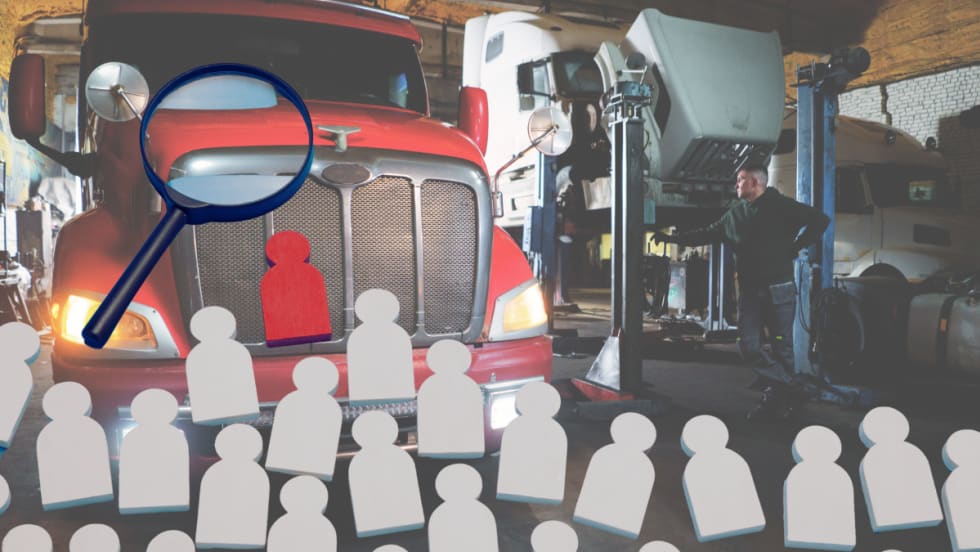
Why Higher Pay Isn’t Fixing the Heavy-Duty Technician Shortage
Hiring heavy-duty truck technicians has become a bidding war, but shops that focus on culture, training, and career paths are gaining an edge. That's the takeaway from a TMC panel discussion.
Read More →
Technology & Maintenance Council 2026 Annual Meeting [Photos]
Couldn't make it to Nashville for TMC's 2026 annual meeting? Check out these images.
Read More →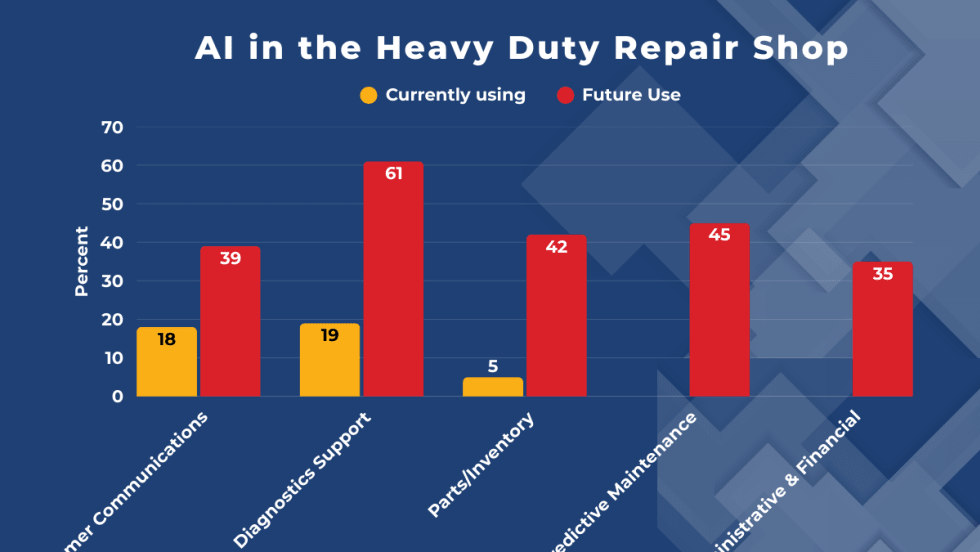
Fullbay Report: Heavy-Duty Shop Revenue Up, Rates Rising, but Shops Still Short on Techs
Strong growth across the heavy-duty repair sector is being tempered by workforce shortages and an aging technician pipeline.
Read More →
How Mack Sees the Next Era of Fleet Intelligence
Telematics has evolved from simple vehicle tracking into a connected service platform that can help fleets boost uptime, improve specifications, and move toward predictive maintenance. Mack executives say AI is now giving fleets a way to turn all that vehicle data into faster, smarter decisions.
Read More →
Clarios Expands Battery Monitoring Into Subscription Service with Battery Manager Pro
A new battery-monitoring-as-a-service program from Clarios Connected Services uses predictive analytics and automatic replacement to reduce downtime and smooth fleet maintenance costs.
Read More →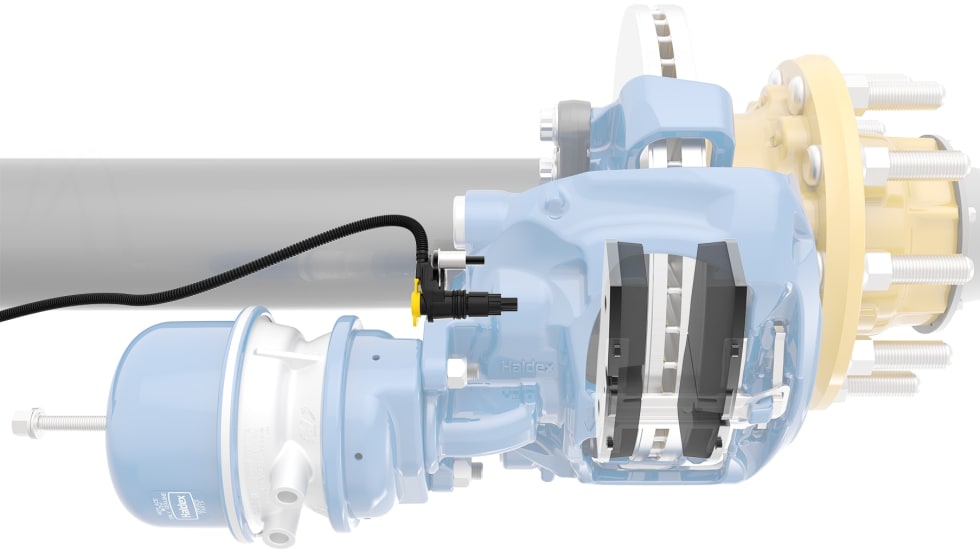
SAF-Holland’s BrakeSight Aims to Take the Guesswork Out of Air Disc Brake Maintenance
New Haldex sensor technology from SAF-Holland integrates with telematics systems to give fleets continuous insight into air disc brake condition.
Read More →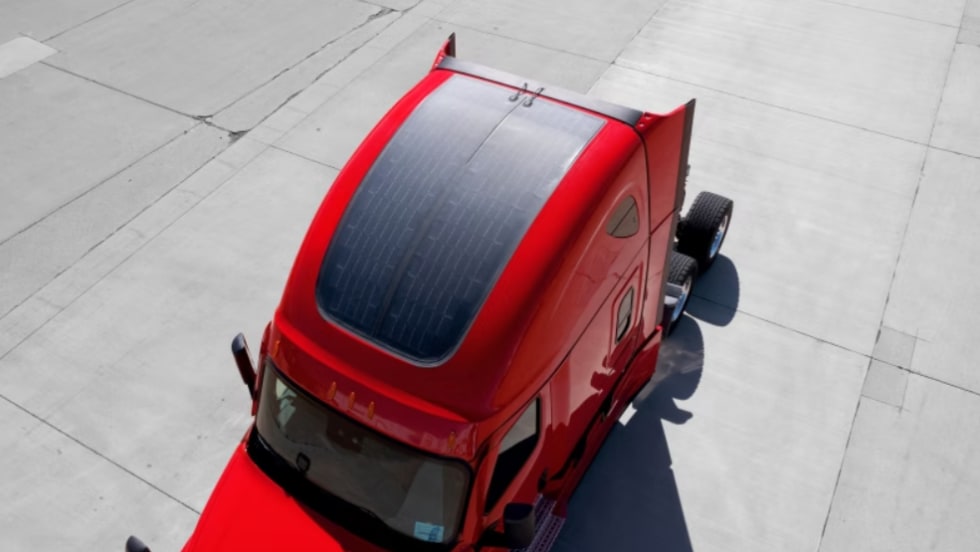
Vanair Introduces Solar, Battery Power Ecosystem for Class 8 Trucks
The company’s expanded EPEQ ecosystem includes flexible solar panels, lithium batteries, hydraulic power systems, and a portable fast charger for electric trucks.
Read More →