




March’s unprecedented surge in diesel prices was one more indication that costs for truck fleets are rising sharply. Of course, the same is true for everyone. Consumer inflation is running at the highest levels in 40 years, prompting the Federal Reserve to raise the target federal funds rate for the first time since 2018 in a bid to cool things down a bit and return the economy to a long-run inflation rate of around 2%.
Trucking’s Inflation Worries Go Beyond Fuel
For trucking companies, the biggest single threat from inflation arguably is not in their own costs, but in what higher costs will mean for consumer spending.
by Avery Vise, FTR
March 29, 2022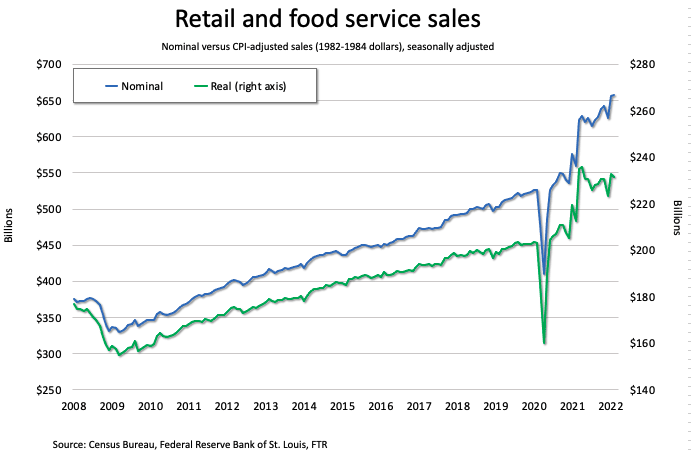
Some economists are skeptical that the Fed’s moves to address inflation will work, because the inflationary pressures are not normal.
Source: FTR
3 min to read
Inflation currently is running close to 8% annualized, and it’s still more than 6% if we exclude the volatile food and energy sectors. One reason economists exclude those sectors is that they tend to fall outside of usual pricing pressures. Food costs often vary because of weather-related issues such as droughts, floods, or freezes. Meanwhile, petroleum is a global economy that moves for a host of supply, demand, and political reasons or — as is currently the case — because the world’s third largest supplier of crude decided to start a war.
Some economists are skeptical that the Fed’s moves to address inflation will work, because the inflationary pressures are not normal. Much of it is driven by supply chain disruptions causing scarcity — a dynamic that we historically had seen just in food or a few other limited products at any given time. During the rebound from pandemic, however, these disruptions have become widespread.
How is inflation affecting trucking companies?
For motor carriers, inflation is showing up in places besides driver wages and fuel. Perhaps the most dramatic example is trailers. The Producer Price Index (essentially a measure of business-to-business inflation) for truck trailers and chassis has been surging for a year. February saw the second-largest monthly increase (6.3%) in the trailer PPI, after the third-largest increase (5.5%) in January. The largest one-month gain (10.5%) occurred in October. Surging trailer costs are not surprising given the price surges we have seen in key trailer materials, such as aluminum, steel, and lumber.
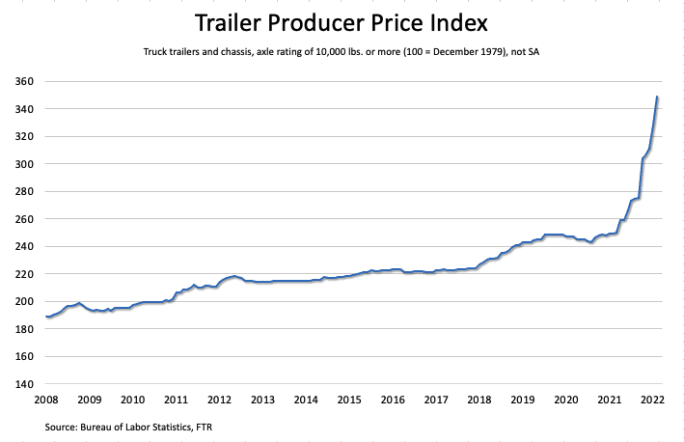
The Producer Price Index (essentially a measure of business-to-business inflation) for truck trailers and chassis has been surging for a year.
Source: FTR
For trucking companies, the biggest single threat from inflation arguably is not in their own costs, but in what higher costs will mean for consumer spending. If consumers buy fewer goods because each item they purchase costs more, that’s a loss of freight. That weakening of freight, in turn, would be compounded by the fact that retail inventory levels (except in the automotive industry) have risen sharply.
In February, retail and food service sales edged up to a record, but there are some nuances that should concern carriers. First, gasoline station sales were by far the strongest retail sector, and that was all due to rising prices. That obviously continued in March, although we do not have the data yet. If we exclude gas station sales, retail sales declined.
Pricing is a broader concern. Adjusted for the Consumer Price Index, retail and food service sales fell 0.5% in February, according to the St. Louis Federal Reserve. February sales in current, or nominal, dollars in February were 25.2% higher than February 2020. Real retail and food service sales were 14.1% higher than February 2020, according to St. Louis Fed figures. Both comparisons are well ahead of trend.
Higher costs clearly are a concern at any time, but robust rates have dampened those concerns some. The worry is that the negative effects of inflation on consumer spending could lead to less volume and, ultimately, weaker freight rates.
This article appears in the April 2022 issue of Heavy Duty Trucking.
Subscribe to Our Newsletter
More Fleet Management
ACT: Trucking Volumes Rise, Capacity Tightens as Fuel Prices Cloud Outlook
ACT Research data shows volumes hitting a four-year high and supply-demand balance strengthening, but higher oil prices are undercutting tariff relief and tempering optimism.
Read More →
Wabash Teams Physical Security With Digital Tech For Better Cargo Visibility
The patent-pending cargo solution integrates a digitally connected cargo door and an intelligent locking system with the TrailerHawk.AI technology platform.
Read More →
From Diesel Prices to Cyberattacks: How the Iran War Is Affecting Trucking
The impact of the Iran conflict extends beyond fuel costs, bringing more fraud and cybersecurity risks to the trucking industry.
Read More →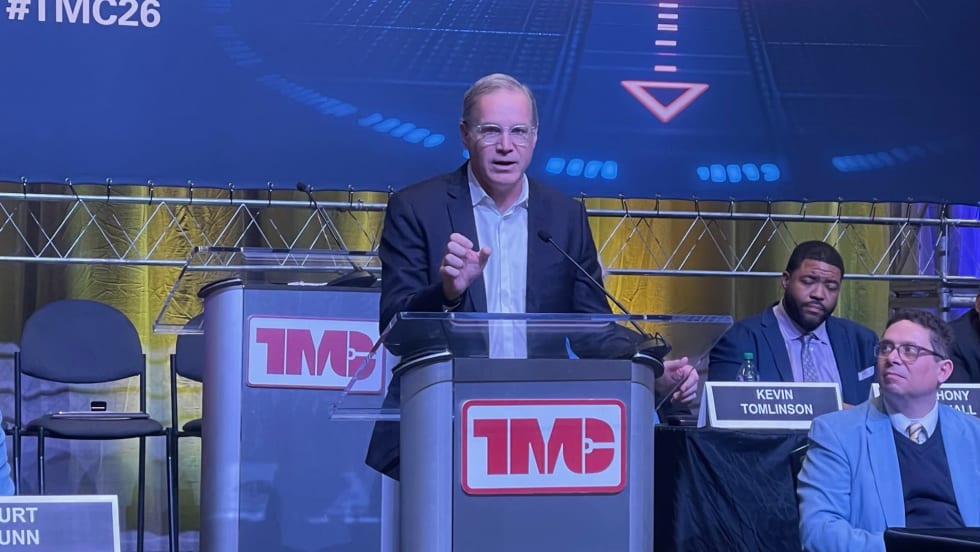
ATA’s Spear Warns Fuel Prices, Trade Policy, and Global Conflict Could Stall Trucking Recovery
Speaking at the TMC Annual Meeting in Nashville, ATA President Chris Spear said trucking faces mounting pressure from rising fuel prices, geopolitical instability, and uncertainty around trade policy.
Read More →
New Entrants, Chameleon Carriers, and Safety: Is It Too Easy to Start a Trucking Company?
More than 100,000 new trucking companies enter the industry each year, but regulators manage to audit only a fraction of them. That churn creates opportunities for inexperienced startups — and for “chameleon carriers” that shut down after safety violations and reappear under new identities. Read more from Deborah Lockridge in this commentary.
Read More →
Fleet Managers Invited to Apply for Exclusive HDT Exchange Event
HDTX is an intimate event that connects heavy-duty trucking fleet managers with industry suppliers through small-group discussions, educational sessions, and structured one-on-one meetings.
Read More →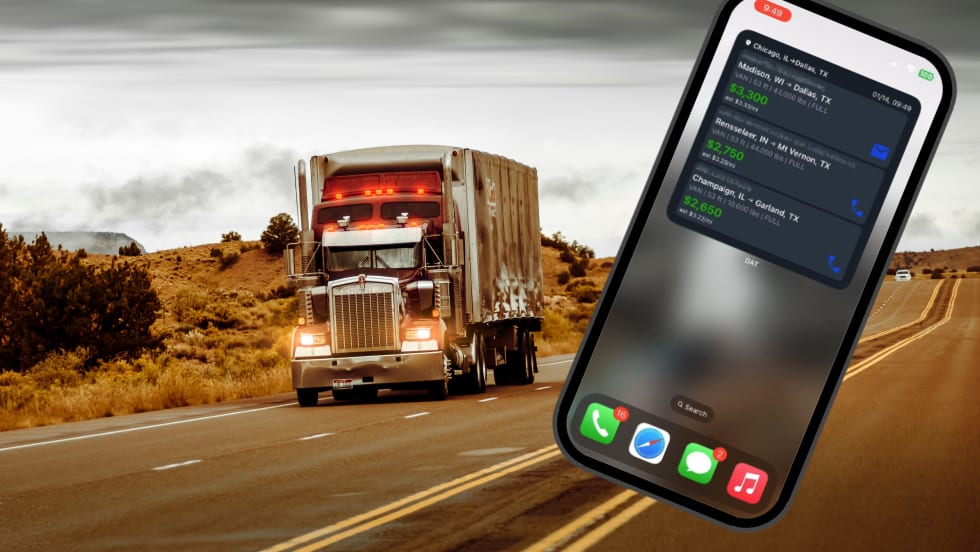
DAT Launches iPhone Widget to Help Owner-Operators Find Loads Faster
New DAT One feature shows top-paying loads directly on an iPhone’s home screen, helping carriers react faster to spot-market opportunities.
Read More →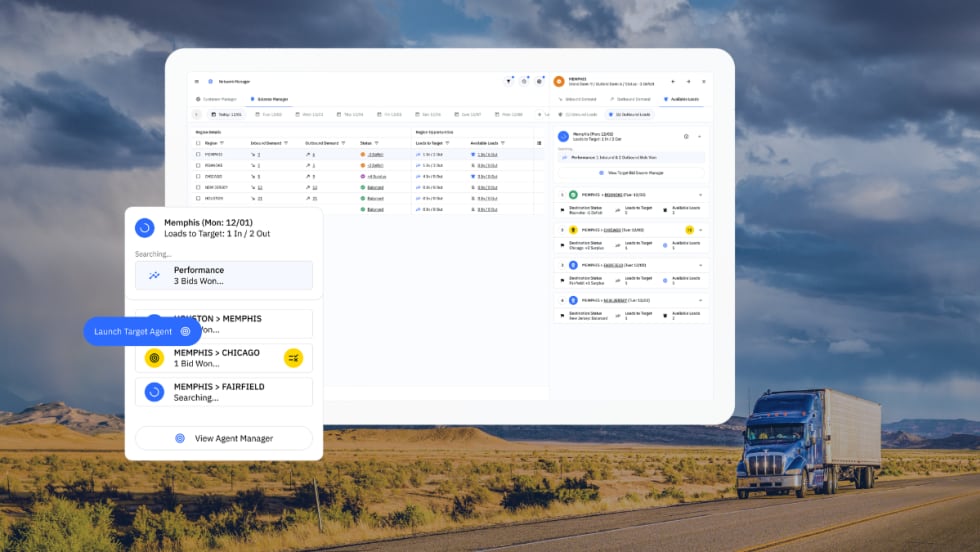
Optimal Dynamics Launches AI System to Help Carriers Choose Better Freight
Optimal Dynamics says its new Scale platform uses AI agents and optimization to help carriers find and secure freight that improves network balance and profitability.
Read More →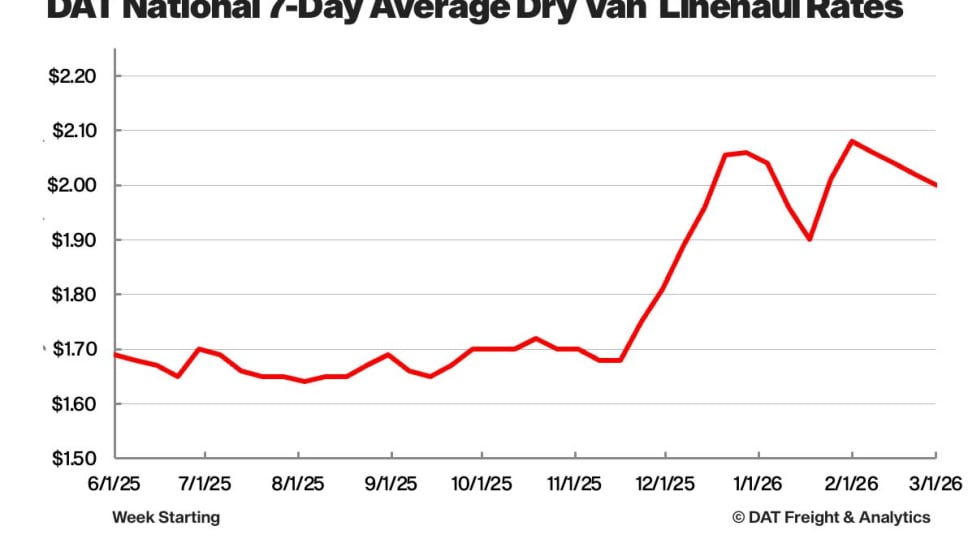
DAT: Flatbed Demand Climbs as Van and Reefer Rates Soften
DAT Freight & Analytics data shows tightening flatbed capacity, easing produce markets, and softening van and reefer rates.
Read More →
Run on Less “Messy Middle” Data Shows Multiple Paths Forward for Truck Powertrains [Watch]
NACFE's Run on Less - Messy Middle project demonstrates the power of data in helping to guide the future of alternative fuels and powertrains for heavy-duty trucks.
Read More →