




The stories abound: daring daylight thefts that plague the trucking industry, many from the "black hole" that is the northern New Jersey-New York City metro area.
Under Lock and Key
Securing the doors of your fleet's trucks and trailers is the easiest and the most effective way to prevent theft.
by Tom Berg, Senior Equipment Editor
July 1, 20066 min to read
One involves thieves popping open the rear doors of a trailer and pulling out boxes of cargo – while the rig is sitting at a traffic light. True story. A trucking company that had been plagued with losses in the neighborhood video taped the incident, says a marketing executive at a security equipment manufacturer who saw the tape.
What's pitiful about that incident, and others that aren't so well documented, is that the doors couldn't have been opened so easily had they been locked. Look at trucks and tractor-trailers going up and down the roads and parked at rest areas and truckstops, and you'll see plenty of unsecured cargo doors.
Obviously vehicles moving at highway speeds aren't too touchable, but sooner or later they stop, and that's when they are in jeopardy. Operators get away without locks because, in spite of the above example, most folks are honest, and thieves tend to shy away from taking things in busy public areas.
Theft is ridiculously easy if the doors are unsecured, security consultants say. And since 9/11 and the ongoing wars in Iraq and Afghanistan, we're warned that terrorists here at home can stash bombs or plague-inducing devices in trucks, trailers and containers, to be unwittingly delivered by innocent transport workers. The threats would be less serious if truck operators would take the simple step of locking their doors. Almost all doors, whether rollup or swing, have holes for securement with a padlock or cable lock. But while making their rounds, many long-haul and P&D drivers don't bother to lock their doors because it's a hassle.
"It's like locking a door on a house," argues Lt. Col. David Binder, deputy director of the Florida Department of Transportation's Motor Carrier Compliance Office, which has actively combated cargo theft. He and others in the industry wonder why even simple padlocks aren't applied more to the doors of trailers and truck bodies. A lock need only be stout enough to require a thief about a half minute of work to break, because when he sees it he'll move on to the next trailer that isn't locked and can be opened in seconds.
Lock manufacturers, such as Kaba Mas and Master Lock, make products that are strong enough to resist battering and cutting. Master Lock says an effective padlock costs $25 or less. Special designs put the shanks of some locks in boxes on the doors so shanks can't be cut, forcing the thief to deal with the lock itself.
Manufacturers also offer electronic locks that are activated by radio frequency ID cards and can record who goes in and when. They can also be programmed to open only at certain times. One of these can cost hundreds of dollars, but that's still cheap when compared to the total value of some cargoes.
Bigger is not always better when choosing a lock. Binder warns there's a drawback to using "ostentatious" locks: Thieves figure the cargoes they protect are worth the trouble of getting to.
However it's done, "Just locking the trailer doors is by far the most successful thing" in preventing theft, says Susan Chandler, executive director of the American Trucking Associations' Security Council. Tracking devices can find a vehicle that's been stolen, but locking it can prevent the theft in the first place.
That, of course, includes a trailer that's been left on a parking lot or street. Anyone with a tractor who acts like he's just doing his job can back onto it and pull it away. This happens a lot, Binder says.
"We put out baited trailers with tracking devices, wait for them to be stolen, then recover them and make arrests," he says. The baited vans and reefers have boxes of apparently high-value cargo stacked at the rear doors and sand bags to provide some weight. It doesn't take long in some areas for thieves to spot them. The department used to borrow actual loads worth more than $50,000 so convicted thieves would receive stiff sentences, but changes in state law will soon apply enhanced penalties to lesser cargo thefts.
Binder notes that most companies don't use kingpin locks, which prevent a tractor's fifth wheel from coupling onto the kingpin. Florida's legislature once considered requiring all untended trailers parked in public areas to be secured with kingpin locks. But it dropped the idea when large fleets pointed out that wholesale use of the locks is impractical, because they'd have to issue keys to many drivers and somehow keep a lock aboard every trailer. He still thinks they're a good idea, especially on trailers carrying dangerous cargo, such as petroleum tankers.
These aren't 100 percent effective, however, because a determined thief can torch it off. And fifth wheels can be cut out and their jaws made to couple around a secured kingpin. Binder's office got the legislature to classify a fifth wheel modified in this manner to be considered the same as burglary tools, with possession being illegal. If officers spot a tractor with such a fifth wheel cruising through a truckstop, they'll arrest its driver.
Of course, thieves can swipe the entire rig – and occasionally they do. Breaking a window to get into a locked tractor and hot-wiring its ignition is easy. That's why Binder advises owners to secure the power unit with devices that keep anyone but the authorized driver from starting its engine or moving it. A collar lock can be placed around the yellow-buttoned parking brake valve, preventing its release. Card-activated or biometric locks can secure the ignition or fuel system. Electronic controls on engines can be programmed to require a pass code be punched in before they can be started.
FedEx and United Parcel Service are two companies that take locking policies seriously. They have strict rules that drivers lock their parked delivery trucks when they leave them to make a drop or pick-up. Semitrailers are locked while in transit. UPS package cars have cylinder locks in T- and L-handles that are easily closed and opened. Some FedEx trucks have remote-controlled door locks actuated by transponders carried by drivers; the lock is a shot-pin that engages the track of the overhead door.
Various types of locks are readily available from manufacturers of overhead doors, including Todco and Whiting. They offer lock boxes that secure a door handle and open with keys. Another design has a keeper that prevents a padlock from being removed. Slam locks do what they say, like trunk lids on automobiles, though their securing mechanisms include pins that are far stronger. Todco has a Maximum Security product whose banana-shaped handle latches onto a plate in the sill, and is further secured by gravity and vibration as the truck bounces down the street.
Managing locks and keys should include a limit on who gets a key, and a record of those who have them, security experts advise. For instance, a driver should be required to sign for the lock and its key, and be instructed to not have any duplicate keys made. Adherence to such a rule depends on the person's honesty, and that depends a good deal on the worth of a company's hiring procedures.
If an employee loses a key or lock, a record should be made of it, and he might be made to pay for the replacement. The driver should turn in the key when he is reassigned or quits, and should get a receipt for it. If a lock has been opened by an unauthorized person, it should be rekeyed or replaced. Similar managerial safeguards should be in place for combination locks and the numerical or alpha codes to open them.
The industry notes that only about 1.4 percent of cargo in transit is stolen, so perhaps the problem is overstated. Still, 1.4 percent of 10 billion tons worth $1 trillion – the estimated amount of cargo moved annually – adds up to a lot of stuff.
Subscribe to Our Newsletter
More Fleet Management

ACT: Trucking Volumes Rise, Capacity Tightens as Fuel Prices Cloud Outlook
ACT Research data shows volumes hitting a four-year high and supply-demand balance strengthening, but higher oil prices are undercutting tariff relief and tempering optimism.
Read More →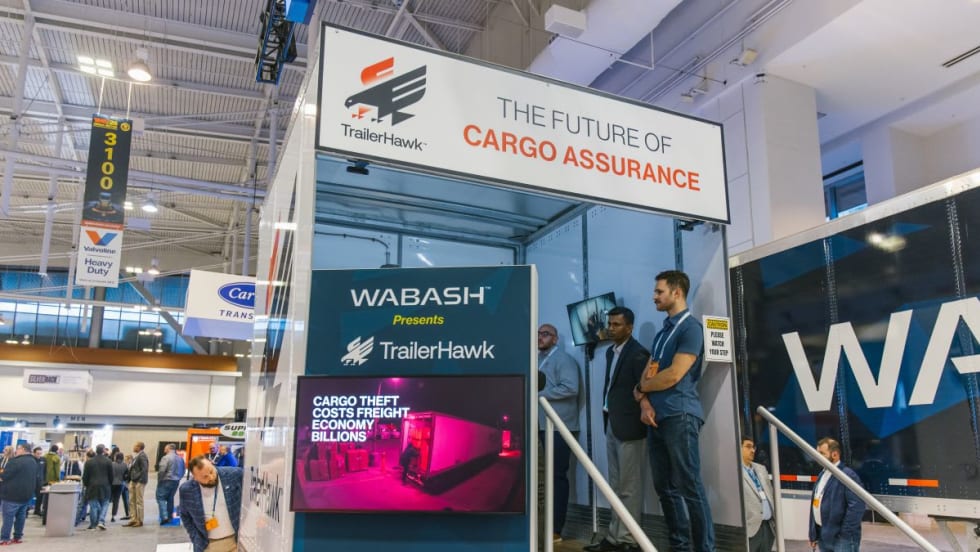
Wabash Teams Physical Security With Digital Tech For Better Cargo Visibility
The patent-pending cargo solution integrates a digitally connected cargo door and an intelligent locking system with the TrailerHawk.AI technology platform.
Read More →
From Diesel Prices to Cyberattacks: How the Iran War Is Affecting Trucking
The impact of the Iran conflict extends beyond fuel costs, bringing more fraud and cybersecurity risks to the trucking industry.
Read More →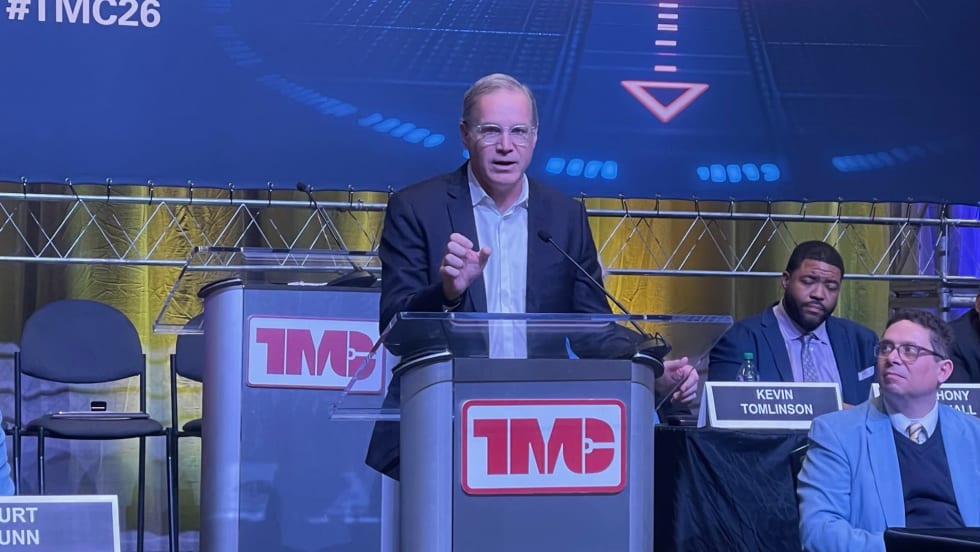
ATA’s Spear Warns Fuel Prices, Trade Policy, and Global Conflict Could Stall Trucking Recovery
Speaking at the TMC Annual Meeting in Nashville, ATA President Chris Spear said trucking faces mounting pressure from rising fuel prices, geopolitical instability, and uncertainty around trade policy.
Read More →
New Entrants, Chameleon Carriers, and Safety: Is It Too Easy to Start a Trucking Company?
More than 100,000 new trucking companies enter the industry each year, but regulators manage to audit only a fraction of them. That churn creates opportunities for inexperienced startups — and for “chameleon carriers” that shut down after safety violations and reappear under new identities. Read more from Deborah Lockridge in this commentary.
Read More →
Fleet Managers Invited to Apply for Exclusive HDT Exchange Event
HDTX is an intimate event that connects heavy-duty trucking fleet managers with industry suppliers through small-group discussions, educational sessions, and structured one-on-one meetings.
Read More →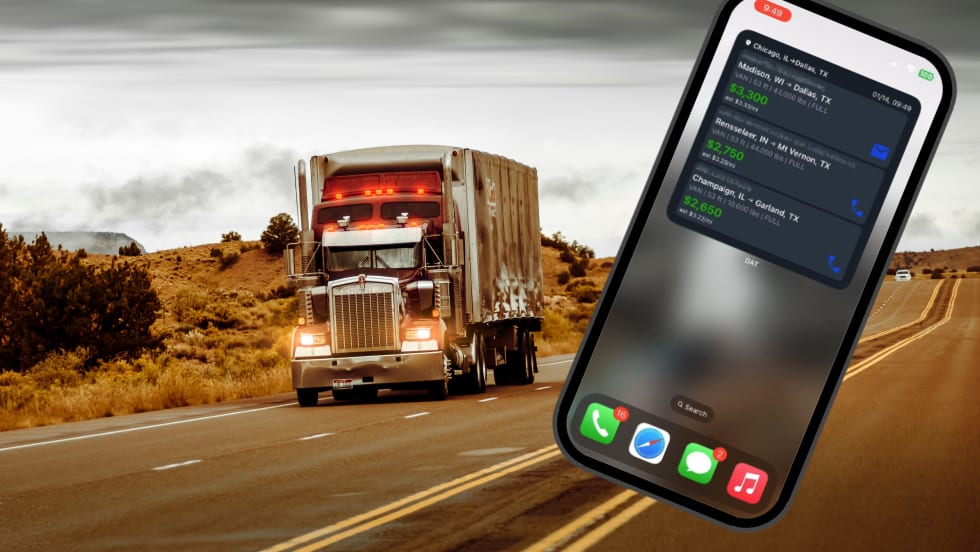
DAT Launches iPhone Widget to Help Owner-Operators Find Loads Faster
New DAT One feature shows top-paying loads directly on an iPhone’s home screen, helping carriers react faster to spot-market opportunities.
Read More →
Optimal Dynamics Launches AI System to Help Carriers Choose Better Freight
Optimal Dynamics says its new Scale platform uses AI agents and optimization to help carriers find and secure freight that improves network balance and profitability.
Read More →
DAT: Flatbed Demand Climbs as Van and Reefer Rates Soften
DAT Freight & Analytics data shows tightening flatbed capacity, easing produce markets, and softening van and reefer rates.
Read More →
Run on Less “Messy Middle” Data Shows Multiple Paths Forward for Truck Powertrains [Watch]
NACFE's Run on Less - Messy Middle project demonstrates the power of data in helping to guide the future of alternative fuels and powertrains for heavy-duty trucks.
Read More →