




You probably anticipate problems such as missing paperwork, a driver getting lost, or an unexpected breakdown. But have you thought about the possibility of losing your data to terrorists, extremists,
Under Lock and Key: Protecting Your Data
You probably anticipate problems such as missing paperwork, a driver getting lost, or an unexpected breakdown. But have you thought about the possibility of losing your data to terrorists, extremists
by Diana Britton, Managing Editor
January 6, 2010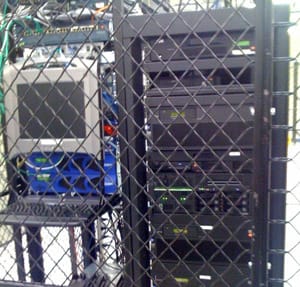
These days, almost every trucking company relies on data. Is yours safe?
6 min to read
criminals, natural disasters, a competitor or a disgruntled employee?
Data is becoming second nature to the trucking industry, with automation and number-crunching becoming more common in almost every corner of a fleet's operation. "The amount of data roving the world is increasing," says Tim Matthews, senior director of product marketing for PGP Corp., which provides e-mail and data encryption software.
This data is valuable, not only to your company, but also to your customers. "The bottom line is that data has value, whether that's personal information or corporate information," says Mike Spinney, senior privacy analyst at the Ponemon Institute, which conducts independent research on privacy, data protection and information security policy. According to the institute's research, the price that accompanies losing a laptop is just short of $50,000.
"This is more than just an electronic device," Spinney explains. "This is a storage container for high-value information."
If your company doesn't take steps to protect itself from losing this data or having it fall into the wrong hands, it leaves itself at risk of losing valuable customers and money, going out of business if there's so much data lost that it can't get things back up and running, lawsuits and audits, and even national security disasters.
Celadon's story
Indianapolis-based Celadon Trucking Services implemented a disaster recovery program through SafeData. As a large public company, Celadon wanted to ensure its shareholders that business could continue to operate in the event of a disaster.
According to Mike Gabbei, chief information officer of Celadon, the company was looking at housing a redundant system, or a backup system, themselves. But after considering the infrastructure, capital costs, manpower and air conditioning systems that would have to go into it, the company decided that it would be cheaper to outsource the task.
The company came on board with SafeData's high availability service, which provides a switchable "mirror" of the company's data and applications, guaranteeing continuity in two hours or less. SafeData's data center acts almost like one of Celadon's outlying facilities, as it houses all of the data Celadon needs to operate.
"If we did not have a redundant system in place, we would go out of business," in the case of a disaster, Gabbei says. "Hopefully, we'll never have to use it."
The critical processes that Celadon needs to have up and running includes the ability to take orders and put orders in the system; communicate with the drivers on where to pick up and deliver freight; and the visibility of trucks, Gabbei says.
"Data means so much to the customer that they have to have visibility on where the freight is," Gabbei says.
Data downtime
One of the benefits of having a disaster recovery system in place is a reduction in downtime - not of trucks, but of a company's operations. Because of the size of Celadon and the high number of transactions it goes through, it required SafeData's high availability service, which can have them back online in a matter of minutes, says Peter Briggs, president of SafeData.
According to Briggs, a large company can shell out an average of $100,000 for every hour of downtime in the case of a failure. It also can lead to loss of customers, who might switch to a competitor.
With an off-site data center, the company can access their system no matter what happens. "These trucks can keep rolling; these orders can be taken," Briggs says.
It doesn't take a natural disaster or a fire for backup systems to come into play. A&R Transport, a Chicago-based trucking company that specializes in bulk dry plastic transport, uses UltraBac's backup and disaster recovery software. While the company has not experienced any major catastrophes, it has seen an improvement in downtime.
"About two years ago our core database server had a hardware issue where it kept rebooting itself intermittently for no apparent reason," says Tim Bowles, network administrator for A&R.
After losing 24 hours trying to resolve the issue, A&R decided to restore the server from the last good image backup using UBDR Gold. The new server they had available was not an exact hardware match, so UltraBac Software technical support guided A&R through the steps of how to do a repair installation of the OS to support the new hardware. "We were back up and running in only a couple of hours."
A data breach
Trucking companies are also vulnerable to a data breach - secure information falling into the wrong hands. This could be a disgruntled employee, a competitor, a criminal, or anyone who wishes to exploit this critical information.
Because of the nature of the trucking industry, data is constantly on the move, and this puts the data even more at risk. "When data is most vulnerable is when it's in transit," Spinney says. When data is being transmitted or uploaded - from the truck to the back office, for example - this communication can be intercepted.
Spinney says data breaches are usually due to employee negligence. The incident may not necessarily be malicious, and most likely could have been prevented. He suggests implementing a low-cost security strategy, which involves training employees and promoting awareness of the value of the information to the customers and the company. You don't have to spend millions to address the issue, but creating a basic awareness among employees of the types of information and the value of it will make employees more vigilant.
Another method of protection against a data breach is data leak protection software, which prevents information from getting out of the company, Spinney says. For example, if a company wants to e-mail out a file with protected information, the software either won't allow the message to go out or it will prompt the sender to confirm.
Encryption, another way of protecting vital information, is a means of scrambling information, so that only those with a decryption code has authorization to read it. PGP Corp. offers encryption solutions that protect data from the thumb drive all the way up to the main frame. This includes securing laptops, mobile phones and e-mail.
PGP's Matthews points out that these days, employees often use their own hardware, such as laptop computers and smart phones. This hardware travels with them around the country. So not only is the amount of data increasing, but also the number of devices that need to be covered.
A data breach could result in business losses and fines, he adds. When a data breach occurs, a company has to get almost everyone involved, including lawyers, public relations professionals, IT personnel, risk managers and auditors. Matthews likens it to "an unscheduled audit in the middle of normal operations."
Intentional electromagnetic interference
Another threat to data security is intentional electromagnetic interference, which can occur when devices and systems that run on electromagnetic energy are zapped. According to Gale Nordling, president and CEO of Emprimus, which offers solutions to protect against IEMI, devices have been perfected to corrupt and damage critical data systems. He says universities are teaching how to build such interference technology, and that it's widely available on the Internet. "It's available and out there for everyone for good or bad purposes," he says.
While this might sound like a sci-fi flick, IEMI is a real threat, and it could render your company useless if someone were to corrupt the system. Unlike a data breach or a natural disaster, this threat simply fries the electronics, and the data is gone forever. In addition, IEMI leaves no f
Subscribe to Our Newsletter
More Fleet Management

'Beyond Compliance,' Regulations, Driver Coaching on ATRI’s 2026 Research List
The American Transportation Research Institute will examine driver coaching, regulatory impacts — including the "Beyond Compliance" concept —and weather disruptions that shape trucking operations.
Read More →
Fleet Advantage's Brian Antonellis on the Growing Need to Replace Old Trucks
Fleet Advantage's Brian Antonellis says it's time for fleets to get back to the fundamentals of good maintenance practices. And that includes replacing older, inefficient equipment.
Read More →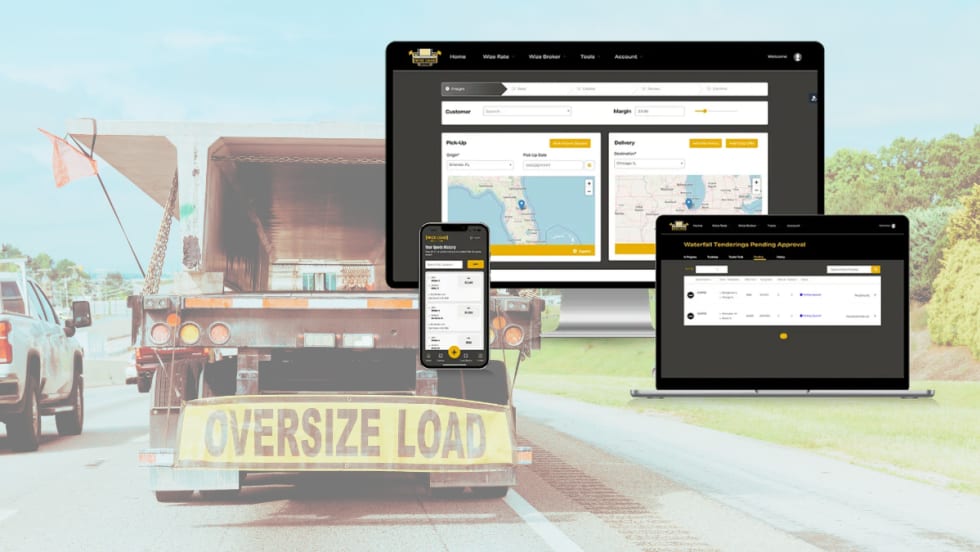
Truckstop.com Adding to Open Deck, Heavy Haul Offerings
Load matching for flatbed, lowbed, oversize and overweight loads can't be automated like basic van freight, but Truckstop.com is adding more high-tech tools to help.
Read More →
Trucker Path, Truckstop.com Expand Load Access Partnership
An expanded Trucker Path and Truckstop.com integration brings more freight opportunities into the TruckLoads app while emphasizing security and network quality.
Read More →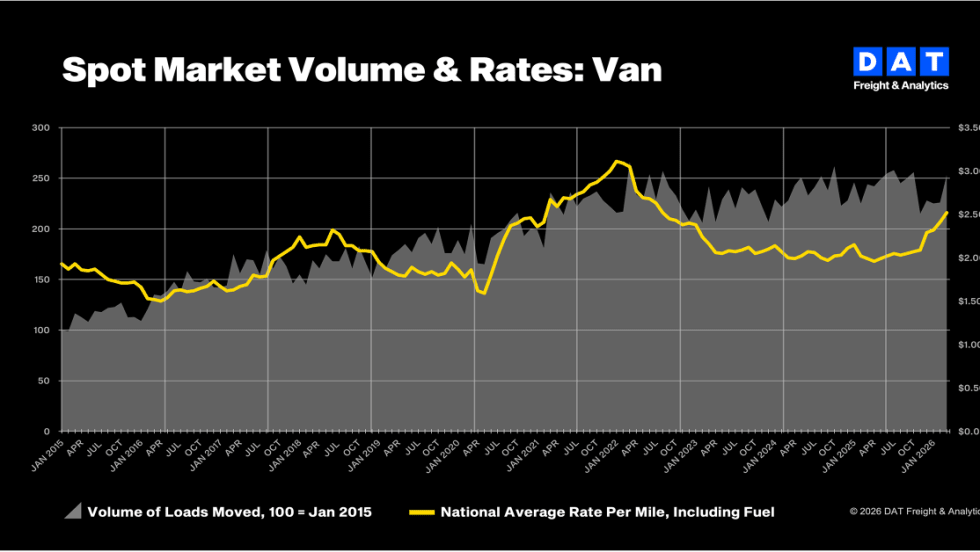
Truckload Rates Hit Two-Year Highs as Diesel Costs Surge, DAT Says
Strong March freight demand combined with a spike in fuel costs pushed both spot and contract truckload rates to their highest levels in more than two years.
Read More →
The AI Conversation You Need to Have with Your TMS Provider
Everyone’s talking about AI — but is your transportation management system actually built for it?
Read More →
Kriska Buys Fellow Canadian Carrier Sharp Transportation Systems
Being part of KTG will allow Sharp to expand and improve its services.
Read More →
Bill in House Would Raise Minimum Insurance for Motor Carriers to $5 Million
The Fair Compensation for Truck Crash Victims Act would increase insurance requirements for interstate motor carriers by nearly seven times.
Read More →
FTR Trucking Conditions Index Hits Four-Year High in February
Strong freight rates push TCI to 10.2, but FTR expects fuel-price volatility to skew March results.
Read More →
C.H. Robinson Offers Carriers Relief as Diesel Prices Surge
C.H. Robinson is waiving fees on fuel cards and cash advances for April and May, aiming to help carriers offset rising diesel costs tied to geopolitical instability.
Read More →