





You’ve probably never lost any sleep over a steering maintenance issue. The systems are proven and reliable and don’t require a lot of hands-on contact. Sticking to scheduled fluid and filter changes, lubrication, and visual inspections during regular preventive maintenance inspections is probably all the attention they need — at least when they’re new.
What to Know About Steering System Maintenance
There’s not a lot to go wrong with steering systems. Keeping air out of the system and using the correct replacement parts will help steer clear of trouble.
December 22, 2021

Finicky steering can make a driver’s life miserable.
Photo: Jim Park
5 min to read
As trucks age, though, parts loosen up, hoses weather and crack, and seals wear out. Normal wear and tear of the other components in the steering system (the ball-joints, drag links, kingpins, etc.) can affect how the vehicle handles. These can lead to driver complaints about steering and vehicle handling.
A complete visual inspection should be part of a routine PM, including components that don’t typically require a lot of attention.
“You’ll want to ensure that bolts are securely torqued across the system — the Pitman arms, drag links, even the tie rods,” says Mike Bolen, Bendix’s steering reman product manager.
“Check those connections to make sure nothing is loose. And it’s important to know the recommended steering fluid life, as well as the replacement schedule for the filters on the system that protect the steering gear by keeping the fluid clean.”
Regular visual inspections also should include the steering reservoir and fluid level, plus checking hoses for weathering or cracks and keeping an eye out for fluid leaks. If steering fluid is leaking out, air could be leaking in, warns Scott Jones, a senior steering product specialist at ZF.
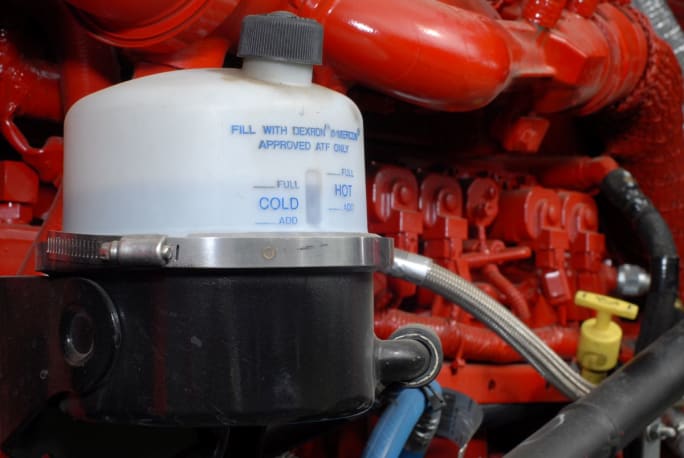
Keep the steering fluid levels topped up and watch for signs of entrained air in the fluid (tiny bubbles or specks that look like crystals).
Photo: Jim Park
“You need to keep an eye on the hoses from the reservoir down to the inlet of the power steering pump, including the input seal of the pump,” he says.
“The input seal is a primary source of air getting into the system. And it can go either direction. I’ve seen it pull air in the system. I’ve seen it transfer [steering fluid] into the crankcase. And I’ve seen it pull engine oil into the hydraulic system itself.”
Air in the system can cause catastrophic damage to the pump due to cavitation. The same problem can arise from letting the reservoir run dry. If the reservoir is dry, then air can get in. It’s hard not to notice a cavitating pump. It makes a loud whine that any driver should recognize as unusual. In fact, any amount of air in the system will make the pump whine.
“The telltale signs of entrained air include pink-colored frothing or foam in the reservoir and/or tiny air bubbles in the fluid,” Jones says. “The bubbles will look like glitter or diamond crystals in the fluid.”
In addition to the noise from the steering pump, the driver may also notice a lumpy feel to the steering, or a chatter, like the steering wheel is vibrating.
Diagnosing Steering Complaints
When drivers write up a steering complaint, they don’t always provide a lot of information for the technicians. If the shop does not use a power steering system analyzer (PSSA), getting input from the driver can save a lot of troubleshooting time.
“Without input from the driver, where do you even start?” Jones asks. “There are so many variables that [drivers] can help isolate, such as whether the problem occurs when the vehicle is empty or loaded, or whether the problem is more noticeable when turning right or when turning left.”
You can try narrowing the problem down with an inspection of the front-end steering components, such as tie-rods, kingpins, ball joints, etc., eliminating as many variables as possible. If there’s nothing wrong with the front end, the steering gear is usually the first suspect.
“If the problem occurs only one direction, even without a PSSA test, that leads me directly to the steering gear,” Jones says.
“The power steering pump doesn’t care. It’s probably going to give you the same pressure and the same flow both directions. Typically, a loss of [steering] assist in one direction only suggests a problem with the steering gear.”
The PSSA is a combination flow and pressure gauge. It guides a technician through a set of procedures to determine whether the problem is in the gear or the pump — and that matters to the bottom line.
“One of the biggest problems is that people will start replacing parts without knowing which is malfunctioning,” says Jonathon Gerke, Bendix product manager for steering.
“They tend to start with the pump, because it’s cheaper, although if the gear is easier to access, they’ll start there. In any case, if they’re wrong, now they’re out the time and cost of that repair, and they still have to replace the other part.”
Sources of Steering System Trouble
Jones says the inadvertent installation of incorrect steering components, such as the wrong pitman arm or an incorrectly set drag link, can produce adverse steering effects.
“You might see bump steering or brake dive because of that change in steering geometry,” he says.
Air in the hydraulic system can create symptoms some fleets mistake for a failed steering gear, says Roy Molter, marketing manager at ZF Global Commercial Steering.
“You’ll see a lot of people wanting to change out a steering gear when they should have gone through an air bleed process or some basic diagnostics first,” he says.
While air in the system usually produces hard steering one direction, hard steering in both directions can indicate an incorrectly set poppet valve inside the steering gear, says Gerke.
“The poppet is an internal unloading valve inside the gear, so you don’t build pressure against the axle stops, which causes unnecessary loads across the entire steering linkage.
"It’s important not to rotate the steering gear input or output shaft until it’s installed on the truck and connected to the linkage with the wheels straight,” he cautions.
Technicians must also check that the axle stops are properly set so that the poppet valves are timed correctly. This provides clearance between the front tire and other components such as the frame rail, allowing free angular movement of the tire. Again, verify that all fasteners are securely torqued across the system, adds Gerke.
This article first appeared in the December 2021 issue of Heavy Duty Trucking.
Subscribe to Our Newsletter
More Maintenance
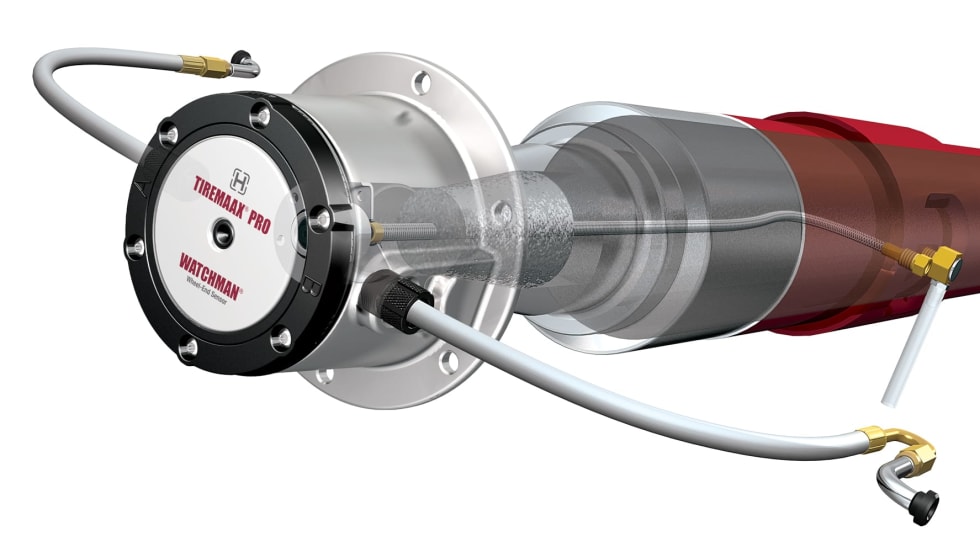
Hendrickson Unveils Watchman Smart Wheel-End System at TMC
Hendrickson’s new sensor platform integrates with its TireMaax system to deliver real-time tire and wheel-end insights, targeting uptime and cost savings.
Read More →
Over-the-Air Updates and the Modern Powertrain Explained
Over-the-air updates are moving beyond recalls, and expanding how fleets manage performance, compliance, and uptime.
Read More →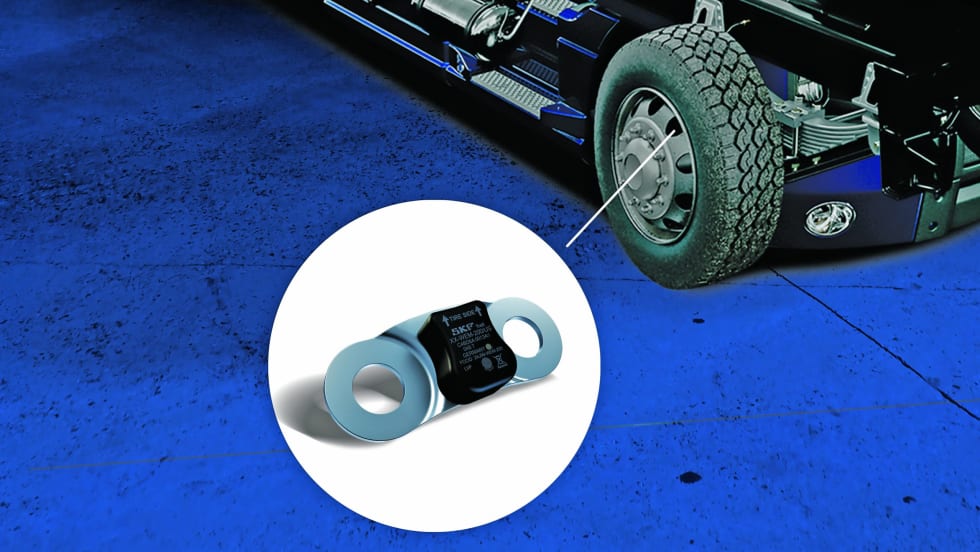
SKF, TMC Expand Hands-On Training to Boost Technician Skills at Annual Meeting
A new partnership between SFK and TMC brings certified, on-site instruction focused on wheel-end reliability and maintenance best practices.
Read More →
Why Higher Pay Isn’t Fixing the Heavy-Duty Technician Shortage
Hiring heavy-duty truck technicians has become a bidding war, but shops that focus on culture, training, and career paths are gaining an edge. That's the takeaway from a TMC panel discussion.
Read More →
Technology & Maintenance Council 2026 Annual Meeting [Photos]
Couldn't make it to Nashville for TMC's 2026 annual meeting? Check out these images.
Read More →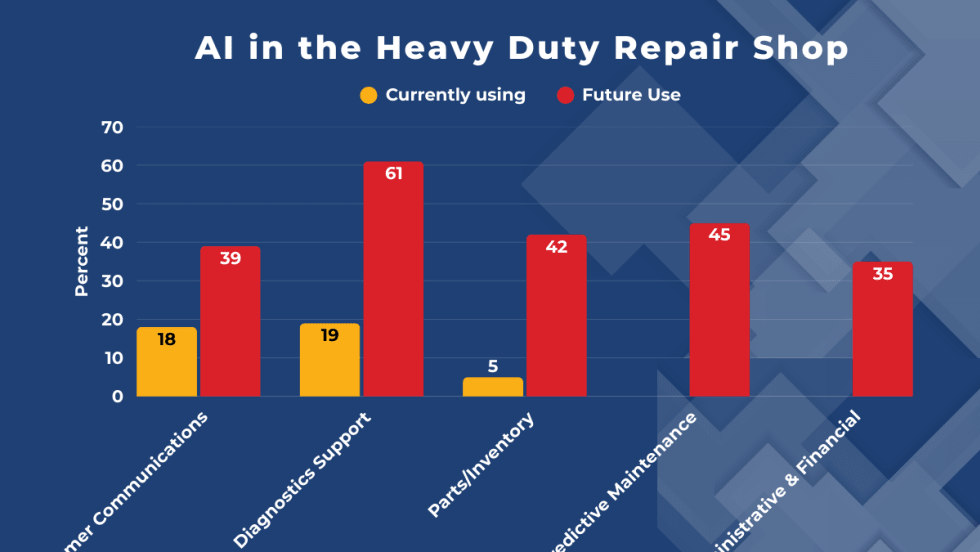
Fullbay Report: Heavy-Duty Shop Revenue Up, Rates Rising, but Shops Still Short on Techs
Strong growth across the heavy-duty repair sector is being tempered by workforce shortages and an aging technician pipeline.
Read More →
How Mack Sees the Next Era of Fleet Intelligence
Telematics has evolved from simple vehicle tracking into a connected service platform that can help fleets boost uptime, improve specifications, and move toward predictive maintenance. Mack executives say AI is now giving fleets a way to turn all that vehicle data into faster, smarter decisions.
Read More →
Clarios Expands Battery Monitoring Into Subscription Service with Battery Manager Pro
A new battery-monitoring-as-a-service program from Clarios Connected Services uses predictive analytics and automatic replacement to reduce downtime and smooth fleet maintenance costs.
Read More →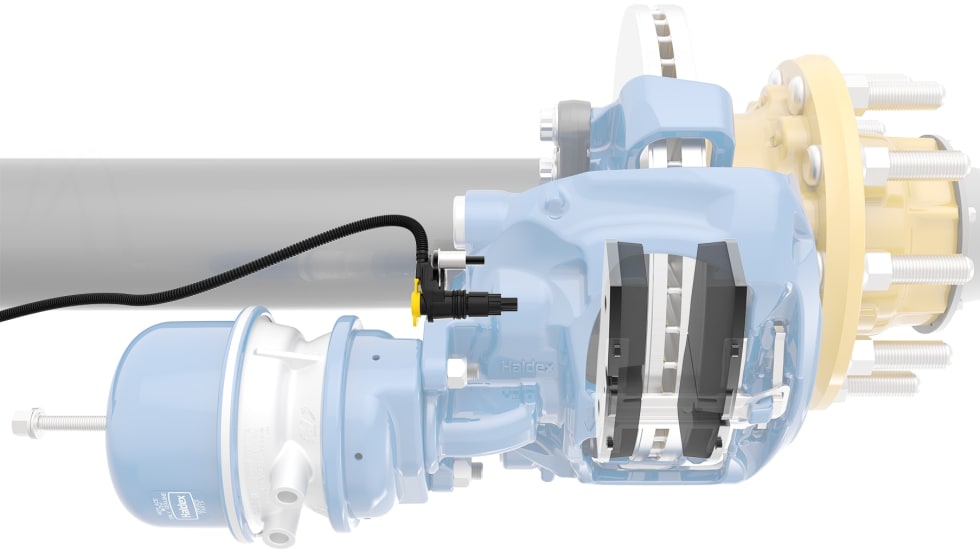
SAF-Holland’s BrakeSight Aims to Take the Guesswork Out of Air Disc Brake Maintenance
New Haldex sensor technology from SAF-Holland integrates with telematics systems to give fleets continuous insight into air disc brake condition.
Read More →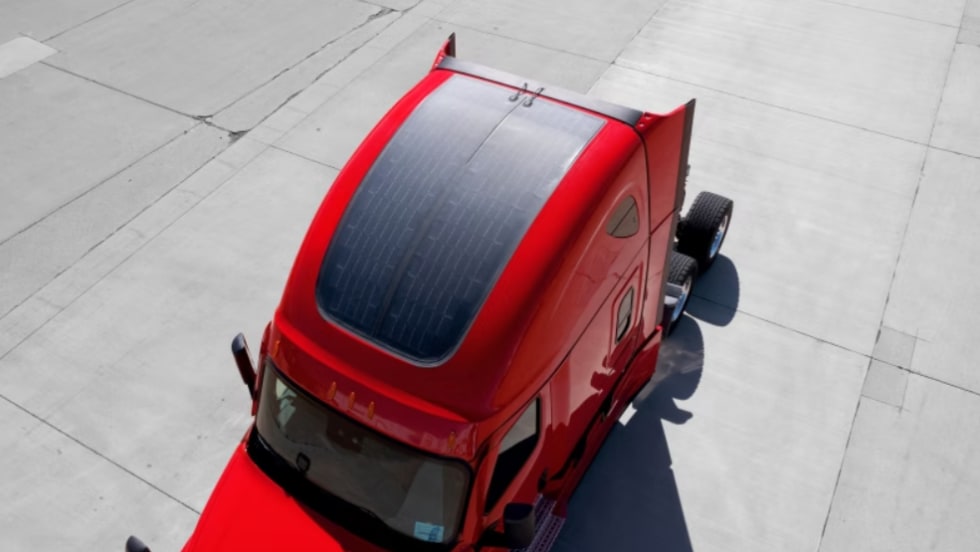
Vanair Introduces Solar, Battery Power Ecosystem for Class 8 Trucks
The company’s expanded EPEQ ecosystem includes flexible solar panels, lithium batteries, hydraulic power systems, and a portable fast charger for electric trucks.
Read More →