





With our 2019 economics and truck volume forecast in place, where should that take us in terms of earnings, and where are we in the course of the earnings cycle for truckers?
What Will Earnings Look Like for Fleets This Year?
With our 2019 economics and truck volume forecast in place, where should that take us in terms of earnings, and where are we in the course of the earnings cycle for truckers? Commentary from the February issue of Heavy Duty Trucking magazine.
February 1, 2019
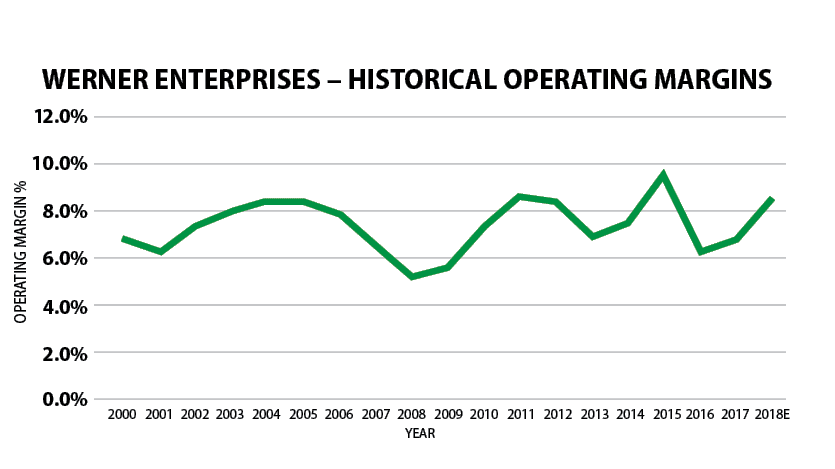
Since 2000, Werner’s operating margins have stayed in a consistent 6% to 9% range, with the majority of a cycle in the 6.5%-8.5% range.
Source: Company reports, Tahoe Ventures estimates
3 min to read
Recent data has shown some slowing of economic growth. The Institute for Supply Management’s Purchasing Managers’ Index reported in January dropped to 54.1 from 59.3. Consumer confidence has slowed from a reading of 136.4 to 128.1. The three-month/10-year yield curve (which uses the difference between 10-year and three-month U.S. Treasury rates to calculate the probability of a recession) is currently around 35 basis points – almost flat. It’s normally about 200 basis points when healthy, and negative if the economy is at risk of recession.
Remember, in our forecast last month, we anticipated much of this “normalization” of growth expectations. While both the ISM and consumer confidence measures are sentiment indexes and do have predictive value, freight volumes and traffic continue to be strong. These lower readings could reflect concerns about stock market volatility and investor fears. As we noted last month, we expect the economy to slow to a more sustainable growth rate of around 2.5% GDP this year, where we spent much of the decade prior to 2016.
To explore the health of the trucking industry and what expectations are for 2019-2020, let’s look at where truck industry operator margins are right now, and where they might go. To simplify the analysis, let’s look at one large representative trucker – Werner Enterprises. Werner is a large truck fleet with about 7,800 trucks. It historically has grown organically, so acquisition-related costs don’t tend to cloud comparisons, and the company tends to be fairly consistent in terms of its margins over the course of a cycle.
Since 2000, Werner’s operating margins have stayed in a consistent 6% to 9% range, with the majority of a cycle in the 6.5%-8.5% range. Analyst expectations point toward an 8.6% operating profit margin for this year. (We look at margins all-in with fuel surcharges, versus the company’s reported results, which exclude fuel surcharges in calculating operating margins). Based on our expectations for a 3.5% truck freight growth level in 2019, and our expectations that the industry adds about 3% net capacity, we are looking for truck rates to be 2-3% higher by the end of 2019 than they were at the end of 2018. And they could even see an average for the year closer to 4%-5%, because we expect contract rates to begin the year in the 8-10% range. This would imply 6-8% revenue growth (the consensus of Wall Street analysts is 6.9%).
With all that in mind, and with declining fuel prices (the Energy Information Administration’s weekly on-highway diesel price index declined to $3.013/gallon for the week of Jan. 7), truck margins should be stronger for Werner in 2019. In fact, that is what Wall Street analysts are forecasting for Werner, according to Factset, which projects a 50 basis point (half a percentage point) improvement in Werner’s operating margin, implying an operating profit margin over 9% – the high end of the company’s historical range.
What does all this mean for fleet managers? While we expect some moderation in equipment orders because much of the order book for 2019 is filled, and uncertainty has increased regarding 2020 growth expectations, profit margins in the trucking industry should be healthy – near prior cycle peak levels. That means fleets should be a position to support continued buying of equipment, at least in the first part of the year. We look for truck OEMs to begin to enforce penalties for cancellations soon, which could thin out some of the order book as well.
Jeff Kauffman has been a recognized transportation authority for almost 30 years, most notably heading freight transportation research for Merrill Lynch. Currently he is managing director for Loop Capital Markets and also heads Tahoe Ventures, a transportation consulting company. He can be reached at jkauffman@truckinginfo.com.
Subscribe to Our Newsletter
More Fleet Management

ACT: Trucking Volumes Rise, Capacity Tightens as Fuel Prices Cloud Outlook
ACT Research data shows volumes hitting a four-year high and supply-demand balance strengthening, but higher oil prices are undercutting tariff relief and tempering optimism.
Read More →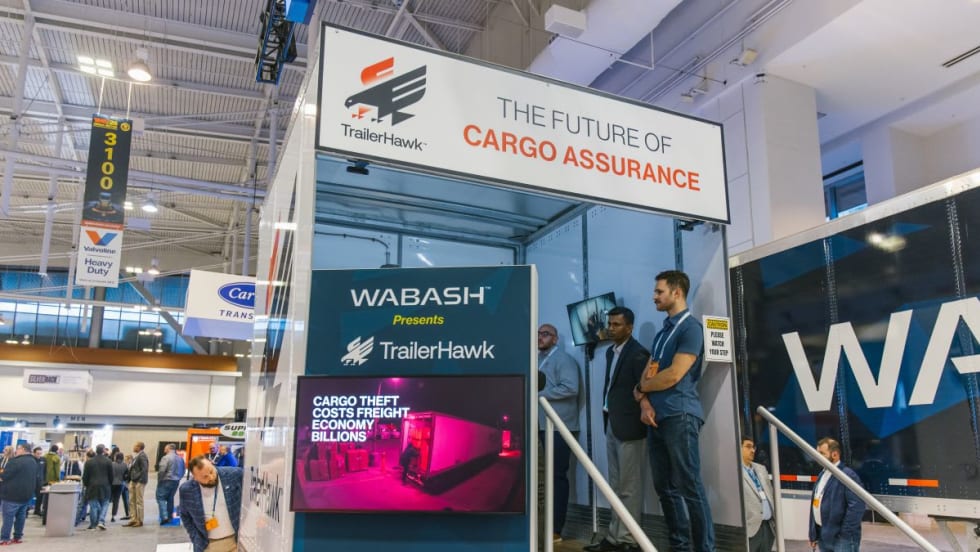
Wabash Teams Physical Security With Digital Tech For Better Cargo Visibility
The patent-pending cargo solution integrates a digitally connected cargo door and an intelligent locking system with the TrailerHawk.AI technology platform.
Read More →
From Diesel Prices to Cyberattacks: How the Iran War Is Affecting Trucking
The impact of the Iran conflict extends beyond fuel costs, bringing more fraud and cybersecurity risks to the trucking industry.
Read More →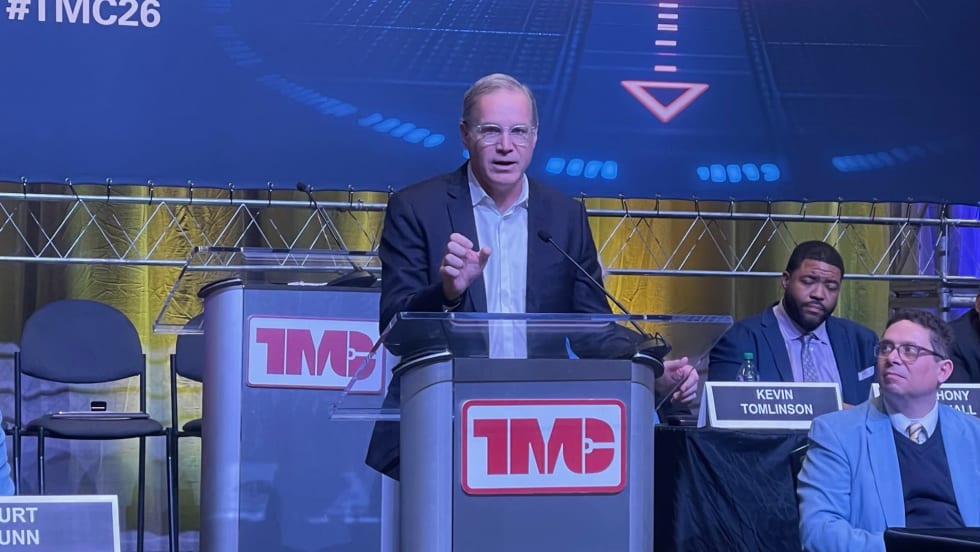
ATA’s Spear Warns Fuel Prices, Trade Policy, and Global Conflict Could Stall Trucking Recovery
Speaking at the TMC Annual Meeting in Nashville, ATA President Chris Spear said trucking faces mounting pressure from rising fuel prices, geopolitical instability, and uncertainty around trade policy.
Read More →
New Entrants, Chameleon Carriers, and Safety: Is It Too Easy to Start a Trucking Company?
More than 100,000 new trucking companies enter the industry each year, but regulators manage to audit only a fraction of them. That churn creates opportunities for inexperienced startups — and for “chameleon carriers” that shut down after safety violations and reappear under new identities. Read more from Deborah Lockridge in this commentary.
Read More →
Fleet Managers Invited to Apply for Exclusive HDT Exchange Event
HDTX is an intimate event that connects heavy-duty trucking fleet managers with industry suppliers through small-group discussions, educational sessions, and structured one-on-one meetings.
Read More →
DAT Launches iPhone Widget to Help Owner-Operators Find Loads Faster
New DAT One feature shows top-paying loads directly on an iPhone’s home screen, helping carriers react faster to spot-market opportunities.
Read More →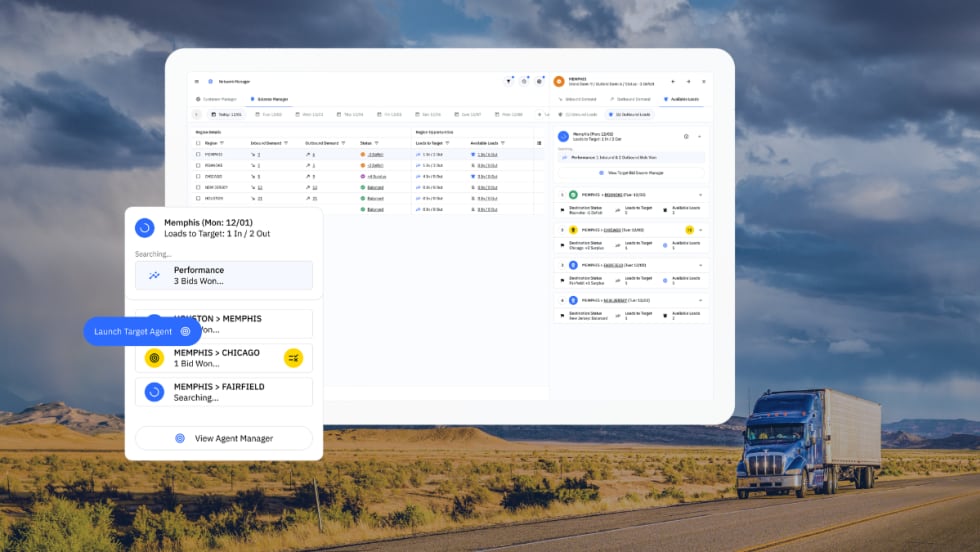
Optimal Dynamics Launches AI System to Help Carriers Choose Better Freight
Optimal Dynamics says its new Scale platform uses AI agents and optimization to help carriers find and secure freight that improves network balance and profitability.
Read More →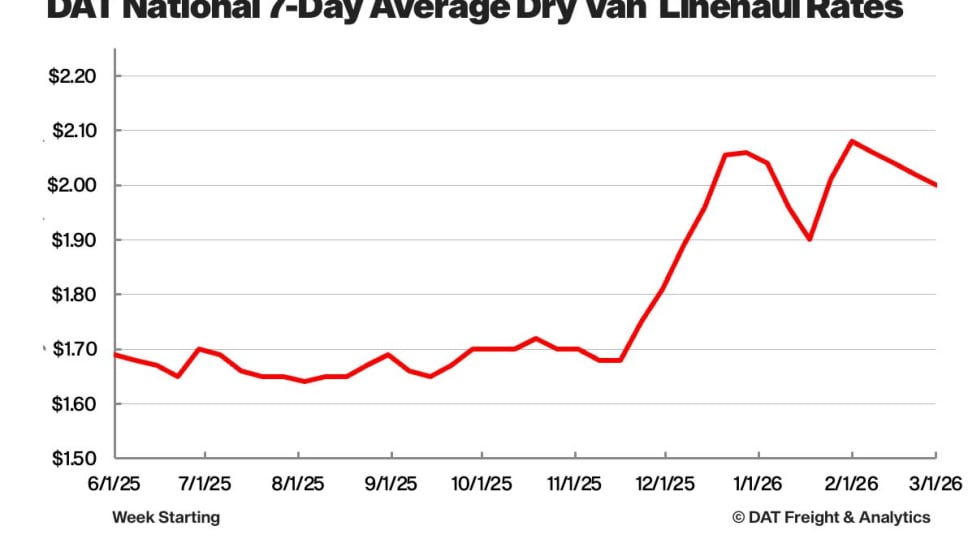
DAT: Flatbed Demand Climbs as Van and Reefer Rates Soften
DAT Freight & Analytics data shows tightening flatbed capacity, easing produce markets, and softening van and reefer rates.
Read More →
Run on Less “Messy Middle” Data Shows Multiple Paths Forward for Truck Powertrains [Watch]
NACFE's Run on Less - Messy Middle project demonstrates the power of data in helping to guide the future of alternative fuels and powertrains for heavy-duty trucks.
Read More →