





We’re hearing the word “inflation” a lot these days, a term we haven’t used much in the economic world for some time — decades, in fact.
What Does Inflation Mean For Trucking?
Driver costs, equipment costs, insurance costs, travel and food costs may have longer-term legs of reducing the purchasing power of your budget, says HDT's Contributing Economic Analyst Jeff Kauffman.
June 24, 2021
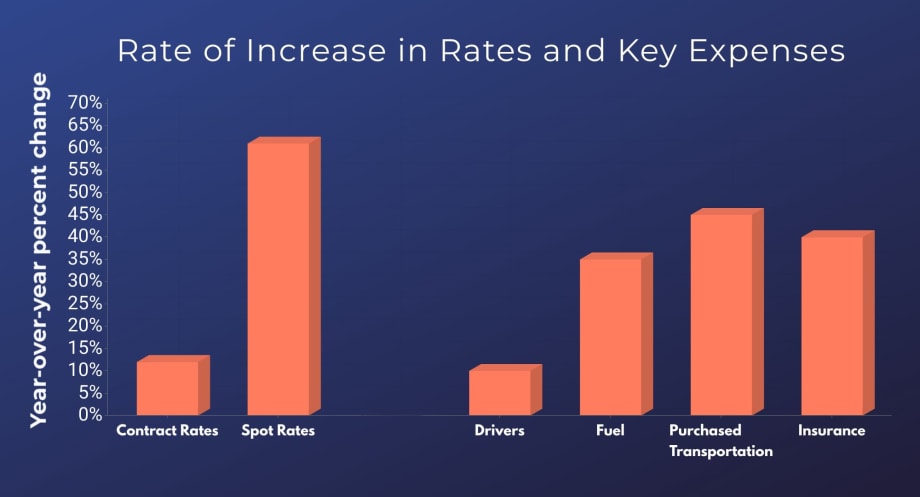
Driver costs, equipment costs, insurance costs, travel and food costs may have longer-term legs of reducing the purchasing power of your budget.
Source: Truckstop.com, FTR, company reports
4 min to read
I’m not talking about the air in your tires, or when someone inflates a grade from a B to a B+. It’s not about seeing higher fuel prices caused by a specific situation or that are otherwise short-term in nature (the better term in this case would be “headwind.”)
No; the type of inflation I am going to discuss this month is the scary type of inflation. Here I’m talking about a sustained increase in the overall general level of prices that results in a decline in the purchasing power of money. Those three elements make this different from a cost headwind.
It’s a little like the Matrix for you movie fans. You can’t see it, feel it, or touch it, but it is all around you — raising the cost of everything in your life, from the food you eat and the things you buy to expectations about your future ability to afford the things that are important to your company.
How did we get here?
What is going on right now was created by a series of events. It started with global shutdowns across multiple economies due to the COVID-19 pandemic. This forced a change in consumption patterns that resulted in an unanticipated acceleration in demand for certain goods above normal levels.
Then there was a sharp resumption of broad demand as economies began to reopen. But there was not a like-kind resumption of productive capacity, making the shortages more acute and affecting more industries, such as microchips, lumber, and steel. This created a bottleneck in supply chain efficiency, forcing shippers to seek expensive and creative solutions. Add to that the impact of extended social programs and challenges such as the need to find child-care when schools were shut down, which have reduced the number of job seekers, and you now have labor shortages that have led to a rapid increase in low-end wages.

Jeff Kauffman
All this has affected the cost of almost every commodity. The measure much of the financial world follows is the Consumer Price Index (CPI), which rose by a higher-than-expected 5% in May — the fastest rate since 2008, according to the Bureau of Labor Statistics. There is hope that as extended unemployment benefits end, workers will come back to jobs, reducing labor cost inflation, but I am not so sure of that.
Commodity inflation seems like it is going to be here for a while. This means that eventually, companies will have to further raise their prices. The same income will buy fewer things, reducing spending power.
What does this mean for trucking?
Equipment costs will rise, and probably meaningfully. By our numbers, it’s about an $8,000 to $9,000 increase on what used to be a $30,000 trailer because of higher lumber, aluminum, steel, and polyethylene costs. The worker shortage will also force direct labor costs to rise, so your capital budget won’t go as far.
This, in our view, is why recent equipment orders are dropping — not because OEMs are sold out, but because they are repricing backlog and fleets can afford fewer vehicles.
In terms of operations, driver costs will continue to rise (they’re already up about 9-10% right now). Staffing costs will rise with higher minimum wages and skilled worker shortages (total labor expense averages about one-third of revenues, so that would require a 3-4% rate increase to cover).
Fuel costs are up 34% year-over-year, implying another 3-4% rate increase needed (although many companies surcharge for this).
Spot rates are still about 60% higher, implying purchased transportation costs could remain elevated. Many carriers are absorbing about 40-50% higher insurance costs, so another 1-2% rate increase is needed there.
Overall, that’s about a 10-12% rate increase required to offset higher costs (less for less-than-truckload fleets). Right now, the market is allowing carriers to recover that, so margins are rising. But recall, our definition of inflation emphasizes sustained increases. How long can fleets continue to price at these levels? Maybe for the next year. But driver costs, equipment costs, insurance costs, travel and food costs may have longer-term legs of reducing the purchasing power of your budget.
This commentary appears in the July 2021 issue of Heavy Duty Trucking.
Subscribe to Our Newsletter
More Fleet Management
ACT: Trucking Volumes Rise, Capacity Tightens as Fuel Prices Cloud Outlook
ACT Research data shows volumes hitting a four-year high and supply-demand balance strengthening, but higher oil prices are undercutting tariff relief and tempering optimism.
Read More →
Wabash Teams Physical Security With Digital Tech For Better Cargo Visibility
The patent-pending cargo solution integrates a digitally connected cargo door and an intelligent locking system with the TrailerHawk.AI technology platform.
Read More →
From Diesel Prices to Cyberattacks: How the Iran War Is Affecting Trucking
The impact of the Iran conflict extends beyond fuel costs, bringing more fraud and cybersecurity risks to the trucking industry.
Read More →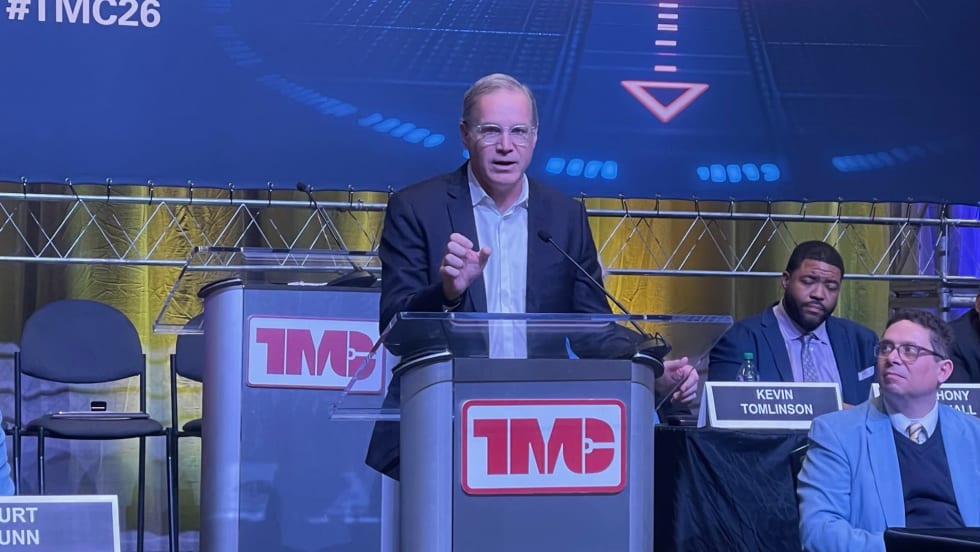
ATA’s Spear Warns Fuel Prices, Trade Policy, and Global Conflict Could Stall Trucking Recovery
Speaking at the TMC Annual Meeting in Nashville, ATA President Chris Spear said trucking faces mounting pressure from rising fuel prices, geopolitical instability, and uncertainty around trade policy.
Read More →
New Entrants, Chameleon Carriers, and Safety: Is It Too Easy to Start a Trucking Company?
More than 100,000 new trucking companies enter the industry each year, but regulators manage to audit only a fraction of them. That churn creates opportunities for inexperienced startups — and for “chameleon carriers” that shut down after safety violations and reappear under new identities. Read more from Deborah Lockridge in this commentary.
Read More →
Fleet Managers Invited to Apply for Exclusive HDT Exchange Event
HDTX is an intimate event that connects heavy-duty trucking fleet managers with industry suppliers through small-group discussions, educational sessions, and structured one-on-one meetings.
Read More →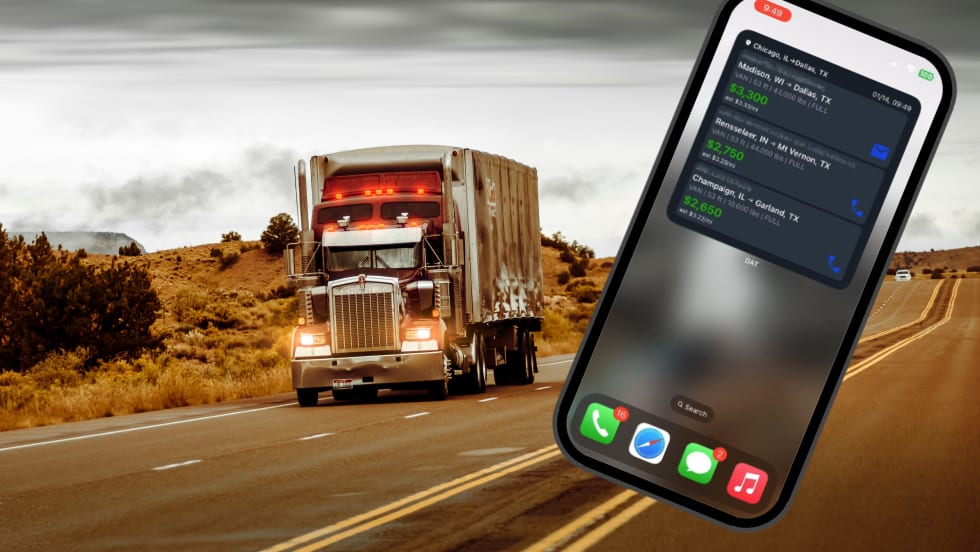
DAT Launches iPhone Widget to Help Owner-Operators Find Loads Faster
New DAT One feature shows top-paying loads directly on an iPhone’s home screen, helping carriers react faster to spot-market opportunities.
Read More →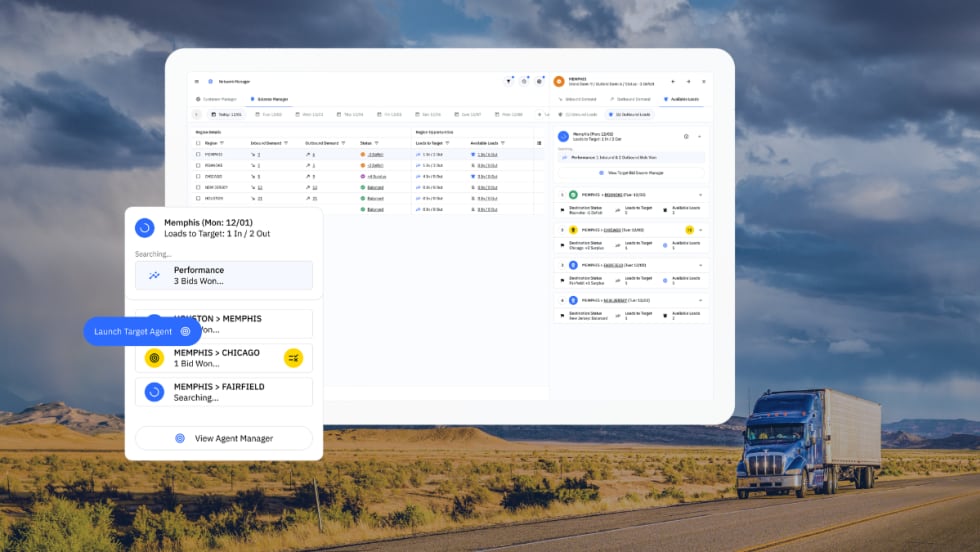
Optimal Dynamics Launches AI System to Help Carriers Choose Better Freight
Optimal Dynamics says its new Scale platform uses AI agents and optimization to help carriers find and secure freight that improves network balance and profitability.
Read More →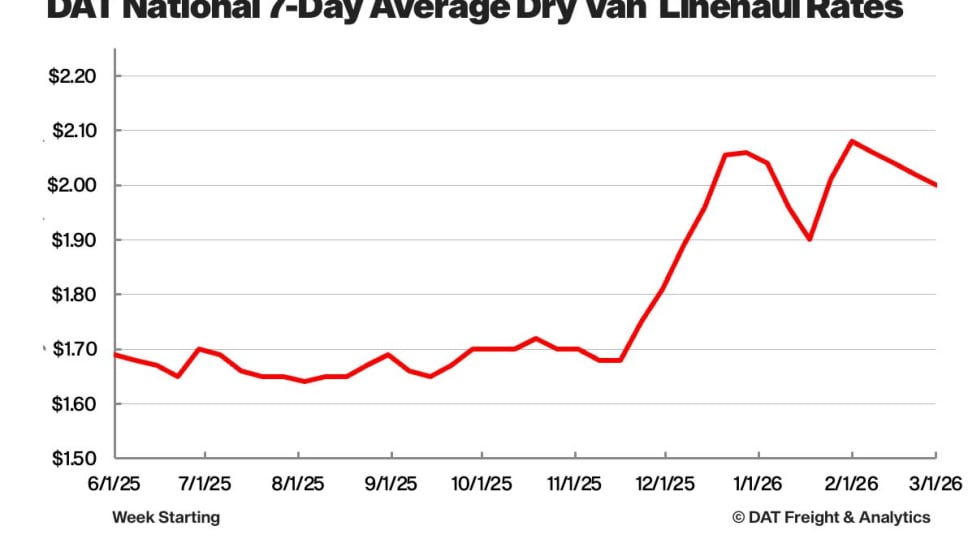
DAT: Flatbed Demand Climbs as Van and Reefer Rates Soften
DAT Freight & Analytics data shows tightening flatbed capacity, easing produce markets, and softening van and reefer rates.
Read More →
Run on Less “Messy Middle” Data Shows Multiple Paths Forward for Truck Powertrains [Watch]
NACFE's Run on Less - Messy Middle project demonstrates the power of data in helping to guide the future of alternative fuels and powertrains for heavy-duty trucks.
Read More →