




When fleets look to automate operations, one of the last places they look is the yard. For most carriers, yard management is still a manual process, with a fleet manager walking around performing yard checks, keeping track on a clipboard
Yard Management: The Virtual Clipboard
When fleets look to automate operations, one of the last places they look is the yard. For most carriers, yard management is still a manual process, with a fleet manager walking around performing yard checks, keeping track on a clipboar
by Diana Britton, Managing Editor
December 18, 2009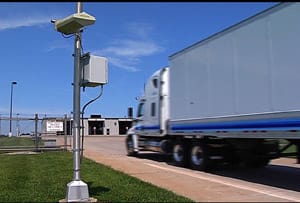
While the yard is usually the last place to automate, now might be the time to consider yard management solutions.
6 min to read
. Or it might involve your tire guy going around with a tire gauge.
Implementing a yard management solution can automate those mundane processes, bring the yard up to date with the rest of the fleet's operations, and help the yard to run smoother.
According to Chuck Papa, vice president of strategic value for Penske Logistics, the return on investment on yard management technology is there today. Penske recently deployed Fluensee's Yard solution, which uses a combination of radio frequency identification (RFID), GPS, and cellular technologies. Penske was able to deploy the technology through an existing cellular network, so no additional infrastructure or wiring was needed. This made the solution a very cost-effective way to manage the yard.
"Fluensee's Yard solution provides us with unlimited flexibility and is architected to grow with us, which helps us protect our investment and create efficiencies that will help us improve customer service," says Papa. The combination of RFID and GPS gives Penske real-time updates about the location, status and condition of company trucks and trailers. It also helps the company reduce gate congestion and improve visibility in the yard.
While Fluensee's solution is mostly geared to the shipper and logistics community, the technology used and benefits gained are very similar to those designed for fleets.
But the technology does not stop there. The types of technologies that can be used in the yard can include tire pressure monitoring systems, trailer tracking solutions, transponders, gate readers, handheld devices, in-cab computers and back-office software, not to mention RFID and GPS.
For instance, Xata will roll out a new onboard computer next year that will support yard management technology that can monitor just about anything on the trailer, including tires, reefer units, door latches, temperature sensors and cargo sensors. The computer will support ZigBee and Wi-Fi wireless technologies.
At the gate
Possibly the most logical place to capture information about an asset is at the gate, the entrance and exit point of the yard.
HELP Inc., the public-private partnership that offers the PrePass weigh station bypass service, recently launched a new suite of products designed for the trucking industry. One of them, PrePass Gates, is a fully integrated gate control access and management system that lets drivers enter and exit terminals using their PrePass transponder.
The fleet manages gate activity through a Web-based system, which allows them to add and delete which trucks have access to the yard. When a truck arrives at the gate, the system recognizes the transponder and checks the database to see whether the truck is authorized. If the truck is authorized, the gate opens automatically and records the transaction. If the truck is not authorized, an alert is sent to the dispatcher, asking what action they want to take. Just as in the PrePass line, trucks don't have to stop.
No manual intervention is needed, and it offers the same tracking and security of a guard. It can help fleets automate and manage the traffic flow, eliminating the amount of trucks sitting and backing up traffic. Carriers will also see environmental benefits, not having trucks idling at the gate while waiting for authorization. In addition, a fleet with multiple yards in different locations can manage all of them from one screen.
TransCore, Harrisburg, Pa., offers a yard management solution via RFID technology, which starts at the gate. When a truck pulls into the gate, the RFID reader recognizes the truck and trailer using RFID tags. The yard management system then pulls up the online data associated with the load, and directs the truck to the correct pick-up or drop-off location, according to John Danyluk, director. "By speeding up the gate process, queuing at busy times is reduced," Danyluk says. "This reduces the need for real estate at busy terminals. By increasing the velocity of the gate process, idling time is reduced, reducing operating and labor costs."
According to Danyluk, advances in RFID technology are moving toward expanding the amount of data that can be collected through the tag. In the future, he says, tags could capture time and date in and out of the facility, manifest information, hazmat identification, handling information, odometer readings and engine diagnostic information.
Keeping tabs on trailers
One of the most common forms of yard management technology is trailer tracking. For large fleets with thousands of trailers coming in and out of the terminals, keeping tabs on where a particular trailer is in the yard and what's in it can be a particularly useful tool.
It not only provides visibility of your assets, but it also can prevent a driver from picking up the wrong trailer, according to Martin Demers, CEO of FleetMind Solutions, which recently added a trailer tracking feature to its onboard computer application.
"By installing identifier and reader devices in each trailer and cab, we can communicate detailed and accurate information to the back office system every time a trailer is connected or disconnected," Demers says.
In addition to making sure drivers get the right trailers, the system also records the last position of the trailer where it was disconnected from the truck, so fleets will know where the trailer is at all times.
"Dispatchers will know the trailer's location, can ensure the right trailers are attached to the right vehicles, are able to track mileage for maintenance planning, and will have accurate and immediate information for customer service," he says.
Keeping track of trailers can also help carriers better utilize their assets. "If a fleet has three trailers to one tractor, the fleet is doing something wrong," says Sibin Luke, product specialist for Stemco's Bat RF system, a suite of active RFID components that provide real-time data on assets. He says Stemco's trailer sensor can help fleets to better match up trailers to tractors and make sure equipment isn't underutilized.
The Stemco system includes the TracBat RF, a sensor attached to the trailer. The sensor communicates with the system's Gate Reader at the yard entrance, which can read trucks in motion at 20-30 mph. Because part of the information it sends is mileage, a fleet can set a threshold at which certain maintenance should be performed. The back-office software that connects to TracBat RF collects this information and creates reports showing which vehicles need to head to the shop.
Tire pressure monitoring
Another part of Stemco's Bat RF system is its AirBat RF, a sensor mounted on the wheel end that automatically monitors tire pressure with visual alerts to detect under-inflated tires.
When a truck enters or leaves the yard, the Stemco Gate Reader captures tire pressure information from that truck. The information is then sent to the system's Web-based software, where the fleet manager can log in and view the tire pressure status of the entire fleet. You can break down the information by unit, tractor or trailer. The system will automatically identify all the low tires, so the technician can address the few tires that need attention, rather than manually checking all 8,000 in the yard.
Automatic tire pressure monitoring in the yard can also save fleets from breakdowns on the road. This type of technology provides a more proactive approach to vehicle management, as it addresses the problem before a driver gets out on the road, according to Peggy Fisher, president and chief operating officer of TireStamp, Troy, Mich. Fisher says that with TireStamp's TireVigil system, fleets can eliminate 90 per
Subscribe to Our Newsletter
More Fleet Management

'Beyond Compliance,' Regulations, Driver Coaching on ATRI’s 2026 Research List
The American Transportation Research Institute will examine driver coaching, regulatory impacts — including the "Beyond Compliance" concept —and weather disruptions that shape trucking operations.
Read More →
Fleet Advantage's Brian Antonellis on the Growing Need to Replace Old Trucks
Fleet Advantage's Brian Antonellis says it's time for fleets to get back to the fundamentals of good maintenance practices. And that includes replacing older, inefficient equipment.
Read More →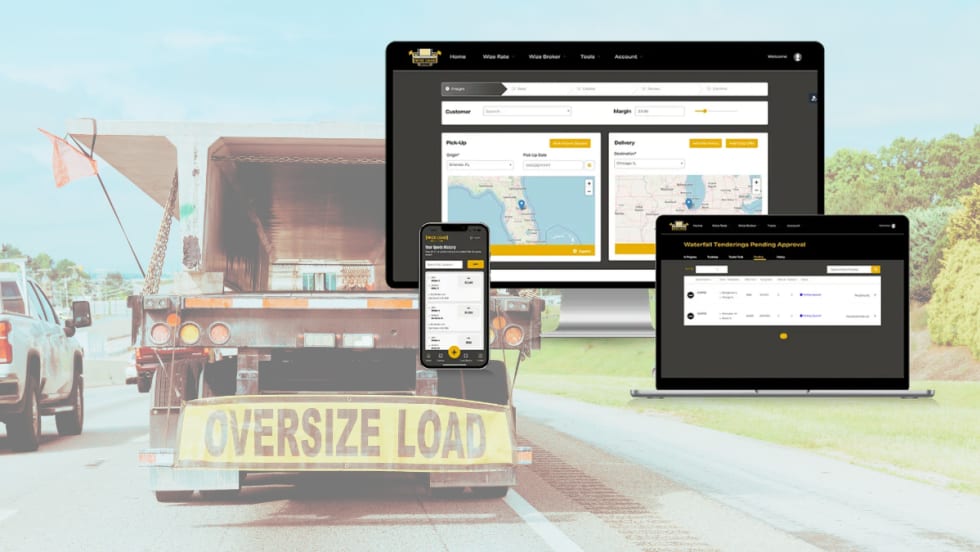
Truckstop.com Adding to Open Deck, Heavy Haul Offerings
Load matching for flatbed, lowbed, oversize and overweight loads can't be automated like basic van freight, but Truckstop.com is adding more high-tech tools to help.
Read More →
Trucker Path, Truckstop.com Expand Load Access Partnership
An expanded Trucker Path and Truckstop.com integration brings more freight opportunities into the TruckLoads app while emphasizing security and network quality.
Read More →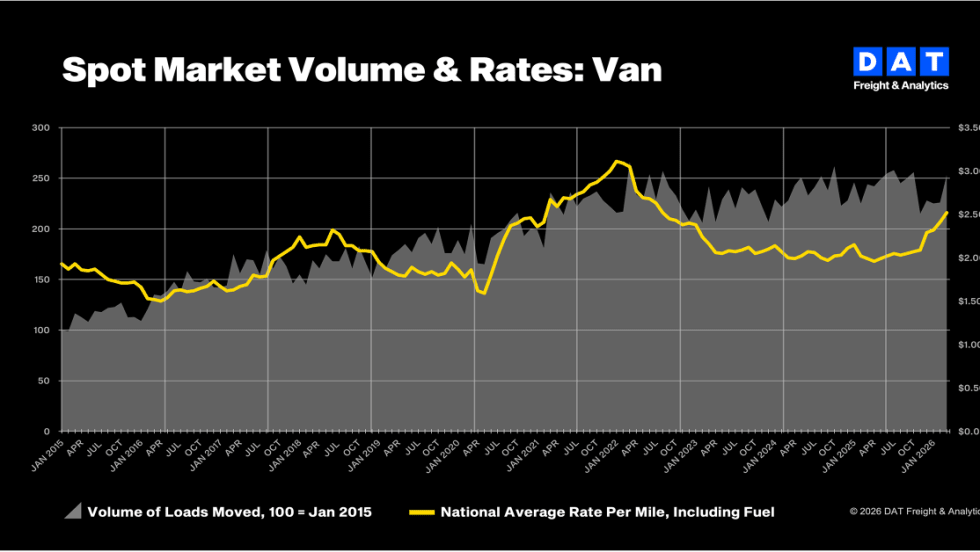
Truckload Rates Hit Two-Year Highs as Diesel Costs Surge, DAT Says
Strong March freight demand combined with a spike in fuel costs pushed both spot and contract truckload rates to their highest levels in more than two years.
Read More →
The AI Conversation You Need to Have with Your TMS Provider
Everyone’s talking about AI — but is your transportation management system actually built for it?
Read More →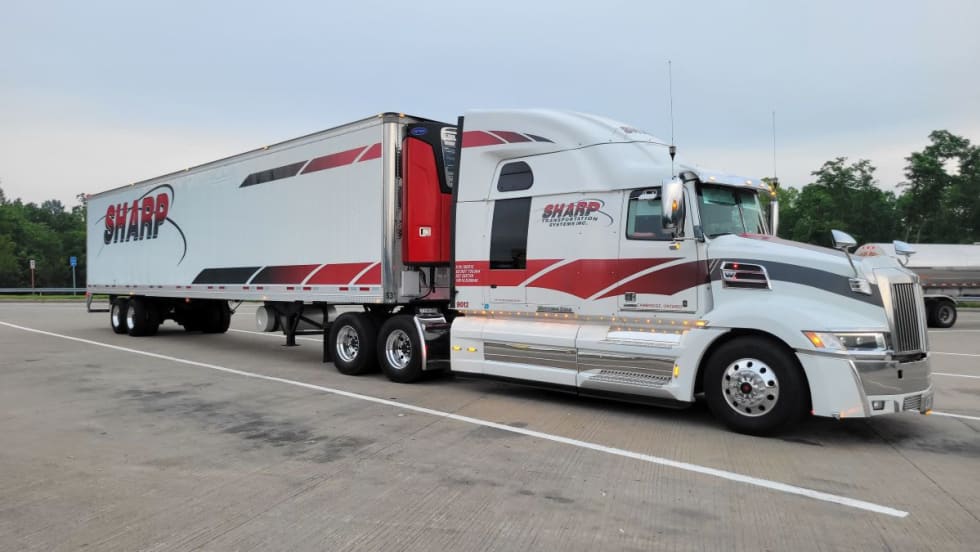
Kriska Buys Fellow Canadian Carrier Sharp Transportation Systems
Being part of KTG will allow Sharp to expand and improve its services.
Read More →
Bill in House Would Raise Minimum Insurance for Motor Carriers to $5 Million
The Fair Compensation for Truck Crash Victims Act would increase insurance requirements for interstate motor carriers by nearly seven times.
Read More →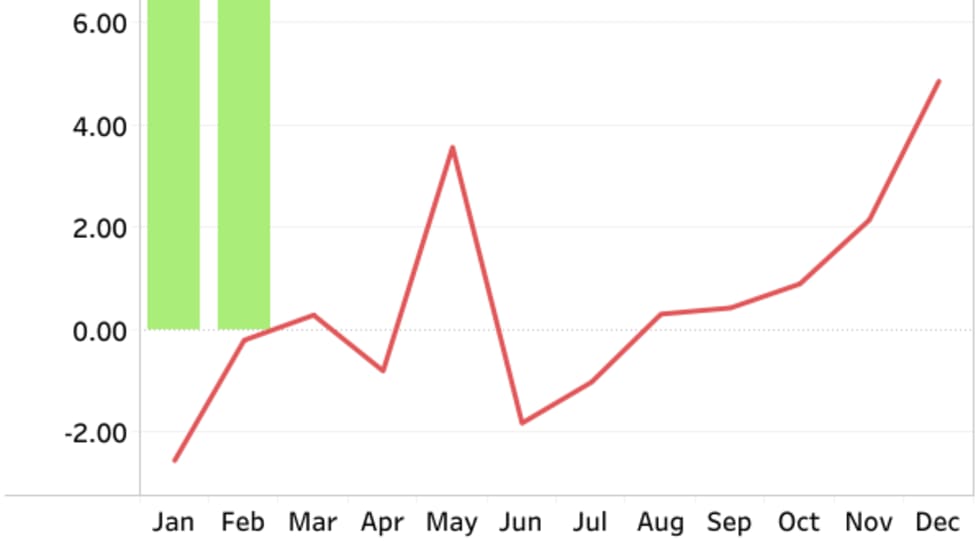
FTR Trucking Conditions Index Hits Four-Year High in February
Strong freight rates push TCI to 10.2, but FTR expects fuel-price volatility to skew March results.
Read More →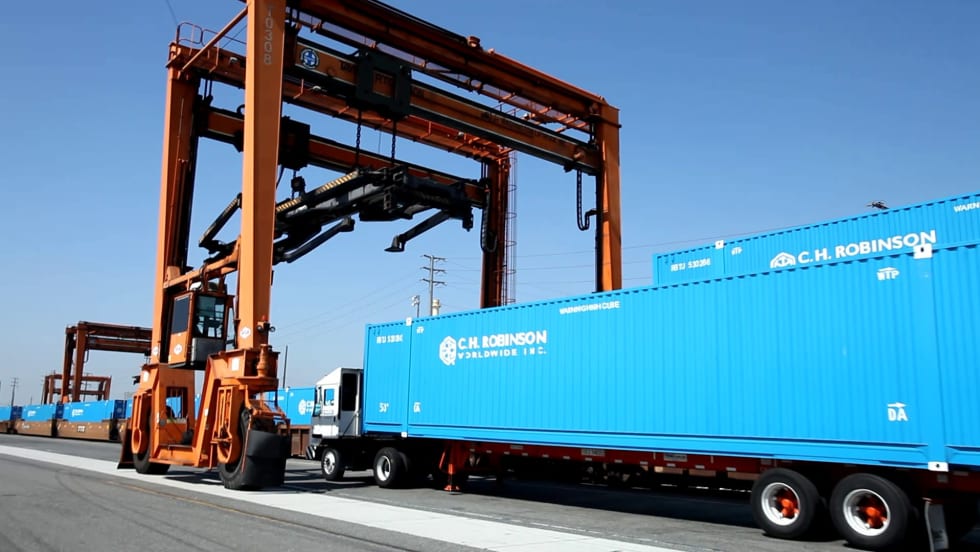
C.H. Robinson Offers Carriers Relief as Diesel Prices Surge
C.H. Robinson is waiving fees on fuel cards and cash advances for April and May, aiming to help carriers offset rising diesel costs tied to geopolitical instability.
Read More →