




During a meeting of its Legislative Policy Council this week, the American Association of Port Authorities said that it would not be a part of the efforts by the ports of Los Angeles, Oakland and New York-New Jersey to regulate
AAPA Opts Out of Ports' Efforts to Regulate Trucking
During a meeting of its Legislative Policy Council this week, the American Association of Port Authorities said that it would not be a part of the efforts by the ports of Los Angeles, Oakland and New York-New Jersey to regulat
by Staff
January 29, 2010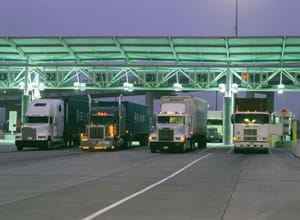
The Ports of Los Angeles, Oakland and New York and New Jersey have been trying to get more control over trucking operations at their harbors, but the AAPA wants no part of it. (Photo courtesy of the Port of Long Beach)
2 min to read
truck drayage operations, according to reports by the Journal of Commerce.
The Ports of Los Angeles, Oakland and New York and New Jersey have taken action to urge Congress to intercede and change the Federal Aviation Administration Authorization Act, which prohibits states from enacting and enforcing laws that are "related to" motor carrier prices, routes, or services in order to maximize competitive forces in the trucking industry. These ports wish to have the authority to regulate trucking operations at the ports, such as security, congestion and the environment, the JOC reports.
However, the AAPA has voted to opt out of the movement, saying that the ports already have enough authority to ban older trucks, the JOC says.
The JOC reports that there are outside interests at play in the ports efforts, such as labor, environmental and community groups, looking to gain more control over trucking operations at the ports.
Susan Monteverde, vice president of government relations at AAPA, told the JOC that the ports currently can regulate the vehicle, not the carrier, and if these ports want to be have control over the way carriers do business at their harbors, the law must be altered.
In October, the Ports of Long Beach and Los Angeles celebrated the one-year anniversary of their Clean Truck programs, announcing they are on track to reduce truck-related emissions by 80 percent, two years ahead of schedule. Since inception, the programs have purged the roads of more than 2,000 polluting trucks, with more than 5,500 clean trucks in operation today.
This improvement in emissions at the ports was one of the main reasons the AAPA opted out of the efforts, Monteverde told the JOC. She said that with the emissions reductions, there was not enough reason to pursue a change in the law.
More Fleet Management

'Beyond Compliance,' Regulations, Driver Coaching on ATRI’s 2026 Research List
The American Transportation Research Institute will examine driver coaching, regulatory impacts — including the "Beyond Compliance" concept —and weather disruptions that shape trucking operations.
Read More →
Fleet Advantage's Brian Antonellis on the Growing Need to Replace Old Trucks
Fleet Advantage's Brian Antonellis says it's time for fleets to get back to the fundamentals of good maintenance practices. And that includes replacing older, inefficient equipment.
Read More →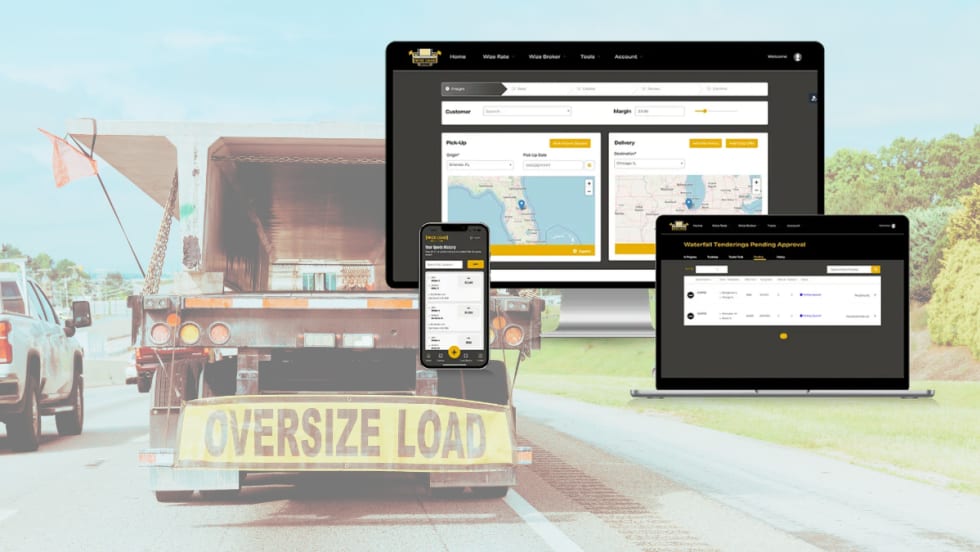
Truckstop.com Adding to Open Deck, Heavy Haul Offerings
Load matching for flatbed, lowbed, oversize and overweight loads can't be automated like basic van freight, but Truckstop.com is adding more high-tech tools to help.
Read More →
Trucker Path, Truckstop.com Expand Load Access Partnership
An expanded Trucker Path and Truckstop.com integration brings more freight opportunities into the TruckLoads app while emphasizing security and network quality.
Read More →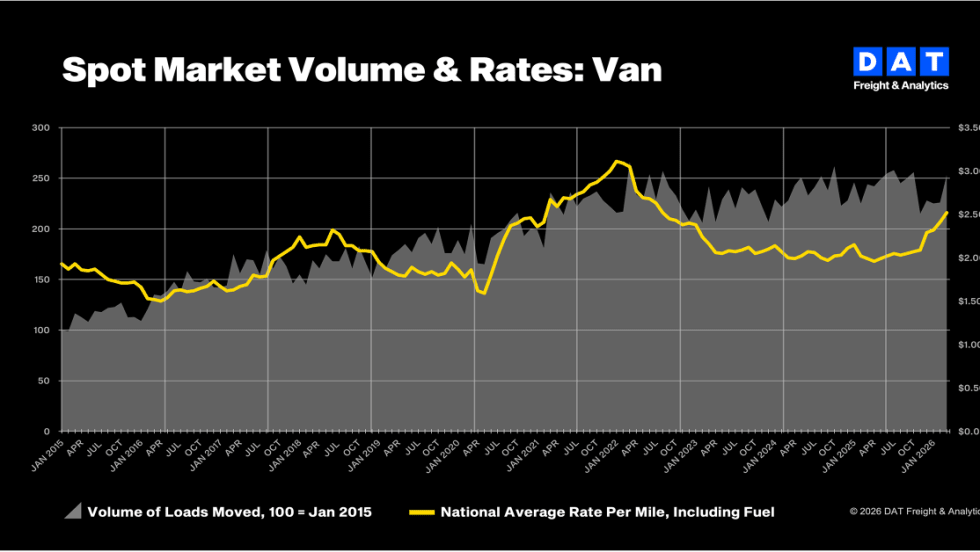
Truckload Rates Hit Two-Year Highs as Diesel Costs Surge, DAT Says
Strong March freight demand combined with a spike in fuel costs pushed both spot and contract truckload rates to their highest levels in more than two years.
Read More →
The AI Conversation You Need to Have with Your TMS Provider
Everyone’s talking about AI — but is your transportation management system actually built for it?
Read More →
Kriska Buys Fellow Canadian Carrier Sharp Transportation Systems
Being part of KTG will allow Sharp to expand and improve its services.
Read More →
Bill in House Would Raise Minimum Insurance for Motor Carriers to $5 Million
The Fair Compensation for Truck Crash Victims Act would increase insurance requirements for interstate motor carriers by nearly seven times.
Read More →
FTR Trucking Conditions Index Hits Four-Year High in February
Strong freight rates push TCI to 10.2, but FTR expects fuel-price volatility to skew March results.
Read More →
C.H. Robinson Offers Carriers Relief as Diesel Prices Surge
C.H. Robinson is waiving fees on fuel cards and cash advances for April and May, aiming to help carriers offset rising diesel costs tied to geopolitical instability.
Read More →