ATA’s Spear: Trucking Must “Take Seat at the Table” for Making Autonomous-Driving Policy
Because autonomous driving technologies offer “a lot of potential but also a lot of unknowns,” Chris Spear, ATA president, said trucking must “take our seat at the table with other industries to develop a [policy] framework without stymying innovation.
David Cullen・[Former] Business/Washington Contributing Editor
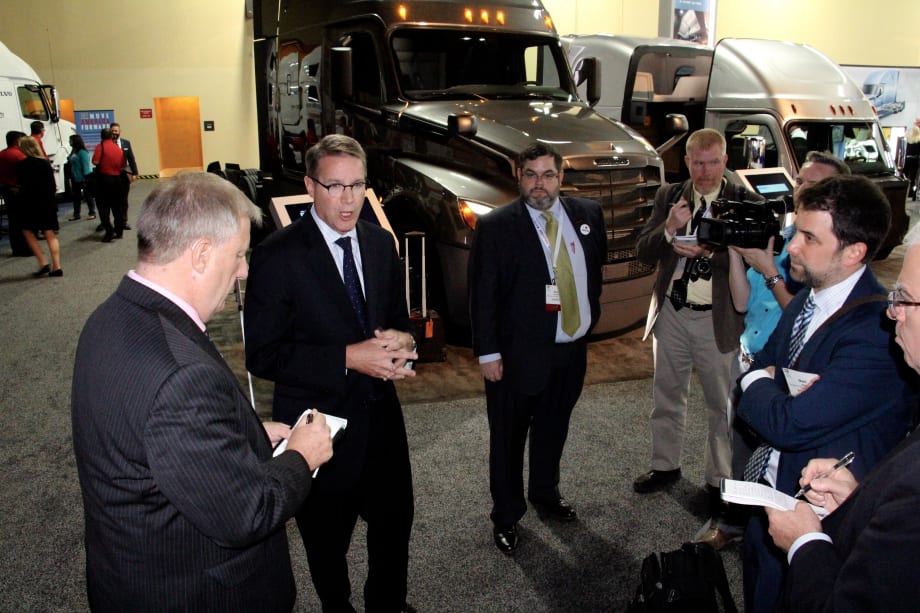
ATA president Chris Spear fielding reporters' queries on autonomous policymaking.Photo: Evan Lockridge
3 min to read
ATA president Chris Spear fielding reporters' queries on autonomous policymaking. Photo: Evan Lockridge
LAS VEGAS. Because autonomous driving technologies offer “a lot of potential but also a lot of unknowns,” Chris Spear, president of the American Trucking Associations, said trucking must “take our seat at the table with other industries [primarily the automotive sector] to develop a [policy] framework without stymying innovation.
Ad Loading...
“The technology is here and will grow rapidly,” Spear told members of the industry press during a brief Q&A on Oct. 2 here on the show floor of ATA’s Management Conference & Exposition. “Suppliers are already creating connected and automated technology.”
Ad Loading...
He said trucking is “a different animal than the car side” so the association is aiming to ensure the industry’s voice is heard as federal policymaking develops.
On the other hand, he said that “[technological developments] are not going to wait for the federal government. He also pointed out that autonomous policymaking will move on two tracks.
“States are not waiting for the federal government, either.” He pointed to Nevada, which has enacted legislation and regulations to enable the testing and operation of autonomous vehicles, as an example. “Nevada is innovating; creating a breeding ground for this technology.
“As far as [putting in place] seamless regulation, that has to be done by the federal government,” Spear continued. “But we will also get engaged at the state level to avoid a patchwork of laws [for autonomous trucks.]”
Ad Loading...
Spear said connected and autonomous vehicles hold the promise of increasing highway safety, reducing fuel consumption and emissions, and by alleviating congestion, boosting trucking productivity, which in turn “would be better for driver pay.”
As for that seat at the table, Spear said he sees ATA working closely with DOT but also with other transportation modes as well as the auto industry as “our trucks will have to communicate with those cars” to gain the full measure of safety and traffic-flow benefits of autonomous driving.
He also said it’s imperative to “ensure that the technology will be reliable and understood by all industries and government agencies before it is deployed” on a large scale.
Turning to Capitol Hill, Spear said that he expects Congress will “largely focus on oversight” of autonomous regulations with an eye to not inhibiting technological innovations.
He also said that it is well to keep in mind that “one regulation can take four years” to implement and to consider how much innovation can take place in that time.
Ad Loading...
Spear added that what must be asked is “How fast can our government get into this game and be collaborative— so the result is good for safety and the economy.”
ACT Research data shows volumes hitting a four-year high and supply-demand balance strengthening, but higher oil prices are undercutting tariff relief and tempering optimism.
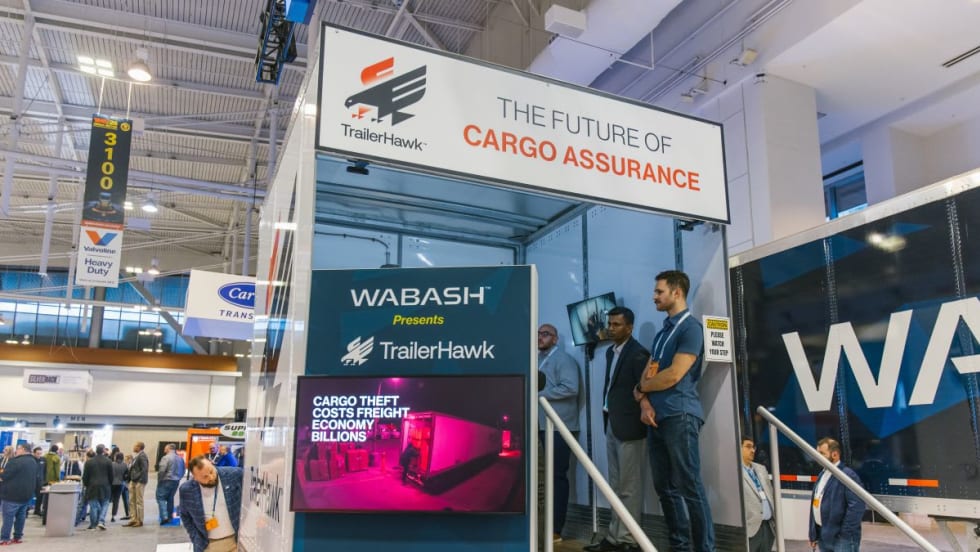
The patent-pending cargo solution integrates a digitally connected cargo door and an intelligent locking system with the TrailerHawk.AI technology platform.
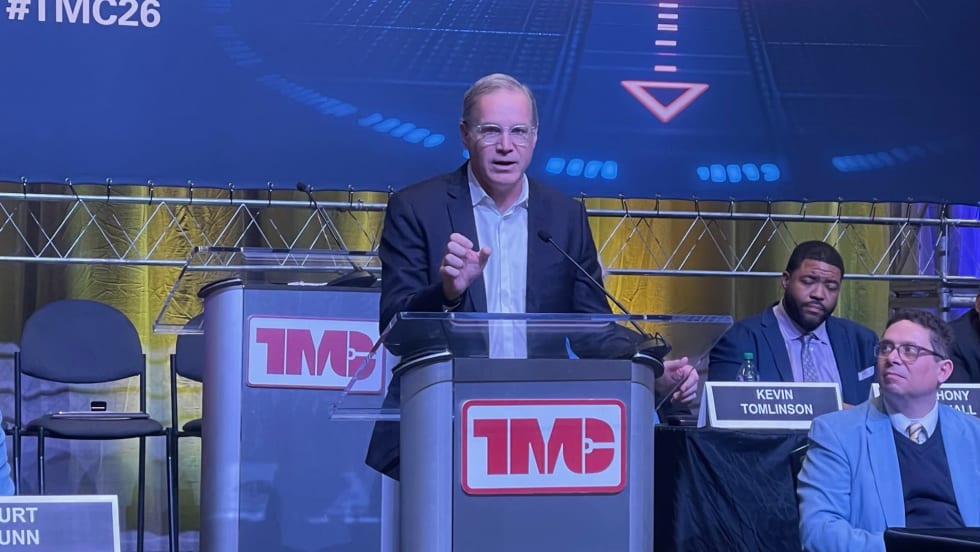
Speaking at the TMC Annual Meeting in Nashville, ATA President Chris Spear said trucking faces mounting pressure from rising fuel prices, geopolitical instability, and uncertainty around trade policy.
More than 100,000 new trucking companies enter the industry each year, but regulators manage to audit only a fraction of them. That churn creates opportunities for inexperienced startups — and for “chameleon carriers” that shut down after safety violations and reappear under new identities. Read more from Deborah Lockridge in this commentary.
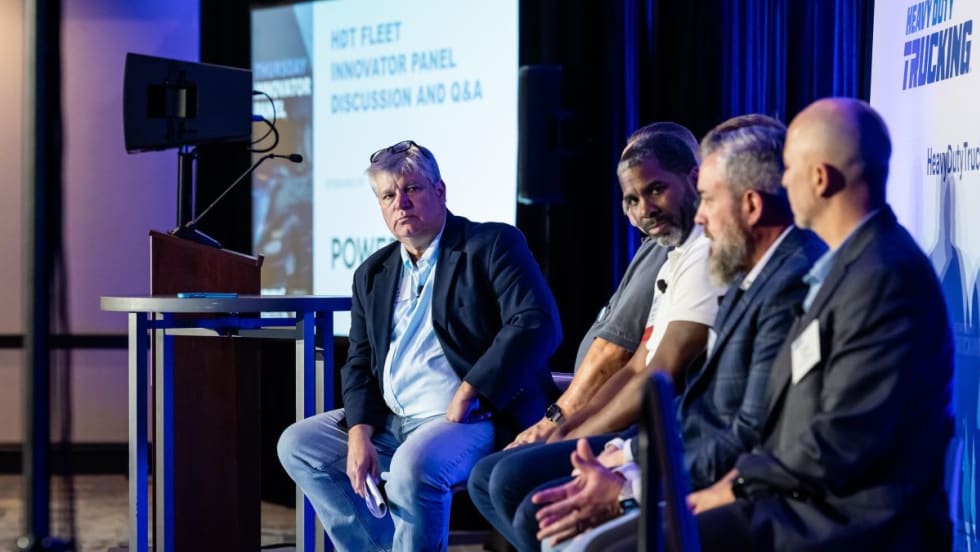
HDTX is an intimate event that connects heavy-duty trucking fleet managers with industry suppliers through small-group discussions, educational sessions, and structured one-on-one meetings.
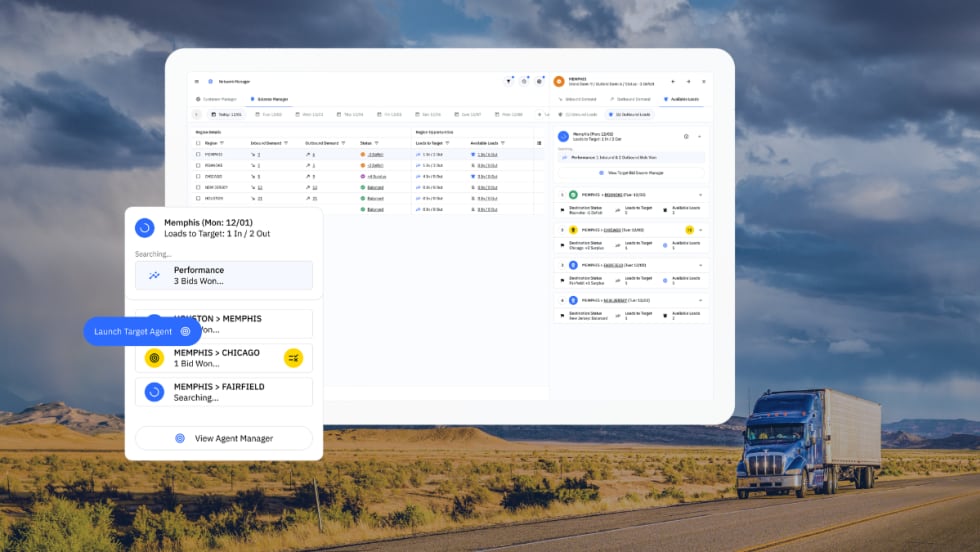
Optimal Dynamics says its new Scale platform uses AI agents and optimization to help carriers find and secure freight that improves network balance and profitability.
NACFE's Run on Less - Messy Middle project demonstrates the power of data in helping to guide the future of alternative fuels and powertrains for heavy-duty trucks.