





The American Transportation Research Institute (ATRI) has released a new report examining the causes and potential solutions for the shortage of qualified diesel technicians. Findings show that 65.5% of shops were understaffed in 2025, with nearly one in five positions unfilled.
ATRI: Trucking's Technician Shortage is Getting Worse
A new ATRI report reveals most diesel technicians enter the workforce without formal training, leaving shops to spend thousands on preparation. The findings outline key barriers, training gaps, and retention risks for fleets.
August 7, 2025
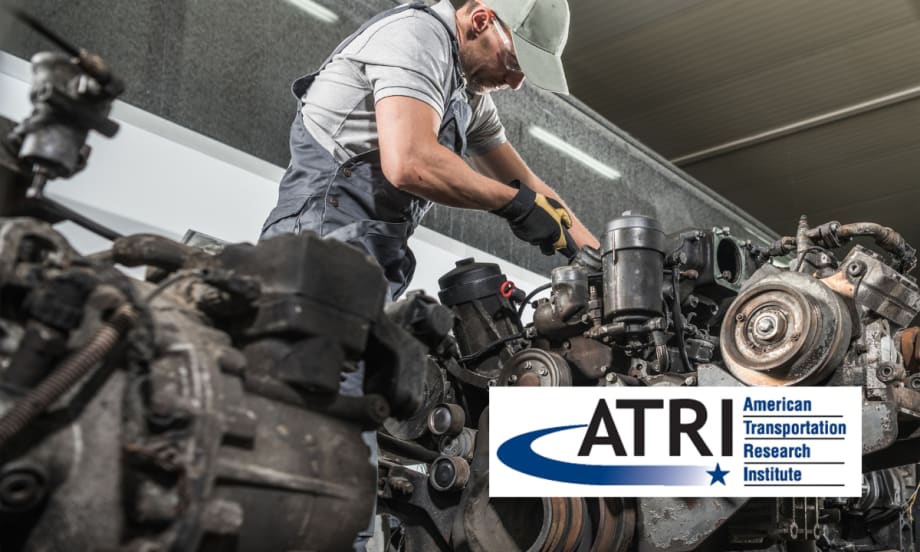
ATRI’s latest report highlights training gaps and retention challenges as fleets face a growing shortage of qualified diesel technicians.
Photo: HDT
2 min to read
Training and Qualification Challenges
Most diesel technicians (61.8%) enter the field without formal training. Shops report an average of 357 training hours and $8,211 in trainee wages are needed to bring these workers up to speed. Even among graduates of formal programs, more than 30% were rated unqualified in 20 core skill areas.
ATRI found training effectiveness varied significantly by skill area.
Impact of Additional Training Hours on Technician Qualification
| Core Skill Area | Median Training Hours | Improvement in Qualification (%) | Improvement per Hour (%) |
|---|---|---|---|
| Cab – Hardware | 5.0 | 166% | 33% |
| Diesel Engines – Cooling System | 7.5 | 205% | 27% |
| Electronic Systems – Instrument Cluster and Driver Information Systems | 7.5 | 191% | 25% |
| Hydraulics – Basic Inspection | 5.0 | 123% | 25% |
| Diesel Engines – Air Induction and Exhaust Systems | 12.5 | 232% | 19% |
| Electronic Systems – Lighting Systems | 10.0 | 170% | 17% |
| Diesel Engines – Lubrication Systems | 10.0 | 170% | 17% |
| HVAC – Heating, Ventilation, and Cooling Systems | 12.5 | 189% | 15% |
| Diesel Engines – Fuel System | 20.0 | 294% | 15% |
| Brakes – Dynamic Brake Systems, ABS, ATC, and ESC | 10.0 | 146% | 15% |
| Cab – Safety Equipment | 7.5 | 106% | 14% |
| HVAC – Refrigeration System Components | 12.5 | 171% | 14% |
| Diesel Engines – Engine Block, Cylinder Head, and Valve Train | 27.5 | 276% | 10% |
| Suspension and Steering | 20.0 | 178% | 9% |
| Drive Train | 27.5 | 188% | 7% |
| Brakes – Air Brake, Air Supply and Service Systems | 30.0 | 200% | 7% |
| Tires – Wheels, and Wheel Ends | 20.0 | 123% | 6% |
| Brakes – Foundation Brake System | 30.0 | 128% | 4% |
| Electronic Systems – Battery, Starting, and Charging System | 35.0 | 147% | 4% |
| Soft Skills – Customer Service, Communication, Task Management | 25.0 | 89% | 4% |
These findings highlight both the benefits of targeted training and the need to update curricula in less impactful skill areas.
Barriers to Entry
When starting their careers, technicians reported the following primary barriers:
| Barrier | Percentage Reporting |
|---|---|
| High cost of tools | 29.0% |
| Lack of prior technical knowledge | 28.0% |
| Insufficient pay | 16.1% |
| Poor shop mentorship | 10.8% |
| Restrictive shift/hours | 6.5% |
| New digital/electronic technology | 5.4% |
| Low confidence | 4.3% |
While pay and schedules remain major incentives, technicians also ranked more interesting work and greater variety of work as important factors for staying in the industry.
Industry Distribution of Technicians
The table below from ATRI shows how diesel technicians are distributed across U.S. industries:
| Industry | Bus and Truck Mechanics and Diesel Engine Specialists | Farm Equipment Mechanics and Service Technicians | Mobile Heavy Equipment Mechanics, Except Engines | Total by Industry |
|---|---|---|---|---|
| Truck Transportation | 57,300 | 70 | 2,480 | 59,850 |
| Merchant Wholesalers, Durable Goods | 35,910 | 25,790 | 48,760 | 110,460 |
| Repair and Maintenance | 33,660 | 1,600 | 9,720 | 44,980 |
| Federal, State, and Local Government | 30,920 | 0 | 14,900 | 45,820 |
| Rental and Leasing Services | 14,830 | 60 | 20,810 | 35,700 |
| Transit and Ground Passenger Transportation | 12,620 | 0 | 0 | 12,620 |
| Educational Services | 10,510 | 250 | 280 | 11,040 |
| Heavy and Civil Engineering Construction | 3,170 | 90 | 20,260 | 23,520 |
| Support Activities for Agriculture & Forestry | 210 | 3,160 | 150 | 3,520 |
Retention Concerns
The report found that 44% of diesel technicians are considering leaving for other industries, particularly automotive and agriculture. Dissatisfaction with pay, management, and lack of work variety were significant factors influencing these decisions.
Industry Response
“With a lack of qualified techs and stiff competition from other industries, retaining entry-level technicians has become one of our biggest challenges,” said Robert Braswell, executive director of ATA’s Technology & Maintenance Council. “This report identifies where training can be improved and how we can build on the industry’s strengths.”
The full ATRI report is available online here.
More Maintenance
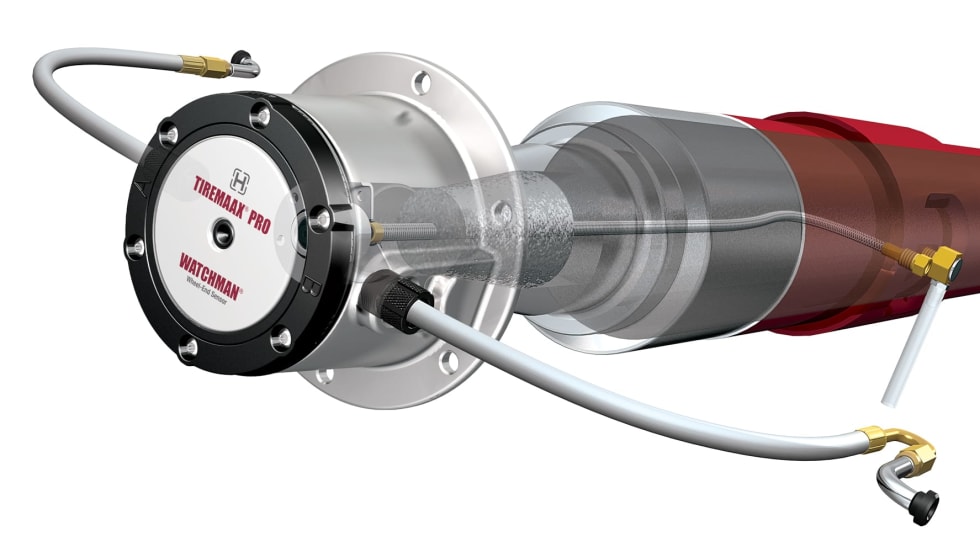
Hendrickson Unveils Watchman Smart Wheel-End System at TMC
Hendrickson’s new sensor platform integrates with its TireMaax system to deliver real-time tire and wheel-end insights, targeting uptime and cost savings.
Read More →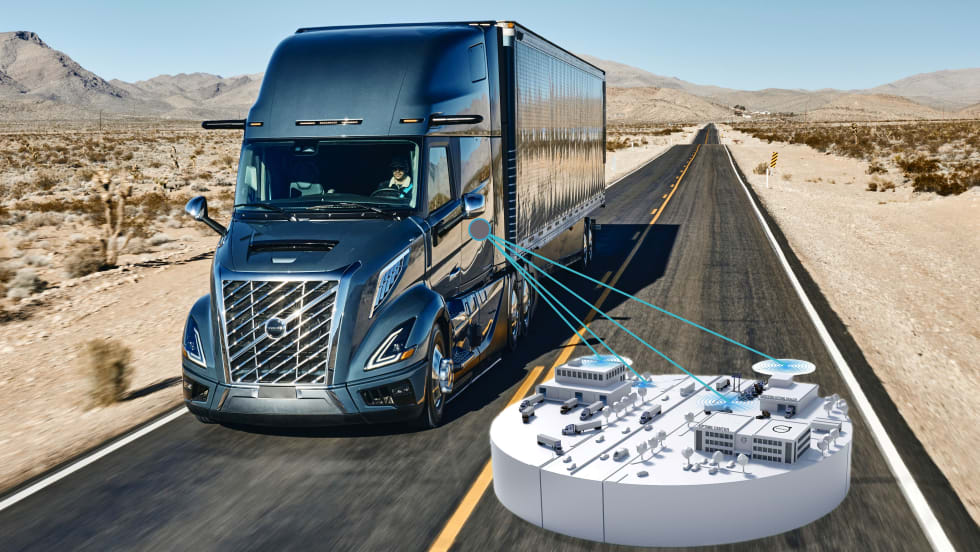
Over-the-Air Updates and the Modern Powertrain Explained
Over-the-air updates are moving beyond recalls, and expanding how fleets manage performance, compliance, and uptime.
Read More →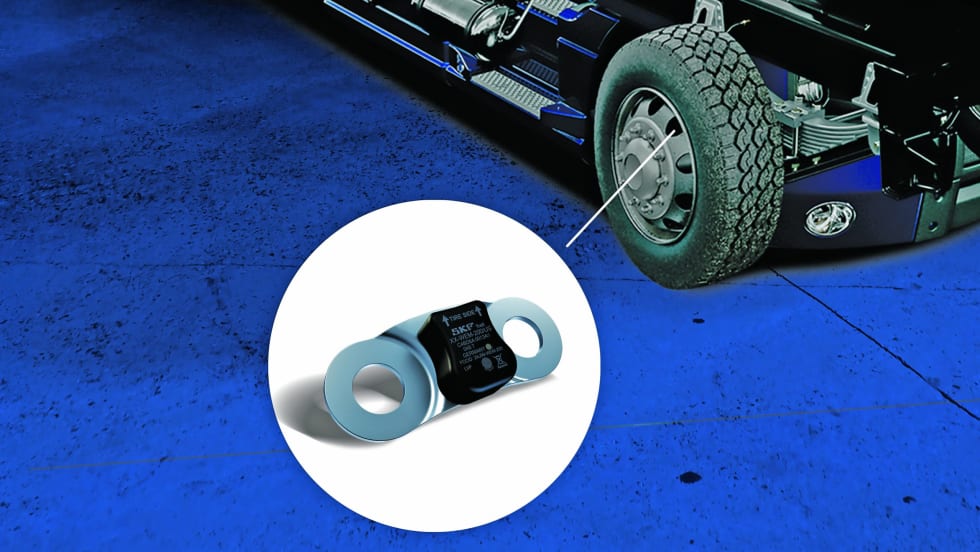
SKF, TMC Expand Hands-On Training to Boost Technician Skills at Annual Meeting
A new partnership between SFK and TMC brings certified, on-site instruction focused on wheel-end reliability and maintenance best practices.
Read More →
Why Higher Pay Isn’t Fixing the Heavy-Duty Technician Shortage
Hiring heavy-duty truck technicians has become a bidding war, but shops that focus on culture, training, and career paths are gaining an edge. That's the takeaway from a TMC panel discussion.
Read More →
Technology & Maintenance Council 2026 Annual Meeting [Photos]
Couldn't make it to Nashville for TMC's 2026 annual meeting? Check out these images.
Read More →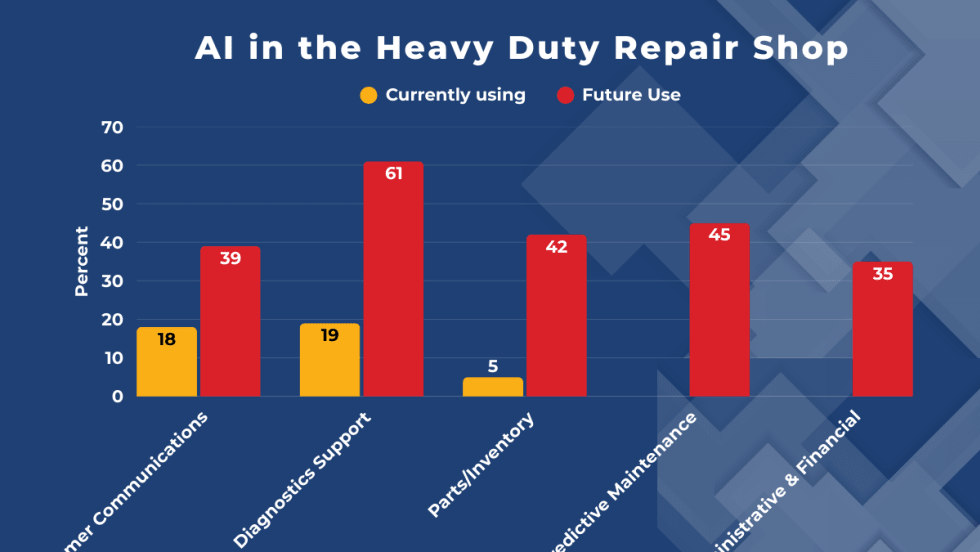
Fullbay Report: Heavy-Duty Shop Revenue Up, Rates Rising, but Shops Still Short on Techs
Strong growth across the heavy-duty repair sector is being tempered by workforce shortages and an aging technician pipeline.
Read More →
How Mack Sees the Next Era of Fleet Intelligence
Telematics has evolved from simple vehicle tracking into a connected service platform that can help fleets boost uptime, improve specifications, and move toward predictive maintenance. Mack executives say AI is now giving fleets a way to turn all that vehicle data into faster, smarter decisions.
Read More →
Clarios Expands Battery Monitoring Into Subscription Service with Battery Manager Pro
A new battery-monitoring-as-a-service program from Clarios Connected Services uses predictive analytics and automatic replacement to reduce downtime and smooth fleet maintenance costs.
Read More →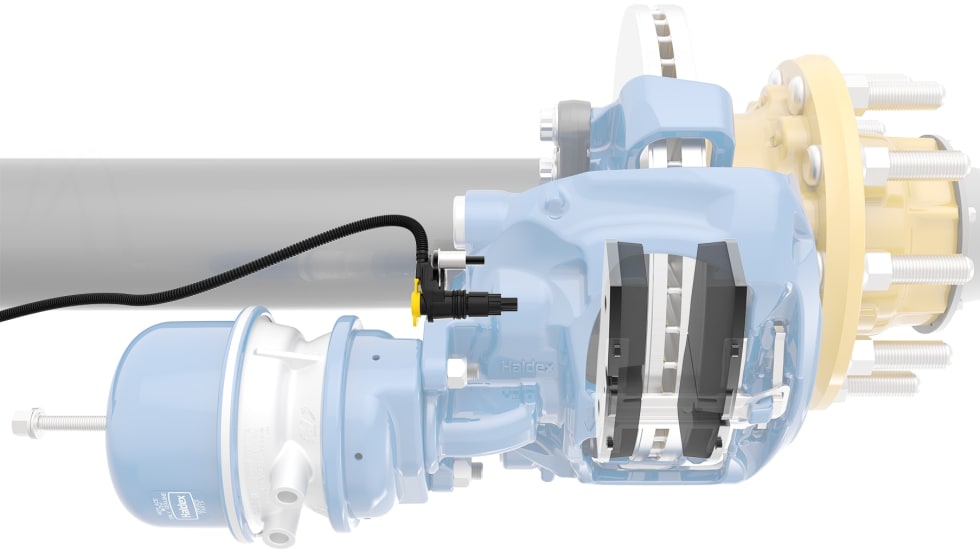
SAF-Holland’s BrakeSight Aims to Take the Guesswork Out of Air Disc Brake Maintenance
New Haldex sensor technology from SAF-Holland integrates with telematics systems to give fleets continuous insight into air disc brake condition.
Read More →
Vanair Introduces Solar, Battery Power Ecosystem for Class 8 Trucks
The company’s expanded EPEQ ecosystem includes flexible solar panels, lithium batteries, hydraulic power systems, and a portable fast charger for electric trucks.
Read More →