





A new entrant in autonomous trucking is taking a different route to commercialization: removing the cab entirely.
Autonomous Start-Up Humble Announces Cabless Autonomous Electric Hauler
A new autonomous truck startup company is targeting yard, port, and short-haul freight with a lighter, fully autonomous platform designed for dock-to-dock moves.
April 21, 2026
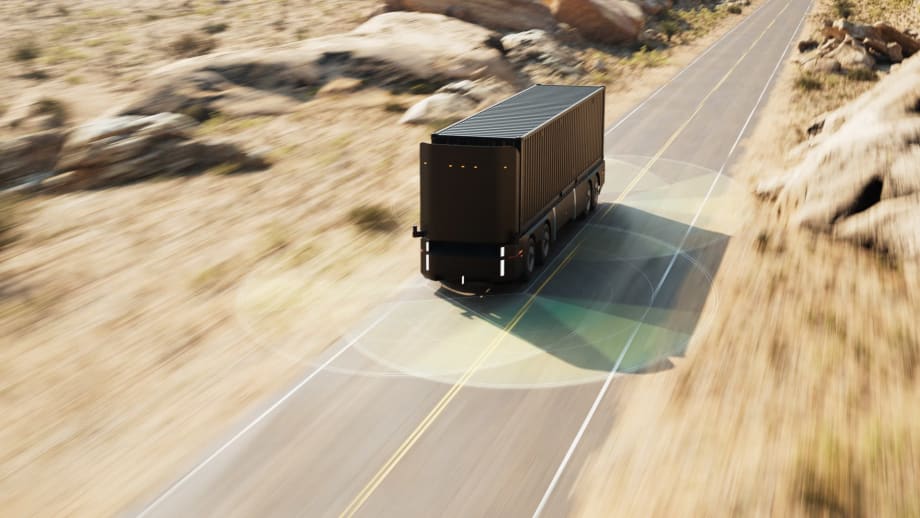
A new autonomous vehicle developer, Humble, has emerged from a stealth development mode with $24 million in seed money in hand.
Credit:
Humble
3 min to read
Humble, a San Francisco-based startup, emerged from stealth mode on April 21 by announcing a fully autonomous, cabless, battery-electric freight hauler.
The company also said it has raised $24 million in seed funding.
The funding round was led by Eclipse, with participation from Energy Impact Partners and other investors.
Humble said its approach is focused on purpose-built, driverless equipment for controlled logistics environments. The company believes its freight hauler solution could accelerate adoption of autonomy in freight operations that have so far resisted large-scale deployment.
A Cabless Platform Built for Freight Efficiency
The Humble Hauler is designed from the ground up as a modular, autonomous freight platform rather than a retrofitted Class 8 tractor. Its first application targets container movement in environments such as warehouses, railyards, and seaports.
By eliminating the cab, Humble said the vehicle is significantly lighter than a traditional tractor-trailer combination. That reduction in weight can translate into higher payload efficiency and lower operating costs, while also enabling new use cases where conventional trucks are less practical.
The platform is designed to adapt to different cargo types and logistics workflows, positioning it as a flexible solution for industrial and intermodal operations.
Designed for Dock-to-Dock Autonomy
Humble’s system combines cameras, Lidar, and radar to provide 360-degree visibility, supporting what the company describes as true dock-to-dock autonomous operation.
At the core of the autonomy stack are vision-language-action (VLA) models, a newer approach in artificial intelligence that enables machines to interpret complex environments and make decisions in unfamiliar scenarios.
The company says this capability can reduce edge-case limitations that have slowed deployment of autonomous trucks on public roads.
The electric powertrain further supports the business case by reducing exposure to fuel price volatility and lowering maintenance requirements, while aligning with fleet sustainability goals.
A Massive -- but Challenging -- Market
Truck-based freight in the U.S. represents a $906 billion market. Humble said autonomous trucking has so far struggled to achieve widespread commercial traction. Challenges include driver shortages, fragmented logistics networks, and the complexity of operating in unpredictable real-world environments.
Humble is positioning its cabless design and controlled environment focus as a way to bypass some of those barriers. The company claims its system is the first Class 8 solution capable of unloading directly at the dock without human intervention.
“We are making freight sustainable, safe and efficient in a way no one thought was possible,” said Eyal Cohen, founder and CEO, of Humble. “For the first time, freight can be fully automated all the way to the loading dock.”
Cohen is a two-time entrepreneur with experience spanning Apple, Uber, and autonomous trucking developer Waabi. He has assembled a team with backgrounds at Tesla, Waymo, Cruise, and other companies involved in autonomous and electric vehicle development.
The company says it completed its first prototype in less than six months, underscoring what investors describe as an unusually fast development pace.
“Humble understands that autonomous trucking isn’t just a software problem,” said Jiten Behl, partner at Eclipse and a member of Humble’s board. “It requires a full-stack rethink across hardware, AI, and electrification.”
Pilots and Commercialization Plans
Humble is now working with logistics and supply chain partners to begin testing and pilot deployments. The new funding will support further vehicle development, expansion of its autonomy stack, and early manufacturing efforts.
Initial deployments are expected to focus on controlled environments, with a longer-term goal of operating on public roads.
The company says safety is a primary focus, with multiple redundant systems and proprietary guardrails designed to manage risk in dynamic industrial settings.
As it scales, Humble plans to offer multiple vehicle configurations tailored to different use cases, potentially expanding beyond container handling into broader freight applications.
More Equipment
Top Green Fleets of 2026: Nomination Deadline Extended
Is your company a leader in sustainability efforts among trucking fleets? If so, Heavy Duty Trucking's editors want to hear from you.
Read More →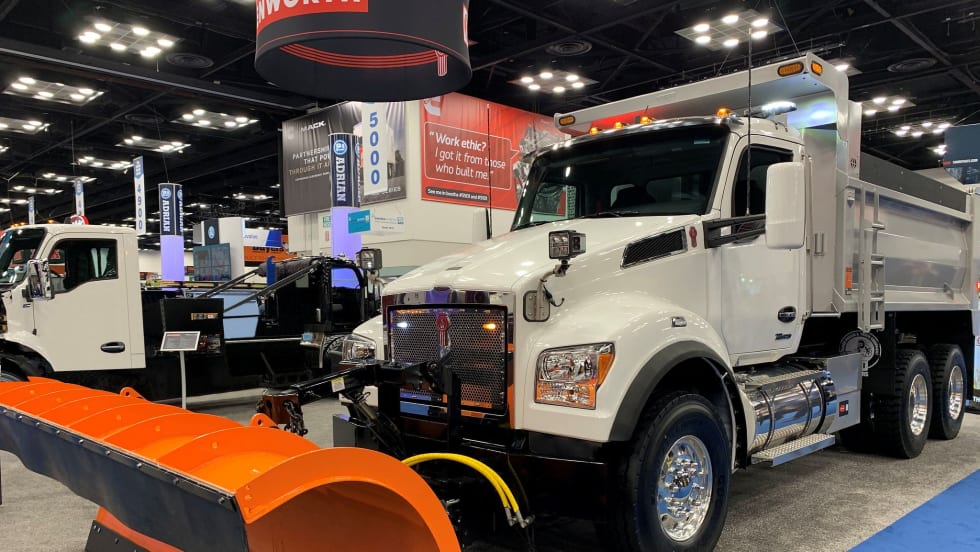
Kenworth Announces Reinforced Front Frame Option for T880 and T880S Models
Kenworth has released a factory-installed reinforced front frame option for T880 models, designed to simplify upfits, cut costs, and speed time to service.
Read More →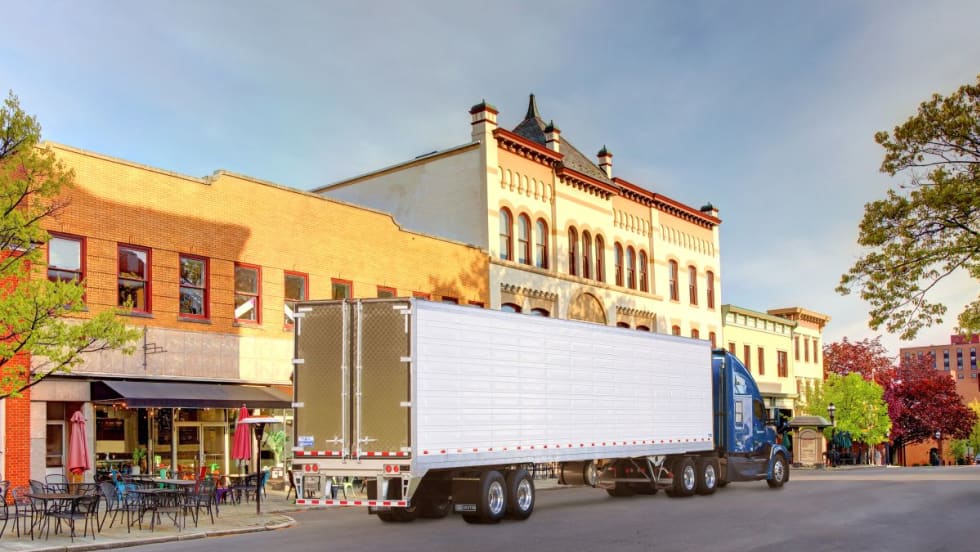
Stoughton Rolls Out PureBlue Reefer Trailer, Raises Safety Bar With 40-mph Rear Impact Guard
Stoughton’s new refrigerated trailer platform delivers double-digit efficiency gains while a next-generation rear impact guard exceeds current crash standards.
Read More →
New Lightweight Wheel Cover Targets Simpler Aero Gains [Watch]
Watch to learn how Deflecktor's new wheel cover design is taking a simpler approach to aerodynamics, with an eye toward making it more practical for both trucks and trailers.
Read More →
How Maxiloda’s Glide System Unlocks Hidden Trailer Capacity
By turning unused vertical space into usable capacity, Maxiloda’s Glide system helps fleets move more freight per trip while reducing loading risks and equipment damage.
Read More →
Deflecktor: Hubbub Aerodynamic Wheel Cover Cost-Effective Even for Trailers
Aerodynamic wheel covers can deliver small but meaningful fuel-economy gains for fleets, and Deflecktor says its latest design aims to make the technology easier and more affordable to deploy.
Read More →
Kenworth Revives Iconic 'TourAmerica' Paint Scheme
Kenworth’s new, limited-edition scheme celebrates trucking heritage while supporting a nationwide mobile museum tour.
Read More →
Ryder Joins International’s Autonomous Truck Pilot on Texas Freight Lane
Ryder and International take autonomous trucking out of the lab and onto a live, 600-mile Texas freight lane.
Read More →
FTR: Class 8 Orders Stay Hot in March Despite Monthly Dip
Fuel prices aside, Class 8 demand remains elevated as freight fundamentals improve and fleets regain confidence in long-term investments.
Read More →
Fontaine Expands Flatbed Lineup with New Fleet-Focused Models, Eyes 2027 Launch
Fontaine is broadening its flatbed lineup with new models aimed at fleets, including a lightweight aluminum trailer expected in 2027 that emphasizes durability, repairability, and lower cost.
Read More →