



Several House Republicans are proposing a national standard to protect buyers of trucking services from claims that they were negligent when selecting the carrier.
 MENU
MENU SEARCH
Several House Republicans are proposing a national standard to protect buyers of trucking services from claims that they were negligent when selecting the carrier. The bill by Rep. John Duncan, R-Tenn., says that shippers and brokers would not be liable for negligence claims at the state level if they made sure that the carrier is registered at the Federal Motor Carrier Safety Administration, has the required insurance and does not have an unsatisfactory safety rating.


Several House Republicans are proposing a national standard to protect buyers of trucking services from claims that they were negligent when selecting the carrier.
The bill by Rep. John Duncan, R-Tenn., says that shippers and brokers would not be liable for negligence claims at the state level if they made sure that the carrier is registered at the Federal Motor Carrier Safety Administration, has the required insurance and does not have an unsatisfactory safety rating.
Duncan is the vice chairman of the House Transportation and Infrastructure Committee and actively engaged in drafting that committee’s highway bill. He is joined on this bill, H.R. 4727, by Reps. Rodney Davis of Illinois and Erik Paulsen of Minnesota.
Robert Voltmann, president and CEO of the Transportation Intermediaries Association, said TIA helped draft the language and hopes to see it become part of the next highway bill.
He said the problem is that states are setting their own standards for liability when there should be a national interstate standard.
“Let’s say you are a shipper or broker in California,” he said. “You hire a motor carrier based in Ohio to move a load from Texas to New Jersey. What liability criteria should you use in selecting that carrier?”
“Tell me where the accident’s going to occur and then I’ll tell you what you should have done. There is no federal standard. It’s up to each state and state judge making those decisions. That’s not interstate commerce.”
Voltmann said it is FMCSA’s job to say whether or not a carrier is fit, in terms of safety, to do business.
The agency does make safety fitness determinations based on a compliance review, but it does not have the resources to perform compliance reviews on all carriers so many are not rated.
The CSA enforcement system, which measures carrier safety with data from roadside inspections and other sources besides compliance reviews, is intended to broaden the agency’s ability to rate carrier fitness. But FMCSA has not yet completed the rule that will link CSA data with safety fitness determinations. The initial proposal for that rule is scheduled to be published in December.
Voltmann is optimistic that this proposal will clarify the issue.
He said Rep. Duncan recognizes that transportation purchasers are at a disadvantage.
“Without a national standard, you don’t know until an accident has occurred and a lawsuit has been settled what the standard of care is in that district,” he said.
“We want the agency to tell us who is unsafe and we’ll stop using them,” he said. “And we want a national standard of care in selecting motor carriers.”
T&I Committee is supposed to report out a bill by this summer, before the current highway program expires at the end of September. But Capitol Hill insiders believe passage is not likely before the November mid-term elections, due to conflicts over how to pay for the measure.

ACT Research data shows volumes hitting a four-year high and supply-demand balance strengthening, but higher oil prices are undercutting tariff relief and tempering optimism.
Read More →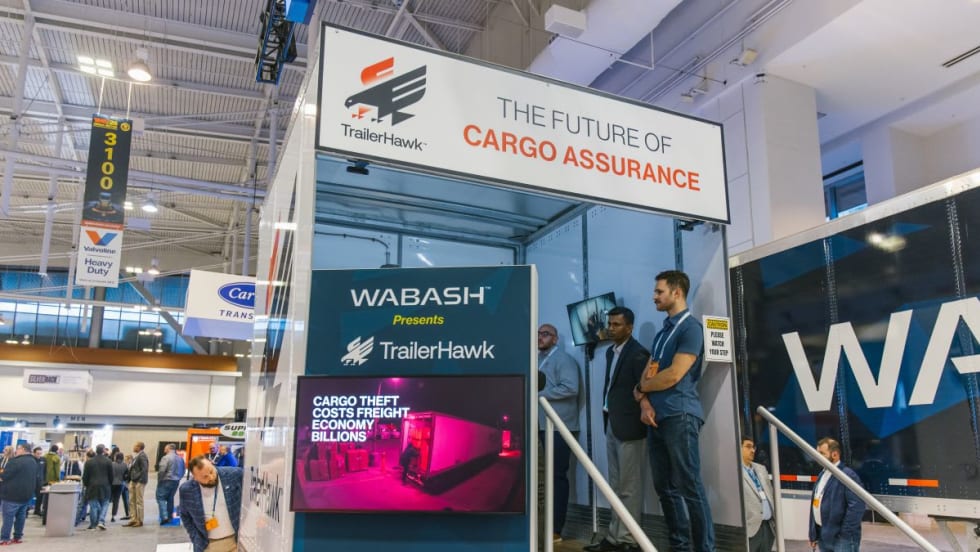
The patent-pending cargo solution integrates a digitally connected cargo door and an intelligent locking system with the TrailerHawk.AI technology platform.
Read More →
The impact of the Iran conflict extends beyond fuel costs, bringing more fraud and cybersecurity risks to the trucking industry.
Read More →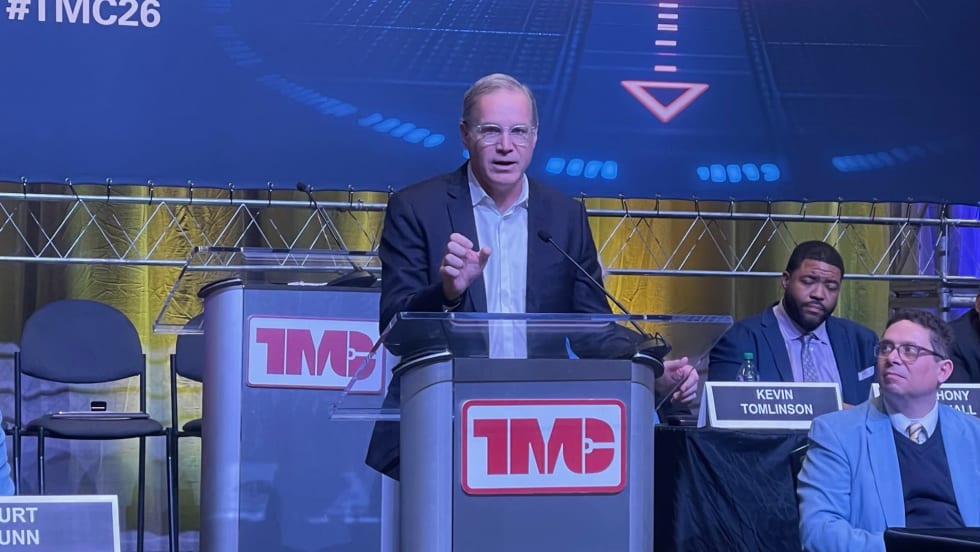
Speaking at the TMC Annual Meeting in Nashville, ATA President Chris Spear said trucking faces mounting pressure from rising fuel prices, geopolitical instability, and uncertainty around trade policy.
Read More →
More than 100,000 new trucking companies enter the industry each year, but regulators manage to audit only a fraction of them. That churn creates opportunities for inexperienced startups — and for “chameleon carriers” that shut down after safety violations and reappear under new identities. Read more from Deborah Lockridge in this commentary.
Read More →
HDTX is an intimate event that connects heavy-duty trucking fleet managers with industry suppliers through small-group discussions, educational sessions, and structured one-on-one meetings.
Read More →
New DAT One feature shows top-paying loads directly on an iPhone’s home screen, helping carriers react faster to spot-market opportunities.
Read More →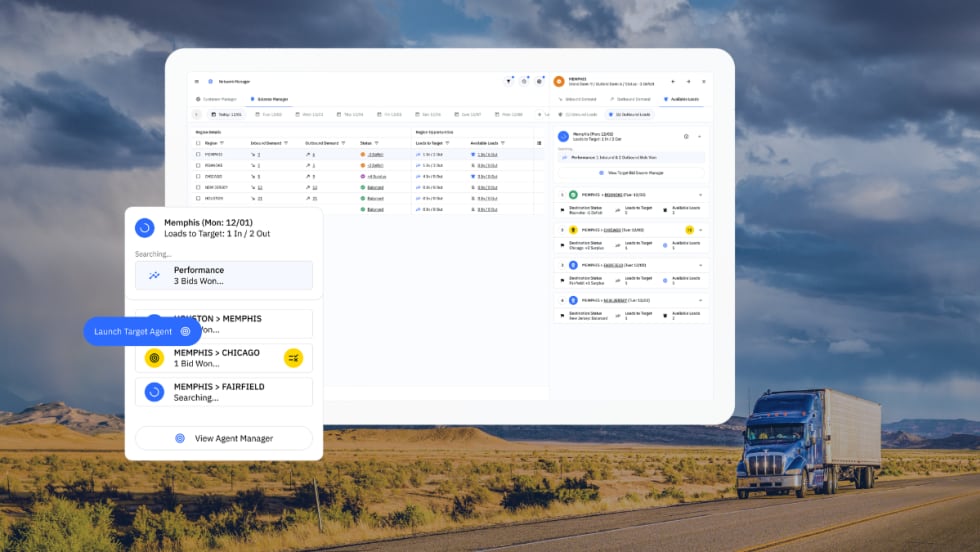
Optimal Dynamics says its new Scale platform uses AI agents and optimization to help carriers find and secure freight that improves network balance and profitability.
Read More →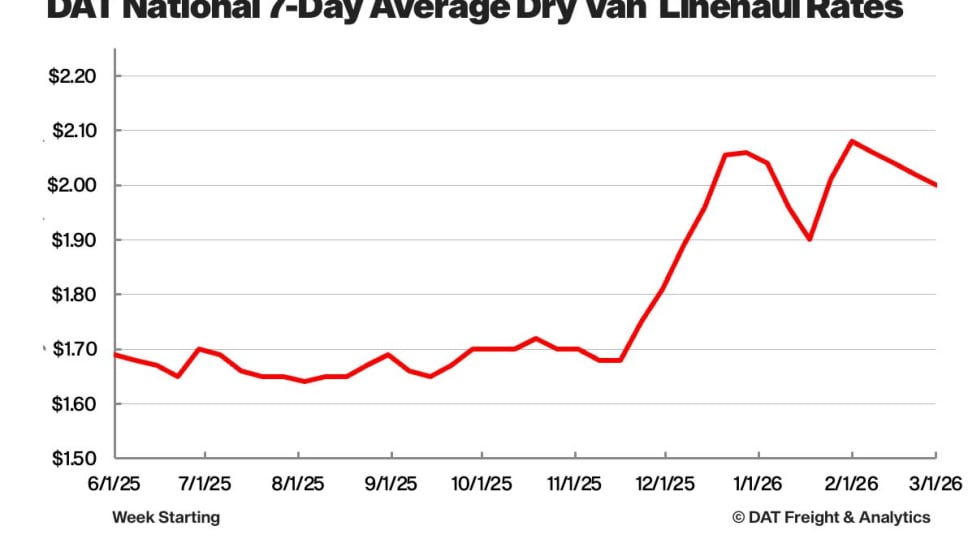
DAT Freight & Analytics data shows tightening flatbed capacity, easing produce markets, and softening van and reefer rates.
Read More →
NACFE's Run on Less - Messy Middle project demonstrates the power of data in helping to guide the future of alternative fuels and powertrains for heavy-duty trucks.
Read More →