




The U.S. average on-highway price for diesel fuel dropped by a tenth of a cent to $3.907 over last week, according to the Department of Energy. The marginal decrease broke a 15-week streak in diesel price increases.
Break in Price Rise Streak for On-Highway Diesel, Crude Rises
The U.S. average on-highway price for diesel fuel dropped by a tenth of a cent to $3.907 over last week, according to the Department of Energy. The marginal decrease broke a 15-week streak in diesel price increases
by Staff
March 21, 2011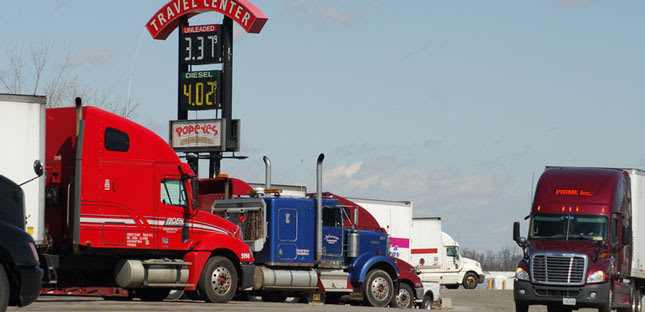
Fuel prices dropped slightly but are still hovering near $4 per gallon in many areas. (Photo by Jim Park)
1 min to read
The price is up 74.5 cents since prices began to rise, and up 96.1 cents over last year.
As always, regional prices varied, with California gaining 2.9 cents per gallon to average $4.199. The Gulf Coast still claims the lowest prices at $3.841 per gallon, down a tenth of cent from last week.
This break in the upward momentum of diesel prices is likely to be only temporary. Crude oil prices climbed Monday, as energy experts warned that Libya's oil exports could be off the world market longer than expected, and countries including the U.S. enforced a no-fly zone over the country. Added to this is the general concern over unrest in North Africa and the Middle East, which produces 27 percent of the world's oil.
On Monday, Benchmark West Texas crude for May delivery gained $1.24 to settle at $103.09 per barrel on the New York Mercantile Exchange. The April contract, which ends Tuesday, rose $1.26 to settle at $102.33 per barrel. Last week, oil had slipped below the $100 mark following the earthquake in Japan.
For more information: www.eia.gov
More Drivers

FMCSA Extends Paper Medical Card Exemption … Again
Five states still aren't ready to accept commercial driver medical exam information directly from the medical examiner's registry.
Read More →
Mack Launches Digital Driver Guide for Chassis-Specific Truck Info
Mack’s new, virtual owner’s manual delivers VIN-based, on-demand guidance for vehicle systems via web, app, and soon in-cab displays.
Read More →
Western Star Showcases Truckers' Pride and Skill
Western Star is expanding its Star Nation Experience in 2026, adding new competitions and dealer participation to highlight operator skills and promote careers in trucking.
Read More →
Best Fleets to Drive For: Two Carriers Earn Overall Award for First Time
CarriersEdge announced the 2026 Best Fleets to Drive For overall winners, with Crawford Trucking, Fortigo Freight Services, and FTC Transportation receiving top awards.
Read More →
Federal Proposal Would Allow Pell Grants for Shorter-Term Job Training
The Department of Labor plans to expand Pell Grant eligibility to some shorter workforce training programs, a move the American Trucking Associations said will help strengthen commercial driver training schools and diesel technician training programs.
Read More →
Owner-Operator Model Gets Boost as DOL Proposes 2024 Independent Contractor Definition Reversal
For an industry that has watched this issue go back and forth for years, the independent contractor proposal marks the latest swing in the regulatory pendulum.
Read More →
FMCSA Reinstates Field Warrior ELD to Registered Device List
One electronic logging device has been reinstated to the FMCSA's list of registered ELDs.
Read More →
How One Company is Using Smart Suspension Technology to Reduce Driver Injuries and Improve Retention
America’s Service Line adopted Link’s SmartValve and ROI Cabmate systems to address whole-body vibration, repetitive strain, and driver turnover. The trucking fleet is already seeing measurable results.
Read More →
CarriersEdge Announces 2026 Best Fleets to Drive For
The 18th annual contest recognizing the best workplaces for truck drivers sees changes to Top 20, Hall of Fame
Read More →
FMCSA Targets 550+ ‘Sham’ CDL Schools in Nationwide Sting Operation
The Federal Motor Carrier Safety Administration issued more than 550 notices of proposed removal to commercial driver training providers following a five-day nationwide enforcement sweep. Investigators cited unqualified instructors, improper training vehicles, and failure to meet federal and state requirements.
Read More →