





A Chicago interchange for the first time was named the most congested freight bottleneck in the country, according to the American Transportation Research Institute.
Chicago Interchange Overtakes Longstanding New Jersey Intersection as Worst Freight Bottleneck
The American Transportation Research Institute's annual analysis of truck speeds through congested interchanges yielded a new worst bottleneck this year.
February 17, 2026
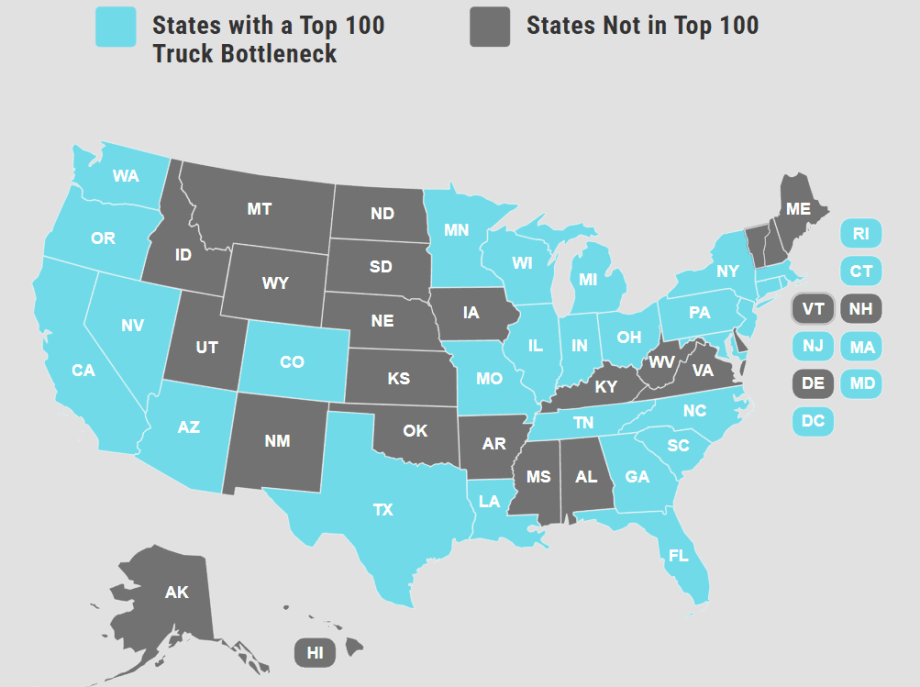
According to ATRI, 28 states have at least one of the worst interchanges for freight bottlenecks.
Credit:
American Transportation Research Institute
3 min to read
ATRI, the research arm of the American Trucking Associations, released its 15th annual list highlighting the most congested bottlenecks for trucks in America.
The analysis of data from 2025 found traffic conditions continue to deteriorate, although in some instances, it’s due to work zones that result from increased infrastructure investment.
Average rush-hour truck speeds last year at the more than 300 locations ATRI tracks were 33.2 mph, 2.8% slower than the previous year.
Among the top 10 locations, the average rush-hour truck speed was 29.6 mph.
What Are the Most Congested Bottlenecks for Trucks?
For the first time ever, the intersection of I-294 and I-290/I-88 in Chicago is the top freight bottleneck in the country, surpassing the long-standing number one bottleneck in Fort Lee, New Jersey.
The remaining Top 10 bottlenecks include:
2. Fort Lee, New Jersey: I-95 at SR 4
3. Atlanta: I-285 at I-85 (North)
4. Houston: I-45 at I-69/US 59
5. Atlanta: I-75 at I-285 (North)
6. Atlanta: I-20 at I-285 (West)
7. Nashville: I-24/I-40 at I-440 (East)
8. Houston: I-10 at I-69/US 59
9. Cincinnati: I-71 at I-75
10. McDonough, Georgia: I-75
Data That Can Help Target Infrastructure Funding for Improvements
It’s a report that Congress would do well to consider as it prepares to reauthorize the nation’s surface transportation programs.
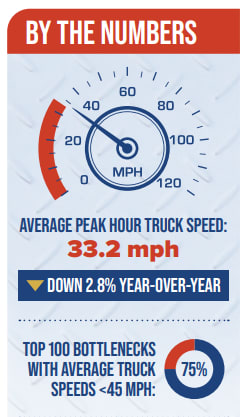
Three-quarters of the top freight bottlenecks have average truck speeds of less than 45 mph.
Credit:
American Transportation Research Institute
“Congestion delays inflicted on truckers are the equivalent of 436,000 drivers sitting idle for an entire year,” said ATRI President and COO Rebecca Brewster in a news release.
Illinois has been home to the country’s top bottleneck before, but following a sustained effort to expand capacity, its previous number 1 bottleneck at the Jane Byrne Interchange no longer ranks in the top 25, Brewster said.
“This data gives policymakers a road map to reduce chokepoints, lower emissions, and drive economic growth.”
“For many years, the George Washington Bridge held this infamous bottleneck title,” said American Trucking Associations President and CEO Chris Spear. “Yet targeted infrastructure investments have finally helped to boost speeds between New York and New Jersey.
“This success provides a roadmap for policymakers to invest in projects that will improve efficiency throughout our transportation system and benefit their constituents."
How ATRI Determines the Worst Freight Bottlenecks
The 2026 Top Truck Bottleneck List measures the level of truck-involved congestion at more than 325 locations on the national highway system.
The analysis, based on an extensive database of freight truck GPS data, uses several customized software applications and analysis methods, along with terabytes of data from trucking operations, to produce a congestion impact ranking for each location.
ATRI’s truck GPS data is also used to support the U.S. Department of Transportation's Freight Mobility Initiative.
The bottleneck locations detailed in this latest ATRI list represent the top 100 congested locations, although ATRI continuously monitors more than 325 freight-critical locations.
More information on the top freight bottlenecks is available on ATRI's website.
More Fleet Management

ACT: Trucking Volumes Rise, Capacity Tightens as Fuel Prices Cloud Outlook
ACT Research data shows volumes hitting a four-year high and supply-demand balance strengthening, but higher oil prices are undercutting tariff relief and tempering optimism.
Read More →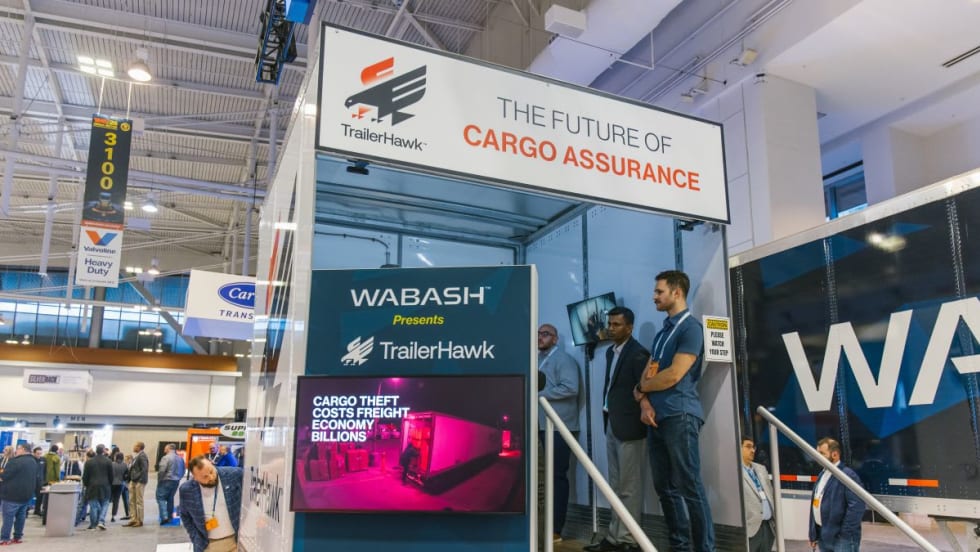
Wabash Teams Physical Security With Digital Tech For Better Cargo Visibility
The patent-pending cargo solution integrates a digitally connected cargo door and an intelligent locking system with the TrailerHawk.AI technology platform.
Read More →
From Diesel Prices to Cyberattacks: How the Iran War Is Affecting Trucking
The impact of the Iran conflict extends beyond fuel costs, bringing more fraud and cybersecurity risks to the trucking industry.
Read More →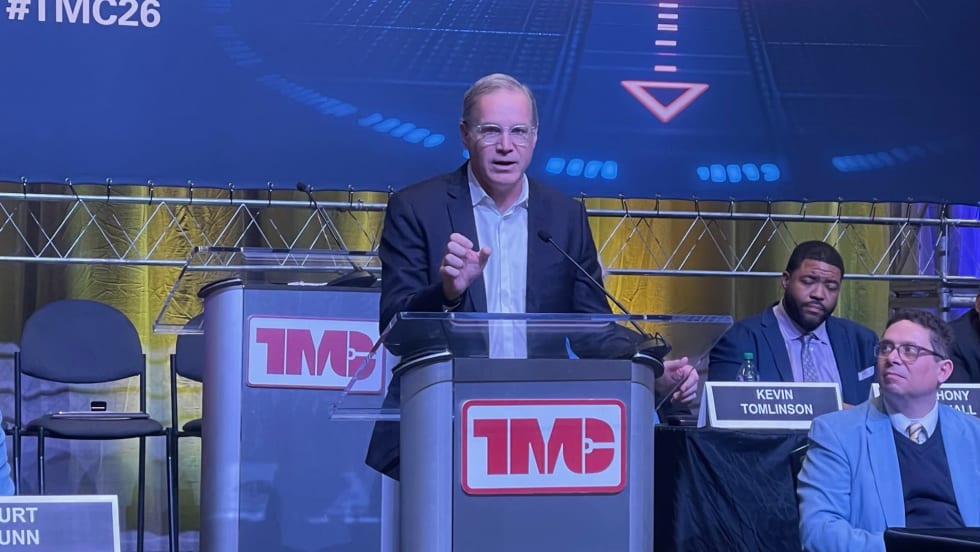
ATA’s Spear Warns Fuel Prices, Trade Policy, and Global Conflict Could Stall Trucking Recovery
Speaking at the TMC Annual Meeting in Nashville, ATA President Chris Spear said trucking faces mounting pressure from rising fuel prices, geopolitical instability, and uncertainty around trade policy.
Read More →
New Entrants, Chameleon Carriers, and Safety: Is It Too Easy to Start a Trucking Company?
More than 100,000 new trucking companies enter the industry each year, but regulators manage to audit only a fraction of them. That churn creates opportunities for inexperienced startups — and for “chameleon carriers” that shut down after safety violations and reappear under new identities. Read more from Deborah Lockridge in this commentary.
Read More →
Fleet Managers Invited to Apply for Exclusive HDT Exchange Event
HDTX is an intimate event that connects heavy-duty trucking fleet managers with industry suppliers through small-group discussions, educational sessions, and structured one-on-one meetings.
Read More →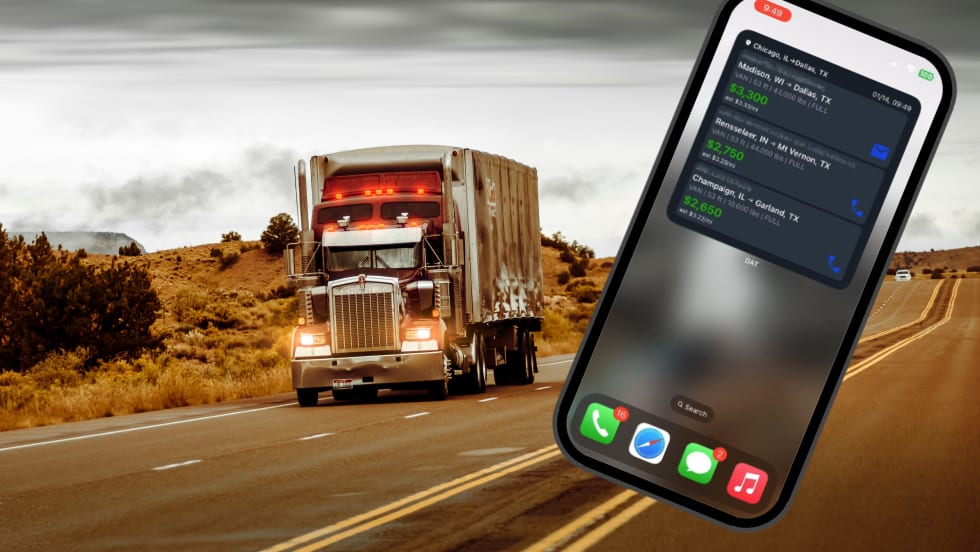
DAT Launches iPhone Widget to Help Owner-Operators Find Loads Faster
New DAT One feature shows top-paying loads directly on an iPhone’s home screen, helping carriers react faster to spot-market opportunities.
Read More →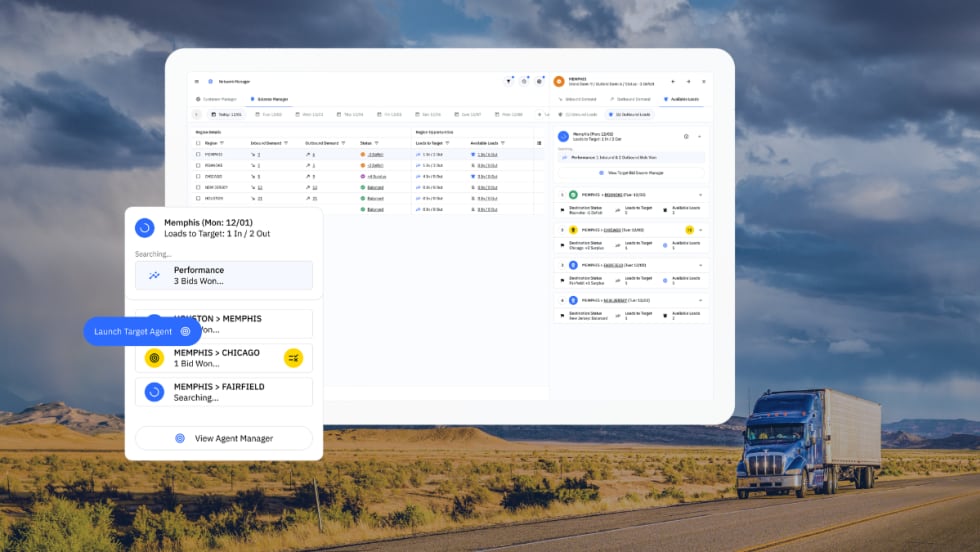
Optimal Dynamics Launches AI System to Help Carriers Choose Better Freight
Optimal Dynamics says its new Scale platform uses AI agents and optimization to help carriers find and secure freight that improves network balance and profitability.
Read More →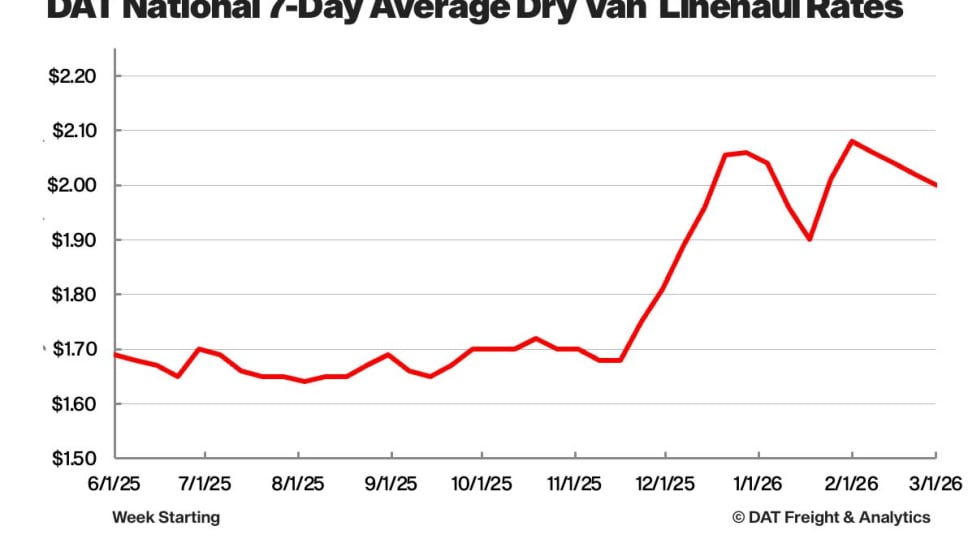
DAT: Flatbed Demand Climbs as Van and Reefer Rates Soften
DAT Freight & Analytics data shows tightening flatbed capacity, easing produce markets, and softening van and reefer rates.
Read More →
Run on Less “Messy Middle” Data Shows Multiple Paths Forward for Truck Powertrains [Watch]
NACFE's Run on Less - Messy Middle project demonstrates the power of data in helping to guide the future of alternative fuels and powertrains for heavy-duty trucks.
Read More →