




Results from the second Rolling Speed Harmonization effort continues to demonstrate that it can be used to improve road safety, reduce crashes and ultimately improve traffic flow on Interstate 70 during heavier travel periods.
The Colorado Department of Transportation, in coordination with the Colorado State Patrol, and Silverthorne Police Department, conducted the test along a 27-mile segment of eastbound Interstate 70, from Silverthorne to Empire Junction (U.S. 40), on Sunday, September 25. Operations took place from 11:15 a.m. to approximately 3:15 p.m. This was the second test of the operation.
When Rolling Speed Harmonization is underway, a law enforcement vehicle runs its emergency lights and merges ahead of traffic to pace vehicles and create more speed uniformity. SPD paced from Silverthorne to the west portal of the Eisenhower/Johnson Memorial Tunnels, where the SPD handed off to the CSP through the EJMT to Empire Junction.
Results from the second test included:
Speeds averaged 55 mph (posted speed 60 mph) from Silverthorne to the EJMT; 50 mph (posted 50 mph) within the EJMT; and 60 mph (posted 65 mph) from the EJMT to Empire Junction.
When traffic congestion occurs, the average speed along this 27-mile segment varies between 10 and 30 mph.*
High Compliance with Metered Speeds
The data showed very high compliance among drivers and speed differentials between vehicles were reduced, even for vehicles traveling outside the paced group of vehicles -- a key determinant since wide variations in speed lead to higher probability of accidents which, in turn, substantially increases congestion.
Vehicle counts during the test period:
11 a.m. to 12 p.m. - 1,879;
12 p.m. to 1 p.m. - 2,068;
1 p.m. to 2 p.m. - 2,076;
2 p.m. to 3 p.m. - 2,125;
3 p.m. to 4 p.m. - 2,273.
"It's interesting to note that after we concluded operations, vehicle speeds dropped significantly east of Empire Junction, from 60 to about 30 miles per hour," said CDOT Regional Transportation Director Tony DeVito. "We began to see vehicles clumping together again, which contributed to the congestion and slower speeds."
The September 25 test was a follow-up to one conducted on Saturday, August 13, along eastbound I-70 from Silverthorne to the EJMT. This second test was undertaken to analyze results along a longer segment and during a higher traffic period.
"All of the data we're seeing from the two test runs indicates that Rolling Speed Harmonization can be used as another tool for maximizing capacity, improving safety and lowering the number of accidents, which are a big contributor to traffic congestion," added DeVito. "It's the congestion that leads to tunnel metering, something we would like to reduce since it's an inconvenience for I-70 travelers."
CDOT holds or "meters" eastbound traffic at the tunnel when vehicle volumes exceed the capacity of I-70. When back-ups occur, CDOT stops vehicles from entering the tunnel, allowing traffic to clear, before releasing more traffic into the tunnel.
Rolling Speed Harmonization is expected to be implemented early in 2012. It is projected to operate when ski traffic is at its highest, primarily on Sunday afternoons. CDOT will continue to monitor the results from its usage and determine how often it should be put into operation.
*The average speed for large trucks (over 26,000 pounds) traveling from Silverthorne to the EJMT is 30 mph. However, since I-70 is three lanes along this segment, a majority of vehicles are able pass and maintain uniform speeds. From the EJMT east, large trucks are able to harmonize with other traffic since travel primarily is downhill. CDOT currently is collaborating with the trucking industry to identify shipments that are not required to travel the I-70 west corridor during the most congested periods to minimize impacts for commercial, commuter and recreational traffic.
Colorado I-70 Speed Harmonization Test Considered Successful
Results from the second Rolling Speed Harmonization effort continues to demonstrate that it can be used to improve road safety, reduce crashes and ultimately improve traffic flow on Interstate 70 during heavier travel periods
More Drivers

FMCSA Extends Paper Medical Card Exemption … Again
Five states still aren't ready to accept commercial driver medical exam information directly from the medical examiner's registry.
Read More →
Mack Launches Digital Driver Guide for Chassis-Specific Truck Info
Mack’s new, virtual owner’s manual delivers VIN-based, on-demand guidance for vehicle systems via web, app, and soon in-cab displays.
Read More →
Western Star Showcases Truckers' Pride and Skill
Western Star is expanding its Star Nation Experience in 2026, adding new competitions and dealer participation to highlight operator skills and promote careers in trucking.
Read More →
Best Fleets to Drive For: Two Carriers Earn Overall Award for First Time
CarriersEdge announced the 2026 Best Fleets to Drive For overall winners, with Crawford Trucking, Fortigo Freight Services, and FTC Transportation receiving top awards.
Read More →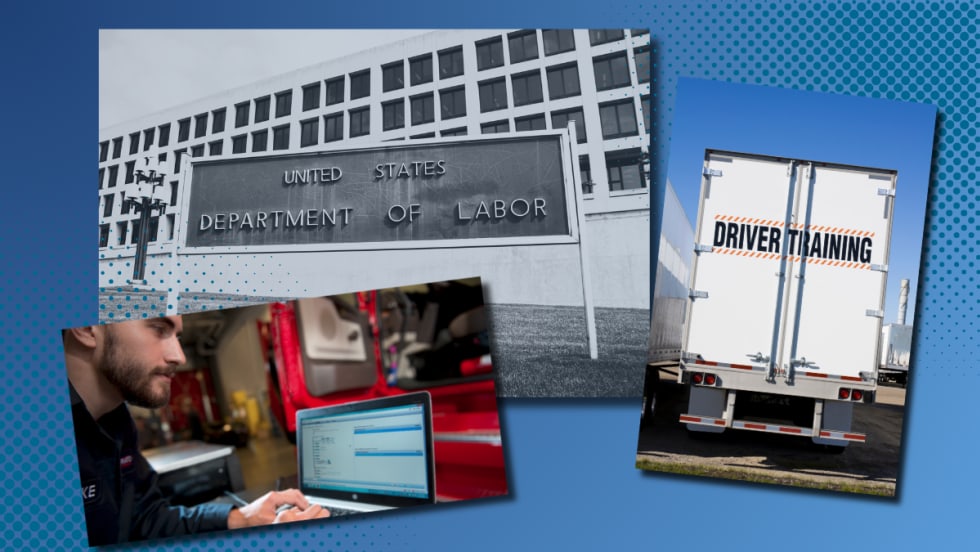
Federal Proposal Would Allow Pell Grants for Shorter-Term Job Training
The Department of Labor plans to expand Pell Grant eligibility to some shorter workforce training programs, a move the American Trucking Associations said will help strengthen commercial driver training schools and diesel technician training programs.
Read More →
Owner-Operator Model Gets Boost as DOL Proposes 2024 Independent Contractor Definition Reversal
For an industry that has watched this issue go back and forth for years, the independent contractor proposal marks the latest swing in the regulatory pendulum.
Read More →
FMCSA Reinstates Field Warrior ELD to Registered Device List
One electronic logging device has been reinstated to the FMCSA's list of registered ELDs.
Read More →
How One Company is Using Smart Suspension Technology to Reduce Driver Injuries and Improve Retention
America’s Service Line adopted Link’s SmartValve and ROI Cabmate systems to address whole-body vibration, repetitive strain, and driver turnover. The trucking fleet is already seeing measurable results.
Read More →
CarriersEdge Announces 2026 Best Fleets to Drive For
The 18th annual contest recognizing the best workplaces for truck drivers sees changes to Top 20, Hall of Fame
Read More →
FMCSA Targets 550+ ‘Sham’ CDL Schools in Nationwide Sting Operation
The Federal Motor Carrier Safety Administration issued more than 550 notices of proposed removal to commercial driver training providers following a five-day nationwide enforcement sweep. Investigators cited unqualified instructors, improper training vehicles, and failure to meet federal and state requirements.
Read More →