




Calling the current federal motor fuels tax unsustainable over the long term, a bipartisan, Congressionally created commission is recommending that the U.S. shift to a mileage-based usage fee by 2020.
Congressional Commission Recommends Mileage-Based User Fee
Calling the current federal motor fuels tax unsustainable over the long term, a bipartisan, Congressionally created commission is recommending that the U.S. shift to a mileage-based usage fee by 2020
by Staff
February 26, 2009
New report says fuel taxes are no longer the best way to pay for highway construction.
3 min to read
Culminating nearly two years of study and deliberation, the National Surface Transportation Infrastructure Financing Commission offered its consensus view and roadmap for sweeping reform of the nation's transportation infrastructure funding approach with the release of its final report, "Paying Our Way: A New Framework for Transportation Finance," Thursday.
Charging vehicle drivers a mileage fee embodies the "user pays" principle and more accurately aligns the costs and benefits of the surface transportation system to those who are using it. More transparent charges for using infrastructure may also spur drivers to use the system more efficiently, reducing the overall investment need.
"With the expected shift to more fuel efficient vehicles," said Robert Atkinson, the chair of the Financing Commission and president of the Information Technology and Innovation Foundation, "it will be increasingly difficult to rely on the gas tax to raise the funds needed to improve, let alone maintain our nation's surface transportation infrastructure."
In order to support the transition from the gas tax to a mileage-based charge, the Financing Commission recommends a 10-cent-per-gallon increase in the federal gas tax (15 cents for diesel) and indexing the tax to inflation going forward. The gas tax, which is not currently indexed to inflation, has lost a third of its purchasing power since 1993, the last time the tax was increased.
Unfair Burden on Trucking?
Reaction to the report from trucking groups was swift.
The American Trucking Associations said it agrees with the need for an adjustment in the federal fuel tax -- provided more of those revenues are focused on programs to improve goods movement. But, presumably referring to the proposal to raise diesel taxes 50 percent more than gas taxes, they also noted that one sector should not be asked to bear an unfair burden, particularly during these difficult economic times.
ATA also noted that moving to a vehicle miles traveled (VMT) tax currently presents privacy concerns that are not only intrusive, but could lead to new forms of fraud and identity theft. The costs to implement and maintain the program also reduce the amount of funds that are directed towards infrastructure. The proposed VMT tax system also eliminates consumer incentive to use less fuel, a necessary component in helping to lower the cost of fuel, reduce carbon output and improve the nation's balance of trade. All of these issues must be addressed before considering a VMT tax as a viable long-term solution.
"The federal fuel tax has worked well for more than 50 years with the lowest collection and evasion costs," says ATA President Bill Graves. "There is no reason to transition to a new funding source within the 10-year timeframe suggested by the Commission, and certainly not to an alternative with as many problems as a VMT tax."
Smarter Spending
The Owner Operator Independent Drivers Association agreed there is a need for additional funds but asked why there was no thorough evaluation of how highway user dollars are currently spent.
"Before dumping more water into the bucket, we need to fix the gaping holes in the bottom." said Todd Spencer, executive vice president of OOIDA. "They neglected to address the most fundamental problem associated with financing our nation's infrastructure — reining in and redirecting ineffective and wasteful spending on programs and initiatives that aren't aligned with actual construction and maintenance for our highway system."
In addition to the fuel tax/VMT recommendations, the commission recommended doubling the annual Heavy Vehicle Use Tax and further increases in the truck tire tax. Also, the commission suggests more toll roads, congestion pricing, conversion of existing public roads into toll roads, private-public partnerships, and a system to record and tax miles driven.
Download a copy of the full report here.
More Fleet Management

'Beyond Compliance,' Regulations, Driver Coaching on ATRI’s 2026 Research List
The American Transportation Research Institute will examine driver coaching, regulatory impacts — including the "Beyond Compliance" concept —and weather disruptions that shape trucking operations.
Read More →
Fleet Advantage's Brian Antonellis on the Growing Need to Replace Old Trucks
Fleet Advantage's Brian Antonellis says it's time for fleets to get back to the fundamentals of good maintenance practices. And that includes replacing older, inefficient equipment.
Read More →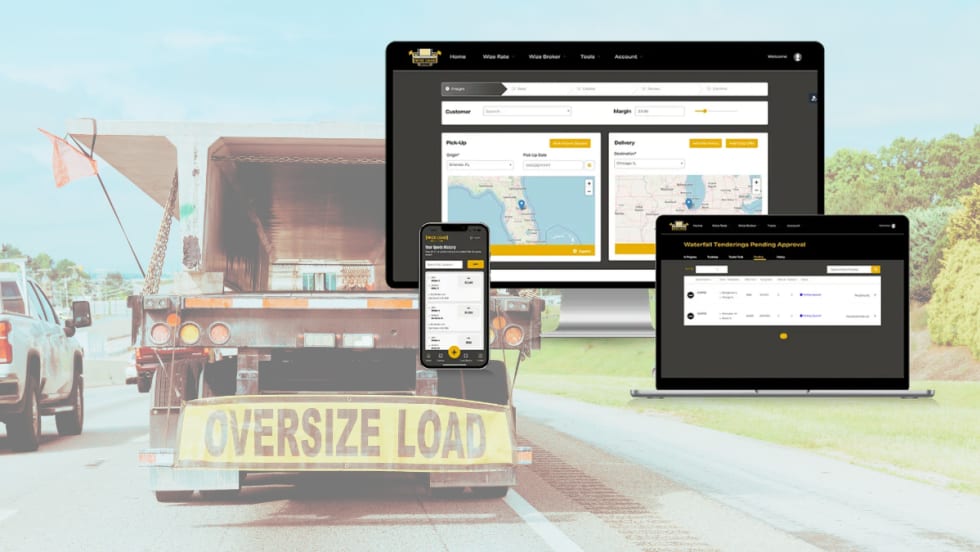
Truckstop.com Adding to Open Deck, Heavy Haul Offerings
Load matching for flatbed, lowbed, oversize and overweight loads can't be automated like basic van freight, but Truckstop.com is adding more high-tech tools to help.
Read More →
Trucker Path, Truckstop.com Expand Load Access Partnership
An expanded Trucker Path and Truckstop.com integration brings more freight opportunities into the TruckLoads app while emphasizing security and network quality.
Read More →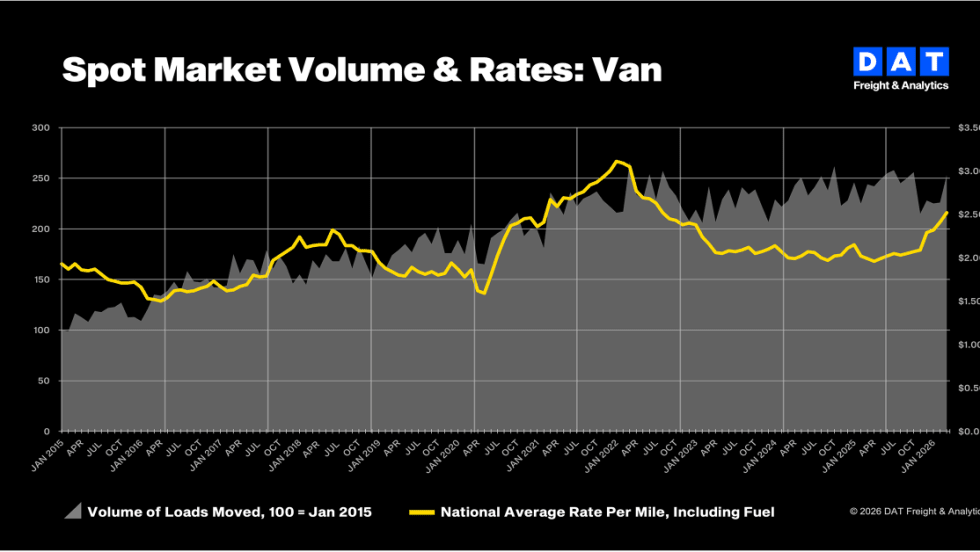
Truckload Rates Hit Two-Year Highs as Diesel Costs Surge, DAT Says
Strong March freight demand combined with a spike in fuel costs pushed both spot and contract truckload rates to their highest levels in more than two years.
Read More →
The AI Conversation You Need to Have with Your TMS Provider
Everyone’s talking about AI — but is your transportation management system actually built for it?
Read More →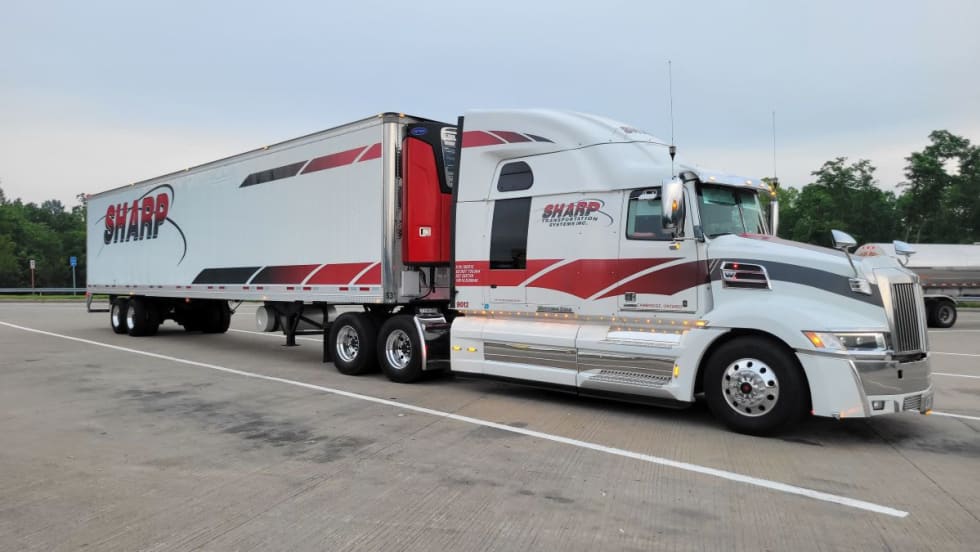
Kriska Buys Fellow Canadian Carrier Sharp Transportation Systems
Being part of KTG will allow Sharp to expand and improve its services.
Read More →
Bill in House Would Raise Minimum Insurance for Motor Carriers to $5 Million
The Fair Compensation for Truck Crash Victims Act would increase insurance requirements for interstate motor carriers by nearly seven times.
Read More →
FTR Trucking Conditions Index Hits Four-Year High in February
Strong freight rates push TCI to 10.2, but FTR expects fuel-price volatility to skew March results.
Read More →
C.H. Robinson Offers Carriers Relief as Diesel Prices Surge
C.H. Robinson is waiving fees on fuel cards and cash advances for April and May, aiming to help carriers offset rising diesel costs tied to geopolitical instability.
Read More →