All five major transportation modes, including trucking, carried less freight between the U.S. and its neighbors of Canada and Mexico last year than in 2014, but big-rigs continue to dominate such cargo movements, according to new U.S. Transportation Department figures.
Evan Lockridge・Former Business Contributing Editor
March 18, 2016
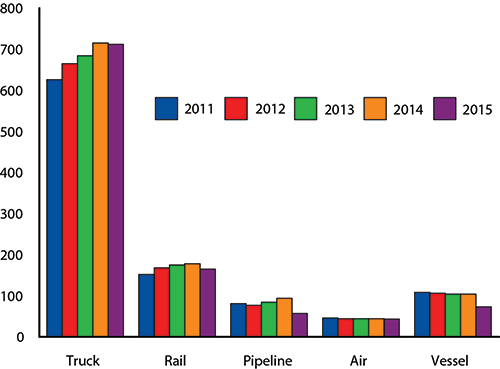
U.S.-NAFTA Merchandise trade by mode: 2011-2015.Graphic: U.S. DOT
3 min to read
U.S.-NAFTA Merchandise trade by mode: 2011-2015. Graphic: U.S. DOT
All five major transportation modes, including trucking, carried less freight between the U.S. and its neighbors of Canada and Mexico last year than in 2014, but big-rigs continue to dominate such cargo movements, according to new U.S. Transportation Department figures.
Ad Loading...
The 7.2% decline in value to $1.1 trillion also includes freight moved by rail, pipeline, vessel and air.
Ad Loading...
Of all the modes, trucking saw the smallest year-over-year drop in the value of commodities moved, down 0.4%. Air fell 1.8%, rail declined 7.1%, vessel tumbled 29.7% and pipeline plummeted 39.4%.
The decline in the value cross-border freight from 2014 to 2015 was almost entirely due to drops in crude oil and petroleum prices. The value of petroleum-related commodity shipments dropped almost 40% year-over-year, while the value of other freight dropped just 0.9%.
In 2015, petroleum-related commodities comprised 10.8% of the total value of U.S. North American freight, down from 16.6% in 2014.
North American Freight by Mode in 2015. Graphic: U.S. DOT
Trucks carried 64.3% of so-called U.S.-NAFTA (North American Free Trade Agreement) freight last year, a 4.4 percentage point increase from 2014, and continued to be the most heavily used mode for moving goods to and from both U.S.-NAFTA partners. Trucks accounted for $359.8 billion of the $589.9 billion of imports, or 61%, and for $351.9 billion of the $516.4 billion of exports, or 68.2%.
Rail remained the second largest mode, moving 14.9% of all U.S.-NAFTA freight. During the last decade, rail’s percentage share rose 0.2 points, far behind trucking increase of 2.2 percentage points.
Ad Loading...
Freight With Canada Posts Double Digit Drop
From 2014 to 2015, the value of U.S.-Canada freight flows fell 12.6% to $575.2 billion.
Trucks carried 58.3% of the value of the freight to and from Canada, followed by rail at 15.7%. The truck freight value was a 0.8 percentage point decrease from 2005 but an increase of 4.5 percentage points from the year before.
Michigan led all states in freight with Canada in 2015 with $69.1 billion.
The top commodity category transported between the U.S. and Canada in 2015 was vehicles and vehicle parts (other than railway vehicles and parts), valued at $103 billion with 60% moved by truck.
Mexican Freight Down Just Slightly
The value of U.S.-Mexico freight fell 0.6% to $531.1 billion from 2014 to 2015, as trucks carried 70.9% of the value of the freight to and from Mexico, followed by rail at 14.1%. The truck freight value was a 3.4 percentage point increase from 2014 and was up 3.5 percentage points from 2005.
Ad Loading...
Texas led all states in freight with Mexico in 2015 with $178 billion.
The top commodity transported between the U.S. and Mexico in 2015 was electrical machinery at $103.8 billion, an increase of 7.5% from 2014, with $95.4 billion or 91.9% moved by trucks.
ACT Research data shows volumes hitting a four-year high and supply-demand balance strengthening, but higher oil prices are undercutting tariff relief and tempering optimism.
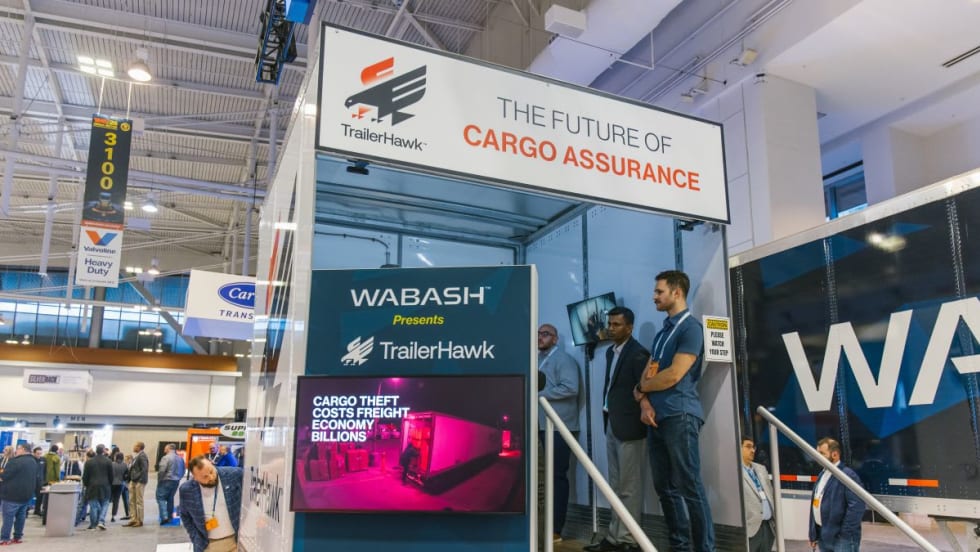
The patent-pending cargo solution integrates a digitally connected cargo door and an intelligent locking system with the TrailerHawk.AI technology platform.
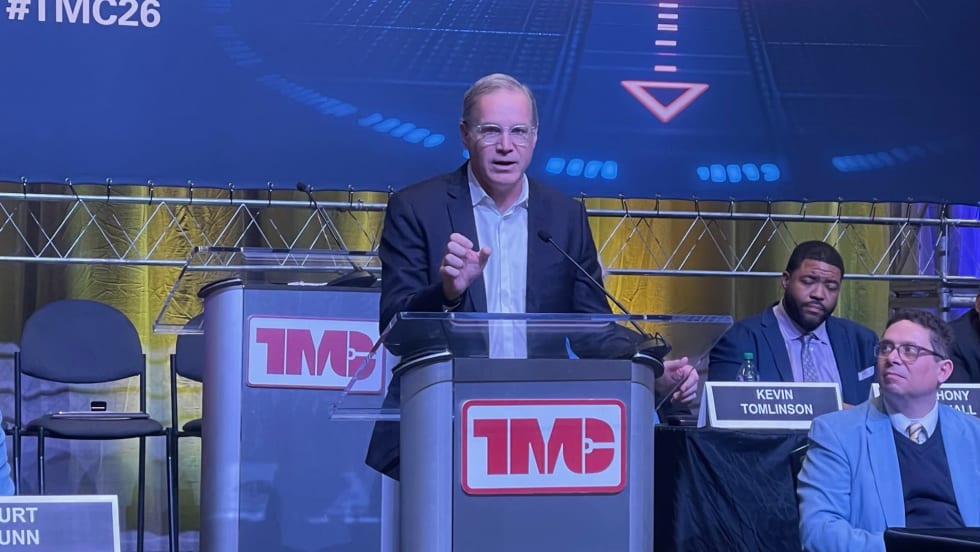
Speaking at the TMC Annual Meeting in Nashville, ATA President Chris Spear said trucking faces mounting pressure from rising fuel prices, geopolitical instability, and uncertainty around trade policy.
More than 100,000 new trucking companies enter the industry each year, but regulators manage to audit only a fraction of them. That churn creates opportunities for inexperienced startups — and for “chameleon carriers” that shut down after safety violations and reappear under new identities. Read more from Deborah Lockridge in this commentary.
HDTX is an intimate event that connects heavy-duty trucking fleet managers with industry suppliers through small-group discussions, educational sessions, and structured one-on-one meetings.
Optimal Dynamics says its new Scale platform uses AI agents and optimization to help carriers find and secure freight that improves network balance and profitability.
NACFE's Run on Less - Messy Middle project demonstrates the power of data in helping to guide the future of alternative fuels and powertrains for heavy-duty trucks.