



Freight transportation capacity has been subject to enormous pressure from a number of sources for a little more than a year, leading to higher rates and even jeopardizing some long-standing business relationships.
 MENU
MENU SEARCH
Freight transportation capacity has been subject to enormous pressure from a number of sources for a little more than a year, leading to higher rates and even jeopardizing some long-standing business relationships

Freight transportation capacity has been subject to enormous pressure from a number of sources for a little more than a year, leading to higher rates and even jeopardizing some long-standing business relationships.
That’s according to a new white paper from DAT Solutions, which operates the DAT network of load boards, that looks at this trend and what’s behind it.
Aimed at logistics managers, the white paper is entitled "Truckload Capacity in 2014: What’s Causing the Capacity Crunch and What Can Shippers Do About it?" In addition to examining what has caused a shortage of trucks, it also explores how the shortage of truck capacity has affected spot freight rates, as well as contract freight rates, and which market indicators shippers can use to better understand future supply and demand conditions, according to DAT.
The paper also outlines how shippers can harness "big data" to prepare for volatility in the transportation market and forecast truckload capacity and rates on North American lanes.
“Transportation and logistics managers have begun to harness “big data” in new ways, as the necessary computing power and expertise are increasingly available and economical,” wrote Don Thornton, DAT Senior VP, author of the white paper. “Data from the company’s own history is used to build operational models of costs, revenues, opportunities and challenges associated with transportation and logistics choices. Managers then apply different variables to create scenarios that help them with forecasting and contingency planning.”
The 11-page free paper is available on the DAT Solutions website.

ACT Research data shows volumes hitting a four-year high and supply-demand balance strengthening, but higher oil prices are undercutting tariff relief and tempering optimism.
Read More →
The patent-pending cargo solution integrates a digitally connected cargo door and an intelligent locking system with the TrailerHawk.AI technology platform.
Read More →
The impact of the Iran conflict extends beyond fuel costs, bringing more fraud and cybersecurity risks to the trucking industry.
Read More →
Speaking at the TMC Annual Meeting in Nashville, ATA President Chris Spear said trucking faces mounting pressure from rising fuel prices, geopolitical instability, and uncertainty around trade policy.
Read More →
More than 100,000 new trucking companies enter the industry each year, but regulators manage to audit only a fraction of them. That churn creates opportunities for inexperienced startups — and for “chameleon carriers” that shut down after safety violations and reappear under new identities. Read more from Deborah Lockridge in this commentary.
Read More →
HDTX is an intimate event that connects heavy-duty trucking fleet managers with industry suppliers through small-group discussions, educational sessions, and structured one-on-one meetings.
Read More →
New DAT One feature shows top-paying loads directly on an iPhone’s home screen, helping carriers react faster to spot-market opportunities.
Read More →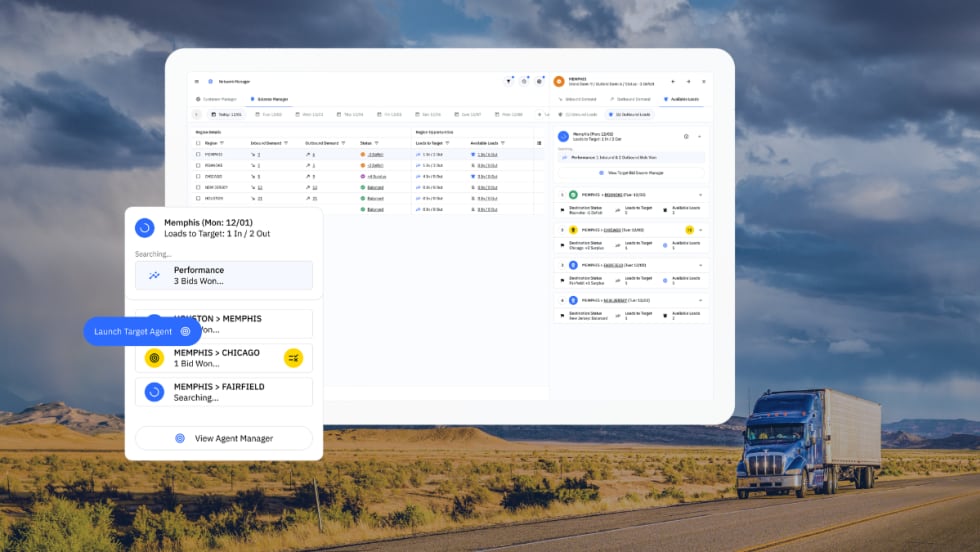
Optimal Dynamics says its new Scale platform uses AI agents and optimization to help carriers find and secure freight that improves network balance and profitability.
Read More →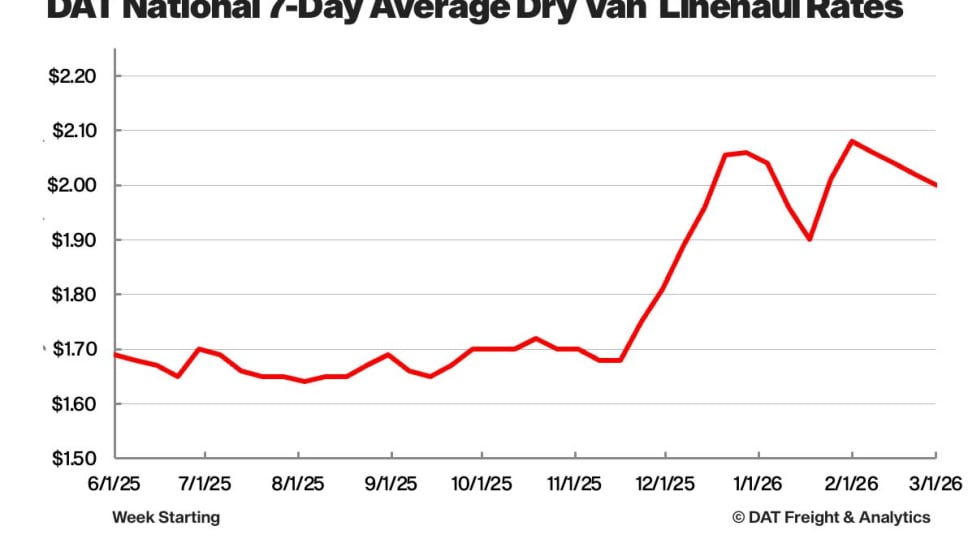
DAT Freight & Analytics data shows tightening flatbed capacity, easing produce markets, and softening van and reefer rates.
Read More →
NACFE's Run on Less - Messy Middle project demonstrates the power of data in helping to guide the future of alternative fuels and powertrains for heavy-duty trucks.
Read More →