




A 30-day extension of the public comment period for a proposed truck speed-limiter rule was announced today by the National Highway Traffic Safety Administration and the Federal Motor Carrier Safety Administration.
 MENU
MENU SEARCH
A 30-day extension of the public comment period for a proposed truck speed-limiter rule was announced today by the National Highway Traffic Safety Administration and the Federal Motor Carrier Safety Administration.

Photo via FMCSA
A 30-day extension of the public comment period for a proposed truck speed-limiter rule was announced today by the National Highway Traffic Safety Administration and the Federal Motor Carrier Safety Administration.
The new deadline for comments is Dec. 7.
The proposed rule would require all newly manufactured U.S. trucks, buses, and multipurpose passenger vehicles with GVWR over 26,000 pounds to be equipped with speed-limiting devices. Motor carriers would be responsible for maintaining the speed limiters at or below the designated speed for the service life of the vehicles.
According to the Department of Transportation, the proposed rule “discusses the benefits of setting the maximum speed at 60, 65, and 68 miles per hour, but the Agencies will consider other speeds based on public input.”
That nebulous aspect drew heavy fire last month from the head of trucking’s biggest lobby. Chris Spear, president and CEO of the American Trucking Associations, slammed the rule during an Oct. 4 press conference. “The various differentials in speed from what this rule proposes and what state speed limits are is dangerous,” he said. “What is this proposal? Three speed limits, not one. No studies to back it up. And no national cap on limits to address speed differentials."
“Our policy focus now is to develop comments on this proposal, which in my humble opinion, is flawed,” Spear continued. “We cannot afford to elevate risks for the motoring public with a rule that does not take into account the danger of differential speeds for cars and trucks."
Spear also said the two agencies have “the responsibility to study [what they’ve proposed] and come to a consensus about [setting] one speed and one national limit— not three speeds and no national limit [as is laid out in the proposal].”
To date, over 3300 public comments have been filed on the proposal. Existing comments may be viewed and new comments submitted online via this link.

ACT Research data shows volumes hitting a four-year high and supply-demand balance strengthening, but higher oil prices are undercutting tariff relief and tempering optimism.
Read More →
The patent-pending cargo solution integrates a digitally connected cargo door and an intelligent locking system with the TrailerHawk.AI technology platform.
Read More →
The impact of the Iran conflict extends beyond fuel costs, bringing more fraud and cybersecurity risks to the trucking industry.
Read More →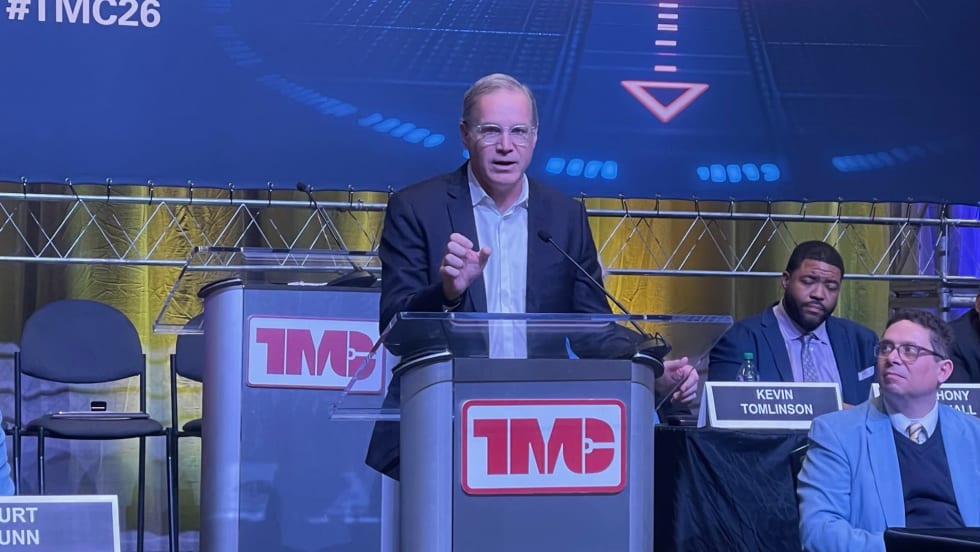
Speaking at the TMC Annual Meeting in Nashville, ATA President Chris Spear said trucking faces mounting pressure from rising fuel prices, geopolitical instability, and uncertainty around trade policy.
Read More →
More than 100,000 new trucking companies enter the industry each year, but regulators manage to audit only a fraction of them. That churn creates opportunities for inexperienced startups — and for “chameleon carriers” that shut down after safety violations and reappear under new identities. Read more from Deborah Lockridge in this commentary.
Read More →
HDTX is an intimate event that connects heavy-duty trucking fleet managers with industry suppliers through small-group discussions, educational sessions, and structured one-on-one meetings.
Read More →
New DAT One feature shows top-paying loads directly on an iPhone’s home screen, helping carriers react faster to spot-market opportunities.
Read More →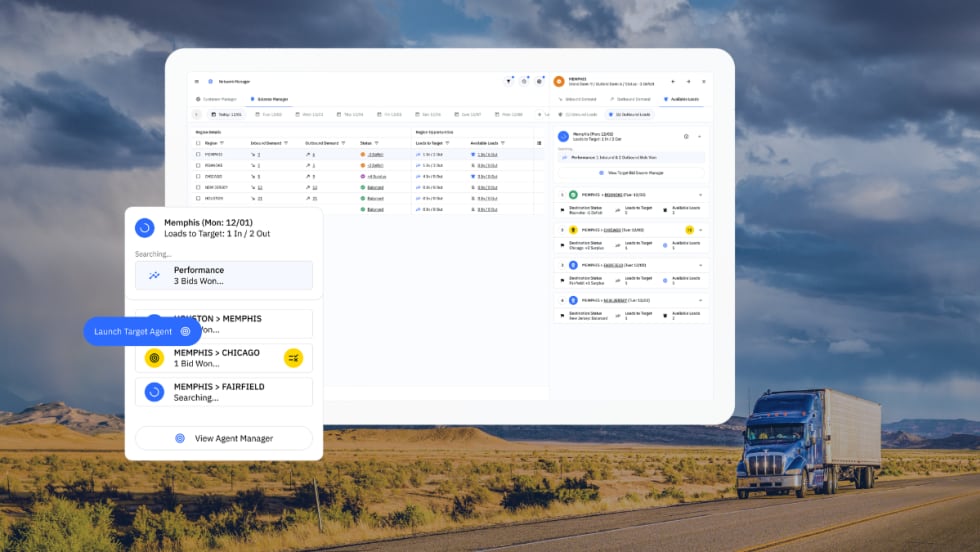
Optimal Dynamics says its new Scale platform uses AI agents and optimization to help carriers find and secure freight that improves network balance and profitability.
Read More →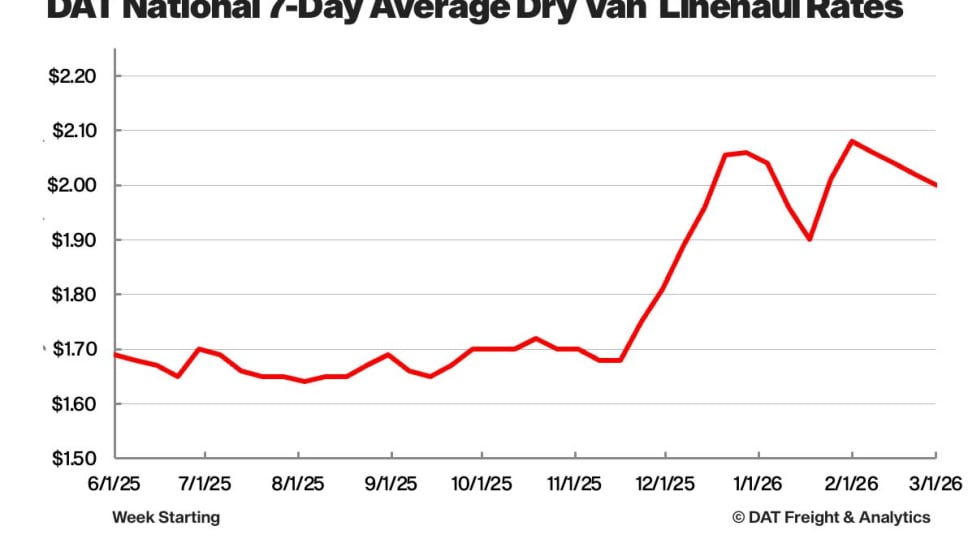
DAT Freight & Analytics data shows tightening flatbed capacity, easing produce markets, and softening van and reefer rates.
Read More →
NACFE's Run on Less - Messy Middle project demonstrates the power of data in helping to guide the future of alternative fuels and powertrains for heavy-duty trucks.
Read More →