




Economist Noel Perry is optimistic about the near-term economic outlook. The current pause in activity falls within normal margins for a recovery and probably is not a sign of a double-dip recession, he said last week.
But underlying problems in the housing market and the difficulty of resolving the U.S. debt crisis are causes for concern several years out, Perry said in a webinar hosted by FTR Associates, a leading transportation analysis group.
Economic Forecast from FTR: OK for the Near Term but Clouds on Horizon
Economist Noel Perry is optimistic about the near-term economic outlook. The current pause in activity falls within normal margins for a recovery and probably is not a sign of a double-dip recession, he said last week. But underlying problems in the housing market and the difficulty of resolving the U.S. debt crisis are causes for concern several years out, Perry said in a webinar hosted by FTR Associates, a leading transportation analysis group
by Staff
June 13, 2011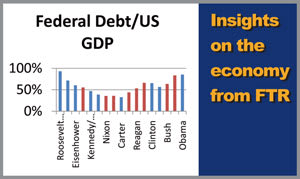
History shows that neither political party can claim better management of U.S. debt. Source: FTR Associates
5 min to read
Perry said he is "relatively pessimistic" about the long-term forces that drive the economy.
The housing market, a major driver of freight levels, has a long climb ahead to get out of the collapse of several years ago. The supply of existing homes is almost twice the historical rate. "It has come down a little bit but not near enough to stimulate a strong housing market," he said.
And the debt problem is easy to explain but very difficult to fix. Tax revenues do not cover expenses and the biggest expenses, Social Security and medical services, are political "untouchables," he said.
"If we cut all discretionary spending we would still have deficit of around $300 billion a year. We can't get from here to there without doing very uncomfortable things and our political system is very uncomfortable with uncomfortableness."
Both political parties have contributed to the imbalance, which means that neither party has the competence to solve the problem, he said. "That means the solution will come late and will be accompanied by mistakes, which almost certainly means that interest rates will increase substantially and inflation may increase as well."
Those problems probably are three or four years into the future, but they are hanging over our heads, he said.
A complicating factor is that economic cycles are coming more quickly than they have in the past. He described it as a "short-cycle era" when the period of gain following a recession is only around nine quarters. That means there's not much time to correct mistakes, he said. "The response to economic change has become much, much more important."
Perry sees the current dip in economic activity as a test of nerves for business. "The question is, do you assume there will be no recovery like all the announcers are telling us on TV, or do you trust the historical data that shows there will be a recovery?"
He trusts the data. Historically, recoveries do not proceed evenly from quarter to quarter, he said. GDP growth in a recovery can vary widely, from less than 2 percent to more than 5 percent. The last quarter came in at 1.8 percent, which Perry described as well within the normal range of variation.
The immediate contributors to the downtick are the earthquake and subsequent nuclear incident in Japan, and recent fluctuations in oil prices, he said.
Japan lost 15 percent of its manufacturing activity and exports, but already is showing a turnaround. "Toyota expects to be back to normal pretty soon."
The recent diesel price spike and retreat reflect supply issues in the world market, he said. Initially, the market was pricing in fear that the conflict in Libya could take as much as 1 to 2 million barrels of oil a day out of the supply flow, but now Iraq is producing in record amounts and the market is correcting.
Trucking
This translates to a moderate but relatively normal recovery for trucking, which means that the industry still is facing a challenge finding enough drivers, Perry said.
A couple of demographic trends underpin the driver situation, he said. In the last decade trucking has been the beneficiary of the decline in manufacturing employment and the decline in construction, which shifted around 6 million out of those industries and into the pool of potential drivers, over and above normal demographic growth.
But now as manufacturing picks up steam the number of people coming in to the employable population is declining, Perry said. Most of the experienced drivers who were laid off during the recession are back to work. That leaves inexperienced drivers in the pool, but the industry has been slow to take on the 30,000 to 40,000 recruiters it needs to hire the 600,000 to 700,000 drivers it needs each year.
And the decision to take on the expense of recruiters is complicated by the possibility of another economic downturn in the next four to five years, Perry said.
An additional question is the drag that will be created by Federal Motor Carrier Safety Administration regulations such as CSA and the pending rewrite of the hours of service rule. Perry predicted, for instance, that the HOS rule will increase the driver shortage by 5 percent early next year. His overall forecast is that the regulations will take the equivalent of 300,000 drivers out of a pool of about 2.8 million.
The industry is likely to counter the regulatory pressure by increasing productivity by speeding up freight turnaround times and delivery times, although shippers appear not yet convinced that they will have to make these changes, Perry said.
On the equipment side, he sees the recent upturn in purchasing as replacement ordering rather than fleet expansion. The bigger fleets with 500 or more trucks have the cash and are placing the orders, but small fleets are not yet doing so, he said.
"Historically, expansion of the fleet requires medium and small (fleets) to be buying, but they don't have the cash right now and their profit margins are not enough for them to take the risk."
His take: expansion will come as the economy grows, but it won't happen right away.
Also on the webinar, FTR rail expert Larry Gross reported that domestic intermodal activity remains strong. "Intermodal is where action is," he said.
A big contributor is new truck entrants: the use of 53-foot trailers in intermodal is growing more than 20 percent year over year, he said. "That's because the easiest thing for them to do is put their trailers on flatcars." And he predicted that the 53-foot container fleet will grow by 14 percent this year.
More Fleet Management

'Beyond Compliance,' Regulations, Driver Coaching on ATRI’s 2026 Research List
The American Transportation Research Institute will examine driver coaching, regulatory impacts — including the "Beyond Compliance" concept —and weather disruptions that shape trucking operations.
Read More →
Fleet Advantage's Brian Antonellis on the Growing Need to Replace Old Trucks
Fleet Advantage's Brian Antonellis says it's time for fleets to get back to the fundamentals of good maintenance practices. And that includes replacing older, inefficient equipment.
Read More →
Truckstop.com Adding to Open Deck, Heavy Haul Offerings
Load matching for flatbed, lowbed, oversize and overweight loads can't be automated like basic van freight, but Truckstop.com is adding more high-tech tools to help.
Read More →
Trucker Path, Truckstop.com Expand Load Access Partnership
An expanded Trucker Path and Truckstop.com integration brings more freight opportunities into the TruckLoads app while emphasizing security and network quality.
Read More →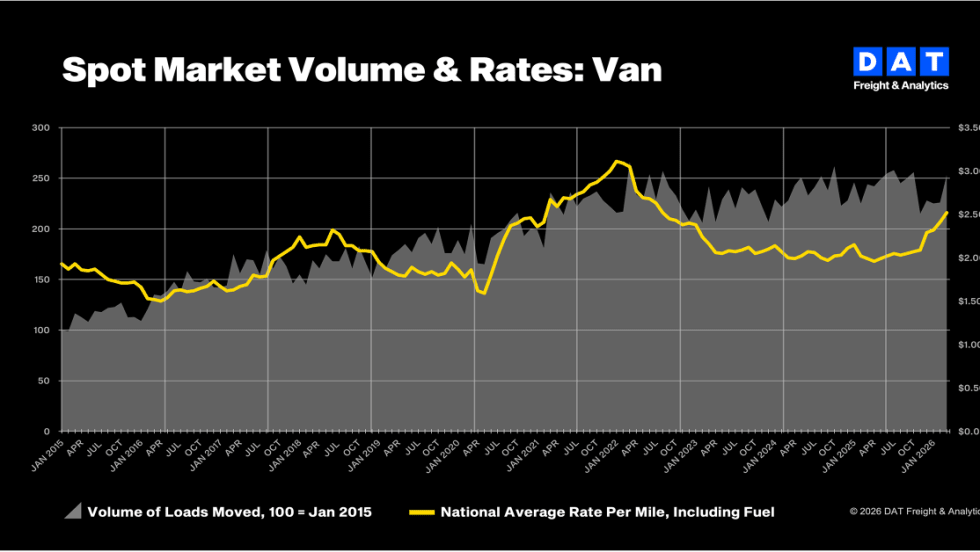
Truckload Rates Hit Two-Year Highs as Diesel Costs Surge, DAT Says
Strong March freight demand combined with a spike in fuel costs pushed both spot and contract truckload rates to their highest levels in more than two years.
Read More →
The AI Conversation You Need to Have with Your TMS Provider
Everyone’s talking about AI — but is your transportation management system actually built for it?
Read More →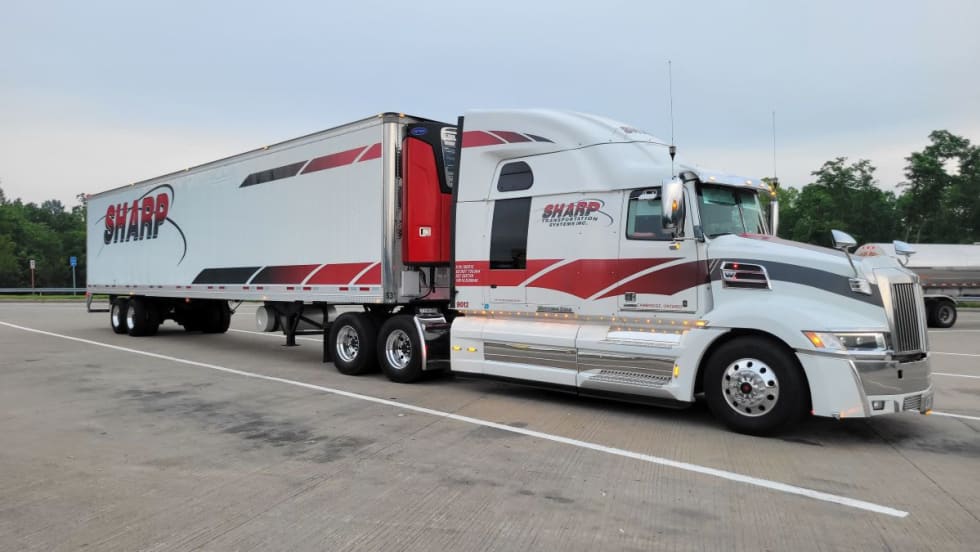
Kriska Buys Fellow Canadian Carrier Sharp Transportation Systems
Being part of KTG will allow Sharp to expand and improve its services.
Read More →
Bill in House Would Raise Minimum Insurance for Motor Carriers to $5 Million
The Fair Compensation for Truck Crash Victims Act would increase insurance requirements for interstate motor carriers by nearly seven times.
Read More →
FTR Trucking Conditions Index Hits Four-Year High in February
Strong freight rates push TCI to 10.2, but FTR expects fuel-price volatility to skew March results.
Read More →
C.H. Robinson Offers Carriers Relief as Diesel Prices Surge
C.H. Robinson is waiving fees on fuel cards and cash advances for April and May, aiming to help carriers offset rising diesel costs tied to geopolitical instability.
Read More →