



Consumer prices rose again in June, but the pace was less than it was the month before, according to the U.S. Labor Department.
 MENU
MENU SEARCH
Consumer prices rose again in June, but the pace was less than it was the month before, according to the U.S. Labor Department.

Photo: Pen Waggener via Wikimedia Commons
Consumer prices rose again in June, but the pace was less than it was the month before, according to the U.S. Labor Department.
This measure of inflation, known as the Consumer Price Index, increased 0.3% from May, following a 0.4% gain, translating into an annual increase of 2.1% through June, the same rate as the month before.
When the volatile food and energy sectors are removed the June hike was just 0.1%, the smallest increase since February, while the annual “core rate” was 1.9%, compared to 2% in May.
In contrast to the broad-based increase last month, the June increase was primarily driven by a hike in gasoline prices, which rose 3.3%, and accounted for two-thirds of the overall hike. Prices for food decelerated in June, rising only slightly.
“Some officials have warned the recent pickup in inflation may force the Federal Reserve to move quicker with [interest] rate hikes. The Federal Reserve, however, continues to focus on the labor market, downplaying the recent rise in prices at the end of the first quarter and the start of the second quarter, sentiment echoed again in the chairman's latest testimony,” said Lindsey Piegza, chief economist at the investment firm Sterne Agee.
Meantime, a separate shows existing-home sales increased in June, hitting an annual pace of 5 million sales for the first time since October, according to the National Association of Realtors.
Total existing-home sales climbed 2.6% to a seasonally adjusted annual rate of 5.04 million in June from an upwardly-revised 4.91 million in May. Despite the gain sales remain 2.3% below the 5.16 million-unit level a year ago.
Lawrence Yun, NAR chief economist, said housing fundamentals are moving in the right direction. “Inventories are at their highest level in over a year and price gains have slowed to much more welcoming levels in many parts of the country. This bodes well for rising home sales in the upcoming months as consumers are provided with more choices,” he said. “On the contrary, new home construction needs to rise by at least 50% for a complete return to a balanced market because supply shortages, particularly in the West, are still putting upward pressure on prices.”
Yun also noted that stagnant wage growth is holding back what should be a stronger pace of sales. “Hiring has been a bright spot in the economy this year, adding an average of 230,000 jobs each month,” he said. “However, the lack of wage increases is leaving a large pool of potential homebuyers on the sidelines who otherwise would be taking advantage of low interest rates. Income growth below price appreciation will hurt affordability.”
Regionally, existing-home sales in the Northeast rose 3.2% in June, but are 3% below a year ago, while in the Midwest existing-home sales jumped 6.2%, but remain 2.4% below the June 2013 level. Existing-home sales in the South inched 0.5% higher and are up 1% percent from a year earlier while existing-home sales in the West rose 2.7% but remain 7.3% below a year ago.

ACT Research data shows volumes hitting a four-year high and supply-demand balance strengthening, but higher oil prices are undercutting tariff relief and tempering optimism.
Read More →
The patent-pending cargo solution integrates a digitally connected cargo door and an intelligent locking system with the TrailerHawk.AI technology platform.
Read More →
The impact of the Iran conflict extends beyond fuel costs, bringing more fraud and cybersecurity risks to the trucking industry.
Read More →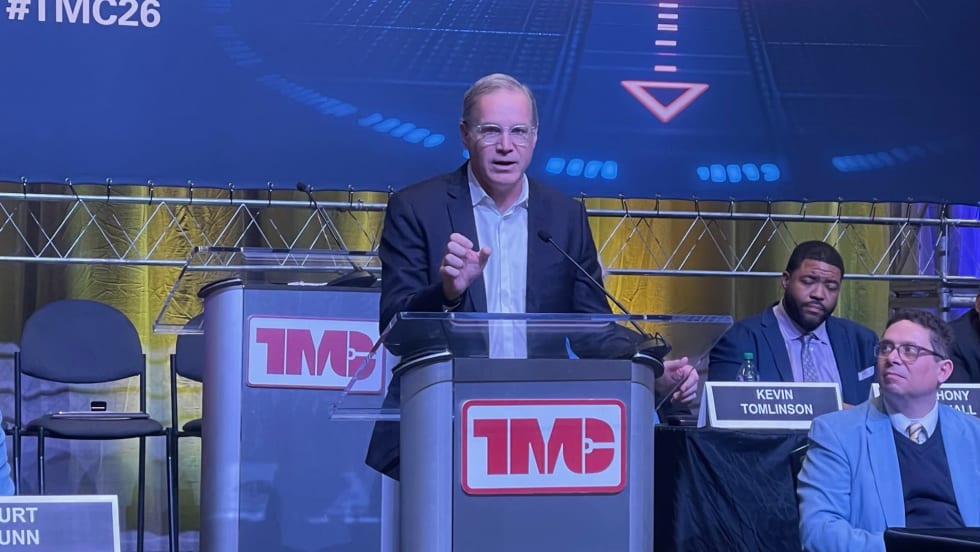
Speaking at the TMC Annual Meeting in Nashville, ATA President Chris Spear said trucking faces mounting pressure from rising fuel prices, geopolitical instability, and uncertainty around trade policy.
Read More →
More than 100,000 new trucking companies enter the industry each year, but regulators manage to audit only a fraction of them. That churn creates opportunities for inexperienced startups — and for “chameleon carriers” that shut down after safety violations and reappear under new identities. Read more from Deborah Lockridge in this commentary.
Read More →
HDTX is an intimate event that connects heavy-duty trucking fleet managers with industry suppliers through small-group discussions, educational sessions, and structured one-on-one meetings.
Read More →
New DAT One feature shows top-paying loads directly on an iPhone’s home screen, helping carriers react faster to spot-market opportunities.
Read More →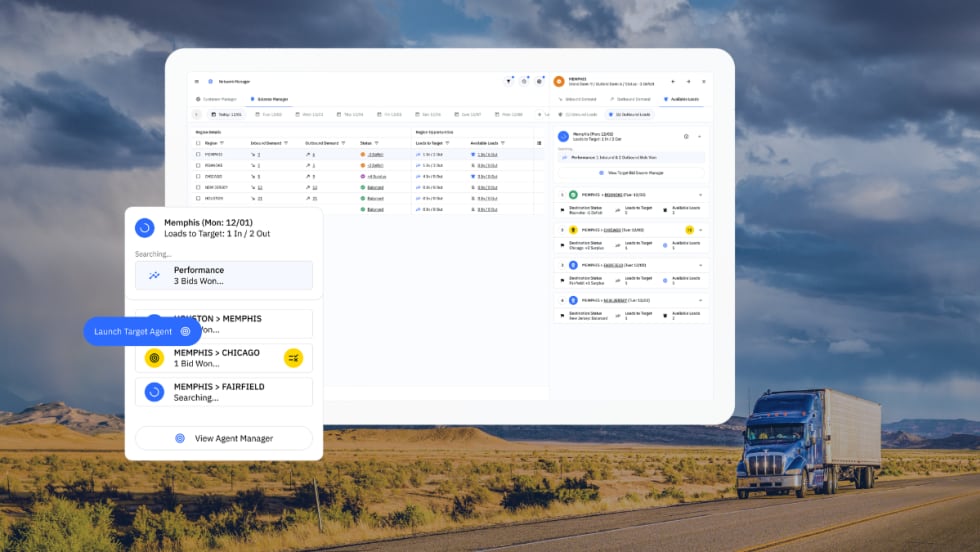
Optimal Dynamics says its new Scale platform uses AI agents and optimization to help carriers find and secure freight that improves network balance and profitability.
Read More →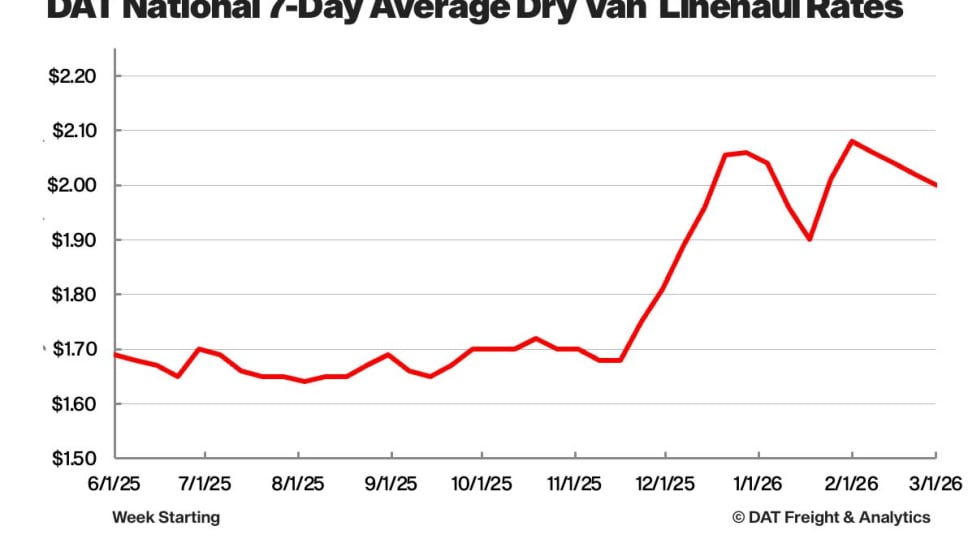
DAT Freight & Analytics data shows tightening flatbed capacity, easing produce markets, and softening van and reefer rates.
Read More →
NACFE's Run on Less - Messy Middle project demonstrates the power of data in helping to guide the future of alternative fuels and powertrains for heavy-duty trucks.
Read More →