




Industrial production in the U.S. rose in April more than expected and by the fastest rate in more than three years, according to a new report issued Tuesday. Meanwhile, separate reports show e-commerce continues to boom but the building of new homes fell for the second straight month.
Economic Watch: Industrial Production, E-Commerce Jump; Home Starts Drop
Industrial production in the U.S. rose in April more than expected and by the fastest rate in more than three years, according to a new report issued Tuesday. Meanwhile, separate reports show e-commerce continues to boom but the building of new homes fell for the second straight month.

Evan Lockridge・Former Business Contributing Editor
4 min to read
The total output at the nation’s factories, mines and utilities increased 1% from the month before, marking the biggest gain since February 2014, according to the Federal Reserve, and far better than a 0.4% gain expected from a consensus estimate by analysts.
Pushing the overall figure higher was a 1% increase in factory production after falling 0.4% in March and a 1.2% improvement in the output from mines, following a drop of 0.4% the month before. Utility output moderated to a 0.7% increase after leaping 8.2% in March.
At 105.1% of its 2012 average, total industrial production in April was 2.2% above its year-earlier level.
Capacity utilization for the industrial sector increased 0.6 of a percentage point in April to 76.7%, but was 3.2 percentage points below its 1972–2016 average.
Wells Fargo Securities noted that April is the first time in recent memory that all three major industry groups were higher with manufacturing, mining and utilities all posting gains of at least 0.7% on the month.
“One lesson from the ups and downs of the manufacturing recovery in this cycle is to curb your enthusiasm when the data finally indicate firming in activity,” cautioned Tim Quinlan, senior economist at Well Fargo Securities. “The latest print of the Institute for Supply Management manufacturing survey showed a big dip in the orders component [during April].”
E-Commerce up Nearly 15% from Year Earlier
Meantime, a separate report, also released Tuesday, showed first quarter e-commerce retail sales in the U.S. grew 4.1% from the final quarter of 2016 while increasing faster than total retail sales.
The Commerce Department reported total retail sale for the first quarter of 2017 were estimated at $1,250 billion, an increase of 1% from the fourth quarter of 2016.
The first quarter 2017 e-commerce estimate increased 14.7% from the first quarter of 2016 while total retail sales increased 5.1% in the same period.
E-commerce sales in the first quarter of 2017 accounted for 8.5% of total sales, up from 7.8% from the same time in 2016.
This rise in e-commerce is leading retailers to close stores by the thousands, according to a recent story from FreightWaves.com. Just a few days ago it reported retailers have announced plans to close over 4,000 stores this year with just 21 retailers accounting for over 3,500 of those stores.
However, Business Insider noted there a nearly two dozen companies that are going against this trend and are opening more stories this year. Some analysts say this is an indication the brick and mortar retail sector is simply shifting, rather than shrinking.
Housing Starts Down, New Building Permits Mixed
On the downside, one economic report from Tuesday showed the homebuilding market, which has been one of the brighter spots in the economy, declined a bit more in April to the slowest pace since last November.
Led by a decline in the volatile multifamily production category, nationwide housing starts fell 2.6% from the month before to a seasonally adjusted annual rate of 1.17 million units, according to the Commerce Department. The rate was less than Wall Street expectations and follows a 6.6% drop in March
Multifamily starts fell 9.2% to a seasonally adjusted annual rate of 337,000 units while single-family production moved up slightly by 0.4% to 835,000.
“While we saw a little pause in market growth this month, single-family production is still up 7% since the start of 2017,” said National Association of Home Builders Chief Economist Robert Dietz. “The April report falls in line with our forecast for continued, gradual strengthening of the single-family sector throughout the year.”
Overall permit issuance in April was down 2.5% to a seasonally adjusted annual rate of 1.23 million units. Multifamily permits inched up 1.4% to 440,000 units while single-family permits fell 6.2% to 789,000.
The U.S. economy’s disappointing start to the year, with the gross domestic product increasing at an annual rate of 0.7% in the first quarter, was despite the best efforts of the residential sector-- which contributed half a percentage point to growth in the quarter, one of the better adds of the post-recession housing recovery.
According to RBC Economic Research, the unexpected pullback in April’s housing starts seems to indicate some of that strength was due to activity being brought forward amid unseasonably mild temperatures earlier this year.
“We don’t expect residential investment can keep up the double-digit gains recorded in the first quarter, but we look for housing to continue to make a positive contribution to GDP growth going forward,” said Josh Nye, senior economist at RBC.
He said strong labor markets, rising confidence, improving household balance sheets, accommodative financial conditions and limited supply in the existing home sales market all argue for further recovery in homebuilding activity. Also healthy permit issuance and strong homebuilders’ confidence also point to recent strength being maintained.
More Fleet Management

ACT: Trucking Volumes Rise, Capacity Tightens as Fuel Prices Cloud Outlook
ACT Research data shows volumes hitting a four-year high and supply-demand balance strengthening, but higher oil prices are undercutting tariff relief and tempering optimism.
Read More →
Wabash Teams Physical Security With Digital Tech For Better Cargo Visibility
The patent-pending cargo solution integrates a digitally connected cargo door and an intelligent locking system with the TrailerHawk.AI technology platform.
Read More →
From Diesel Prices to Cyberattacks: How the Iran War Is Affecting Trucking
The impact of the Iran conflict extends beyond fuel costs, bringing more fraud and cybersecurity risks to the trucking industry.
Read More →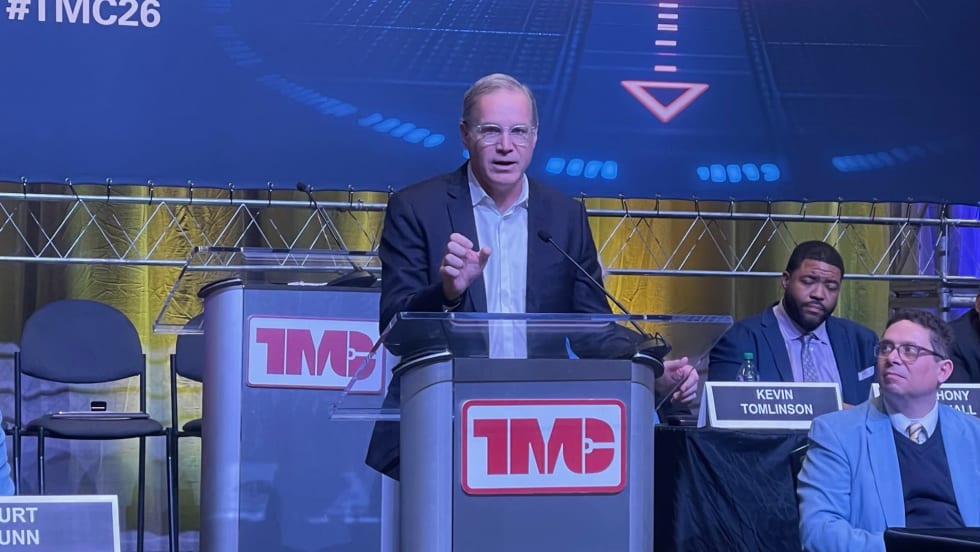
ATA’s Spear Warns Fuel Prices, Trade Policy, and Global Conflict Could Stall Trucking Recovery
Speaking at the TMC Annual Meeting in Nashville, ATA President Chris Spear said trucking faces mounting pressure from rising fuel prices, geopolitical instability, and uncertainty around trade policy.
Read More →
New Entrants, Chameleon Carriers, and Safety: Is It Too Easy to Start a Trucking Company?
More than 100,000 new trucking companies enter the industry each year, but regulators manage to audit only a fraction of them. That churn creates opportunities for inexperienced startups — and for “chameleon carriers” that shut down after safety violations and reappear under new identities. Read more from Deborah Lockridge in this commentary.
Read More →
Fleet Managers Invited to Apply for Exclusive HDT Exchange Event
HDTX is an intimate event that connects heavy-duty trucking fleet managers with industry suppliers through small-group discussions, educational sessions, and structured one-on-one meetings.
Read More →
DAT Launches iPhone Widget to Help Owner-Operators Find Loads Faster
New DAT One feature shows top-paying loads directly on an iPhone’s home screen, helping carriers react faster to spot-market opportunities.
Read More →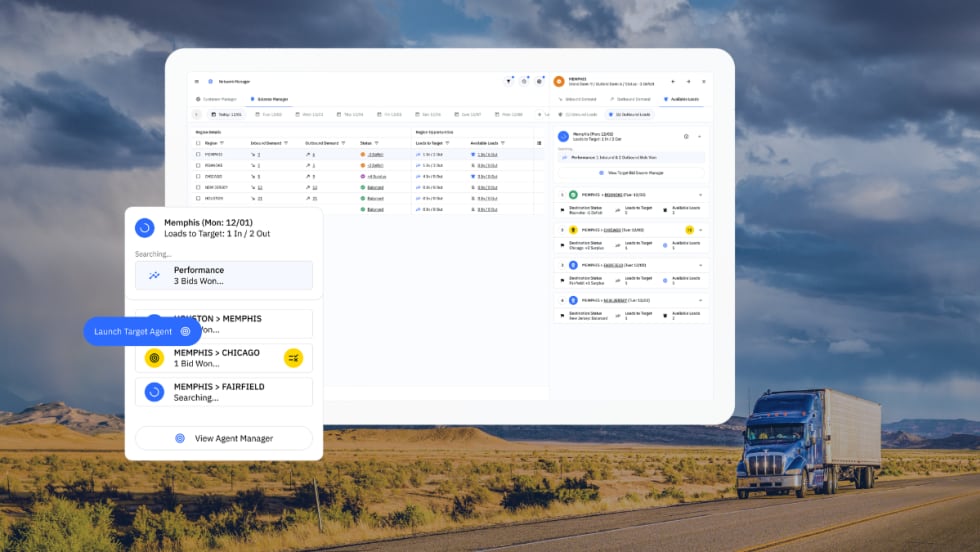
Optimal Dynamics Launches AI System to Help Carriers Choose Better Freight
Optimal Dynamics says its new Scale platform uses AI agents and optimization to help carriers find and secure freight that improves network balance and profitability.
Read More →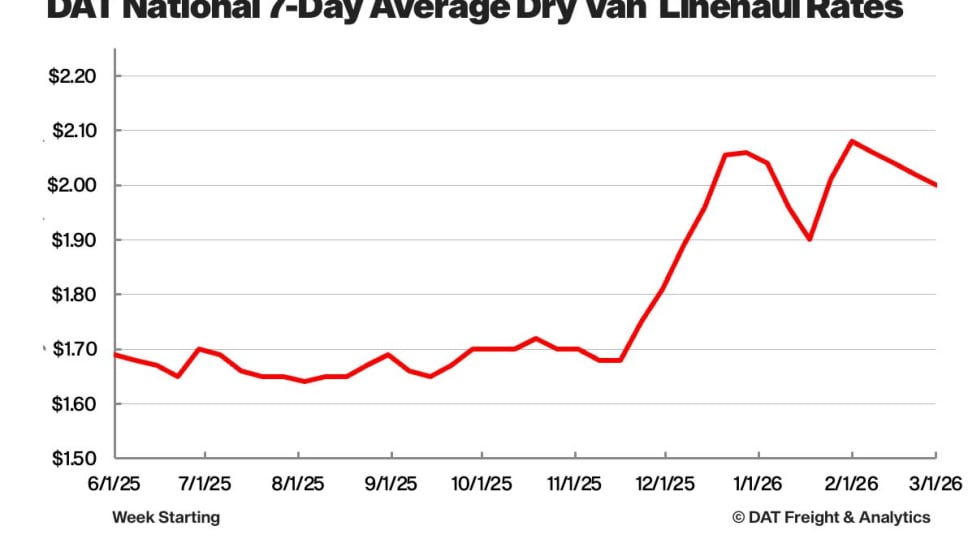
DAT: Flatbed Demand Climbs as Van and Reefer Rates Soften
DAT Freight & Analytics data shows tightening flatbed capacity, easing produce markets, and softening van and reefer rates.
Read More →
Run on Less “Messy Middle” Data Shows Multiple Paths Forward for Truck Powertrains [Watch]
NACFE's Run on Less - Messy Middle project demonstrates the power of data in helping to guide the future of alternative fuels and powertrains for heavy-duty trucks.
Read More →