




Industrial production in the U.S. increased 0.4% in July, its sixth consecutive monthly gain, according to new Federal Reserve numbers, due in large part to a big increase in activity within the auto sector.
Economic Watch: Industrial Production Surges, Inflation Tame
Industrial production in the U.S. increased 0.4% in July for its sixth consecutive monthly gain, according to new Federal Reserve numbers, due in large part to a big increase in activity within the auto sector.
by Staff
August 15, 20143 min to read
This measure of the total output at the nation’s factories, mines and utilities is 5% higher than the level from the same time in 2013 and is the fastest pace in five months.
Manufacturing output, the biggest part of the overall figure, advanced 1% in July, its largest increase since February. The production of motor vehicles and parts jumped 10.1%, the biggest increase in five years, as Americans replaced aging vehicles, while output in the rest of the manufacturing sector rose 0.4%.
The production at mines moved up 0.3%, its ninth consecutive monthly increase, while the output of utilities dropped 3.4%, as weather that was milder than usual for July reduced demand for air conditioning.
Capacity utilization for the total industrial sector edged up one tenth of percentage point to 79.2% in July, a rate of 1.7 percentage points above its level of a year earlier and 0.9 percentage point below average from 1972 through 2013.
The Federal Reserve also upwardly revised overall April and June industrial production figures, but cut May’s number from an earlier reported number
Meantime, a separate report shows prices at the wholesale level in July rose just 0.1% from June, according to the U.S. Labor Department, showing inflationary pressure remains modest.
This increase in the Producer Price Index follows a June gain of 0.4% and a 0.2% decline in May. Excluding the volatile food and energy sectors, the PPI in July rose 0.2% while food alone increased 0.4%.
Compared to the same time a year ago, the July PPI is 1.7% higher, down from 1.9% at the end of the second quarter and even further below the recent peak of 2.1% in April.
“After briefly breaching the 2% threshold and sparking fears of run-away inflation, headline price pressures appear to be abating,” said Lindsey Piegza, chief economist at the investment firm Sterne Agee. “From the Fed’s perspective, Chairman Yellen’s lack of concern for transitory pressures has proven valid, further justifying continued accommodation as the U.S. labor market struggles to gain momentum.”
She said the lack of wage and income growth seen so far in this economic recovery is beginning to have a negative impact on the consumer’s ability and willingness to spend with retail sales slowly waning since March and falling flat in July.
“While the economy continues to boast headline job creation, the quality of the job creation relative to the jobs lost in 2008 through 2009 is distinctly different in terms of average annual wages. In other words, the jobs being created are not the same jobs lost during the recession,” Piegza said.
Despite the rather upbeat news on the economy on Friday, U.S. consumers remain muted in their enthusiasm for the third straight month, according to the Thomson Reuters/University of Michigan's Survey of Consumers.
It shows consumer sentiment fell in July with its index registering 81.3, a four-month low.
"The most remarkable aspect of recent trends in consumer confidence has been its resistance to change in either direction due to very negative gross domestic product nor very positive employment gains," said survey director Richard Curtin. "This stability will provide the necessary strength for consumer spending to continue to expand, but does not support an acceleration in spending above 2.5%."
The survey's measure of current economic conditions by consumers rose slightly in July from the month before, while the gauge of consumer expectations slipped for a third straight month.
More Fleet Management

ACT: Trucking Volumes Rise, Capacity Tightens as Fuel Prices Cloud Outlook
ACT Research data shows volumes hitting a four-year high and supply-demand balance strengthening, but higher oil prices are undercutting tariff relief and tempering optimism.
Read More →
Wabash Teams Physical Security With Digital Tech For Better Cargo Visibility
The patent-pending cargo solution integrates a digitally connected cargo door and an intelligent locking system with the TrailerHawk.AI technology platform.
Read More →
From Diesel Prices to Cyberattacks: How the Iran War Is Affecting Trucking
The impact of the Iran conflict extends beyond fuel costs, bringing more fraud and cybersecurity risks to the trucking industry.
Read More →
ATA’s Spear Warns Fuel Prices, Trade Policy, and Global Conflict Could Stall Trucking Recovery
Speaking at the TMC Annual Meeting in Nashville, ATA President Chris Spear said trucking faces mounting pressure from rising fuel prices, geopolitical instability, and uncertainty around trade policy.
Read More →
New Entrants, Chameleon Carriers, and Safety: Is It Too Easy to Start a Trucking Company?
More than 100,000 new trucking companies enter the industry each year, but regulators manage to audit only a fraction of them. That churn creates opportunities for inexperienced startups — and for “chameleon carriers” that shut down after safety violations and reappear under new identities. Read more from Deborah Lockridge in this commentary.
Read More →
Fleet Managers Invited to Apply for Exclusive HDT Exchange Event
HDTX is an intimate event that connects heavy-duty trucking fleet managers with industry suppliers through small-group discussions, educational sessions, and structured one-on-one meetings.
Read More →
DAT Launches iPhone Widget to Help Owner-Operators Find Loads Faster
New DAT One feature shows top-paying loads directly on an iPhone’s home screen, helping carriers react faster to spot-market opportunities.
Read More →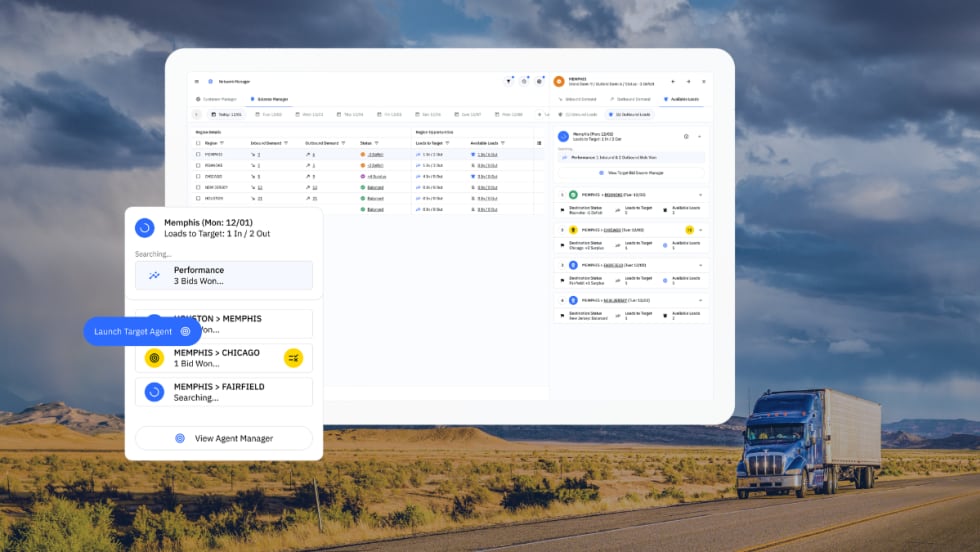
Optimal Dynamics Launches AI System to Help Carriers Choose Better Freight
Optimal Dynamics says its new Scale platform uses AI agents and optimization to help carriers find and secure freight that improves network balance and profitability.
Read More →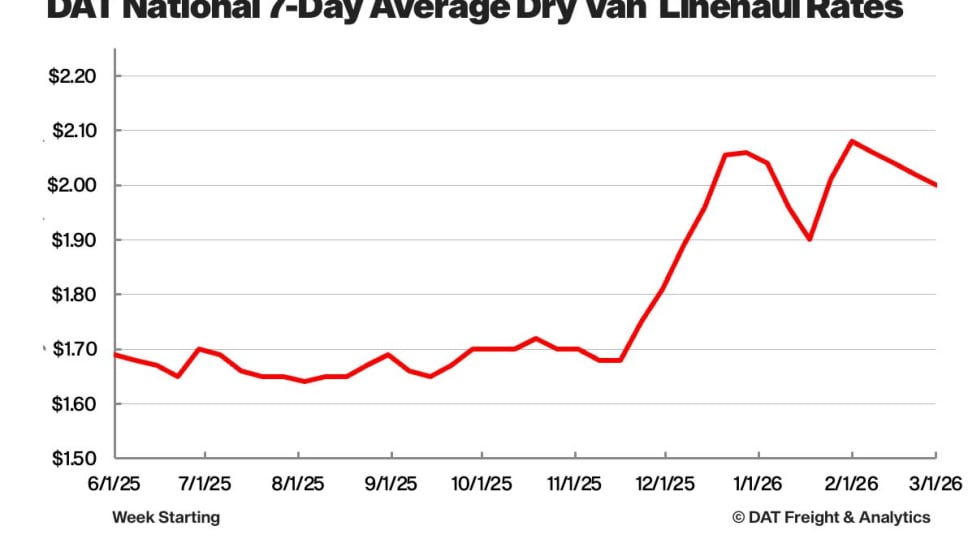
DAT: Flatbed Demand Climbs as Van and Reefer Rates Soften
DAT Freight & Analytics data shows tightening flatbed capacity, easing produce markets, and softening van and reefer rates.
Read More →
Run on Less “Messy Middle” Data Shows Multiple Paths Forward for Truck Powertrains [Watch]
NACFE's Run on Less - Messy Middle project demonstrates the power of data in helping to guide the future of alternative fuels and powertrains for heavy-duty trucks.
Read More →